
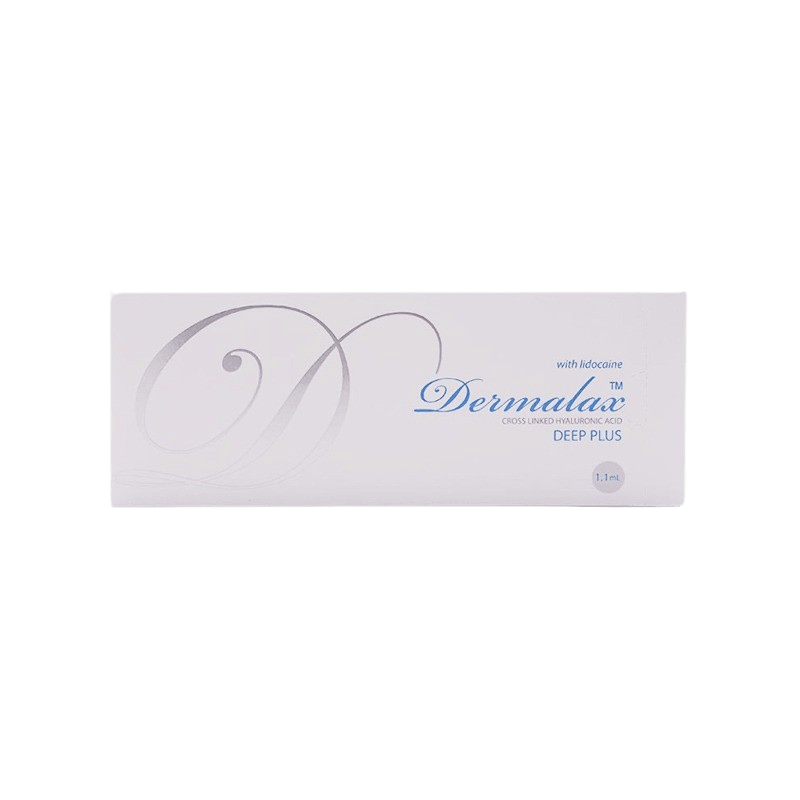
Dermalax™ Deep Plus w/Lidocaine
Order Dermalax™ Deep Plus w/Lidocaine for Clinics
Dermal Filler
$69.00
You save
Description
Dermalax™ Deep Plus w/Lidocaine is a cross-linked hyaluronic acid injectable dermal filler with lidocaine for professional facial volumization and contour refinement. Licensed clinics, med spas, and healthcare professionals can order it for treatment-room use, with sterile prefilled syringe handling that supports consistent setup and inventory control. The formulation is intended for trained injectors working within established aesthetic protocols, not for self-administration.
Clinic Ordering, Price, and Account Access
Clinics can buy Dermalax Deep Plus w/Lidocaine through a verified professional account and view current clinic pricing after signing in. Price and volume terms can vary by account, order quantity, and contract arrangement, so purchasing teams should align replenishment with appointment volume and planned aesthetic campaigns.
The product is stocked for professional use in facial contouring workflows where a hyaluronic acid dermal filler with lidocaine is appropriate. Account access helps support clinic-only procurement, lot-level documentation, and product traceability from receipt through treatment-room use. Med Wholesale Supplies serves licensed clinics and healthcare professionals with brand-name medical products sourced through vetted distributors and verified supply channels.
Quick tip: Match order quantities to scheduled procedure blocks and internal expiry tracking so trays remain supplied without unnecessary overstock.
What the Filler Is and How It Works
Dermalax® Deep Plus with Lidocaine is a sterile, viscoelastic, biodegradable hyaluronic acid gel prepared for intradermal injection by trained professionals. The hyaluronic acid is produced by bacterial fermentation and purified before cross-linking. Cross-linking helps stabilize the polymer matrix, allowing the gel to maintain structure after placement while remaining resorbable over time.
Lidocaine is incorporated into the gel to help reduce procedural discomfort at the injection site. The filler’s viscoelastic properties support controlled extrusion and precise placement when used by experienced injectors. Within appropriate aesthetic workflows, the product can help restore contour and soften visible creases without surgery.
This Dermalax Deep Plus injectable filler belongs within a broader class of HA fillers that vary in gel behavior, cohesivity, and intended placement depth. Clinics building product protocols can browse the wider dermal fillers category for related HA presentations and complementary choices.
Professional Applications and Treatment Planning
In aesthetic practice, Dermalax Deep Plus w/Lidocaine fits protocols focused on age-related volume loss and contour refinement across the midface and lower face. Providers may use treatment maps to support cheek projection, jawline definition, and the softening of pronounced folds when clinical assessment supports those goals.
For lip-focused work, suitability depends on anatomy, tissue characteristics, injector technique, and the practice’s product-selection standards. Dermalax Deep Plus may be considered within professional filler planning, but thinner or differently structured gels may be preferred for certain lip borders, superficial lines, or subtle hydration-focused work. Selection should remain a clinician-led decision based on the treatment area and expected gel behavior.
Marionette lines and nasolabial folds also require individualized planning. The best injectable for these areas is not determined by brand alone; it depends on fold severity, surrounding volume support, movement patterns, skin quality, and whether structural support or superficial refinement is the main objective. Clinics can use our practical dermal filler selection guide to support internal discussion around gel class and treatment goals.
Key Features for Treatment-Room Workflow
- Purified HA base: fermentation-derived hyaluronic acid prepared for professional aesthetic use.
- Built-in anesthetic: lidocaine helps temper discomfort during injection.
- Cross-linked gel network: viscoelastic structure supports controlled extrusion.
- Sterile, single-use format: supports clean procedure setup and reduces contamination risk.
- Luer-lock compatibility: allows secure needle attachment during preparation and use.
- Biodegradable material: resorbs naturally over time after placement.
- Clear product identification: labeled as Dermalax™ Deep Plus w/Lidocaine for straightforward stocking.
- Traceable packaging: lot and expiry information support inventory documentation.
The prefilled syringe presentation helps standardize tray setup and reduces handling steps before administration. Clinics should follow internal aseptic technique, sharps disposal, and product-use protocols for injectable materials.
Composition and Ingredients
As a hyaluronic acid dermal filler with lidocaine, the formulation includes cross-linked hyaluronic acid, lidocaine, and other excipients identified on the manufacturer’s label. The HA component provides structure and water-binding capacity, while lidocaine serves as the local anesthetic component within the gel.
| Component | Clinical role |
|---|---|
| Cross-linked hyaluronic acid | Provides the gel matrix used for contour support and wrinkle correction in professional aesthetic procedures. |
| Lidocaine | Helps reduce injection-related discomfort during placement. |
| Excipients | Support the final sterile gel formulation as listed by the manufacturer. |
Hyaluronic acid is naturally present in human tissue, but injectable HA fillers differ by manufacturing process, cross-linking, concentration, rheology, and labeled use. Those distinctions affect how a product handles in the syringe and how an injector chooses placement depth and technique.
Packaging, Storage, and Handling
Dermalax Deep Plus is supplied as a sterile prefilled syringe intended strictly for single use. Each syringe includes a Luer-lock fitting for secure needle attachment. The outer packaging and unit label should be retained or documented according to clinic policy so lot number and expiry date remain traceable.
Store and handle the product according to the manufacturer’s packaging and your facility’s written procedures. Staff should inspect the package before use, keep the sterile pathway intact, and avoid using a syringe if the package appears damaged, compromised, or outside acceptable dating. After treatment, dispose of the syringe, needle, and other sharps according to clinical waste procedures.
Orders are processed through professional supply channels with reliable US logistics. Temperature-controlled handling when required and tracked US delivery can help practices coordinate receipt with procedure calendars, staff coverage, and inventory intake documentation.
Safety, Contraindications, and Post-Procedure Monitoring
Injectable dermal fillers require appropriate patient assessment, anatomical knowledge, and trained administration. Common transient reactions may include localized redness, swelling, tenderness, bruising, firmness, itching, or discomfort near the injection site. These effects are often mild and temporary, but clinics should provide aftercare instructions and document follow-up needs.
More serious complications can occur with dermal filler procedures, including infection, hypersensitivity reactions, nodules, vascular compromise, tissue injury, or visual symptoms if product enters or compresses a blood vessel. Providers should be prepared to assess urgent symptoms promptly and manage adverse events according to professional guidance, product instructions, and clinic protocols.
Contraindication and precaution screening should include allergy history, prior filler reactions, active skin infection or inflammation in the treatment area, relevant medical conditions, medication use that may increase bruising risk, and the timing of recent procedures. Treatment planning should also consider patient expectations, facial anatomy, and whether staged correction is safer than attempting full correction in one visit.
For patient-facing education after treatment, clinics may adapt general aftercare principles from our post-treatment care essentials for dermal fillers while keeping final instructions consistent with the injector’s assessment and the product used.
Benefits in Clinic Practice
Dermalax Deep Plus w/Lidocaine supports a streamlined workflow from consultation through follow-up. The integrated anesthetic may improve in-chair tolerance, allowing injectors to focus on placement accuracy, tissue response, and flow control. Predictable gel handling can also support consistent technique among trained providers using shared clinic protocols.
Inventory teams benefit from a single-use sterile presentation that fits standard injectable trays without repackaging. Clear labeling, Luer-lock compatibility, and visible lot information simplify preparation and documentation. For practices developing tiered aesthetic pathways, the product can sit alongside other HA fillers and skin-quality treatments scheduled in separate visits.
Clinics that want deeper brand context can reference the Dermalax brand overview and related educational material on Dermalax fillers in aesthetic practice.
Comparing Dermalax Deep Plus with Other Fillers
No dermal filler brand is universally best for every clinic protocol or treatment area. Selection depends on gel properties, injector familiarity, patient anatomy, depth of placement, and the desired degree of lift, contour, or crease correction. A high-support filler may suit one region while a softer gel may be more appropriate elsewhere.
Clinics often compare Dermalax Deep Plus with other HA volumizers containing lidocaine. Within the same broad class, products can differ in cross-linking, extrusion force, cohesivity, and how they integrate into tissue. Revolax, Juvederm, Perfectha, and other HA brands should be evaluated by intended use, clinical experience, and practice standards rather than by brand reputation alone.
For adjacent HA choices, practices may consider Dermalax Plus with Lidocaine, Dermalax Implant Plus with Lidocaine, Perfectha Deep Lidocaine, or Revolax Deep with Lidocaine. These alternatives should be matched to tissue plane, procedural objective, and injector training before substitution.
Documentation and Bulk Purchasing
Professional purchasing teams should keep Dermalax Deep Plus w/Lidocaine aligned with clinic documentation requirements. Lot numbers, expiry dates, receiving records, treatment notes, and adverse event logs all support traceability. Multi-site groups may need consistent intake procedures so each location documents the same product identifiers.
Bulk order planning should reflect historical appointment volume, injector schedules, promotional treatment days, and training sessions. Because HA fillers are sterile single-use products, clinics should avoid opening units before the procedure setup requires them. Procurement staff can coordinate replenishment cycles so product is available when needed without excessive storage burden.
Why it matters: Consistent product documentation supports safety reviews, inventory reconciliation, and follow-up if a clinic needs to investigate a specific lot.
Authoritative Sources
This content is for informational purposes only and is not a substitute for professional medical advice.
Frequently Asked Questions
Who can order Dermalax™ Deep Plus w/Lidocaine?
Dermalax™ Deep Plus w/Lidocaine is intended for licensed clinics, med spas, and healthcare professionals using injectable fillers within professional aesthetic protocols. Account verification may apply before clinic pricing and ordering are available.
Is Dermalax Deep Plus good for lips?
It may be considered only within a clinician-led filler plan. Lip suitability depends on anatomy, tissue depth, desired correction, injector technique, and whether a softer or differently structured HA gel would better match the treatment goal.
What is included in the formulation?
The formulation includes cross-linked hyaluronic acid, lidocaine, and other excipients listed on the manufacturer’s label. HA provides the gel matrix, while lidocaine helps reduce injection-related discomfort during placement.
How should clinics handle the prefilled syringe?
Use the syringe as a sterile, single-use unit. Keep the package intact until procedure setup, document lot and expiry information, inspect the unit before use, and dispose of sharps according to clinic policy.
Can clinics substitute another HA filler if this product is not suitable for a protocol?
Substitution should be approved by clinical leadership. Other HA fillers may differ in rheology, cohesivity, intended placement depth, and handling, so practices should match the alternative to the treatment area and injector technique.
Specifications
- Main Ingredient: Cross-Linked Hyaluronic Acid And Lidocaine
- Manufacturer: Hugel Pharma Co., Ltd.
- Drug Class: Aesthetic Dermatology
- Generic Name: Hyaluronic Acid With Lidocaine
- Package Contents: 1.1 mL x 1 Pre-Filled Syringe
- Storage Requirements: Room Temperature (2℃~25℃)
- Main Usage: Volume Filler
About the Brand
Dermalax™
Synonymous in the healthcare community, Dermalax™ stands as a renown and reliable name in the industry. Available for purchase on our website, medwholesalesupplies.com, we extend the privilege of acquiring Dermalax™ products to our clientele. Furnished with an user-friendly interface and secure payment methodology, ordering Dermalax™ products has never been more comfortable from within your home or workspace. Authentication and superior quality is a guarantee when you buy Dermalax™ from us because we deal directly with the manufacturers. At medwholesalesupplies.com, we hold your satisfaction and the quality of your shopping journey in the highest regard. Opting to source your Dermalax™ goods from us implies swift and dependable delivery, pervasive customer assistance. Whatever your queries or issues about your Dermalax™ acquisitions, our staff is always on standby, eager to help. Combined with competitive pricing and a seamless order placement process, medwholesalesupplies.com has become the top spot for all things Dermalax™. Along with our website’s dependability and ease-of-access, direct purchasing of Dermalax™ from medwholesalesupplies.com also grantees you verified, safe products. We comprehend the significance of genuine, high-caliber medical materials, particularly concerning items used on patients. When you purchase directly from the manufacturer via our website, you can rest assured that you’re getting genuine Dermalax™ products that have been scrutinized and certified for medical utilization. Protect your patients’ safety; choose medwholesalesupplies.com for your Dermalax™ requirements.
Browse Dermalax™ Products
Here to help
Questions about ordering, delivery or products? You can email our team here or call now at 1-800-630-9757 and be connected with your dedicated Account Manager
Related Products
Evenity® (English Alternative)
Injectable Medication
$1,229.00 - $1,299.00
You save
You save
Intraline® For Men
Dermal Filler
$59.00 - $79.00
You save
You save
RejuvaNAD+ Pro
Injectable Medication
$237.00 - $249.00
You save
You save
Teosyal® RHA 4
Aesthetic Surgery Product
$259.00 - $279.00
You save
You save
Related Articles
Prednisone in Clinical Care: Uses, Risks, and Monitoring
Prednisone is a prescription systemic corticosteroid used to reduce inflammation or suppress immune activity in…
Lip Fillers Swelling Stages: Timeline, Safety, and Follow-Up
Lip fillers swelling stages usually follow a short inflammatory course: swelling appears soon after injection,…
Hypopigmentation of the Skin: Assessment and Care
Hypopigmentation of the skin means one or more areas look lighter than the surrounding skin.…
Radiesse vs Sculptra: Selection Factors for Clinics
Radiesse vs Sculptra is best understood as a comparison between two collagen-stimulating injectables with different…
Hyaluronic Acid Under-Eye Filler: Safety and Workflow
Hyaluronic acid under-eye filler is an injectable soft-tissue filler used by trained aesthetic clinicians to…
Dermal Filler Types: Materials, Uses, and Clinic Fit
Dermal filler types are usually grouped by their base material, tissue behavior, and expected role…
What Is Dysport? Clinical Uses, Safety, and Workflow
For clinic teams asking what is Dysport, the short answer is simple: Dysport is a…
Biostimulators in Aesthetic Care: Selection and Safety
Biostimulators are injectable aesthetic products used to encourage a controlled tissue response, often involving new…