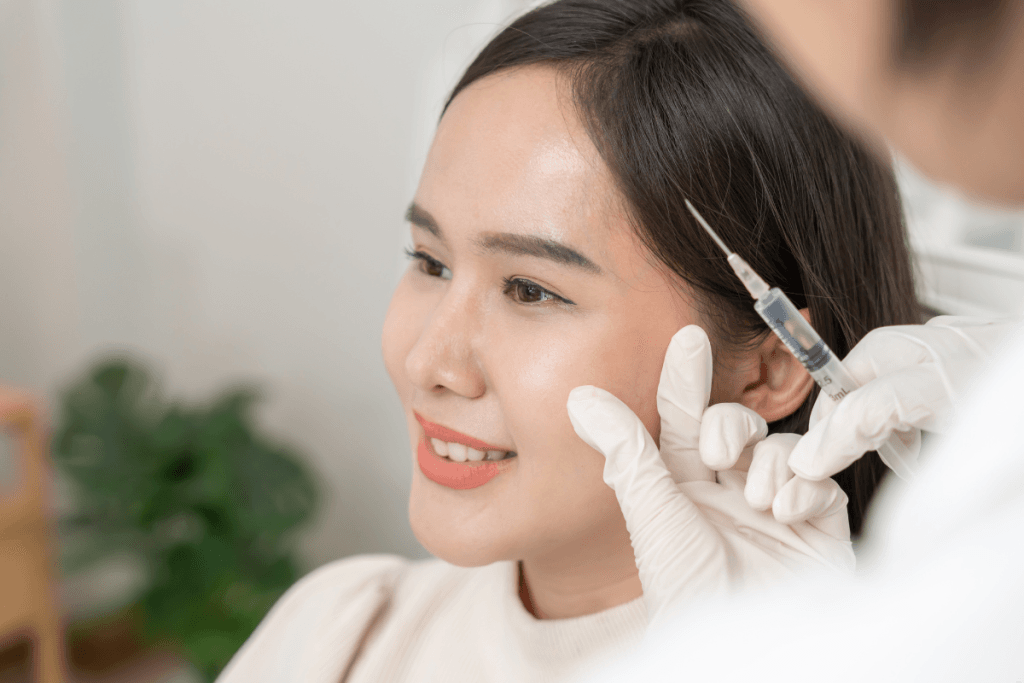
Skin quality treatments now sit alongside fillers, neuromodulators, and energy devices. For many practices, Rejuran skin booster injection is discussed as a “skin renewal” option rather than a volumizer. That framing changes how you screen, consent, document, and evaluate outcomes.
This briefing is written for licensed healthcare professionals and clinic teams. It focuses on mechanism concepts, route options, patient communication, and operational controls. It avoids dosing and patient-specific recommendations, which should follow local regulations and official labeling.
Use this as a structure for internal protocols, staff training, and procurement conversations. Align your approach with your medical director’s standards and your jurisdiction’s rules.
Key Takeaways
- Define treatment goals with “skin quality” endpoints, not volume change.
- Screen for contraindications and set expectations on downtime variability.
- Standardize photography and documentation for before-and-after consistency.
- Choose route and technique based on anatomy, risk, and workflow.
- Source only through credentialed, vetted distribution channels.
MedWholesaleSupplies supports credentialed clinical accounts and licensed healthcare professionals.
Rejuran Skin Booster Injection: What Clinics Mean By “Skin Renewal”
“Skin booster” is a broad umbrella. In day-to-day clinic language, it can mean microdroplet intradermal products, biorevitalization approaches, or hydration-focused injectables that aim to improve texture and luminosity. Rejuran injection is often grouped into this category because the discussion centers on skin quality rather than contouring.
When clinicians say Rejuran healer, they typically refer to a polynucleotide-based approach (sometimes discussed alongside Rejuran PDRN language in online forums). Polynucleotides are nucleic-acid fragments that are described as supporting tissue repair signaling. Because naming conventions vary by market, clinics should anchor decisions to the specific product’s IFU (instructions for use), ingredient list, and the distributor’s documentation.
If your team is benchmarking across brands, treat Rejuran healer injection as one example within a larger “regenerative/biostimulatory” conversation. You may also compare against HA skin boosters and other biorevitalizers. For an adjacent brand reference, see the product listing for Rejuran Healer, and keep the conversation focused on class-level fit and clinic workflow.
Mechanism And Product Class: Polynucleotide Signaling, Explained
Polynucleotides, PDRN, and “biostimulation” language
Rejuran polynucleotide therapy is commonly explained in terms of dermal support rather than immediate filling. In simple terms, polynucleotides are DNA/RNA-derived fragments that may influence the local tissue environment. You will also see PDRN (polydeoxyribonucleotide) referenced in the same space. In practice, clinics discuss these products as supporting repair pathways and skin barrier function over time, rather than creating instant structural lift.
For clinic teams, the operational implication is important. When a product’s value proposition relies on gradual change, the “success metrics” shift. You will rely more on standardized photography, skin texture scoring, and patient-reported outcomes. You will rely less on immediate mirror feedback after the appointment.
Where it fits among injectables and devices
Skin quality programs often combine multiple modalities across visits. Practices may pair polynucleotide approaches with hydration-focused injectables, collagen-stimulation strategies, or device-based treatments. If your staff needs a broader refresher on adjacent categories, the Advancements In Dermal Fillers overview can help frame where “skin boosters” sit operationally. You can also browse your clinic’s broader portfolio planning within the Dermal Fillers hub to map adjacent classes without conflating indications.
MedWholesaleSupplies sources brand-name products through screened and vetted distribution partners.
Route Options: Injection, Microneedling, And Topical Support
Teams often hear about three pathways: injection, microneedling delivery, and topical “serum” support. Patient questions may be influenced by social posts, including Rejuran microneedling reddit threads and informal “Rejuran healer reviews.” That chatter can blur the line between professional-use injectables and topical cosmetics.
A practical way to manage expectations is to separate (1) product class, (2) route of administration, and (3) evidence quality. When you compare Rejuran microneedling vs injection, the discussion is less about brand and more about depth, distribution, and risk controls. For a route-level refresher, see Skin Boosters Injections, which outlines common clinic frameworks.
| Approach | What clinics usually aim for | Operational considerations |
|---|---|---|
| Intradermal injection | Targeted placement, controlled dosing by clinician | Higher documentation burden; stronger need for consent and asepsis |
| Microneedling-assisted delivery | Diffuse coverage for texture and tone goals | Device setup, post-procedure care scripts, and consistent parameters |
| Topical support | Adjunct hydration and barrier support | Avoid implying equivalence to injectable outcomes |
In day-to-day operations, you will also see “hybrid” planning. Some clinics use injection for focal areas and reserve microneedling for broader zones. When you evaluate Rejuran skin booster injection alongside Rejuran skin booster microneedling, document that they are different routes with different risk profiles, even if the brand name appears similar.
If your patients compare across biorevitalizers, it helps to have neutral language ready. For example, the hydration-first approach discussed in Viscoderm Hydrobooster may lead to different counseling than collagen-stimulation approaches. Likewise, the modality selection points summarized in Jalupro Vs Profhilo can help your staff explain why “skin booster” is not one uniform category.
Patient Selection, Contraindications, And Informed Consent
Selection and consent should be framed around skin quality goals and realistic variability. Patients asking about Rejuran for acne scars, pores, or dullness may bring strong expectations from curated photos. Your role is to normalize that response ranges differ with baseline skin health, concurrent treatments, and adherence to post-procedure guidance.
Contraindications and precautions for any injectable treatment depend on the specific product labeling and local regulations. Many clinics use a conservative screening workflow that considers active skin infection, uncontrolled inflammatory dermatoses, history of severe hypersensitivity, bleeding risk factors, and pregnancy or breastfeeding status. For delicate zones such as Rejuran under eye treatment, your documentation should explicitly note anatomy-related risk counseling and alternatives discussed.
Why it matters: Standardized consent language reduces misunderstandings when results evolve gradually.
Rejuran injection side effects discussed in practice settings often overlap with common injection-related events. These can include transient erythema (redness), edema (swelling), tenderness, bruising, and palpable irregularities. Counsel in plain language and document the discussion. Escalation instructions should be standardized at the clinic level, not improvised chairside.
Regulatory status also shapes consent wording. If patients ask “Is Rejuran FDA approved,” avoid assumptions. In the US, many aesthetic injectables and skin boosters have specific cleared or approved uses, while others may not be authorized for cosmetic injection. If your practice is considering Rejuran injection USA sourcing, confirm the exact product’s status and permitted use cases through your compliance process and distributor documentation.
MedWholesaleSupplies provides authentic, brand-name products intended for professional clinical use.
Protocol Design Without Overpromising Results
Protocol discussions usually cover treatment spacing, reassessment points, and combination sequencing. Terms like Rejuran treatment protocol and Rejuran session frequency are used widely online, but real-world plans vary. Your medical director should define what “standard course” means in your practice, which endpoints justify continuation, and what changes trigger a pause or referral.
Because these programs often target gradual skin quality change, plan how you will talk about a Rejuran results timeline. Avoid promising specific timelines or magnitude of improvement. Instead, document when you will re-evaluate (for example, after a defined number of visits) and what outcomes you will measure. Use consistent lighting and camera distance for Rejuran injection before and after photos, and record any concurrent treatments that could confound attribution.
Quick tip: Use the same camera preset and background for every photo set.
Build your clinic scripts around “expected experiences,” not guaranteed outcomes. That includes likely downtime patterns. Rejuran downtime can be minimal for some patients and longer for others, especially if microinjections leave visible papules or bruising. Provide a written aftercare summary and document that it was reviewed. Keep Rejuran aftercare instructions product- and procedure-specific, and align them with your standard infection-control policies.
- Unclear endpoints: no shared definition of success.
- Inconsistent photos: different lighting and angles.
- Stacking treatments: confounded attribution of outcomes.
- Overbroad promises: “scar removal” language without nuance.
- Loose follow-up: no standardized reassessment visit.
For staff education, it can help to compare Rejuran vs PRP at a concept level. PRP (platelet-rich plasma) is autologous and workflow-heavy, with centrifugation and chain-of-custody steps. Polynucleotide products are manufactured and sourced, shifting the operational risk toward procurement verification and storage controls.
Clinic Operations Checklist: Sourcing, Verification, And Records
Operational readiness is often the deciding factor for adding a new injectable category. Start by mapping the full pathway: credential verification, product receipt, lot tracking, storage, and documentation. Clarify who owns each step, and where handoffs occur between front desk, nursing, injectors, and inventory staff.
Use conservative language in purchasing and patient-facing materials. Clinics should avoid equating cosmetic “ampoules” with prescription or professional injectables. If staff reference Rejuran healer turnover ampoule or Rejuran healer ampoule, ensure they can explain whether they mean an injectable presentation, a topical cosmetic, or a brand-adjacent term used online. That clarity prevents charting errors and reduces audit risk.
Procurement and documentation checklist
- Verify credentials: confirm licensed account requirements.
- Confirm product identity: match name, lot, and paperwork.
- Document receipt: date, condition, and responsible staff.
- Set storage controls: follow manufacturer instructions and clinic SOPs.
- Track lots: enable event reporting and recalls.
- Standardize charting: product, route, site, and counseling notes.
- Audit periodically: reconcile administered units and inventory counts.
If your workflow includes centralized ordering, align purchasing with reliable US logistics and your internal receiving schedule. Avoid last-minute substitutions that complicate traceability. When you add Rejuran skin booster injection to your menu, plan how your EHR templates, consent forms, and photo storage will be updated before the first appointment.
For cross-training, some practices keep a small “comparison shelf” of adjacent product classes to help staff answer questions without making claims. Examples include Rejuran HB as a related brand reference, and category-adjacent items like Profhilo Structura. If patients bring up alternatives, your team can also reference educational overviews such as Restylane Skinboosters Vital for hydration-centered counseling, or Nucleofill Treatment for another biostimulatory framing.
Authoritative Sources
Because “skin booster” is a marketing umbrella, the most reliable references are regulators, official labeling, and device-specific guidance. Build your internal policy around what is authorized in your jurisdiction and what your medical director permits. If a patient asks about approvals, avoid general statements and document what you verified for the specific product.
For US-based clinics, these FDA pages are helpful starting points for category-level context. They do not replace product-specific labeling, but they help staff use accurate language about devices and injectables.
- For FDA overview of category risks and claims: FDA Dermal Fillers
- For device considerations in microneedling workflows: FDA Microneedling Devices
Further reading: if you are updating patient education language, review your “skin quality” terminology against current content in Beauty Trends and ensure it matches your clinic’s consent forms.
This content is for informational purposes only and is not a substitute for professional medical advice.