
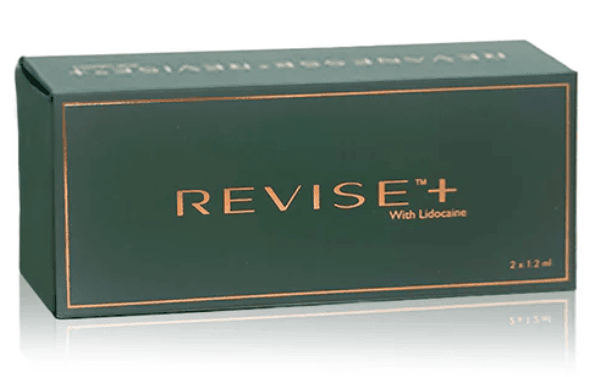
Revanesse® Revise™ w/ Lidocaine
Order Revanesse® Revise™ w/ Lidocaine for Clinics
Dermal Filler
$259.00
You save
Description
Revanesse® Revise™ w/ Lidocaine is a cross-linked hyaluronic acid injectable gel formulated with lidocaine for professional aesthetic use. Licensed clinics, med spas, and healthcare professionals can order it for treatment-room workflows that require sterile handling, controlled placement, and consistent gel behavior. The integrated anesthetic supports procedural comfort while allowing trained injectors to work within established facial-contouring protocols.
This Revanesse Revise Lidocaine dermal filler is intended for use by qualified professionals who assess anatomy, treatment goals, injection plane, and patient suitability before administration. Med Wholesale Supplies serves B2B medical and aesthetic practices with brand-name products sourced through vetted distribution channels for licensed clinic use.
Provider Pricing and Clinic Ordering
Revanesse Revise provider pricing is available to verified professional accounts. Sign in to view current cost, unit availability, and ordering options for clinic procurement. Practices can align purchases with scheduled injectable sessions, internal approval processes, and multi-location inventory needs without using patient-facing insurance or retail pharmacy workflows.
Because aesthetic inventory often depends on procedure mix, reorder timing, and staff training, clinics should match purchase quantities to expected treatment volume and storage capacity. Lot numbers, expiration dates, and packaging integrity should be documented during intake according to clinic policy. When required, shipments use temperature-controlled handling when required and tracked US delivery.
Quick tip: Assign one team member to verify lot, expiry, and outer packaging condition before units move into treatment-room stock.
What the HA Gel Is Designed to Do
Revanesse® Revise is a hyaluronic acid dermal filler with lidocaine. Hyaluronic acid is a water-binding polymer used in aesthetic injectables to add soft-tissue volume, refine contours, and support smoothing of folds or wrinkles when appropriate for the selected treatment area and technique. The cross-linked matrix helps the gel maintain structure after placement, while the lidocaine component provides local anesthetic effect during injection.
The gel’s smooth, cohesive texture supports controlled extrusion and measured placement. This matters in clinic because handling characteristics affect injection feel, molding, and how easily trained staff can integrate a filler into established protocols. Providers should use this product only as directed by the manufacturer’s labeling, professional training, and patient-specific assessment.
For broader clinical planning across the same brand family, practices can browse the Revanesse product range. Teams building an injectable formulary may also use the article on Revanesse filler applications to support internal discussion, while continuing to rely on official labeling for actual use decisions.
Professional Use and Treatment-Room Fit
Clinics use HA fillers in treatment plans that may address facial contour refinement, proportion balancing, or soft-tissue augmentation. Revanesse Revise with Lidocaine fits workflows where an injector wants a cohesive HA gel with integrated anesthetic and predictable handling. Final product selection should consider patient history, skin quality, facial anatomy, target plane, injection method, and the practitioner’s training.
Common operational considerations include whether the gel’s consistency suits the intended technique, whether the needle or cannula approach aligns with clinic protocol, and how staff will document the product in the medical record. This preparation is supplied for single-patient use in sterile packaging; opened or compromised units should not be returned to general inventory.
- Cross-linked HA matrix for cohesive placement.
- Lidocaine included for local anesthetic effect.
- Smooth extrusion profile for controlled injection technique.
- Sterile, single-use presentation for professional settings.
- Lot and expiry information to support clinic documentation.
- Use within labeled directions and professional training.
Composition, Packaging, and Handling
Revanesse Revise injectable gel with lidocaine contains cross-linked hyaluronic acid in a sterile gel vehicle with lidocaine hydrochloride. The complete excipient list and any device-specific handling instructions should be verified against the manufacturer’s insert before clinical use. Do not rely on shelf labels or reorder notes as a substitute for the official package information.
Each unit should be inspected at receipt. Confirm the outer packaging is intact, tamper-evident seals are not compromised, and product identifiers match the purchase record. The Revanesse Revise syringe is intended for one patient and should be disposed of according to sharps and biomedical waste procedures used by the facility.
| Clinic checkpoint | Why it matters |
|---|---|
| Packaging integrity | Helps confirm the unit remains suitable for sterile clinical handling. |
| Lot and expiration | Supports traceability, charting, and inventory rotation. |
| Storage instructions | Protects product quality before use. |
| Manufacturer insert | Provides the official directions, contraindications, and handling guidance. |
Store the product according to the manufacturer’s instructions and avoid conditions that could expose it to excessive heat, freezing, or damaged packaging. Use a first-expiry, first-out rotation system so staff can reduce waste and maintain accurate procedure-room counts.
Safety, Contraindications, and Patient Assessment
Dermal fillers are medical devices used by trained professionals, and safe outcomes depend on appropriate patient selection, sterile technique, anatomical knowledge, and recognition of adverse events. Providers should review the official insert before use and screen for relevant contraindications, including known hypersensitivity to product components such as lidocaine when applicable to the labeled product.
Expected post-injection reactions with HA fillers may include temporary redness, swelling, tenderness, bruising, firmness, itching, or discoloration at the injection site. Serious complications are uncommon but can include infection, vascular occlusion, tissue injury, visual symptoms, nodules, or inflammatory reactions. Clinics should have protocols for urgent assessment, escalation, and post-procedure follow-up when concerning symptoms occur.
Important screening questions often include prior filler history, allergy history, active skin infection or inflammation near the treatment site, bleeding tendency, relevant medications, pregnancy or breastfeeding status, and history of immune or inflammatory conditions. These factors do not replace professional judgment; they help the injector decide whether treatment, product choice, timing, or referral should change.
The FDA describes dermal fillers as injectable medical devices and advises that they be administered by licensed healthcare professionals with appropriate training. The American Society for Dermatologic Surgery also emphasizes professional assessment and informed discussion before soft-tissue filler treatment.
How It Compares With Other Fillers
No HA filler is universally better than another. Revanesse, Juvéderm, Restylane, Perfectha, and other filler families use different gel technologies, rheology profiles, labeling, and product ranges. For clinic procurement, the better question is whether a specific gel’s handling, indication, packaging, training requirements, and patient-fit profile match the procedure being planned.
Practices that already use several HA products may stock Revanesse Revise as one option within a broader injectable menu. For brand-specific comparison planning, see Revanesse and Juvéderm selection considerations. For a wider view of filler categories and placement decisions, the practical dermal filler selection guide can help teams organize internal training conversations.
When a similar Revanesse product is needed for a different aesthetic workflow, consider related items such as Revanesse Contour with Lidocaine, Revanesse Ultra Lido, or Revanesse Kiss Lido. Product choice should follow the manufacturer’s labeling and the treating professional’s assessment.
Duration, Results Planning, and Follow-Up
Search interest around Revanesse often includes how long filler lasts and what treatment cost looks like. Duration varies by product, treatment area, injection technique, tissue mobility, metabolism, and patient factors. Clinics should avoid promising a fixed timeline and instead document the treatment plan, product used, injection sites, and planned follow-up interval.
Cost discussions also vary by practice model, number of syringes used, staff credentials, geographic market, and whether additional procedures are performed in the same visit. For B2B ordering, Revanesse Revise price refers to provider purchasing cost after account sign-in, not the patient’s final treatment fee. The clinic’s own professional assessment determines how product usage translates into procedure pricing.
For patient-facing education prepared by your practice, keep expectations factual: swelling and bruising may affect early appearance, final assessment should wait until the clinician’s chosen follow-up point, and any unusual pain, color change, visual symptom, or progressive swelling should be escalated promptly.
Inventory Planning for Licensed Practices
Revanesse Revise wholesale ordering can support clinics that need repeatable purchasing for aesthetic schedules. A practical inventory plan accounts for average monthly syringe use, lead time, expiration rotation, injector preferences, and backup products approved by the medical director or supervising clinician. Avoid overstocking products that may expire before use.
Staff should separate clinical decision-making from purchasing convenience. If a preferred filler is temporarily unsuitable for a patient or procedure, substitution should be based on labeling, anatomical goals, and injector judgment rather than inventory pressure. Document any product change in the chart and confirm that consent materials reflect the product actually used.
- Track usage by injector, treatment area, and product family.
- Keep unopened units in their original packaging until use.
- Record lot and expiration details in patient documentation.
- Rotate stock by expiration date to reduce waste.
- Train staff to quarantine damaged or questionable packaging.
- Review reorder levels before high-volume clinic days.
Related Education and Supplies
Clinics expanding an injectable menu may benefit from structured staff education on product selection, comfort measures, and procedural planning. The article on lidocaine in dermal filler procedures explains why anesthetic-containing fillers are used in many aesthetic settings. For a broader procedure map, see common facial filler uses.
Within the Revanesse family, practices may also assess Revanesse Pure Lido or Revanesse Shape Lido when those products align with labeling and clinic protocols. Keep related products organized by intended use, injector familiarity, and medical-director approval rather than by brand alone.
Authoritative Sources
- Revanesse manufacturer information
- FDA dermal filler information
- American Society for Dermatologic Surgery soft-tissue filler overview
This content is for informational purposes only and is not a substitute for professional medical advice.
Frequently Asked Questions
Who can order Revanesse® Revise™ w/ Lidocaine?
This product is intended for licensed clinics, med spas, and healthcare professionals using dermal fillers in professional aesthetic settings. Account verification may be required before provider pricing and ordering functions are available.
Does Revanesse Revise contain lidocaine?
Yes. Revanesse® Revise™ w/ Lidocaine is formulated with lidocaine, a local anesthetic component used to support comfort during injection. Providers should review the official insert for ingredient details and contraindications.
How should clinics handle this product on receipt?
Inspect the outer packaging, confirm lot and expiration details, and store the product according to the manufacturer’s instructions. Quarantine any unit with damaged packaging or questionable seals until clinic quality review is complete.
Is Revanesse better than Juvéderm or other HA fillers?
No filler is universally better for every case. Selection depends on the product’s labeling, gel characteristics, target area, injection technique, patient assessment, and injector training. Clinics often stock more than one HA filler family for different workflows.
How long does Revanesse filler last?
Duration varies by product, treatment area, injection technique, tissue mobility, metabolism, and patient factors. Clinics should avoid fixed promises and provide follow-up guidance based on the treating professional’s protocol.
Specifications
- Main Ingredient: Cross-Linked Hyaluronic Acid
- Manufacturer: Prollenium Medical Technologies Inc.
- Drug Class: Dermal Filler
- Generic Name: hyaluronic acid (HA)
- Package Contents: 1.2mL x 2 Pre-Filled Syringes
- Storage Requirements: Room Temperature (2℃~25℃)
- Main Usage: Volume Filler
About the Brand
Revanesse
Revanesse Versa is a respected medical brand that provides a variety of dermal fillers to suit the requirements of its customers. Whether one needs to diminish fine lines or restore facial volume, Revanesse Versa has the answer. It's straightforward to buy Revanesse Versa from our online store, medwholesalesupplies.com. At medwholesalesupplies.com, we acknowledge the significance of consistent quality in medical supplies. That's why we only showcase items from trusted brands such as Revanesse Versa. When you buy Revanesse from our platform, you are assured of a high-quality, authentic product. Besides guaranteeing quality, purchasing Revanesse from medwholesalesupplies.com comes with the ultimate convenience. Our website is user-friendly, ensuring that locating and buying the Revanesse products you need is a breeze. Plus, our pricing is competitively set to ensure you get the best return on your investment. Therefore, if you need a trustworthy supplier for your Revanesse purchase, medwholesalesupplies.com is your perfect solution.
Browse Revanesse Products
Here to help
Questions about ordering, delivery or products? You can email our team here or call now at 1-800-630-9757 and be connected with your dedicated Account Manager
Related Products
Prolia® (International English)
Prescription Medication
$529.00 - $549.00
You save
You save
Evenity® (English Alternative)
Injectable Medication
$1,229.00 - $1,299.00
You save
You save
Intraline® For Men
Dermal Filler
$59.00 - $79.00
You save
You save
RejuvaNAD+ Pro
Injectable Medication
$237.00 - $249.00
You save
You save
Related Articles
Prednisone in Clinical Care: Uses, Risks, and Monitoring
Prednisone is a prescription systemic corticosteroid used to reduce inflammation or suppress immune activity in…
Lip Fillers Swelling Stages: Timeline, Safety, and Follow-Up
Lip fillers swelling stages usually follow a short inflammatory course: swelling appears soon after injection,…
Hypopigmentation of the Skin: Assessment and Care
Hypopigmentation of the skin means one or more areas look lighter than the surrounding skin.…
Radiesse vs Sculptra: Selection Factors for Clinics
Radiesse vs Sculptra is best understood as a comparison between two collagen-stimulating injectables with different…
Hyaluronic Acid Under-Eye Filler: Safety and Workflow
Hyaluronic acid under-eye filler is an injectable soft-tissue filler used by trained aesthetic clinicians to…
Dermal Filler Types: Materials, Uses, and Clinic Fit
Dermal filler types are usually grouped by their base material, tissue behavior, and expected role…
What Is Dysport? Clinical Uses, Safety, and Workflow
For clinic teams asking what is Dysport, the short answer is simple: Dysport is a…
Biostimulators in Aesthetic Care: Selection and Safety
Biostimulators are injectable aesthetic products used to encourage a controlled tissue response, often involving new…