
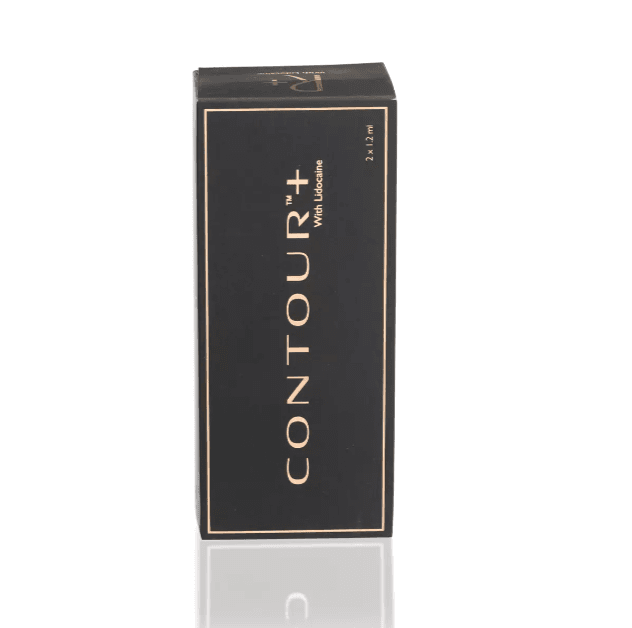
Revanesse® Contour™ w/ Lidocaine
Order Revanesse® Contour™ with Lidocaine for Clinics
Dermal Filler
$259.00
You save
Description
Revanesse® Contour™ w/ Lidocaine is a hyaluronic acid dermal filler used by licensed injectors for structural facial contouring and volume-focused aesthetic protocols. Licensed clinics, med spas, and healthcare professionals can order it as a professional-use clinic supply with documentation, lot traceability, and US distribution support. The cohesive gel is designed for controlled placement in treatment-room workflows where projection, shape retention, and procedural comfort matter.
Clinic Ordering, Price, and Supply Planning
Clinics can buy Revanesse® Contour™ with Lidocaine through a professional account and view current contract or volume pricing during ordering. Revanesse® Contour™ price and cost can vary by purchasing tier, allocation, and ordering schedule, so practices should align quantity with upcoming treatment calendars rather than relying on a fixed public price.
For multi-provider practices, predictable procurement helps standardize documentation, inventory rotation, and room setup. Each unit should be matched to the treatment plan, professional training level, and manufacturer instructions for use. Account verification may apply for professional-use ordering, and clinic documentation should be maintained according to internal compliance procedures.
Quick tip: Record lot number, expiration date, injector, treatment area, and product quantity in the patient chart immediately after use.
What the Filler Is and How It Works
Revanesse® Contour™ with Lidocaine is a cross-linked hyaluronic acid gel. Hyaluronic acid, often shortened to HA, is a water-binding molecule used in soft-tissue fillers to add volume and support contour definition. Cross-linking helps the gel maintain structure after placement, while the integrated lidocaine can improve procedural comfort during injection.
The product is intended for administration by qualified medical professionals using appropriate injection technique. Its cohesive consistency supports controlled extrusion, placement precision, and smooth integration into aesthetic plans that require contour support. For clinics building broader HA protocols, the full Revanesse product range can help teams evaluate related formulations within the same brand family.
Revanesse® Contour™ filler with Lidocaine is commonly positioned in clinic protocols for contour emphasis rather than superficial hydration or fine-line correction. Product choice should reflect the patient’s anatomy, tissue quality, treatment area, medical history, and injector experience.
Professional Applications in Aesthetic Protocols
In practice, this class of filler is used for facial contouring, structural volume support, and profile harmonization when a robust HA gel is appropriate. Clinics may consider it for areas where projection and shape are central to the plan, such as midface support, chin contouring, jawline definition, or deeper facial volume work. The exact indication and placement depth should follow the manufacturer’s instructions and the injector’s clinical judgment.
Treatment outcomes depend on anatomy, technique, injection plane, product quantity, and post-procedure management. Some patients may metabolize HA fillers faster than others, so duration can vary. Clinics should avoid promising a fixed result length and should instead document baseline assessment, treatment goals, and follow-up timing.
For broader decision support on HA filler selection, the article on types of dermal fillers for facial volume rejuvenation explains how filler categories differ across volume, texture, and treatment planning. Clinics comparing brand families can also review Revanesse vs Juvederm for practical comparison points without treating one product as universally better.
Key Features for Treatment-Room Use
- Cross-linked HA matrix supports contour-focused volume and structural placement.
- Cohesive gel behavior helps experienced injectors control extrusion and shaping.
- Integrated lidocaine supports comfort during injection procedures.
- Sterile, single-use presentation supports professional treatment-room protocols.
- Lot and expiry information help clinics maintain product traceability.
- Non-animal hyaluronic acid source supports biocompatible HA filler use.
- Manufacturer-original packaging supports inventory verification before use.
- Professional-use positioning fits clinic, med spa, and aesthetic practice workflows.
Why it matters: Consistent documentation and single-use handling reduce avoidable workflow errors in busy aesthetic practices.
Composition, Lidocaine, and Handling Considerations
The preparation contains cross-linked hyaluronic acid in an injectable sterile gel with lidocaine incorporated for comfort. Lidocaine is a local anesthetic, and its presence should be considered when reviewing patient allergies, sensitivities, medication history, and prior anesthetic reactions. Clinics should not use a lidocaine-containing filler in a patient with a known relevant hypersensitivity.
Handling should follow the manufacturer’s instructions for use, including storage, inspection, sterile technique, and disposal. Do not use units with damaged packaging, compromised sterility indicators, unclear lot information, or expired dating. Clinics should maintain separation between unopened inventory, opened treatment-room supplies, and used sharps or contaminated materials.
Accessory selection can affect precision and tissue trauma. Clinics often plan needle or cannula use according to the treatment area, injection plane, and injector preference. For procedure supply planning, the article on lidocaine benefits in dermal filler procedures explains why integrated anesthetic is relevant to patient comfort and workflow.
Safety, Contraindications, and Monitoring
Dermal fillers are medical devices that require trained administration and appropriate patient selection. Potential adverse events can include injection-site pain, swelling, redness, bruising, tenderness, firmness, lumps, asymmetry, itching, discoloration, and infection. More serious complications, though less common, can include vascular occlusion, tissue injury, visual disturbance, hypersensitivity reactions, or inflammatory nodules.
Clinics should screen for relevant allergies, active infection or inflammation near the treatment area, bleeding risk, immune-mediated conditions, recent procedures, pregnancy or breastfeeding considerations, and medications that may increase bruising. Patients should receive clear aftercare instructions and guidance on symptoms that require urgent contact, especially severe pain, skin blanching, mottling, vision changes, or signs of infection.
Professional protocols should include emergency preparedness for filler complications, including recognition of vascular compromise and escalation procedures. Staff should understand documentation requirements, product traceability, consent, photography standards if used by the clinic, and post-treatment communication. The FDA’s dermal filler safety information provides regulator-backed context on benefits, risks, and patient counseling considerations.
Packaging, Traceability, and Logistics
Revanesse® Contour™ clinic supply should remain in manufacturer-original packaging until prepared for use. Each unit should display lot and expiration information, and clinics should reconcile those identifiers against receiving records. This supports internal audits, post-treatment follow-up, and any manufacturer or distributor communication that may be needed later.
Orders are managed for professional clinic use with reliable US logistics, including temperature-controlled handling when required and tracked US delivery. Receiving staff should inspect packages promptly, record any issue according to clinic policy, and store units according to the manufacturer’s recommended conditions. Avoid transferring products between sites without maintaining chain-of-custody documentation.
For inventory planning, organize stock by expiration date and rotate older units first. Multi-location practices may benefit from centralized product logs so injectors across sites can work from the same product identity, lot-tracking, and treatment documentation standards.
How It Compares Within the Revanesse Line
Clinics comparing Revanesse® Contour™ with Lidocaine against other Revanesse fillers should focus on treatment goal, gel behavior, injection depth, and the degree of contour support needed. A firmer or more cohesive contouring gel may be preferred for projection-focused work, while other HA gels may fit softer correction, lips, superficial refinement, or hydration-focused use.
Within the same brand family, Revanesse Shape with Lidocaine may be evaluated for structural shaping protocols, while Revanesse Ultra with Lidocaine may fit clinics seeking a different HA filler option for their menu. For lip-focused protocols, Revanesse Kiss with Lidocaine may be considered as a related product rather than a direct substitute for contouring work.
There is no single filler that is better for every case. The practical comparison is whether the product’s consistency, intended use, and handling profile match the anatomy and aesthetic endpoint. Clinics can use Revanesse filler precision in aesthetics to support staff discussions about feature-specific planning.
Bulk Purchasing and Professional Account Support
Revanesse® Contour™ wholesale ordering supports clinics that need consistent supply for recurring treatment sessions. Bulk purchasing can help practices reduce ad hoc ordering, coordinate multi-provider schedules, and maintain a consistent formulary. Current bulk pricing is visible through professional account access rather than generalized public estimates.
Before increasing order volume, clinics should review historical product use, seasonal demand, staff training, storage capacity, and expiration management. A conservative par level can prevent both last-minute shortages and excess inventory. Product substitutions should be clinically justified and documented, especially when switching between gels with different firmness, flow, or intended treatment roles.
Practices building a complete Revanesse menu may also evaluate Revanesse Revise with Lidocaine or Revanesse Pure with Lidocaine for adjacent protocols. Related products should be chosen for their intended role, not used interchangeably without reviewing instructions, anatomy, and injector training.
Authoritative Sources
Professional teams should use manufacturer instructions, regulator guidance, and clinic protocols when evaluating dermal filler use. The following sources support product-class understanding and safety review:
- Revanesse manufacturer information
- FDA dermal filler safety information
- Hyaluronic acid chemical reference
Ready to stock upcoming treatment sessions? Sign in to your professional account to order Revanesse® Contour™ w/ Lidocaine, view current clinic pricing, and coordinate supply planning for licensed aesthetic practice use.
This content is for informational purposes only and is not a substitute for professional medical advice.
Frequently Asked Questions
What is Revanesse® Contour™ with Lidocaine used for in clinics?
It is a cross-linked hyaluronic acid dermal filler used by licensed injectors for structural facial contouring and volume-focused aesthetic protocols. Treatment area, injection plane, and quantity should follow the manufacturer’s instructions and the injector’s clinical assessment.
Does Revanesse® Contour™ contain lidocaine?
Yes. This preparation includes lidocaine, a local anesthetic used to support comfort during injection. Clinics should screen for lidocaine allergy or sensitivity before treatment.
How long does Revanesse® Contour™ last?
Duration can vary by patient anatomy, treatment area, injection technique, product quantity, metabolism, and aftercare. Clinics should avoid fixed guarantees and set follow-up timing based on the individual treatment plan.
Is Revanesse® better than Juvéderm?
Neither brand is universally better for every case. Clinics should compare gel characteristics, intended use, treatment area, injector preference, and patient-specific anatomy when choosing between Revanesse, Juvéderm, or another HA filler.
How should clinics document Revanesse® Contour™ use?
Document the product name, lot number, expiration date, quantity used, injector, treatment area, technique notes, consent, and any immediate reactions. This supports traceability, follow-up care, and internal compliance.
Can clinics order Revanesse® Contour™ in bulk?
Professional accounts can view available purchasing tiers and current clinic pricing during ordering. Bulk purchasing should be matched to treatment volume, storage capacity, expiration management, and provider training.
Specifications
- Main Ingredient: Hyaluronic Acid/Lidocaine
- Manufacturer: Prollenium Medical Technologies Inc.
- Drug Class: Dermal Filler
- Generic Name: Hyaluronic Acid gel and Lidocaine
- Package Contents: 1mL x 2 Pre-Filled Syringes
- Storage Requirements: Room Temperature (2℃~25℃)
- Main Usage: Volume Filler
About the Brand
Revanesse
Revanesse Versa is a respected medical brand that provides a variety of dermal fillers to suit the requirements of its customers. Whether one needs to diminish fine lines or restore facial volume, Revanesse Versa has the answer. It's straightforward to buy Revanesse Versa from our online store, medwholesalesupplies.com. At medwholesalesupplies.com, we acknowledge the significance of consistent quality in medical supplies. That's why we only showcase items from trusted brands such as Revanesse Versa. When you buy Revanesse from our platform, you are assured of a high-quality, authentic product. Besides guaranteeing quality, purchasing Revanesse from medwholesalesupplies.com comes with the ultimate convenience. Our website is user-friendly, ensuring that locating and buying the Revanesse products you need is a breeze. Plus, our pricing is competitively set to ensure you get the best return on your investment. Therefore, if you need a trustworthy supplier for your Revanesse purchase, medwholesalesupplies.com is your perfect solution.
Browse Revanesse Products
Here to help
Questions about ordering, delivery or products? You can email our team here or call now at 1-800-630-9757 and be connected with your dedicated Account Manager
Related Products
Evenity® (English Alternative)
Injectable Medication
$1,229.00 - $1,299.00
You save
You save
Intraline® For Men
Dermal Filler
$59.00 - $79.00
You save
You save
RejuvaNAD+ Pro
Injectable Medication
$237.00 - $249.00
You save
You save
Teosyal® RHA 4
Aesthetic Surgery Product
$259.00 - $279.00
You save
You save
Related Articles
Prednisone in Clinical Care: Uses, Risks, and Monitoring
Prednisone is a prescription systemic corticosteroid used to reduce inflammation or suppress immune activity in…
Lip Fillers Swelling Stages: Timeline, Safety, and Follow-Up
Lip fillers swelling stages usually follow a short inflammatory course: swelling appears soon after injection,…
Hypopigmentation of the Skin: Assessment and Care
Hypopigmentation of the skin means one or more areas look lighter than the surrounding skin.…
Radiesse vs Sculptra: Selection Factors for Clinics
Radiesse vs Sculptra is best understood as a comparison between two collagen-stimulating injectables with different…
Hyaluronic Acid Under-Eye Filler: Safety and Workflow
Hyaluronic acid under-eye filler is an injectable soft-tissue filler used by trained aesthetic clinicians to…
Dermal Filler Types: Materials, Uses, and Clinic Fit
Dermal filler types are usually grouped by their base material, tissue behavior, and expected role…
What Is Dysport? Clinical Uses, Safety, and Workflow
For clinic teams asking what is Dysport, the short answer is simple: Dysport is a…
Biostimulators in Aesthetic Care: Selection and Safety
Biostimulators are injectable aesthetic products used to encourage a controlled tissue response, often involving new…