
Description
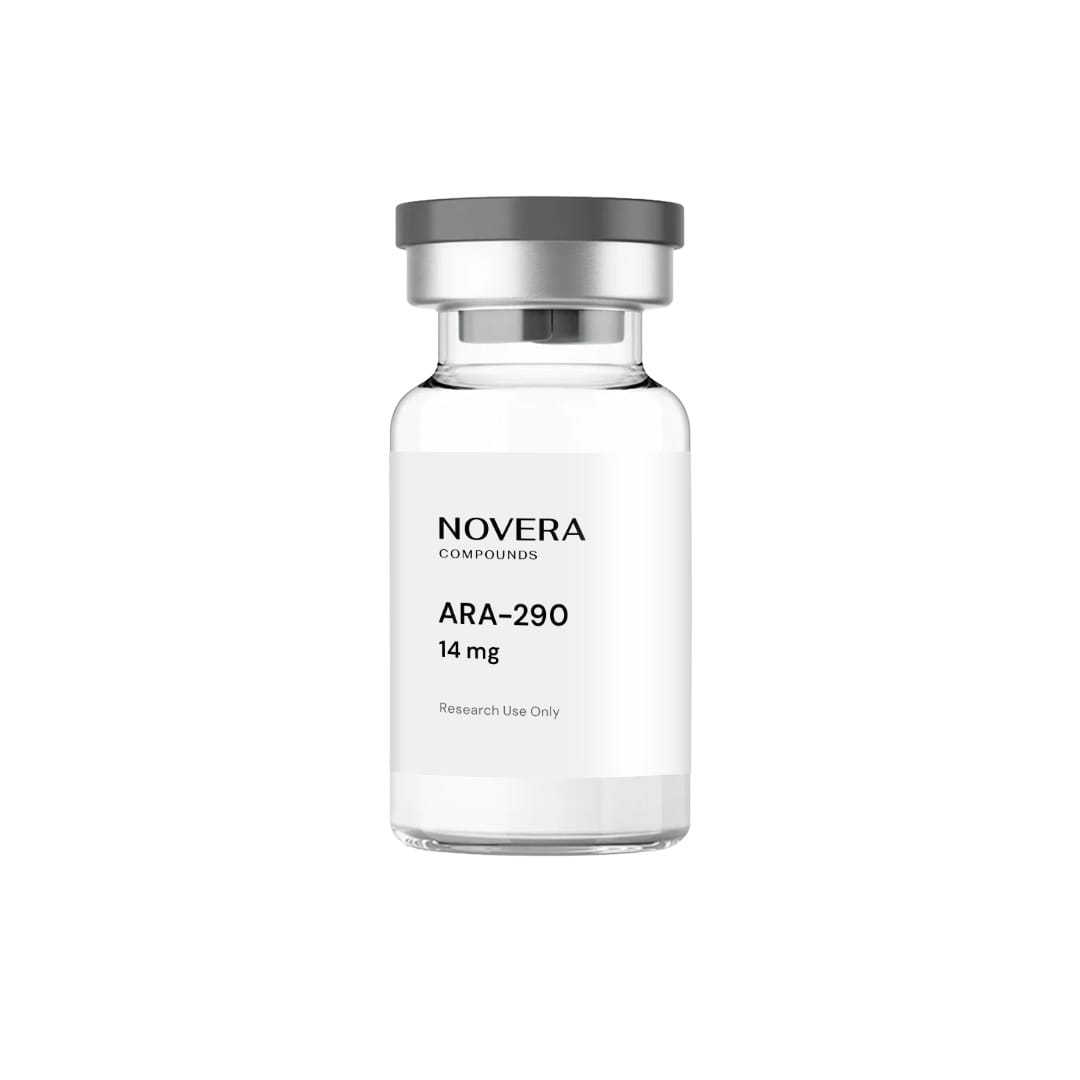
ARA-290 (also known by its investigational name cibinetide) is a synthetic 11-amino-acid peptide derived from the tissue-protective helix-B region of erythropoietin (EPO). It was engineered to retain EPO’s anti-inflammatory and tissue-protective signaling while removing the erythropoietic activity that stimulates red blood cell production. It is used in professional and laboratory settings where researchers are evaluating inflammation, nerve repair, or related investigational workflows. Licensed clinics and research accounts can order ARA-290 for practice or laboratory use, with careful attention to professional documentation, form verification, storage, and safety review. It has no FDA-approved human indication for general use, so accounts should treat ARA-290 as an investigational research peptide rather than a retail wellness supplement.
Before adding ARA-290 to inventory, define who will evaluate the product, how it fits the research or clinic protocol, and what records must be retained for purchasing, receipt, storage, and use. Product names in the broader market may refer to powders, lyophilized vials, or reconstituted solutions, but the account should match the active ingredient, quantity, sterility status, and packaging to the current item record before use.
How Clinics and Labs Can Order ARA-290
Ordering ARA-290 should begin with a professional-use or research-use assessment, not a consumer-style purchase. The account should identify the medical director, principal investigator, or supervising professional responsible for product evaluation, the staff member responsible for receiving inventory, and the internal protocol that explains why the peptide is being considered.
MedWholesaleSupplies serves licensed clinical and research accounts, so account records and practice-use context may be reviewed before an order proceeds. For broader peptide procurement, the Peptides category can help teams evaluate adjacent items, but each peptide still requires its own individual review.
Risk Framework and Safety Considerations
Questions about ARA-290’s effects in humans cannot be answered from approved labeling because there is no FDA-approved human label for general use. ARA-290 has been evaluated in Phase 2 human trials for sarcoidosis-associated small fiber neuropathy and diabetic neuropathy, and holds FDA orphan drug designation for the former, but development has not progressed to approval and its original sponsor ceased operations. Accounts should use a conservative risk framework, especially for any research involving live subjects, and should have institutional review or biosafety oversight in place before proceeding.
Why it matters: Phase 2 trial signals and orphan-drug designation do not replace informed consent (where applicable), institutional review, or adverse-event planning.
Forms, Strengths, and Product Verification
ARA-290 is marketed across the wider peptide space using terms such as ARA-290 powder, ARA-290 vial, cibinetide, ARA-290 14mg, and reconstituted ARA-290. Those descriptions should not be treated as confirmation of the format available for this item. The account should verify the active ingredient, form, quantity, purity (HPLC/COA), sterility status, and packaging against the current product record and supplier documents.
Storage, Handling, and US Logistics
Storage instructions should come from the product label, certificate of analysis, or distributor documentation. Peptides may be sensitive to heat, light, moisture, or reconstitution technique, so accounts should avoid assumptions based on another brand, compound, or market format.
Receiving staff should inspect packaging before releasing ARA-290 into inventory. Match the item to the purchase record, record lot and expiry information, note package condition, and place the product in the required storage environment (typically frozen or refrigerated, protected from light). For operational planning, accounts should factor in temperature-controlled handling and tracked US delivery requirements.
Related Peptides
Accounts evaluating ARA-290 alongside related tissue-repair or anti-inflammatory research compounds, or other investigational peptides in the Peptides category, should assess each item separately — combination or comparative research still requires individual documentation, sourcing verification, and risk review for every active ingredient involved.
Frequently Asked Questions
Can licensed clinics or labs order ARA-290 for professional use?
Licensed clinics, research accounts, and healthcare professionals can order ARA-290 for practice or laboratory use after completing the required account and professional-use review. The account should define responsible staff, retain product records, and document how the peptide fits its internal protocol.
Is ARA-290 FDA-approved for human treatment?
ARA-290 is not FDA-approved for general human use. It holds orphan drug designation for sarcoidosis-associated small fiber neuropathy and has been studied in Phase 2 trials, but accounts should treat it as an investigational compound and avoid patient-facing claims that imply proven or approved treatment outcomes.
What should accounts verify before ordering ARA-290?
Market listings may describe ARA-290 as powder, lyophilized vials, or reconstituted solution, sometimes under its research name cibinetide. Accounts should verify the actual form, strength, quantity, purity documentation (COA), sterility status, and storage requirements shown for the current product record.
Specifications
- Main Ingredient: Peptides
- Manufacturer:
- Drug Class:
- Generic Name: ARA-290 (cibinetide)
- Package Contents: 1 vial
- Storage Requirements:
- Main Usage:
Here to help
Questions about ordering, delivery or products? You can email our team here or call now at 1-800-630-9757 and be connected with your dedicated Account Manager
Related Products
Evenity® (English Alternative)
Injectable Medication
$1,229.00 - $1,299.00
You save
You save
Intraline® For Men
Dermal Filler
$59.00 - $79.00
You save
You save
RejuvaNAD+ Pro
Injectable Medication
$237.00 - $249.00
You save
You save
Teosyal® RHA 4
Aesthetic Surgery Product
$259.00 - $279.00
You save
You save
Related Articles
Prednisone in Clinical Care: Uses, Risks, and Monitoring
Prednisone is a prescription systemic corticosteroid used to reduce inflammation or suppress immune activity in…
Lip Fillers Swelling Stages: Timeline, Safety, and Follow-Up
Lip fillers swelling stages usually follow a short inflammatory course: swelling appears soon after injection,…
Hypopigmentation of the Skin: Assessment and Care
Hypopigmentation of the skin means one or more areas look lighter than the surrounding skin.…
Radiesse vs Sculptra: Selection Factors for Clinics
Radiesse vs Sculptra is best understood as a comparison between two collagen-stimulating injectables with different…
Hyaluronic Acid Under-Eye Filler: Safety and Workflow
Hyaluronic acid under-eye filler is an injectable soft-tissue filler used by trained aesthetic clinicians to…
Dermal Filler Types: Materials, Uses, and Clinic Fit
Dermal filler types are usually grouped by their base material, tissue behavior, and expected role…
What Is Dysport? Clinical Uses, Safety, and Workflow
For clinic teams asking what is Dysport, the short answer is simple: Dysport is a…
Biostimulators in Aesthetic Care: Selection and Safety
Biostimulators are injectable aesthetic products used to encourage a controlled tissue response, often involving new…