

- You must be logged in to add items to the cart.
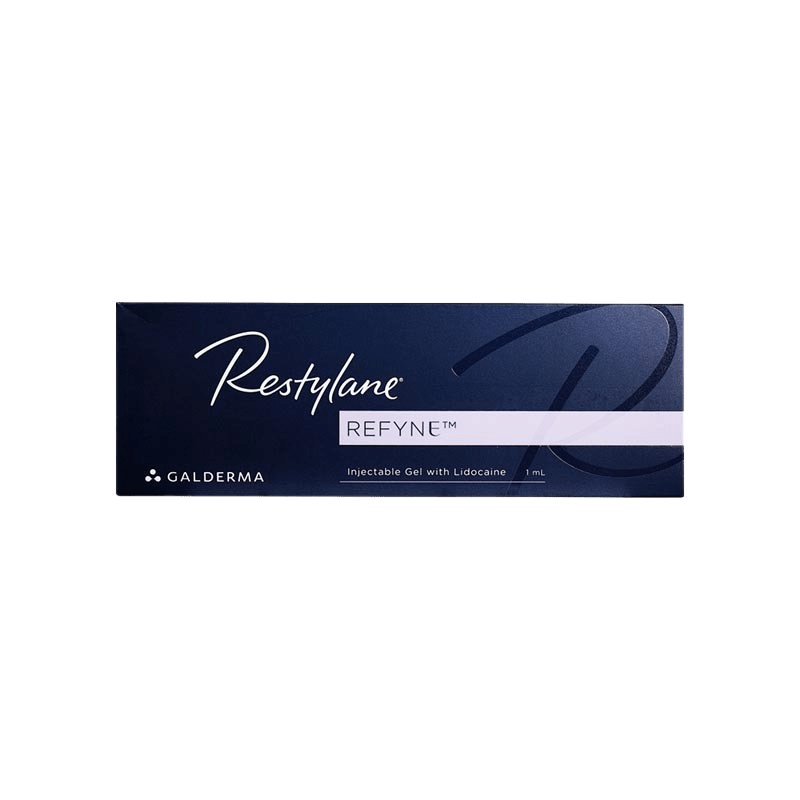
Restylane® Refyne w/ Lidocaine
Order Restylane® Refyne w/ Lidocaine for Clinics
Hyaluronic Acid-Based Filler
$179.00
You save (%)
Description
Restylane® Refyne w/ Lidocaine is a sterile hyaluronic acid injectable gel supplied in a 1 mL prefilled syringe for professional aesthetic use. Licensed clinics and healthcare professionals can order this Galderma Restylane filler for treatment-room protocols that require flexible tissue integration, documented lot tracking, and predictable handling. Each syringe contains hyaluronic acid 20 mg/mL with lidocaine 3 mg/mL and is packaged with two sterile 30G 1/2 inch needles.
Clinics commonly stock Restylane® Refyne w/ Lidocaine for dynamic facial areas where moderate folds or expression lines need soft correction without an overly rigid feel. The integrated lidocaine supports injection comfort, while the prefilled presentation helps teams standardize setup, charting, and inventory rotation across aesthetic schedules.
Clinic Pricing and Professional Ordering
Sign in to view the current Restylane Refyne with Lidocaine price for your clinic account. Qualified professional buyers can use account tools to review contract tiers, plan quantity needs, and add the Restylane Refyne with Lidocaine 1 mL syringe to procurement lists for upcoming treatment sessions. Pricing can vary by account terms and order volume, so purchasing teams should align quantities with expected use and product dating.
Med Wholesale Supplies serves licensed clinics, med spas, aesthetic practices, and healthcare professionals with brand-name products sourced through vetted distributors and verified supply channels. Account verification helps keep professional-use injectables within appropriate clinic purchasing workflows. Orders include documented tracking, and products are managed with temperature-controlled handling when required and tracked US delivery.
Quick tip: Match order quantities to scheduled injection days, staff coverage, and your clinic’s lot documentation process.
Formulation, Strength, and Pack Details
Restylane® Refyne with Lidocaine injectable gel is a crosslinked hyaluronic acid dermal filler with lidocaine. Hyaluronic acid is a naturally occurring glycosaminoglycan that binds water in soft tissue; in dermal fillers, crosslinking helps create a gel matrix with practical handling characteristics. Refyne is positioned for areas that move during speech, smiling, and normal facial expression, so pliability is an important product attribute.
| Attribute | Clinic-use detail |
|---|---|
| Product | Restylane® Refyne w/ Lidocaine |
| Presentation | Single-use 1 mL prefilled syringe |
| Hyaluronic acid concentration | 20 mg/mL |
| Lidocaine concentration | 3 mg/mL |
| Needles | Two sterile 30G 1/2 inch needles |
| Documentation | Package insert and patient record labels |
The Restylane Refyne w Lidocaine 1x1ml pack supports a compact, procedure-ready workflow. Before use, staff should inspect the carton and sterile barrier, confirm lot and expiry information, and stage the syringe according to the package insert. Do not use the device if the sterile barrier is compromised, and do not mix the gel with another product in the same syringe unless the manufacturer explicitly allows it.
What Refyne Is Used For in Aesthetic Practice
Clinicians use Restylane Refyne Lidocaine HA filler for moderate facial folds and expression-related lines where flexibility matters. Common professional treatment areas include nasolabial folds, marionette lines, and perioral areas that require soft transition across moving tissue. Product selection should reflect anatomy, skin thickness, tissue depth, treatment goals, and injector training.
The gel may be introduced with fine needles or cannulas according to clinician judgment and local practice standards. Technique can vary by plane, region, and patient-specific tissue characteristics. For teams standardizing device selection, the clinic resource on cannulas and needles can help support supply planning alongside injectable inventory.
Restylane® Refyne can also fit a staged facial rejuvenation plan. A practice may pair flexible line correction with firmer structural support, lip-focused refinement, or skin-quality procedures during separate visits. Those combinations should follow clinical assessment, manufacturer instructions, and the clinic’s consent and documentation process.
Handling, Room Setup, and Documentation
The prefilled syringe format helps reduce preparation steps in a busy injectable room. Staff can prepare needles, antiseptic supplies, consent documents, photography workflows, and record labels before the appointment begins. Patient record labels support traceability by allowing lot and expiry details to be captured in the chart.
Use sterile technique and follow the product insert for preparation, injection, storage, and disposal. Store the product as directed by the manufacturer and protect it from freezing. Once opened for a procedure, the syringe is intended for single use, and remaining gel should not be saved for later sessions. Sharps and used accessories should be discarded through approved clinical waste pathways.
Clinics that run multiple injectors may benefit from consistent intake forms, facial mapping, and adverse-event escalation steps. Training should cover vascular anatomy, appropriate injection planes, aspiration policies if used by the practice, post-procedure instructions, and documentation standards. A repeatable workflow helps new staff understand where Refyne fits within the broader filler menu.
Safety, Contraindications, and Expected Reactions
Expected localized reactions after hyaluronic acid filler injection can include injection-site pain, itching, swelling, bruising, tenderness, redness, or firmness. These reactions are often transient, but the clinic should document severity, timing, and resolution according to its adverse-event process. Patients should receive aftercare instructions that match the procedure performed and the practitioner’s clinical judgment.
Contraindications and cautions require screening before treatment. Restylane Refyne with lidocaine should not be used in individuals with known hypersensitivity to lidocaine or similar anesthetics, a history of severe allergies or anaphylaxis, or known hypersensitivity to proteins from Gram-positive bacteria. Defer injection into inflamed or infected skin. Use added clinical caution for patients with bleeding disorders, active dermatologic conditions, immune concerns, or medication histories that may increase bruising risk.
Serious but uncommon filler complications may include vascular compromise, tissue injury, infection, nodules, hypersensitivity reactions, or vision-related emergencies if material enters or compresses blood vessels. Clinics should maintain protocols for recognition and escalation, including appropriate access to emergency supplies and referral pathways. The FDA directions for use for Restylane Refyne discuss contraindications, warnings, and adverse-event considerations; see the Official directions for use for source detail.
Lidocaine and Injection Comfort
Restylane Refyne does have lidocaine. The formulation contains lidocaine 3 mg/mL, which is included to help reduce discomfort during injection. Lidocaine content does not replace proper technique, patient screening, topical anesthesia decisions, or local anesthetic safety checks.
Clinics should ask about lidocaine sensitivity and relevant allergy history during intake. If a patient reports prior reactions to local anesthetics, injectable fillers, bacterial proteins, or severe allergic reactions, the practitioner should assess suitability before proceeding. For broader procedure planning, the article on lidocaine in dermal filler procedures offers useful context for clinic teams.
How Long Results May Last
Duration can vary by treatment area, injection depth, amount used, tissue movement, metabolism, and individual patient factors. Refyne is commonly selected for mobile facial regions, and high-motion areas can influence how long visible correction persists. Clinics should avoid promising a fixed timeline and instead set expectations during consultation and follow-up.
Follow-up timing should reflect your injector’s protocol, the treated area, and the patient’s healing response. Documentation from the initial session helps staff assess whether touch-up planning, staged correction, or a different Restylane product would better match the next treatment goal. For a wider discussion of Restylane treatment planning, see the Restylane dermal filler treatment guide.
How Refyne Compares With Related Restylane Fillers
Refyne is generally chosen when the injector wants a balance of flexibility and support in expression-related lines. For deeper folds or more structural correction, many practices evaluate Restylane Defyne with Lidocaine. Defyne may be considered when greater support is needed in areas with moderate-to-severe fold depth, depending on patient anatomy and injector preference.
For lifting or contour-oriented treatment plans, practices may stage Refyne with Restylane Lyft with Lidocaine. For lip texture, lip movement, and refinement protocols, Restylane Kysse with Lidocaine is another commonly reviewed option within the brand family. Product choice should account for rheology, injection plane, tissue thickness, and the intended correction pattern.
Clinics comparing HA filler lines can also review the article on Restylane and Juvederm filler differences. For brand-wide browsing, the Restylane catalog helps teams view related products that may support a complete aesthetic inventory.
Inventory Planning for Multi-Product Filler Menus
Aesthetic practices often stock more than one HA filler because a single gel does not suit every region or tissue behavior. Refyne can occupy the flexible-line position in a clinic’s algorithm, while adjacent products support deeper folds, contouring, lip work, or skin-quality protocols. Grouping similar products by indication, gel behavior, and syringe size can simplify staff training and reduce selection errors.
Recordkeeping is especially important when several Restylane products are used in the same practice. Lot numbers, expiry dates, injection sites, quantities, needle or cannula choices, and aftercare instructions should be captured consistently. When supplies are shared across locations, assign one administrator to monitor par levels, reorder timing, and product movement between rooms or clinics.
If your practice also offers hydration-oriented programs, the clinical overview for Restylane Skinboosters protocol planning may support menu organization. Keep each product’s intended role distinct so consultation notes, consent forms, and purchase planning remain aligned.
Authoritative Sources and Professional Review
Manufacturer instructions and regulatory device information should guide clinic protocols for indications, contraindications, warnings, handling, and storage. The FDA directions for use provide important safety context for Restylane Refyne, including contraindications related to lidocaine sensitivity, severe allergies, and Gram-positive bacterial protein hypersensitivity.
Before adding the product to a treatment room, review the current package insert, train staff on emergency recognition, and confirm that injectors understand the relevant anatomy and product behavior. Purchasing staff should coordinate clinical review with inventory needs so product selection reflects real treatment demand rather than shelf stocking alone.
This content is for informational purposes only and is not a substitute for professional medical advice.
Frequently Asked Questions
What is Restylane® Refyne w/ Lidocaine used for in clinics?
Clinicians use Restylane® Refyne w/ Lidocaine as a hyaluronic acid dermal filler for moderate facial folds and expression-related lines where flexible tissue integration is important. Treatment planning should reflect injector training, anatomy, and the manufacturer’s instructions.
Does Restylane Refyne contain lidocaine?
Yes. The supplied formulation contains hyaluronic acid 20 mg/mL and lidocaine 3 mg/mL. Lidocaine is included to support injection comfort, but clinics should still screen for lidocaine sensitivity and relevant allergy history.
What comes in the Restylane Refyne w Lidocaine 1x1ml pack?
Each pack contains one 1 mL prefilled syringe, two sterile 30G 1/2 inch needles, a package insert, and patient record labels for chart documentation and lot tracking.
How should clinics store and handle this filler?
Store Restylane® Refyne w/ Lidocaine according to the product insert and protect it from freezing. Inspect the sterile barrier before use, maintain sterile technique, and discard used sharps and any remaining single-use contents according to clinic policy.
How is Refyne different from Defyne or Kysse?
Refyne is commonly selected for flexible correction in dynamic facial areas. Defyne is often evaluated for deeper or more supportive correction, while Kysse is a lip-focused Restylane option. Final selection depends on tissue depth, movement, and injector assessment.
How can licensed clinics view Restylane Refyne with Lidocaine cost?
Verified clinic accounts can sign in to view current account pricing and applicable volume tiers. Purchasing teams should match quantities to scheduled procedures, expiry dating, and inventory controls.
Specifications
- Main Ingredient: Cross-Linked Hyaluronic Acid 20Mg/Ml Lidocaine Hydrochloride 3Mg/Ml Physiological Buffer Ph 7 Qs Ad 1 Ml
- Manufacturer: Galderma
- Drug Class: Medical Device
- Generic Name: Cross-Linked Hyaluronic Acid 20Mg/Ml Lidocaine Hydrochloride 3Mg/Ml Physiological Buffer Ph 7 Qs Ad 1 Ml
- Package Contents: 1 mL x 1 Pre-Filled Syringe
- Storage Requirements: Room Temperature (2℃~25℃)
- Main Usage: Volume Filler
About the Brand
Restylane
Restylane stands as a trusted medical brand, providing an extensive variety of injectable dermal fillers designed to rejuvenate facial appearance and minimize aging signs. These products, infused with hyaluronic acid, are renowned for results that embody natural aesthetics and exhibit prolonged effectiveness. On medwholesalesupplies.com, we present Restylane offerings at market competitive rates, facilitating medical experts in keeping these premium dermal fillers on hand. By choosing to acquire Restylane via medwholesalesupplies.com, medical practitioners stand to gain numerous advantages. To begin with, our online platform simplifies the ordering process and lessens the exertion involved in sourcing these medical essentials. Furthermore, by offering Restylane at wholesale prices, we provide an opportunity for practitioners to achieve monetary savings when making bulk purchases. Finally, we place a high emphasis on customer contentment and guarantee only authentic products on our website. Therefore, when purchasing Restylane from medwholesalesupplies.com, you can rest assured you are obtaining genuine articles. In summary, Restylane represents a reliable medical brand furnishing prime quality dermal fillers to aid in facial revival. Through medwholesalesupplies.com, medical specialists can swiftly secure Restylane products at wholesale prices, saving both time and resources while ensuring product genuineness. Unlock the potential of Restylane, a trusted name in cosmetic fillers, through Med Wholesale Supplies. Whether you're looking to enhance lips with Restylane for lips or seeking the best Restylane filler for various treatments, we have you covered. Explore Restylane prices to find affordable solutions that meet your needs. Our expert-curated selection ensures you can deliver the best results to your clients with confidence. Choose Med Wholesale Supplies for all your Restylane products and more!
Browse Restylane Products
Here to help
Questions about ordering, delivery or products? You can email our team here or call now at 1-800-630-9757 and be connected with your dedicated Account Manager
Related Products
JALUPRO® PLUS 4ML
Skin Rejuvenation Treatment
$86.00 - $89.00
You save (%)
You save (%)
$339.00
You save (%)
You save (%)
Select options
This product has multiple variants. The options may be chosen on the product page
Juvéderm® SKINVIVE
Dermal Filler
$339.00 - $359.00
You save (%)
You save (%)
$86.00 - $119.00
You save (%)
You save (%)
Related Articles
Prednisone in Clinical Care: Uses, Risks, and Monitoring
Prednisone is a prescription systemic corticosteroid used to reduce inflammation or suppress immune activity in…
Lip Fillers Swelling Stages: Timeline, Safety, and Follow-Up
Lip fillers swelling stages usually follow a short inflammatory course: swelling appears soon after injection,…
Hypopigmentation of the Skin: Assessment and Care
Hypopigmentation of the skin means one or more areas look lighter than the surrounding skin.…
Radiesse vs Sculptra: Selection Factors for Clinics
Radiesse vs Sculptra is best understood as a comparison between two collagen-stimulating injectables with different…
Hyaluronic Acid Under-Eye Filler: Safety and Workflow
Hyaluronic acid under-eye filler is an injectable soft-tissue filler used by trained aesthetic clinicians to…
Dermal Filler Types: Materials, Uses, and Clinic Fit
Dermal filler types are usually grouped by their base material, tissue behavior, and expected role…
What Is Dysport? Clinical Uses, Safety, and Workflow
For clinic teams asking what is Dysport, the short answer is simple: Dysport is a…
Biostimulators in Aesthetic Care: Selection and Safety
Biostimulators are injectable aesthetic products used to encourage a controlled tissue response, often involving new…