
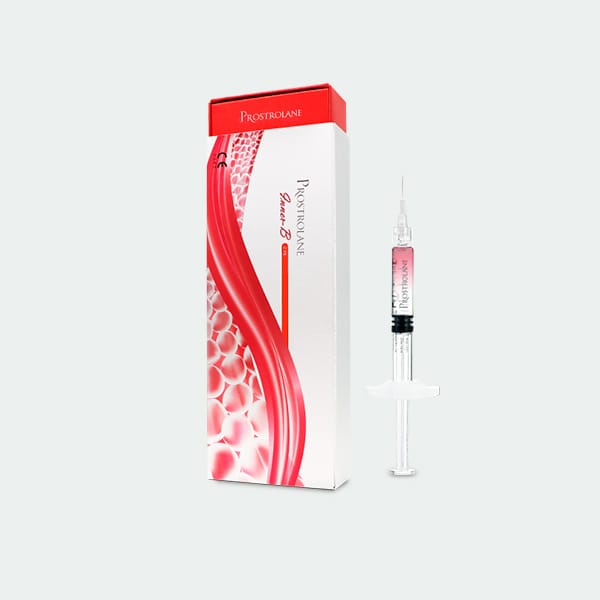
Prostrolane Inner-B
Order Prostrolane Inner-B for Clinics
Fat Dissolving Injection
$129.00
You save
Description
Prostrolane Inner-B is an injectable aesthetic product used in clinician-led treatment protocols for skin-quality and contour-support workflows. Licensed clinics, med spas, and healthcare professionals can order Prostrolane Inner-B for treatment-room use with professional handling, lot tracking, and sterile administration controls. Receiving teams should verify the carton, lot, expiry, IFU, and labeled storage requirements before the unit enters clinical inventory.
This product is intended for in-office use by trained injectors, not self-administration. Technique, target area, patient selection, and treatment interval decisions should follow the manufacturer’s instructions for use and the clinic’s medical protocols. US distribution is available for professional accounts, with temperature-controlled handling when required and tracked US delivery.
Price, Ordering, and Professional Account Requirements
Clinics can place wholesale orders for Prostrolane Inner-B through a professional purchasing workflow. Current price and quantity information should be reviewed during ordering because product cost can change with distributor supply, lot rotation, and account-level purchasing needs. Procurement staff should match the ordered presentation to the treatment plan approved by the responsible clinician and the unit information shown at checkout.
Professional account review may include confirmation that the receiving site is a healthcare or aesthetic practice and that the purchaser is authorized to buy clinic-use products. Before stocking treatment rooms, teams should reconcile the shipment against the invoice, record the lot and expiry, and file any enclosed IFU for clinical reference. Facilities that organize purchasing across related aesthetic services may also browse mesotherapy supplies and body contouring products to keep ordering lists aligned with internal protocols.
- Confirm facility license or clinic registration records.
- Designate an authorized purchaser for wholesale orders.
- Verify the ship-to location before release to inventory.
- Record lot number and expiry at receiving.
- Quarantine units with damaged packaging or storage concerns.
Quick tip: Add lot, expiry, and IFU checks to the receiving workflow before units move into procedure rooms.
Product Role in Clinic-Based Aesthetic Protocols
Prostrolane Inner-B is positioned for professional injectable aesthetic workflows where clinicians focus on skin quality and contour-related planning. It is commonly discussed within biorevitalization and contour-support categories, where the clinical goal is to support appearance and tissue quality rather than create large structural volume changes. The exact intended clinical role, placement approach, and treatment pattern must come from the unit’s IFU and applicable product labeling.
Many products in this aesthetic category combine hydrating gel characteristics with supportive complexes, but the exact composition should be verified on the carton and IFU for the lot received. Procurement teams should avoid assuming that Prostrolane Inner-B, Prostrolane Inner-B SE, or other Prostrolane family products share the same presentation, target area, or protocol. For broader clinical context on how this product is discussed in contour-focused practice, see Prostrolane Inner-B facial contouring considerations.
Common online questions ask how to inject Prostrolane Inner-B. The safe answer is that injection technique belongs to trained healthcare professionals using the manufacturer’s IFU, aseptic technique, anatomy knowledge, and a complication-response plan. A product purchase should never substitute for professional training, hands-on competency, or medical oversight.
Packaging, Receiving Checks, and Inventory Control
Exact packaging details should be confirmed from the carton and enclosed IFU because presentations can vary by market and distributor channel. Injectable aesthetic products may be supplied as single-use syringes or vials, but clinics should rely only on the labeling of the unit received. Staff should preserve original packaging until use so the product name, lot, expiry, storage statement, and instructions remain traceable.
Receiving checks help prevent avoidable handling errors. The intake team should inspect tamper evidence, container integrity, label clarity, and any storage indicators before the product enters active inventory. If a shipment arrives with visible damage, leakage, cracked components, discoloration, or suspected temperature excursion, the units should be separated from usable stock while the facility follows its quality process.
| Receiving item | Clinic action |
|---|---|
| Product identity | Match name, lot number, and expiry to the invoice and IFU. |
| Presentation | Use the form stated on the carton; treat sterile units as single-patient use unless labeling says otherwise. |
| Packaging integrity | Inspect for tamper evidence, leaks, cracks, compromised seals, or discoloration. |
| Instructions | Keep the IFU accessible for injectors and support staff. |
| Storage statement | Document the labeled temperature range and any light-protection requirements. |
Clinics managing adjacent body and facial contouring services may also use body contouring insights to support internal training discussions, while keeping product selection and injection technique under clinician control.
Administration, Documentation, and Treatment-Room Workflow
Prostrolane Inner-B should be administered only by qualified healthcare professionals who understand facial and body anatomy, injection depth, sterile handling, and early complication recognition. The IFU should guide preparation steps, device compatibility where applicable, placement approach, and any recommended treatment pattern. Clinics should not transfer contents between patients or divide a single-use unit unless the manufacturer labeling expressly permits that practice.
A consistent pre-procedure checklist can reduce preventable errors. Many facilities verify patient identity, consent, product name, expiration date, lot number, intended treatment area, skin antisepsis, and availability of emergency supplies before injection begins. Staff should prepare a clean field, maintain aseptic technique, and document the unit used immediately after the procedure while the package information is still available.
Traceability and Clinical Records
Treatment records commonly include product name, lot number, expiry, injection sites, device used, immediate tolerance, and any adverse signs observed before discharge. Post-procedure instructions should tell patients when to contact the clinic for concerning symptoms, especially unusual pain, skin color change, visual symptoms, progressive swelling, or signs of infection. The escalation plan should identify the responsible clinician, emergency supplies, referral contacts, and reporting pathway for suspected serious events.
For procedure-category context, clinics comparing injectable workflows can review fat-removal products and body sculpting supplies. These categories should support procurement planning only; treatment suitability remains a clinician-led decision.
Storage, Handling, and Logistics
Storage conditions should follow the labeled requirements printed on the carton and IFU. Units should remain in original packaging until use to protect labeling and support traceability. If the product label specifies refrigeration, controlled room temperature, or light protection, the receiving team should document that requirement and stock the product in the correct area immediately after intake.
First-expire-first-out rotation helps reduce waste and lowers the risk of using expired stock. Clinics should separate look-alike products, keep sterile injectables away from nonsterile supplies, and restrict access to trained personnel. If a unit has been exposed to conditions outside the labeled range, staff should not return it to usable inventory until the facility’s quality process allows release.
Why it matters: Clear storage logs support audits, complaint investigations, and adverse-event traceability.
Contraindications, Warnings, and Monitoring
Prostrolane Inner-B should not be used when the manufacturer labeling identifies a contraindication. Across injectable aesthetic products, common exclusion themes include known hypersensitivity to any component, active infection or inflammation at the intended injection site, and clinical histories that increase risk during elective injections. Product-specific cautions, including any pregnancy, lactation, autoimmune disease, or skin-condition restrictions, should be taken directly from the IFU.
Injectable aesthetic treatments can cause local reactions such as tenderness, erythema, swelling, bruising, itching, and temporary discomfort. These effects may vary with technique, treatment area, patient factors, and concurrent topical or procedural exposures. Clinics should describe expected reactions in consent materials and provide clear instructions for symptoms that require prompt follow-up.
Serious adverse events are uncommon but require preparation. Injectable aesthetic procedures have been associated across product classes with infection, persistent nodules, delayed inflammatory responses, hypersensitivity reactions, and vascular events that may lead to tissue injury. Sudden blanching, livedo, disproportionate pain, or visual symptoms after facial injection should trigger urgent escalation. For procedure-safety planning, see dermal filler safety protocols.
Interactions, Procedure Sequencing, and Clinical Cautions
Formal drug-interaction data may be limited for products in this category, but clinics should screen for medications and supplements that can increase bruising or bleeding at injection sites. Anticoagulants, antiplatelet agents, NSAIDs, and certain herbal products can affect procedural planning. The treating clinician should decide whether to proceed, defer, or adjust the treatment plan according to the patient’s risk profile and product labeling.
Recent or planned procedures in the same area can also affect local inflammation and healing. Energy-based treatments, chemical peels, dental procedures, and other injections should be considered during scheduling. Sequencing should be guided by the clinician’s protocol, the IFU, and the patient’s clinical status rather than generalized timing assumptions.
Documentation should connect screening findings to the clinical decision. If a patient has prior filler complications, active skin disease, immune concerns, or a history of severe allergy, the chart should show how the clinician evaluated risk before treatment. This approach supports safer practice and clearer follow-up if symptoms develop.
Related Aesthetic Products and Practice Planning
Alternative or adjacent products may be considered when a clinic is planning hydration-focused skin quality, contour support, or broader aesthetic protocols. Product selection should be based on labeling, injector training, patient assessment, reversibility planning, and adverse-event readiness. Marketing descriptions should not replace the IFU or clinic governance.
For skin-quality or injectable aesthetic workflows, clinics may compare protocol fit with products such as Jalupro sodium hyaluronate and amino acid vials. Practices stocking topical or adjunctive aesthetic items may also review Jalupro Enhancer Gel when building service-line inventory. These products are not interchangeable with Prostrolane Inner-B unless the responsible clinician determines that a different product is appropriate for the intended use.
- Match the product category to the intended clinical endpoint.
- Confirm injector training for the chosen technique.
- Keep reversal or escalation planning product-specific.
- Update consent language when the product changes.
- Record lot and expiry for every administered unit.
Authoritative Sources
Manufacturer labeling and the IFU supplied with the unit should be the primary source for preparation, contraindications, administration, and storage. Regulator and public-health resources can support baseline safety expectations for injectable procedures, sterile technique, and adverse-event readiness.
FDA background on dermal filler risks and regulation: Dermal Fillers (Soft Tissue Fillers)
CDC fundamentals for safe injection practices: Injection Safety
This content is for informational purposes only and is not a substitute for professional medical advice.
Frequently Asked Questions
Who can order Prostrolane Inner-B?
Prostrolane Inner-B is supplied for licensed clinics, med spas, and healthcare professionals using professional purchasing accounts. Account records may need to confirm the healthcare setting, authorized purchaser, and receiving location before the order is processed.
How should clinics inject Prostrolane Inner-B?
Injection technique should come from the manufacturer’s IFU, clinician training, and the facility’s medical protocol. Prostrolane Inner-B should be administered only by qualified healthcare professionals using aseptic technique, appropriate anatomy knowledge, and complication-response readiness.
What documentation should be kept after receiving Prostrolane Inner-B?
Clinics should record the product name, lot number, expiry date, storage condition, invoice match, and packaging integrity at intake. Treatment records should also capture the unit used, treated area, immediate tolerance, and any adverse signs.
How should Prostrolane Inner-B be stored?
Follow the storage statement on the carton and IFU for the specific unit received. Keep units in original packaging until use, protect them as labeled, rotate inventory by expiry date, and quarantine any product with damage or suspected temperature excursion.
Is Prostrolane Inner-B the same as Prostrolane Inner-B SE?
Clinics should not assume that Prostrolane Inner-B and Prostrolane Inner-B SE have the same presentation, use instructions, or protocol. Verify the exact product name, labeling, IFU, lot, and packaging before purchase and administration.
What side effects should clinics discuss before treatment?
Common injection-related effects may include tenderness, redness, swelling, bruising, itching, and temporary discomfort. Clinics should also prepare for uncommon but serious events such as infection, hypersensitivity, nodules, vascular compromise, or visual symptoms after facial injection.
Specifications
- Main Ingredient: Sodium Hyaluronate
- Manufacturer: Prostrolane
- Drug Class: Cosmetic Injectable
- Generic Name: Sodium hyaluronate (hyaluronic acid) and Non-cross-linked peptides
- Package Contents: 2 mL x 2 Prefilled Syringe
- Storage Requirements: Temperature between 2 ° C and 25 ° C
- Main Usage:
Here to help
Questions about ordering, delivery or products? You can email our team here or call now at 1-800-630-9757 and be connected with your dedicated Account Manager
Related Products
Evenity® (English Alternative)
Injectable Medication
$1,229.00 - $1,299.00
You save
You save
Intraline® For Men
Dermal Filler
$59.00 - $79.00
You save
You save
RejuvaNAD+ Pro
Injectable Medication
$237.00 - $249.00
You save
You save
Teosyal® RHA 4
Aesthetic Surgery Product
$259.00 - $279.00
You save
You save
Related Articles
Prednisone in Clinical Care: Uses, Risks, and Monitoring
Prednisone is a prescription systemic corticosteroid used to reduce inflammation or suppress immune activity in…
Lip Fillers Swelling Stages: Timeline, Safety, and Follow-Up
Lip fillers swelling stages usually follow a short inflammatory course: swelling appears soon after injection,…
Hypopigmentation of the Skin: Assessment and Care
Hypopigmentation of the skin means one or more areas look lighter than the surrounding skin.…
Radiesse vs Sculptra: Selection Factors for Clinics
Radiesse vs Sculptra is best understood as a comparison between two collagen-stimulating injectables with different…
Hyaluronic Acid Under-Eye Filler: Safety and Workflow
Hyaluronic acid under-eye filler is an injectable soft-tissue filler used by trained aesthetic clinicians to…
Dermal Filler Types: Materials, Uses, and Clinic Fit
Dermal filler types are usually grouped by their base material, tissue behavior, and expected role…
What Is Dysport? Clinical Uses, Safety, and Workflow
For clinic teams asking what is Dysport, the short answer is simple: Dysport is a…
Biostimulators in Aesthetic Care: Selection and Safety
Biostimulators are injectable aesthetic products used to encourage a controlled tissue response, often involving new…