

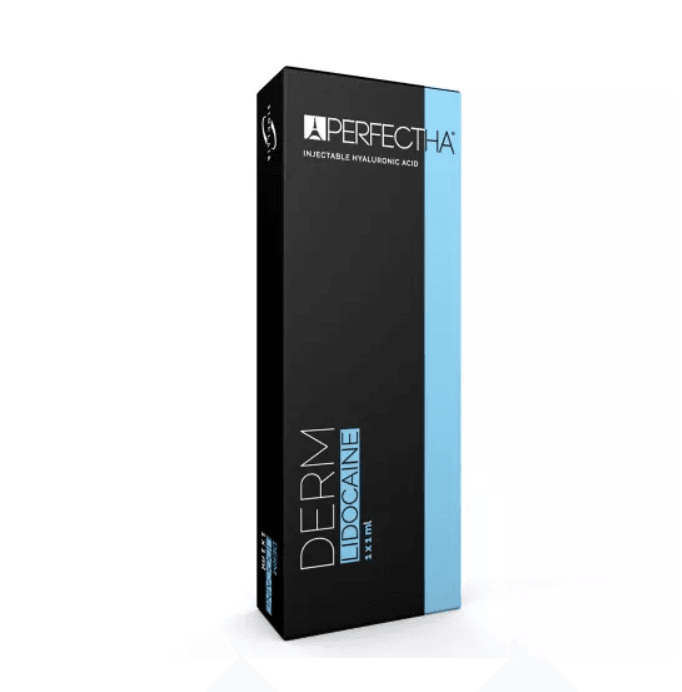
Perfectha® Derm w/ Lidocaine
Order Perfectha® Derm w/ Lidocaine for Clinics
Hair Regenerating Cocktail
$89.00
You save (%)
Description
Perfectha® Derm w/ Lidocaine is a hyaluronic acid dermal filler for professional aesthetic use in facial contouring and wrinkle softening. Licensed clinics and healthcare professionals can order it for treatment-room workflows that require sterile injectable gel, predictable handling, and comfort support from integrated lidocaine. It is used in mid-depth correction protocols where controlled placement and natural-looking refinement are important.
Clinics typically evaluate Perfectha Derm injectable gel by treatment indication, injection depth, staff familiarity, and inventory needs. Current Perfectha Derm with Lidocaine price information is available after account sign-in, and clinic ordering can be aligned to routine replenishment or multi-site purchasing needs without shifting the product into a consumer self-treatment pathway.
Professional Ordering and Price Context
Perfectha® Derm w/ Lidocaine is intended for licensed professional use, so ordering should be managed through clinic procurement controls and clinical leadership. Sign in to view current pricing, volume tiers, and account-specific terms for your practice. If your team uses standardized treatment menus, keeping filler purchasing tied to expected procedure volume can reduce last-minute substitutions and simplify inventory counts.
When evaluating cost, consider the full clinical workflow rather than the unit alone. Treatment planning may include needles or cannulas, antiseptic preparation, post-procedure instructions, adverse-event protocols, and staff time for documentation. Practices that carry several HA fillers often position this preparation within a mid-depth correction range, then reserve firmer or softer gels for different tissue planes and aesthetic goals.
For broader product planning within the same manufacturer family, browse the Perfectha brand portfolio. That category can help procurement teams keep related fillers organized by role while clinical leads decide which gel characteristics best match each protocol.
What This HA Filler Is and How It Works
This class of filler uses cross-linked hyaluronic acid, a water-binding molecule formulated into a cohesive injectable gel. Cross-linking helps the gel retain shape after placement, while elasticity supports flexible movement in treated soft tissue. The lidocaine component is included to improve procedural comfort during injection and may help teams maintain an efficient pace during routine aesthetic sessions.
Perfectha Derm facial filler is used for balanced refinement in areas where moderate support is needed. In professional settings, it may be selected for facial line softening, gentle contour restoration, or perioral refinement when the injector wants a gel that integrates without a rigid feel. Technique, depth, volume, and patient suitability remain clinical decisions made by trained injectors.
The product belongs to the broader Perfectha family, where different gels are chosen according to tissue support needs and treatment area. For clinicians reviewing the line’s general science and brand positioning, the manufacturer’s Sinclair Perfectha overview provides additional background on the portfolio.
Professional Applications in Aesthetic Practice
In clinic workflows, Perfectha® Derm w/ Lidocaine can support mid-depth correction strategies for moderate facial lines and gentle contouring. Common professional-use discussions include nasolabial folds, marionette lines, oral commissures, selected perioral refinements, and conservative lip contouring. The treatment plan should account for facial anatomy, tissue quality, movement, prior filler history, and the patient’s overall aesthetic goals.
Injectors may use this filler as part of a broader facial harmonization plan that includes other HA gel consistencies, neuromodulators, peels, skin boosters, or energy-based treatments. The role of Perfectha Derm hyaluronic acid filler is not to replace clinical assessment, but to provide a specific gel option for cases where moderate lift, smooth integration, and comfort support are appropriate.
For staff education around general filler decision-making, Perfectha filler considerations may be useful when aligning product selection with training and consultation workflows. For outcome assessment conversations, the article on dermal filler before-and-after evaluation can help teams standardize how they document visible changes without overpromising results.
Key Features for Treatment-Room Use
- Cross-linked HA matrix designed for volume support and line softening.
- Integrated lidocaine to support comfort during injection sessions.
- Cohesive gel behavior that helps controlled placement in suitable tissue planes.
- Elastic texture that supports movement in dynamic facial areas.
- Sterile injectable gel intended for administration by trained professionals.
- Professional-only aesthetic product for licensed clinics and healthcare practices.
- Traceable packaging with lot and expiration information for inventory records.
- Useful fit for mid-depth correction protocols and gentle contour refinement.
Quick tip: Keep filler selection notes in the procedure record so future appointments can reference product, lot, placement area, and response.
Handling, Storage, and Clinic Documentation
This item is supplied as a sterile, single-use injectable gel in protective packaging. Before use, staff should inspect package integrity, verify the lot number and expiration date, and follow the manufacturer’s storage and handling instructions. Needle inclusion, syringe configuration, and accessories may vary by distribution channel or lot, so clinical teams should verify the package contents before scheduling cases that depend on a specific setup.
Inventory controls should account for sterility, traceability, and appropriate storage conditions. Clinics commonly record product name, lot, expiration, treatment area, injector, and quantity used in the patient chart. These details support internal quality checks and help teams respond efficiently if manufacturer notices, adverse-event reviews, or product recalls require lot-level review.
Our logistics process supports professional purchasing with temperature-controlled handling when required and tracked US delivery. For clinics building complete injection setups, the article on dermal filler injection safety protocols can help reinforce staff checks around preparation, asepsis, documentation, and escalation planning.
Composition and Ingredient Considerations
Perfectha® Derm w/ Lidocaine contains cross-linked hyaluronic acid as the aesthetic filler matrix and lidocaine as a local anesthetic component. Hyaluronic acid fillers work by adding temporary volume and structural support in targeted soft tissue. Lidocaine does not determine the aesthetic result, but it can reduce injection discomfort for many patients during placement.
Inactive components typically include water and buffering agents appropriate for injectable gels. Clinics should refer to the manufacturer’s documentation for the complete and current ingredient list, contraindications, warnings, and instructions. Patients with known hypersensitivity to lidocaine, amide-type local anesthetics, HA filler components, or any listed excipient require careful clinical review before treatment.
The NIH/NCBI clinical summary on hyaluronic acid fillers provides general medical background on HA filler use, adverse effects, and safety considerations. It should complement, not replace, the product instructions and your clinic’s own treatment protocols.
Safety, Contraindications, and Monitoring
Dermal filler administration requires detailed anatomical knowledge, sterile technique, and readiness to manage complications. Common local reactions after HA filler injection can include redness, swelling, tenderness, bruising, itching, firmness, or temporary discomfort at the injection site. These effects are usually monitored according to clinic protocol, but persistent, worsening, or unusual symptoms require clinician assessment.
Serious complications are uncommon but clinically important. Vascular compromise, tissue necrosis, infection, nodules, inflammatory reactions, granulomas, and visual symptoms require urgent recognition and escalation. Clinics should maintain written protocols for vascular occlusion response, emergency referral, documentation, and patient follow-up. The decision to inject near higher-risk anatomical areas should be based on injector training, product suitability, and patient-specific risk assessment.
Contraindications and precautions may include active infection or inflammation at the treatment site, known allergy to any component, bleeding tendency, anticoagulant or antiplatelet considerations, autoimmune or immune-modulating conditions, pregnancy or lactation considerations, and history of severe allergies or anaphylaxis. These factors should be evaluated before scheduling treatment. Patients should also be asked about prior filler, implants, recent procedures, dental work, and planned laser or energy-based treatments.
Post-treatment instructions should be specific enough for the procedure performed. Clinics often advise patients on expected local reactions, when to avoid pressure or manipulation, and which symptoms require immediate contact. For patient-facing aftercare alignment, post-treatment care essentials for dermal fillers can support consistent staff messaging while the clinician remains responsible for individualized instructions.
Workflow Fit and Staff Planning
Perfectha Derm cosmetic filler is most useful when the clinic has a clear role for it within the filler cabinet. Procurement teams can coordinate with injectors to define which procedures use this gel, which areas require alternate viscosity, and when a related Perfectha product may be more suitable. This reduces chairside uncertainty and helps prevent product selection from becoming a last-minute decision.
Staff planning should also include patient consent language, photography standards, lot tracking, aftercare handouts, and adverse-event reporting steps. New injectors should not rely on product availability as a substitute for hands-on anatomical training and supervised technique development. For clinics reviewing comfort-focused filler selection, the article on lidocaine in dermal filler procedures explains why integrated anesthetic can matter to the treatment experience.
Centralized purchasing teams may order for multiple rooms or locations when clinic governance supports that model. Keep minimum stock levels realistic for actual booked volume, expiry dates, and seasonal demand. Smaller practices may prefer more frequent replenishment, while higher-volume med spas may standardize par levels for each injector or treatment category.
Comparable Perfectha and HA Filler Choices
Perfectha® Derm w/ Lidocaine should be compared with nearby gels by intended tissue plane, firmness, lifting need, and treatment area. If a case requires more structural support, clinics may consider Perfectha® Deep w/ Lidocaine as a related option within the same brand family. Clinical suitability depends on the indication, injection depth, and injector preference.
For practices that stock multiple presentations, Perfectha Derm 20mg/ml prefilled syringe and Perfectha Deep 20mg/ml prefilled syringe may help teams compare related inventory formats when those specific configurations match their protocols. If fine superficial lines are a separate service category, Perfectha Finelines prefilled syringe may be evaluated as a distinct option.
Product selection should remain indication-led rather than brand-led. A gel that works well for moderate folds may not be the best choice for fine superficial lines or deeper structural contouring. Clinics should maintain internal guidance on when to use each filler, when to avoid treatment, and when to schedule a follow-up assessment instead of adding volume immediately.
Availability and Substitution Planning
Clinics can order Perfectha Derm online through their professional account when the product is part of their procurement plan. If a preferred configuration changes or a substitution is being considered, the clinical lead should decide whether the alternative matches the same treatment role. Substitution should never be based only on brand familiarity or unit cost.
When planning replenishment, document which injectors use this gel, the average number of treatments per month, and the expiry window needed for safe stock rotation. Practices with multiple fillers should also track which products are used together during staged facial rejuvenation. This supports consistent treatment records and more accurate ordering.
Why it matters: Filler inventory affects clinical workflow, documentation, and patient safety as much as purchasing efficiency.
Authoritative Sources
NIH/NCBI hyaluronic acid fillers overview
Ready to provision Perfectha® Derm w/ Lidocaine for your aesthetic workflows? Sign in to view professional pricing, confirm ordering documentation, and coordinate clinic supply needs through your account.
This content is for informational purposes only and is not a substitute for professional medical advice.
Frequently Asked Questions
Who can order Perfectha® Derm w/ Lidocaine?
Perfectha® Derm w/ Lidocaine is intended for licensed clinics, med spas, aesthetic practices, and qualified healthcare professionals. Account verification and professional-use ordering requirements may apply before pricing and purchasing are available.
What is Perfectha® Derm w/ Lidocaine used for in clinic workflows?
Clinics use it as a hyaluronic acid dermal filler option for mid-depth aesthetic correction, including moderate facial line softening and gentle contour refinement when clinically appropriate. The exact treatment area, depth, and volume are determined by the injector after patient assessment.
Does the lidocaine change the filler result?
Lidocaine is included to support comfort during injection. The aesthetic effect comes from the cross-linked hyaluronic acid gel and the injector’s placement technique, not from lidocaine itself.
How should clinics handle and document this filler?
Staff should follow the manufacturer’s storage and handling instructions, inspect package integrity, and record the product name, lot number, expiration date, injector, treatment area, and quantity used in the clinical record.
What should clinics compare before choosing a related Perfectha product?
Compare the intended tissue plane, desired support, treatment area, injector preference, and patient-specific risk factors. Softer, mid-depth, and deeper-support gels may serve different roles within the same aesthetic practice.
Specifications
- Main Ingredient: Hyaluronic Acid/Lidocaine
- Manufacturer: ObvieLine,Sinclair
- Drug Class: Dermal Filler
- Generic Name: Hyaluronic Acid gel and Lidocaine
- Package Contents: 1 mL x 1 Pre-Filled Syringe
- Storage Requirements: Room Temperature (2℃~25℃)
- Main Usage: Volume Filler
About the Brand
Perfectha
Perfectha holds a notable reputation in the medical industry for the superior quality of its skin filler products. Whether your goal is to enhance your lips, diminish wrinkles or replenish facial volume, Perfectha offers unmatched effectiveness. These ground-breaking fillers are crafted to deliver naturally beautiful and enduring results, making them a top choice among both healthcare practitioners and consumers. With Perfectha, attain the youthful, revitalized look you've always desired. If you’re in the market for Perfectha products, your search ends at medwholesalesupplies.com. As a credible online purveyor of medical supplies, we provide a plethora of Perfectha products at fair prices. Order Perfectha through our site to guarantee that you are purchasing genuine products straight from respected manufacturers. We also offer rapid and trustworthy shipping services, delivering your Perfectha products right to your front door. Thanks to our user-friendly website and secure payment methods, shopping for Perfectha is more convenient than ever. At medwholesalesupplies.com, we place great value on the quality and safety of our medical products. This is why we have meticulously chosen Perfectha as one of our esteemed brands. Perfectha is lauded for its stringent testing methods and adherence to international standards, guaranteeing foremost safety and efficacy. When ordering Perfectha via our website, rest assured that you are choosing a brand highly esteemed by healthcare professionals globally. Don't settle when it comes to your aesthetic pursuits – trust in Perfectha and shop confidently at medwholesalesupplies.com.
Browse Perfectha Products
Here to help
Questions about ordering, delivery or products? You can email our team here or call now at 1-800-630-9757 and be connected with your dedicated Account Manager
Related Products
$339.00
You save (%)
You save (%)
Select options
This product has multiple variants. The options may be chosen on the product page
Juvéderm® SKINVIVE
Dermal Filler
$339.00 - $359.00
You save (%)
You save (%)
$86.00 - $119.00
You save (%)
You save (%)
$72.00
You save (%)
You save (%)
Select options
This product has multiple variants. The options may be chosen on the product page
Related Articles
Hyaluronidase in Aesthetic Practice: Safety and Workflow
Hyaluronidase is an enzyme that breaks down hyaluronic acid, a water-binding molecule found in skin,…
Jawline Filler in Aesthetic Care: Safety and Workflow
Jawline filler is a nonsurgical dermal filler approach used to refine lower-face contour, support the…
Dermal Fillers Before and After: Assessing Results
Dermal fillers before and after review should show whether an injectable treatment produced a visible,…
Elasticity of the Skin: Assessment and Treatment Planning
Elasticity of the skin is the skin’s ability to stretch, resist deformation, and return toward…
How Long Does Mirena Last? Duration, Labeling, and Workflow
Mirena is labeled to prevent pregnancy for up to 8 years, but its labeled duration…
Is Evenity a Bisphosphonate? Drug Class and Care Context
No. If you are asking is evenity a bisphosphonate, the short answer is no. Evenity…
What Causes Double Chin? Clinical Drivers and Red Flags
The main causes double chin presentations reflect are usually submental fat, inherited facial anatomy, chin…
Skyla Vs Kyleena: Differences That Matter in IUD Selection
In a Skyla vs Kyleena comparison, the main operational difference is duration on the label:…