
Description
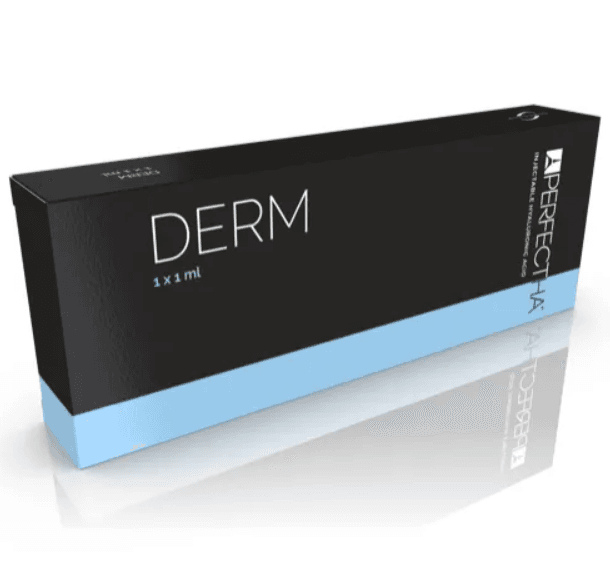
Perfectha® Derm is a crosslinked hyaluronic acid dermal filler supplied in a sterile 1 mL prefilled syringe for professional aesthetic use. Licensed clinics and healthcare professionals can order Perfectha Derm for medium-dermis correction protocols where a 20 mg/mL HA gel and consistent syringe handling are required. The pack includes two 30G x 13 mm needles for treatment-room setup and single-patient use.
This presentation is designed for trained injectors managing moderate lines, contour defects, shallow depressions, and lip definition within clinic-controlled workflows. MedWholesaleSupplies supports professional ordering for licensed accounts using verified supply channels, US distribution, and documentation-focused logistics.
Perfectha Derm 1 mL Syringe Details
Perfectha Derm 1ml is a clinic-ready injectable gel containing crosslinked, non-animal hyaluronic acid at 20 mg/mL. The gel is intended for placement in the medium dermis by qualified professionals who understand facial anatomy, injection planes, aseptic technique, and post-procedure assessment. Its cohesive structure supports controlled extrusion and predictable placement during mid-depth correction.
The sterile unit format helps practices standardize room preparation and inventory counting. Each syringe is intended for single-patient use, and the included 30G needles allow staff to prepare the device without sourcing basic accessories separately. Lot and expiry information on the pack support traceability, internal logs, and routine clinical documentation.
| Attribute | Clinic-use detail |
|---|---|
| Product | Perfectha® Derm |
| Filler class | Crosslinked hyaluronic acid dermal filler |
| Concentration | 20 mg/mL |
| Syringe format | 1 x 1 mL sterile prefilled syringe |
| Needles included | 2 x 30G x 13 mm needles |
| Professional plane | Medium dermis, according to training and labeling |
Quick tip: Match the product’s medium-dermis profile to your clinic’s indication map before adding it to a treatment tray.
Price, Account Access, and Clinic Ordering
Verified professional accounts can sign in to view the current Perfectha Derm price and account-specific purchasing terms. Public pricing is not displayed because ordering is limited to licensed clinics, med spas, aesthetic practices, and qualified healthcare professionals. Volume needs, replenishment cadence, and multi-room inventory planning can be handled through your normal account workflow.
Clinics evaluating Perfectha Derm cost should consider more than the syringe price. Staff should factor in indication fit, predictable utilization, accessory needs, documentation processes, and how the product complements other HA fillers already in the formulary. The single-syringe format can help teams forecast stock for moderate line correction and lip-border appointments without overcommitting to larger case quantities.
New accounts may need to complete credential checks before purchasing. Once account access is active, ordering teams can align par levels with scheduled injectable days, practitioner preferences, and expected turnover. Products are sourced through vetted distributors and verified supply channels for licensed clinics.
Professional Applications and Treatment-Room Fit
Perfectha Derm filler is commonly selected for professional mid-depth correction where a cohesive HA gel is appropriate. Typical clinic applications include glabellar lines, moderate facial wrinkles, shallow skin depressions, contour irregularities, and refinement of the lip profile. Treatment planning should remain conservative and anatomy-led, with product choice matched to tissue quality, depth, mobility, and the practitioner’s established technique.
Hyaluronic acid binds water in tissue, creating temporary volume that can soften visible folds and support contour correction. Crosslinking helps the gel maintain structure after placement while allowing gradual integration with the surrounding matrix. The goal is controlled correction, not overfilling; assessment, aspiration practices when used by the injector, and post-injection monitoring depend on the clinic’s protocols and professional training.
Practices building a broader HA filler formulary can browse the Perfectha range to align gel selection across fine-line, mid-depth, deep-fold, and structural indications. For wider category planning, the article on wholesale dermal fillers for aesthetic practices gives clinic-focused context on supply decisions without replacing product labeling or injector judgment.
Composition, Gel Behavior, and Mechanism
Perfectha Derm 20mg/ml contains non-animal hyaluronic acid in a crosslinked gel matrix. HA is a naturally occurring glycosaminoglycan found in connective tissue, where it contributes to hydration and volume. In dermal filler use, a crosslinked HA network provides temporary soft-tissue augmentation through water binding and mechanical support.
The current product information describes a high cross-linking ratio of approximately 90%, contributing to gel integrity and form stability. In practical terms, this supports an even flow through the syringe and controlled deposition in the target plane. Handling still depends on injector technique, needle selection, tissue resistance, product temperature, and the clinical objective for each region.
Perfectha Derm is not positioned as a universal filler for every facial area. For etched superficial lines, a lighter presentation may be more appropriate; for deeper folds or stronger projection needs, a higher-viscosity filler may fit better. Protocols should define which gel is used for each plane, how much correction is appropriate, and when staged treatment is safer than aggressive placement.
Packaging, Sterile Handling, and Inventory Control
Each unit contains one sterile 1 mL prefilled syringe and two 30G x 13 mm needles. Staff should inspect the outer carton, blister, syringe, needle packaging, batch information, and expiration date before setup. Do not use units that appear opened, damaged, contaminated, expired, or inconsistent with your clinic’s receiving policies.
The syringe should be handled using aseptic technique and used only by trained professionals. Single-patient use supports infection-control expectations and simplifies documentation because the syringe, lot number, and treatment record can be tied to one appointment. Clear lot and expiry details also support internal audits, adverse-event follow-up, and distributor reconciliation.
Inventory teams should store and rotate stock according to the product’s labeling and clinic policies. Keep product records accessible to the injecting practitioner and the person responsible for medical supply reconciliation. When required, orders can use temperature-controlled handling when required and tracked US delivery.
Safety, Side Effects, and Professional Precautions
Dermal fillers require professional assessment before administration. Local reactions can include irritation, tenderness, swelling, erythema, bruising, discomfort, itching, or small injection-site irregularities. These effects are often transient, but clinics should provide appropriate aftercare instructions, document findings, and monitor for events that fall outside the expected recovery pattern.
Serious filler complications are uncommon but clinically important. Vascular compromise, infection, inflammatory nodules, hypersensitivity reactions, and tissue injury require prompt recognition and management. Injectors should understand facial vascular anatomy, risk-reduction techniques, and escalation pathways before using any HA filler. Emergency supplies, complication protocols, and staff training should be maintained according to professional standards.
Patient selection remains a medical decision. Review relevant history, prior filler or device treatments, allergies, active skin conditions, infection risk, anticoagulant or antiplatelet use, autoimmune considerations, pregnancy or lactation status, and any clinic-specific exclusion criteria. Avoid treating through inflamed or infected skin, and defer procedures when assessment suggests an elevated risk that cannot be appropriately managed in the practice setting.
For broader education on outcomes and documentation, clinics may find dermal filler before-and-after assessment useful for standardizing photography, expectation setting, and follow-up review. For aftercare workflow, see post-treatment care essentials for dermal fillers and adapt any general principles to your medical director’s policies.
Choosing Within the Perfectha Filler Range
Perfectha Derm sits in the middle of the range for clinics needing a 20 mg/mL HA filler suited to medium-dermis correction. Product choice should reflect the depth of the fold, tissue thickness, desired lift, mobility of the treated area, and whether the objective is soft smoothing, border definition, or stronger contour support.
For finer etched lines or delicate superficial work, the Perfectha FineLines syringe may align better with a low-volume, fine-correction approach. For deeper folds requiring greater lift, Perfectha Deep offers a related option within the same family. Clinics that prefer anesthetic-containing presentations can evaluate Perfectha Derm Lidocaine where it fits their protocols and patient screening criteria.
More structural correction may require a different product profile. The Perfectha Subskin presentation can be considered by practices that use higher-support HA fillers for appropriate indications. Selection should be led by training, labeling, clinical evaluation, and a conservative plan for staged outcomes.
Results Planning and Follow-Up Expectations
Questions about whether Perfectha filler is “good” are best answered in clinical terms. A filler is appropriate when its rheology, placement depth, safety profile, and handling characteristics match the patient assessment and the injector’s objective. For clinics, the practical value of Perfectha Derm is its role as a mid-depth HA filler with a standardized 1 mL syringe and predictable setup.
Duration can vary by region, injection technique, tissue movement, metabolic factors, product volume, and the individual patient’s treatment history. Avoid promising a fixed outcome window. Instead, document baseline findings, use standardized photography when allowed by clinic policy, and schedule review according to the practice’s normal aesthetic follow-up process.
Marionette lines, nasolabial folds, and perioral concerns may require more than one product or technique. The “best” filler depends on fold depth, skin quality, support loss, and whether the treatment plan also requires structural contouring. Clinics should choose based on assessment rather than a single product name.
Authoritative Sources
For class-level dermal filler safety and hyaluronic acid background, refer to authoritative sources alongside manufacturer labeling and professional training. These references support general safety context and do not replace product-specific instructions.
Use Perfectha® Derm only within professional scope, established clinic protocols, and applicable labeling. Ordering, storage, administration, documentation, and follow-up should be managed by licensed clinical teams.
This content is for informational purposes only and is not a substitute for professional medical advice.
Frequently Asked Questions
Who can order Perfectha® Derm?
Perfectha® Derm is intended for licensed clinics, med spas, aesthetic practices, and qualified healthcare professionals. New accounts may need credential verification before purchasing.
What is included with Perfectha Derm 1 mL?
Each unit contains one sterile 1 mL prefilled syringe of Perfectha Derm 20 mg/mL hyaluronic acid gel and two 30G x 13 mm needles.
What is Perfectha Derm used for in clinics?
Clinics use Perfectha Derm for professional mid-dermal correction of moderate lines, shallow depressions, contour defects, and lip definition when clinically appropriate.
How should clinics plan Perfectha Derm inventory?
Track syringe use by indication, practitioner preference, scheduled injectable days, lot number, and expiry date. The single-syringe format supports room-level counting and replenishment planning.
Can Perfectha Derm be compared with other Perfectha fillers?
Yes. Perfectha Derm is a mid-depth HA filler. FineLines, Deep, Derm Lidocaine, and Subskin presentations may suit different planes or correction goals based on training and protocol.
What safety checks matter before using Perfectha Derm?
Clinics should assess medical history, prior filler use, allergy risk, active skin conditions, infection risk, anticoagulant use, and treatment-area anatomy before administration.
Specifications
- Main Ingredient: Cross-Linked Hyaluronic Acid
- Manufacturer: ObvieLine,Sinclair
- Drug Class: Aesthetic Surgery Product
- Generic Name: Hyaluronic Acid Filler
- Package Contents: 1mL x 1 Pre-Filled Syringe
- Storage Requirements: Room Temperature (2℃~25℃)
- Main Usage: Volume Filler
About the Brand
Perfectha
Perfectha holds a notable reputation in the medical industry for the superior quality of its skin filler products. Whether your goal is to enhance your lips, diminish wrinkles or replenish facial volume, Perfectha offers unmatched effectiveness. These ground-breaking fillers are crafted to deliver naturally beautiful and enduring results, making them a top choice among both healthcare practitioners and consumers. With Perfectha, attain the youthful, revitalized look you've always desired. If you’re in the market for Perfectha products, your search ends at medwholesalesupplies.com. As a credible online purveyor of medical supplies, we provide a plethora of Perfectha products at fair prices. Order Perfectha through our site to guarantee that you are purchasing genuine products straight from respected manufacturers. We also offer rapid and trustworthy shipping services, delivering your Perfectha products right to your front door. Thanks to our user-friendly website and secure payment methods, shopping for Perfectha is more convenient than ever. At medwholesalesupplies.com, we place great value on the quality and safety of our medical products. This is why we have meticulously chosen Perfectha as one of our esteemed brands. Perfectha is lauded for its stringent testing methods and adherence to international standards, guaranteeing foremost safety and efficacy. When ordering Perfectha via our website, rest assured that you are choosing a brand highly esteemed by healthcare professionals globally. Don't settle when it comes to your aesthetic pursuits – trust in Perfectha and shop confidently at medwholesalesupplies.com.
Browse Perfectha Products
Here to help
Questions about ordering, delivery or products? You can email our team here or call now at 1-800-630-9757 and be connected with your dedicated Account Manager
Related Products
Evenity® (English Alternative)
Injectable Medication
$1,229.00 - $1,299.00
You save
You save
Intraline® For Men
Dermal Filler
$59.00 - $79.00
You save
You save
RejuvaNAD+ Pro
Injectable Medication
$237.00 - $249.00
You save
You save
Teosyal® RHA 4
Aesthetic Surgery Product
$259.00 - $279.00
You save
You save
Related Articles
Prednisone in Clinical Care: Uses, Risks, and Monitoring
Prednisone is a prescription systemic corticosteroid used to reduce inflammation or suppress immune activity in…
Lip Fillers Swelling Stages: Timeline, Safety, and Follow-Up
Lip fillers swelling stages usually follow a short inflammatory course: swelling appears soon after injection,…
Hypopigmentation of the Skin: Assessment and Care
Hypopigmentation of the skin means one or more areas look lighter than the surrounding skin.…
Radiesse vs Sculptra: Selection Factors for Clinics
Radiesse vs Sculptra is best understood as a comparison between two collagen-stimulating injectables with different…
Hyaluronic Acid Under-Eye Filler: Safety and Workflow
Hyaluronic acid under-eye filler is an injectable soft-tissue filler used by trained aesthetic clinicians to…
Dermal Filler Types: Materials, Uses, and Clinic Fit
Dermal filler types are usually grouped by their base material, tissue behavior, and expected role…
What Is Dysport? Clinical Uses, Safety, and Workflow
For clinic teams asking what is Dysport, the short answer is simple: Dysport is a…
Biostimulators in Aesthetic Care: Selection and Safety
Biostimulators are injectable aesthetic products used to encourage a controlled tissue response, often involving new…