
$599.00
You save (%)
Description
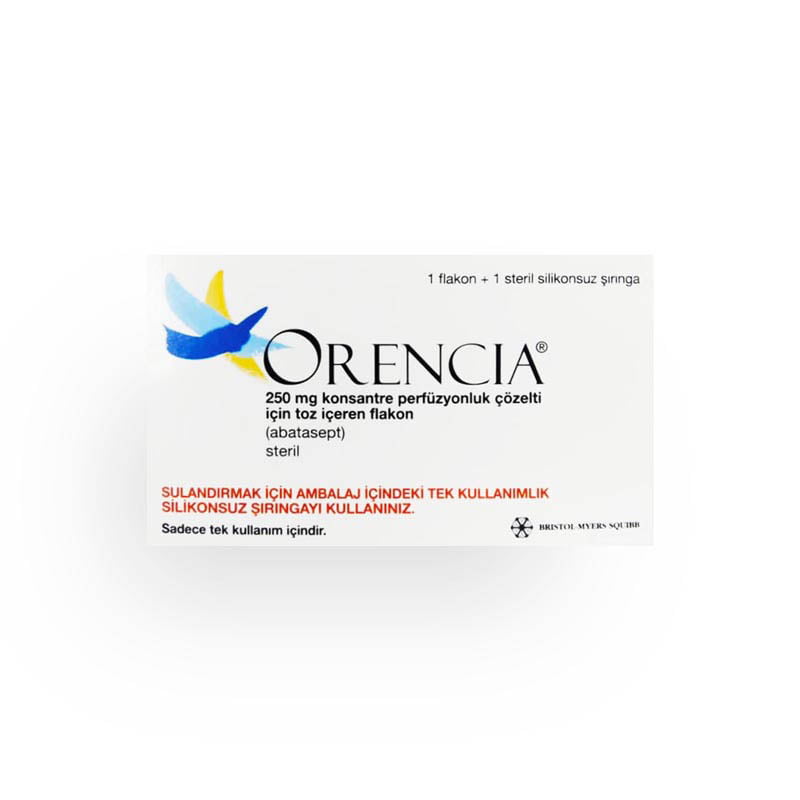
Orencia®(Non-English) is a 250 mg abatacept vial supplied as lyophilized powder for intravenous infusion after reconstitution. Licensed clinics and healthcare professionals can order ORENCIA 250mg vial inventory for rheumatology infusion workflows, pharmacy preparation, lot tracking, and treatment-room documentation. This Non-English packaging presentation may support facilities that accept international labeling within their procurement and materials-management policies.
Med Wholesale Supplies serves professional purchasers with brand-name medical products sourced through vetted distributors and verified supply channels. Orencia clinic supply is handled for US distribution, with temperature-controlled handling when required and tracked US delivery.
ORENCIA 250mg Vial Price and Ordering Details
Current ORENCIA price information is available to verified professional accounts during ordering. The final cost may vary by account terms, order quantity, supply conditions, and accepted packaging language. Facilities planning abatacept infusion volume can align purchasing with clinic schedules, pharmacy workload, and projected patient treatment days.
The supplied presentation is an ORENCIA 250mg 15ml vial intended for single use after aseptic reconstitution and dilution according to the manufacturer’s instructions. Packaging language and barcode format may differ from U.S.-labeled stock, so pharmacy, receiving, and purchasing teams should confirm that the carton, vial, lot, and expiry documentation fit internal acceptance procedures.
For broader biologic purchasing, teams can browse the Rheumatology category or review the Pharmaceuticals category for adjacent clinic-supplied medicines. These category views can help formulary, purchasing, and infusion-center teams organize related products without mixing clinical decision-making with procurement tasks.
What Orencia Is and How It Works
Orencia is abatacept, a biologic immunomodulator used in labeled inflammatory arthritis care. It is a selective co-stimulation modulator, meaning it interferes with the CD80/CD86 and CD28 signal needed for full T-cell activation. By reducing that immune activation pathway, abatacept helps clinicians manage immune-mediated inflammation within approved treatment plans.
The intravenous vial is prepared by trained staff in a controlled setting. After reconstitution, the medicine is diluted for infusion and administered in a monitored clinical environment. This route fits rheumatology infusion suites, hospital outpatient departments, and specialty clinics that already maintain biologic preparation, infusion observation, and post-infusion documentation workflows.
Orencia is used for conditions such as adult rheumatoid arthritis, adult psoriatic arthritis, and certain pediatric juvenile idiopathic arthritis regimens when consistent with approved labeling and clinician direction. It is not the same medication as Rinvoq; Rinvoq is upadacitinib, a Janus kinase inhibitor, while Orencia is abatacept and works through T-cell co-stimulation modulation.
Professional Applications in Infusion Settings
Infusion centers use the abatacept 250mg vial to support standardized preparation and administration steps. The single-use vial format allows pharmacy teams to document lot numbers, reconstitution times, and product identifiers while nursing teams record administration details in the EHR. These steps matter for biologic traceability, charge capture, and audit-ready records.
Hospital outpatient departments and rheumatology service lines often schedule abatacept infusions alongside other biologic appointments. The vial presentation supports pharmacist-led preparation, chair-time planning, and staff handoff between cleanroom and infusion room. Facilities can also use internal protocols to define observation requirements, infusion reaction response steps, and communication with the prescribing clinical team.
Clinics building an inflammatory arthritis program may find additional operational context in rheumatoid arthritis injection therapy and the Orencia side effects and infusion guide. Internal clinical policies and official labeling should remain the controlling references for preparation, administration, and monitoring.
Key Features of the Non-English Vial
- Active ingredient: abatacept, supplied as a biologic immunomodulator.
- Strength: 250 mg per vial.
- Container: 15 mL single-use vial.
- Form: sterile lyophilized powder for solution after reconstitution.
- Route: intravenous infusion after preparation and dilution.
- Packaging: Non-English labeling for facilities that accept international packaging.
- Workflow fit: supports pharmacy preparation, infusion administration, and lot-level documentation.
- Professional use: intended for healthcare facility procurement and clinic administration.
Non-English packaging can help some facilities diversify procurement channels, but it requires disciplined receiving controls. Teams should examine the carton and vial, retain manufacturer documentation, and ensure the labeling language, barcode behavior, and internal item master entry support safe clinical operations.
Composition, Preparation, and Handling
The active component is abatacept, a fusion protein that modulates T-cell co-stimulation. The vial contains sterile lyophilized powder that must be reconstituted and diluted before intravenous infusion. Staff should follow the official instructions for reconstitution, dilution, inspection, and administration rather than creating local compounding shortcuts.
Other components include excipients and buffering agents listed in the manufacturer’s labeling. The prepared solution should be handled aseptically, inspected according to labeling, and used within the conditions specified by the manufacturer. Avoid mixing abatacept with other medicines in a way that is not supported by the instructions for use.
Receiving teams should store and handle the product according to the labeled conditions. Because biologics are sensitive products, clinic procedures should address shipment review, temperature records when applicable, quarantine of questionable units, and escalation to pharmacy leadership before any uncertain product enters clinical use.
Safety, Contraindications, and Monitoring
Orencia affects immune function, so clinical screening matters before use. People with a known hypersensitivity to abatacept or any product component should not receive it. Clinicians also evaluate infection history, current infections, immunization status, tuberculosis risk, and concomitant immune-suppressing medicines before beginning or continuing therapy.
Commonly discussed adverse effects with abatacept may include headache, upper respiratory tract symptoms, nausea, and infusion-related reactions. Serious risks can include severe infections, hypersensitivity reactions, and worsening respiratory symptoms in certain patients with chronic obstructive pulmonary disease. Infusion staff should be prepared to recognize and respond to acute reactions under facility protocol.
Live vaccines are generally avoided during abatacept treatment and for the period specified in labeling. When patients are also receiving other biologic immunosuppressants or targeted immune therapies, clinicians consider additive infection risk. Clinics should maintain communication between prescribing specialists, infusion nurses, and pharmacy staff so screening findings and hold parameters are documented before administration.
Quick tip: Keep infusion reaction supplies, product lot records, and current clinical orders aligned before chair time begins.
Inventory Documentation and Clinic Workflow
Orencia Non-English vial inventory should be managed with a clear receiving and release process. Materials teams can record lot number, expiry date, package language, and quantity received, while pharmacy teams verify that the product matches the clinical order and internal formulary entry. These steps reduce preventable delays on infusion days.
Barcode formats may not match every EHR or inventory system when packaging differs from domestic stock. If scanning does not map cleanly, facilities should use approved manual verification and documentation procedures. Staff education is especially important when multiple abatacept presentations or biologic brands are stocked in the same medication storage area.
Procurement staff may also evaluate adjacent biologic workflow needs, such as cold storage capacity, preparation supplies, cleanroom scheduling, and nursing chair utilization. When reviewing class-adjacent therapies, product-specific policies remain essential because dosing, route, screening, and monitoring are not interchangeable across biologics.
Comparable Rheumatology and Biologic Products
Orencia is one option within a broader rheumatology biologic program. Clinics may also maintain other professional-use biologics depending on their service mix, prescriber preferences, and patient population. Related product reviews may include Cimzia pre-filled syringes, Actemra, and Mabthera 500mg.
These products are not direct substitutes for Orencia without clinician review. Mechanisms, labeled indications, routes of administration, screening needs, and safety warnings differ. For example, abatacept targets T-cell co-stimulation, while other biologics may target tumor necrosis factor, interleukin-6 signaling, or B cells. Pharmacy and therapeutics committees should document any protocol changes before purchasing or administration workflows change.
Facilities considering self-administered biologic pathways can also read about pre-filled syringes in rheumatoid arthritis therapy. For infusion-program planning across different biologic mechanisms, the Actemra uses and side effects article and Remicade medication overview can support internal education, while official labels remain the primary clinical references.
Generic Status and Product Identity
There is no simple retail generic equivalent of Orencia that should be treated as automatically interchangeable with this branded biologic vial. Abatacept is the active ingredient, and biologic substitution rules are different from traditional small-molecule generic substitution. Any biosimilar, alternate biologic, or formulary change requires policy review and clinician approval.
The term ORENCIA Non-English refers to the packaging language of the branded product supplied for professional procurement. It does not change the active ingredient, vial strength, or intended infusion-route handling described for this presentation. Facilities should retain purchase records and package documentation so the product identity remains clear during audits and clinical review.
Authoritative Sources
- Official ORENCIA prescribing information
- Manufacturer healthcare professional information
- American College of Rheumatology abatacept information
Use these sources for labeled indications, preparation instructions, safety warnings, and monitoring considerations. Local protocols should define how your clinic applies labeling requirements to ordering, storage, pharmacy preparation, infusion administration, and documentation.
This content is for informational purposes only and is not a substitute for professional medical advice.
Frequently Asked Questions
What kind of medication is Orencia?
Orencia is abatacept, a biologic immunomodulator. It works by modulating T-cell co-stimulation, which helps reduce immune-driven inflammation in labeled conditions such as rheumatoid arthritis, psoriatic arthritis, and certain juvenile idiopathic arthritis regimens.
Who cannot take Orencia?
People with known hypersensitivity to abatacept or any component should not receive Orencia. Clinicians also assess active infection, infection risk, immunization status, tuberculosis risk, respiratory history, and concurrent immune-suppressing therapy before treatment.
Is there a generic form of Orencia?
Orencia contains abatacept, but biologics do not follow the same substitution pathway as traditional generic tablets. Any biosimilar or alternate biologic decision should be reviewed through clinical leadership and pharmacy policy before use.
Is Rinvoq the same as Orencia?
No. Rinvoq is upadacitinib, a Janus kinase inhibitor. Orencia is abatacept, a biologic selective co-stimulation modulator. They have different mechanisms, routes, safety considerations, and formulary requirements.
How should clinics handle Non-English Orencia packaging?
Receiving and pharmacy teams should verify product name, strength, vial presentation, lot number, expiry date, and package documentation. Barcode differences may require approved manual verification within the clinic’s inventory and EHR workflow.
What is the supplied vial presentation?
This presentation is a 250 mg abatacept vial in a 15 mL container. It is supplied as lyophilized powder for reconstitution and dilution before intravenous infusion in a monitored healthcare setting.
Specifications
- Main Ingredient: Abatacept
- Manufacturer: Bristol-Myers Squibb Company
- Drug Class: Immunosuppressant
- Generic Name: Abatacept
- Package Contents: 250 mg x 1 Vial
- Storage Requirements: Cool Temperature (2℃~8℃)
- Main Usage:
About the Brand
Orencia
Orencia, a renowned medicinal brand offering effective treatment for rheumatoid arthritis, is available on our broad-spectrum of products on mediwholesalesolutions.com. When you choose to purchase Orencia through us, you're assured the genuineness and superior quality of the medication, as all our products are supplied directly from bona fide pharmaceutical manufacturers. Our dedication to offering trustworthy and secure medical supplies establishes us as the preferred supplier for medical professionals and patients alike. Shopping for Orencia on mediwholesalesolutions.com, you'll experience convenience and affordability. From the luxury of your home or workplace you can place your order. Our easily navigable and secure website ensures a seamless buying experience. Moreover, owing to our direct manufacturer ties, we are able to provide competitive rates making Orencia accessible and economical. Acknowledging the significance of safety while purchasing medications, at mediwholesalesolutions.com, client safety is prioritized and all items procured are from trusted manufacturers. Trusting us to purchase Orencia, you can be assured of obtaining a valid and authentic medication. We also offer efficient and reliable shipping services ensuring that your medication is delivered promptly. With mediwholesalesolutions.com, all your medication needs, including Orencia, can be met experiencing convenience, affordability, and safety.
Browse Orencia Products
Here to help
Questions about ordering, delivery or products? You can email our team here or call now at 1-800-630-9757 and be connected with your dedicated Account Manager
Related Products
$107.00 - $145.00
You save (%)
You save (%)
$45.00 - $60.00
You save (%)
You save (%)
$63.00 - $85.00
You save (%)
You save (%)
$85.00 - $89.00
You save (%)
You save (%)
Related Articles
Prednisone in Clinical Care: Uses, Risks, and Monitoring
Prednisone is a prescription systemic corticosteroid used to reduce inflammation or suppress immune activity in…
Lip Fillers Swelling Stages: Timeline, Safety, and Follow-Up
Lip fillers swelling stages usually follow a short inflammatory course: swelling appears soon after injection,…
Hypopigmentation of the Skin: Assessment and Care
Hypopigmentation of the skin means one or more areas look lighter than the surrounding skin.…
Radiesse vs Sculptra: Selection Factors for Clinics
Radiesse vs Sculptra is best understood as a comparison between two collagen-stimulating injectables with different…
Hyaluronic Acid Under-Eye Filler: Safety and Workflow
Hyaluronic acid under-eye filler is an injectable soft-tissue filler used by trained aesthetic clinicians to…
Dermal Filler Types: Materials, Uses, and Clinic Fit
Dermal filler types are usually grouped by their base material, tissue behavior, and expected role…
What Is Dysport? Clinical Uses, Safety, and Workflow
For clinic teams asking what is Dysport, the short answer is simple: Dysport is a…
Biostimulators in Aesthetic Care: Selection and Safety
Biostimulators are injectable aesthetic products used to encourage a controlled tissue response, often involving new…