

- You must be logged in to add items to the cart.
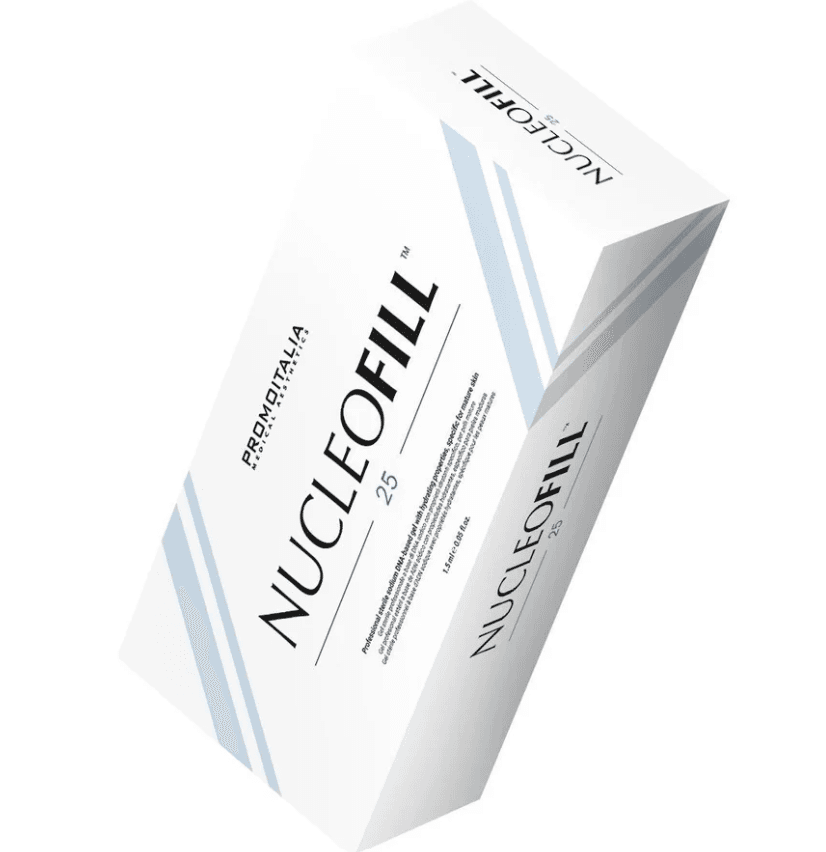
Nucleofill™ 25
Order Nucleofill™ 25 for Clinics
Hyaluronic Acid-Based Dermal Filler
$89.00
You save (%)
Description
Nucleofill™ 25 is an injectable polynucleotide gel used by licensed aesthetic clinics and healthcare professionals for professional skin biostimulation protocols. Clinics use Nucleofill 25 polynucleotide gel in treatment-room workflows focused on tissue hydration, dermal conditioning, and skin-quality support across areas such as the face, neck, and upper chest. Med Wholesale Supplies supports professional procurement with brand-name clinic supplies, documented lot and expiry details, and reliable US logistics.
This preparation belongs to the polynucleotide skin booster category rather than a volumizing dermal filler category. That distinction matters for consultation planning, treatment mapping, consent language, and inventory decisions because PN-based gels are selected for biorevitalization-style protocols instead of structural contouring.
Clinic Pricing, Ordering, and Professional Access
Licensed clinics can order Nucleofill™ 25 through a professional account and view current clinic pricing after signing in. The Nucleofill 25 price may depend on account terms, volume needs, and contract arrangements, so procurement teams should align order quantities with appointment schedules, treatment plans, and site-level inventory controls.
For multi-provider practices, a standardized ordering process helps avoid mismatched stock across rooms or locations. Assign a buyer or clinical lead to monitor lot numbers, expiry dates, and replenishment timing. This makes it easier to support consistent documentation and reduces disruption when PN protocols are scheduled alongside other aesthetic services.
Quick tip: Keep PN gel inventory grouped separately from HA boosters, dermal fillers, and peel supplies so staff can identify the correct class quickly during room setup.
What Nucleofill™ 25 Is Used For in Aesthetic Practice
Nucleofill™ 25 is used in professional aesthetic settings as a polynucleotide injectable for skin biostimulation. Clinics select this class when the treatment goal is improved skin quality, hydration support, and dermal remodeling rather than immediate volume replacement. Common professional-use areas include mature or photoexposed skin on the lower face, neck, and upper chest, subject to practitioner training and patient selection.
Polynucleotides are purified DNA-derived chains that can support fibroblast activity and extracellular matrix renewal. In practical terms, clinicians use the material as part of a regenerative or skin-conditioning protocol. The hydrophilic gel matrix also supports tissue hydration, which can help with suppleness and turgor in appropriately selected patients.
Many practices place PN injectables within broader skin booster and mesotherapy service lines. This positioning helps teams distinguish PN-based treatment plans from hyaluronic acid skin boosters, collagen-stimulating fillers, and energy-based procedures.
How Polynucleotide Gel Differs From Dermal Fillers
Nucleofill™ 25 is not positioned as a conventional filler for lift, contour, or volume correction. Dermal fillers are typically chosen when the goal is structural support, contour restoration, or soft-tissue augmentation. A polynucleotide gel is selected for biostimulation and skin-quality protocols, where hydration, texture, and dermal conditioning are the main objectives.
This difference affects consultation language and treatment planning. Clinics should avoid presenting PN treatment as a substitute for filler when the patient requires volume restoration. Conversely, PN-based approaches may complement filler, HA booster, peel, or device workflows when the clinical objective includes overall skin quality improvement.
For practices building a full injectable portfolio, the Nucleofill collection can help teams evaluate how products within the same family fit different skin-quality protocols. Product selection should remain based on practitioner training, clinical assessment, and the protocol approved by the practice.
Mechanism and Handling Characteristics
Nucleofill™ 25 contains purified polynucleotides in a sterile gel carrier suitable for intradermal professional administration. Polynucleotides are valued in aesthetic medicine for their ability to interact with dermal fibroblasts, support matrix activity, and contribute to an environment associated with tissue repair processes. The class is also discussed for antioxidant activity, including scavenging of reactive oxygen species.
The gel character supports controlled deposition during trained injection techniques. Clinicians may use microdepot or layered placement patterns depending on the treatment area, tissue quality, and protocol design. Technique choice, injection depth, spacing, and treatment interval should be determined by qualified practitioners using current training and clinic policy.
A 2024 review in aesthetic medicine describes polynucleotide use for skin texture, wrinkles, and facial appearance, while also noting that evidence quality and treatment protocols vary across studies. Clinics should use that evidence as context, not as a replacement for individualized assessment or hands-on training.
Key Features for Clinic Workflows
- Polynucleotide platform for professional skin biostimulation protocols.
- Sodium DNA-based formulation designed for intradermal clinical use.
- Sterile gel matrix for controlled placement by trained professionals.
- Hydrophilic character that supports tissue hydration and suppleness.
- Useful fit for face, neck, and upper chest skin-quality workflows.
- Compatible with clinic documentation practices using lot and expiry tracking.
- Appropriate for practices that separate PN protocols from filler and HA booster services.
- Operationally useful for med spas, aesthetic clinics, and healthcare-led injectable programs.
Administration Planning and Technique Considerations
Nucleofill™ 25 should be administered only by trained, licensed practitioners using aseptic technique and a clinically appropriate injection plan. The product may be incorporated into microinjection or depot-style workflows, but the exact technique depends on the treatment area, tissue thickness, patient factors, and the practitioner’s training.
Clinics should document the product name, treatment area, lot number, expiry date, injection approach, and any immediate observations according to their internal standards. Consistent charting supports continuity when patients return for staged protocols or when multiple providers work within the same practice.
Provider education is especially important because online interest often focuses on injection maps or simplified technique videos. Clinical leadership should rely on formal training, manufacturer-aligned materials when available, and professional standards rather than social media demonstrations. For broader clinical positioning, the article on Nucleofill treatment concepts can support staff education without replacing hands-on instruction.
Expected Treatment Role and Timeline Discussions
PN treatment conversations should set realistic expectations. Nucleofill™ 25 is selected for gradual skin-quality support, not instant volumizing correction. Some patients may notice hydration or texture changes over a course of treatment, but response timing and durability vary with age, skin condition, treatment area, lifestyle factors, and the full protocol used by the clinician.
When patients ask whether Nucleofill “works,” the most responsible clinic answer is specific: PN injectables have evidence supporting skin-quality applications, but outcomes depend on selection, technique, and protocol. A practice should avoid guaranteeing a duration of effect or presenting PN therapy as universally superior to fillers, boosters, lasers, or peels.
Clear consent materials can separate short-term treatment effects from longer-term biostimulation goals. This helps providers explain why a staged course may be recommended and why maintenance timing is individualized. The Nucleofill Medium clinical overview may also help teams compare PN positioning across related strengths or protocol categories.
Composition and Ingredients
The active component in Nucleofill™ 25 is purified polynucleotides, also described as sodium DNA. The product is presented in a sterile, buffered gel carrier suitable for professional intradermal administration. Its hydrophilic and viscoelastic nature supports even distribution when handled correctly by trained injectors.
No additional excipients are detailed in the current product information beyond the sterile gel vehicle. Clinics should always follow the packaging, storage label, and professional-use documentation supplied with the unit received. Do not use a unit if the sterile barrier, tamper-evident packaging, or labeling appears compromised.
Storage, Sterile Handling, and Documentation
Store Nucleofill™ 25 according to the product label and clinic policy. Protect units from extremes of temperature and direct sunlight. Keep unopened product in its original packaging until treatment-room preparation, and maintain separation from opened supplies, sharps, and non-sterile materials.
Before treatment, staff should confirm the product name, lot number, expiry date, and package integrity. After use, sharps and residual materials should be disposed of according to local requirements for regulated medical waste. These steps support traceability and reduce preventable handling errors in high-volume aesthetic settings.
Med Wholesale Supplies provides temperature-controlled handling when required and tracked US delivery. Clinic teams should inspect incoming shipments promptly, record lot details in inventory systems, and escalate any packaging concerns before scheduling use.
Safety, Suitability, and Professional Precautions
Nucleofill™ 25 is intended for administration by qualified healthcare professionals within appropriate aesthetic protocols. As with other injectable products, practices should assess treatment suitability before use, including medical history, skin condition, prior procedures, allergies, active infection, inflammation at the intended treatment site, and any factors that could affect healing or injection risk.
Possible procedure-related reactions may include localized redness, swelling, tenderness, bruising, or temporary discomfort at injection points. More serious events are uncommon but require appropriate clinical response. Clinics should have post-treatment instructions, escalation pathways, and emergency protocols aligned with their professional standards.
Do not combine products in the same syringe or alter the product unless supported by the manufacturer’s instructions and the clinic’s professional governance. When coordinating PN treatment with peels, lasers, radiofrequency, toxins, fillers, or HA boosters, schedule sequencing should be determined by trained clinicians. Patient consent should clearly describe the role of each procedure in the overall plan.
Inventory Planning for Multi-Service Practices
PN injectables often sit beside several adjacent categories in a clinic’s aesthetic portfolio. Keeping a clear inventory map helps staff choose the correct product for hydration-focused skin conditioning, filler-based contouring, or device-led resurfacing. This reduces confusion during busy treatment sessions and supports safer room turnover.
For practices expanding from HA boosters into PN protocols, a staff briefing should cover product class, storage expectations, documentation steps, treatment indications used by the clinic, and escalation procedures. Standardized templates can help keep consultation notes consistent across injectors while leaving final clinical judgment to the practitioner.
Clinics that stock several Nucleofill products may also review Nucleofill 20, Nucleofill Medium, and Nucleofill Soft Plus when building protocol-specific assortments. Product choice should reflect handling preference, treatment area, and clinical leadership guidance.
Comparable and Adjacent Products
Nucleofill™ 25 may be compared with other products in the same family by handling, viscosity, intended treatment area, and clinic protocol fit. A lighter or softer product may be preferable for different tissue characteristics, while a stronger or medium product may suit another trained application. The correct choice depends on professional assessment rather than product name alone.
Clinics evaluating PN-based service lines can browse related product categories for assortment planning. The skin booster category supports broader portfolio review, while the Nucleofill brand assortment helps teams stay within a familiar product family when standardizing training and documentation.
Authoritative Sources
This content is for informational purposes only and is not a substitute for professional medical advice.
Frequently Asked Questions
Is Nucleofill™ 25 a filler or a skin booster?
Nucleofill™ 25 is a polynucleotide gel used in professional skin biostimulation and skin-quality protocols. It is not positioned as a conventional volumizing dermal filler for structural contouring.
Who can order Nucleofill™ 25 from Med Wholesale Supplies?
Nucleofill™ 25 is supplied for licensed clinics, med spas, aesthetic practices, and healthcare professionals with appropriate professional-use ordering requirements. Account sign-in is needed to view clinic pricing and place orders.
How should clinics store and document Nucleofill™ 25?
Store the product according to the label, protect it from temperature extremes and direct sunlight, and keep it in original packaging until preparation. Record the product name, lot number, expiry date, and treatment details according to clinic policy.
Can Nucleofill™ 25 be used with fillers, peels, lasers, or HA boosters?
Clinicians may incorporate PN gel into broader aesthetic treatment plans, but sequencing and compatibility should be determined by trained practitioners. Do not mix products or combine procedures without appropriate professional guidance and consent.
How is Nucleofill™ 25 injected?
Administration technique is determined by the treating professional based on training, treatment area, tissue quality, and clinic protocol. Online technique summaries should not replace formal injector training or manufacturer-aligned professional education.
Does Nucleofill™ 25 have immediate results?
Nucleofill™ 25 is selected for gradual skin-quality and biostimulation protocols rather than instant volume correction. Response timing and duration vary by patient factors, treatment area, technique, and the overall plan set by the clinician.
Specifications
- Main Ingredient: Polynucleotides
- Manufacturer: Promoitalia Medical-Aesthetics
- Drug Class: Aesthetic
- Generic Name: Polymerized polynucleotides (25 mg/ml)polu
- Package Contents: 1 x 1.5 ml pre-filled syringe.
- Storage Requirements: Room Temperature (2℃~25℃)
- Main Usage: Anti Ageing
About the Brand
Nucleofill
Regarded as a premier marque in the world of healthcare, Nucleofill is renowned for its superior line of dermal fillers. If you're aiming to advance your aesthetic procedures or offer your clientele the latest wrinkle smoothing and facial amplification therapies, Nucleofill stands out as an exemplary choice. The brand features an ample selection of trustworthy and potent products specifically engineered to create an authentic and natural outcome. Whether you require fillers for profound wrinkles, facial sculpting, or lip augmentation, Nucleofill offers suitable solutions. At medwholesalesupplies.com, we are honoured to provide Nucleofill merchandise for acquisition. We recognize the crucial role of reliable and expedient sourcing for medical practitioners, hence we've made it our goal to supply quality products at pocket-friendly prices. With Nucleofill, rely on a brand that carries with it a reputation fortified by years of exploration and development. Upon securing Nucleofill through medwholesalesupplies.com, rest easy knowing you've procured a risk-free and dependable product delivered straight to your front door. Beyond just offering Nucleofill items, medwholesalesupplies.com is dedicated to phenomenal customer service and assistance. Our commitment is to guarantee you have a smooth transaction from inception to completion. Our team of industry professionals is always on standby to respond to any queries or deal with any issues that may arise. Thanks to our intuitive online platform, you have the ease of browsing and buying Nucleofill products in just a few clicks. Bid goodbye to the stress of having multiple suppliers and welcome the simplicity of securing all your healthcare supplies in one location. With the trusted dependability and efficiency of medwholesalesupplies.com, understand why we are the trusted partner for medical professionals for their Nucleofill requirements.
Browse Nucleofill Products
Here to help
Questions about ordering, delivery or products? You can email our team here or call now at 1-800-630-9757 and be connected with your dedicated Account Manager
Related Products
JALUPRO® PLUS 4ML
Skin Rejuvenation Treatment
$86.00 - $89.00
You save (%)
You save (%)
$339.00 - $399.00
You save (%)
You save (%)
Select options
This product has multiple variants. The options may be chosen on the product page
Juvéderm® SKINVIVE
Dermal Filler
$339.00 - $359.00
You save (%)
You save (%)
$86.00 - $119.00
You save (%)
You save (%)
Related Articles
Prednisone in Clinical Care: Uses, Risks, and Monitoring
Prednisone is a prescription systemic corticosteroid used to reduce inflammation or suppress immune activity in…
Lip Fillers Swelling Stages: Timeline, Safety, and Follow-Up
Lip fillers swelling stages usually follow a short inflammatory course: swelling appears soon after injection,…
Hypopigmentation of the Skin: Assessment and Care
Hypopigmentation of the skin means one or more areas look lighter than the surrounding skin.…
Radiesse vs Sculptra: Selection Factors for Clinics
Radiesse vs Sculptra is best understood as a comparison between two collagen-stimulating injectables with different…
Hyaluronic Acid Under-Eye Filler: Safety and Workflow
Hyaluronic acid under-eye filler is an injectable soft-tissue filler used by trained aesthetic clinicians to…
Dermal Filler Types: Materials, Uses, and Clinic Fit
Dermal filler types are usually grouped by their base material, tissue behavior, and expected role…
What Is Dysport? Clinical Uses, Safety, and Workflow
For clinic teams asking what is Dysport, the short answer is simple: Dysport is a…
Biostimulators in Aesthetic Care: Selection and Safety
Biostimulators are injectable aesthetic products used to encourage a controlled tissue response, often involving new…