
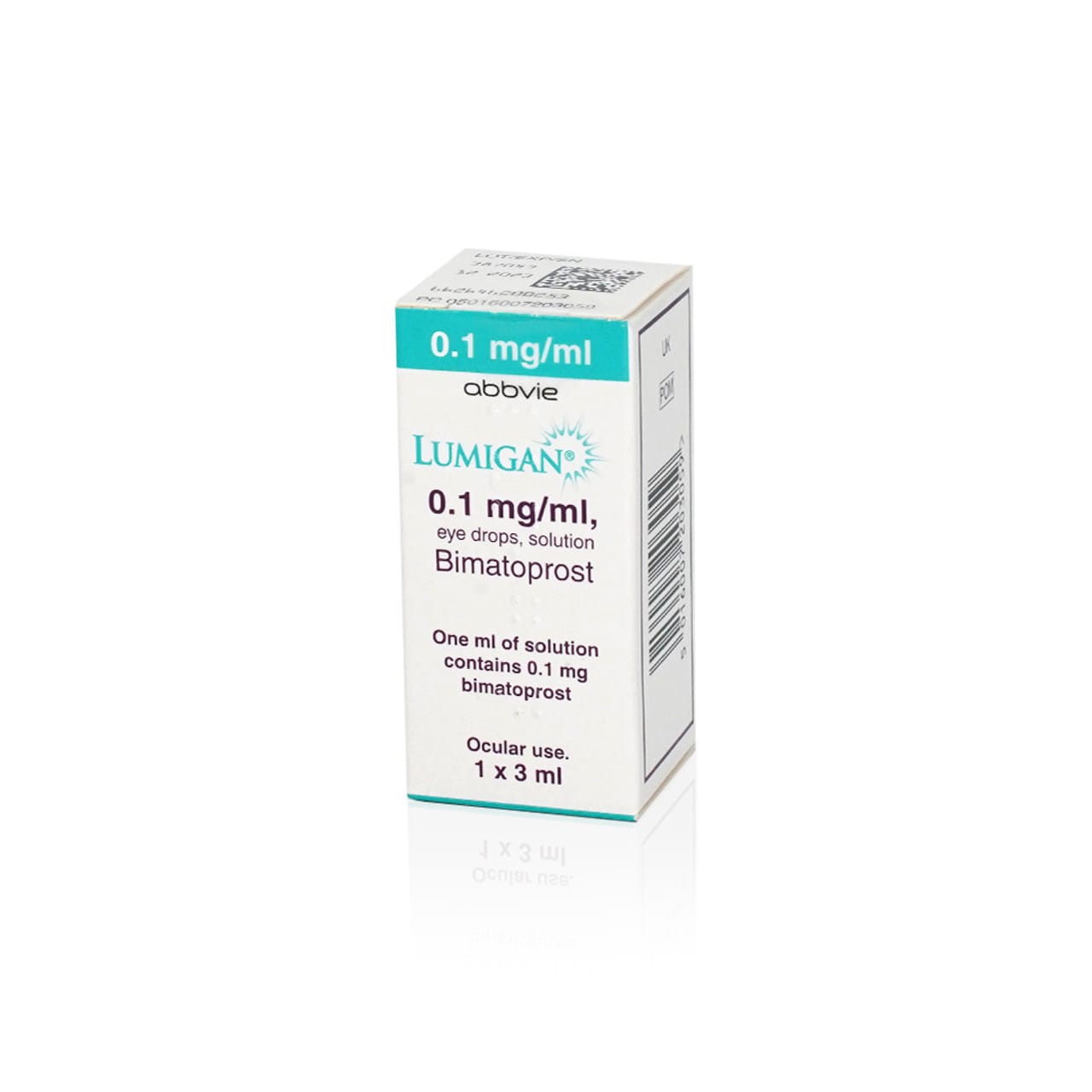
Lumigan®
Order Lumigan® for Clinics
Prescription Medication
$49.00
You save
Description
Lumigan® is a brand-name bimatoprost ophthalmic solution used in professional eye care pathways for lowering elevated intraocular pressure in open-angle glaucoma and ocular hypertension. Licensed clinics and healthcare professionals can order Lumigan® for supervised ocular protocols, inventory planning, and documented treatment-room workflows. The product is supplied as an ophthalmic drop formulation, so sterile handling, patient-specific use, and clear staff instruction are central to safe clinic use.
Lumigan® Price, Pack Selection, and Clinic Ordering
Clinics can sign in to view the current Lumigan eye drops price and select the product configuration shown during ordering. Use the strength, quantity, and labeling visible in your account to match the intended protocol and internal formulary records. If your practice tracks Lumigan cost across multiple locations, align the item name, active ingredient, lot number, and expiration date in your inventory system before distribution to treatment areas.
Med Wholesale Supplies serves licensed clinics and healthcare professionals with brand-name medical products sourced through vetted distributors and verified supply channels. Account setup may include facility details and professional documentation so ordering permissions, ship-to addresses, and purchasing controls remain aligned with your organization. For broader formulary planning, the ophthalmology category groups related eye-care products used in clinic settings.
Many purchasing teams compare branded Lumigan bimatoprost with bimatoprost eye drops used in similar pressure-lowering pathways. The active ingredient should be evaluated with the exact label, concentration, packaging, and clinic policy in mind rather than by name alone. Current pricing and product availability are shown within the ordering portal, with temperature-controlled handling when required and tracked US delivery.
What Lumigan® Treats in Professional Eye Care
Lumigan® contains bimatoprost, a prostaglandin analog used to reduce elevated intraocular pressure in patients with open-angle glaucoma or ocular hypertension. Intraocular pressure is the fluid pressure inside the eye; sustained elevation can contribute to optic nerve damage and vision loss. Clinics typically use this medication within longitudinal care plans that include baseline assessment, pressure checks, optic nerve monitoring, and follow-up documentation.
Bimatoprost works by increasing aqueous humor outflow through ocular drainage pathways. This outflow-based mechanism makes the medication familiar to ophthalmology and optometry teams managing chronic pressure control. Lumigan eye drops may be used alone or within a broader plan that includes other topical ocular therapies when the treating clinician determines that combination management is appropriate.
Some professional aesthetic or oculoplastic settings also maintain bimatoprost-based protocols for supervised eyelash enhancement. That use requires careful screening, counseling, photography standards, and follow-up because prostaglandin analogs can cause visible periocular changes. Clinics building lash-focused service lines can browse adjacent items in eyelash enhancers while keeping ocular safety review central to protocol design.
Active Ingredient and Mechanism
The active ingredient in Lumigan® is bimatoprost. As a prostaglandin analog, it helps lower intraocular pressure by improving the drainage of aqueous humor from the eye. This is different from medicines that primarily reduce fluid production, so the place Lumigan occupies in a protocol should reflect the clinician’s treatment plan, tolerability assessment, and monitoring schedule.
Searches for Bimatoprost 0.01 ophthalmic solution, Bimatoprost 0.03 ophthalmic solution, Lumigan 0.01 eye drops, and Lumigan 0.03 eye drops often reflect concentration-specific procurement questions. Clinics should use the label and order-screen information available for the exact item being purchased rather than assuming interchangeability between strengths or markets. This is especially important when historical protocols, EHR favorites, or external records use older naming conventions.
Because ophthalmic solutions come into contact with the eye, staff should reinforce hygienic administration technique. The dropper tip should not touch the eye, eyelid, fingers, or other surfaces. If multiple topical eye medications are used, spacing and sequencing should follow the clinician’s instructions and accepted clinic standards to reduce washout and irritation.
Key Features for Clinic Workflows
- Brand-name bimatoprost ophthalmic solution for topical ocular use.
- Used in open-angle glaucoma and ocular hypertension care pathways.
- Dropper bottle format supports staff demonstration and patient instruction.
- Lot and expiration labeling helps receiving teams document inventory movement.
- Fits ophthalmology, optometry, oculoplastic, and supervised aesthetic workflows.
- Supports standardized counseling around ocular administration and visible periocular effects.
- Can be mapped to clinic formularies, EHR medication lists, and purchasing records.
- Useful for recurring stock checks in practices managing chronic eye-care follow-up.
Quick tip: Keep the medication name, active ingredient, strength, lot, and expiry aligned across purchasing, charting, and treatment-room storage records.
Safety, Side Effects, and Monitoring
Commonly discussed effects of bimatoprost ophthalmic therapy include eye redness, irritation, itching, dryness, burning or stinging after instillation, eyelash growth, and changes around the eyelids. Prostaglandin analogs may also cause increased brown pigmentation of the iris, darkening of eyelid skin, and eyelash changes such as increased length, thickness, or number. Some pigmentation changes can be long lasting, so counseling and documentation are important before therapy begins.
Clinics should also consider ocular history, active inflammation, contact lens routines, prior surgery, and concurrent topical medications when integrating Lumigan® into care. Reported class concerns can include macular edema in susceptible patients and worsening of certain inflammatory eye conditions. Patients should be instructed to contact the treating clinic for eye pain, vision changes, marked redness, swelling, discharge, or suspected hypersensitivity.
For professional use, monitoring is not limited to symptom review. Eye-care teams commonly track intraocular pressure response, adherence, ocular surface tolerability, optic nerve findings, and refill timing. A structured protocol helps identify inadequate response, administration errors, duplicate prostaglandin use, and adverse cosmetic changes that may affect continuation.
Handling, Storage, and Documentation
Lumigan® should be handled as a sterile ophthalmic product. Staff should follow the package insert, facility policy, and any storage directions printed on the carton or bottle. The container should remain closed when not in use, and the dropper tip should be protected from contamination. Opened bottles should be managed according to clinic policy and the labeled instructions supplied with the product.
Receiving teams should record the lot number and expiration date before transferring stock to medication storage areas. For multi-site practices, consistent catalog naming reduces confusion between Lumigan solution, Lumigan bimatoprost, and other bimatoprost eye drops. If the clinic uses standing checklists, include storage location, handling precautions, patient-specific use rules, and disposal steps for expired or compromised bottles.
Training should cover practical administration points as well as safety counseling. Staff may demonstrate hand washing, cap handling, avoiding contact between the bottle tip and the eye, and spacing from other eye drops when directed. These steps protect sterility and help keep follow-up conversations consistent across providers.
Brand, Generic, and Market Naming Considerations
The generic name for Lumigan® is bimatoprost. A generic for Lumigan eye drops may be referenced in formularies, payer documents, or external records, but brand and generic availability can differ by market, concentration, and supplier channel. Clinics should confirm the exact active ingredient, concentration, label language, and packaging before substituting one bimatoprost product for another.
Questions such as “Why was Lumigan discontinued?” often come from market-specific changes, older strengths, or retailer records rather than a single global status. The practical procurement step is to use the current product label and the pack presented in your ordering account. If a protocol refers to Lumigan 0.01 generic, Lumigan 0.03, or a specific bottle size such as Lumigan 2.5 mL or Lumigan 7.5 mL, verify that the selected item matches the clinician-approved plan.
When substitution is appropriate, the treating clinician should approve the switch and the change should be reflected in the chart, medication list, and purchasing record. Differences in preservative exposure, concentration, administration instructions, or patient tolerance can matter even when the active ingredient is the same.
Professional Applications and Protocol Fit
Ophthalmology and optometry services use Lumigan® within structured pressure-lowering regimens that require regular measurement and longitudinal follow-up. The product can fit daily-use counseling, technician intake scripts, refill review, and medication reconciliation. Practices that coordinate with primary care, surgery centers, or external specialists should maintain clear records of start dates, response, tolerability, and any changes in therapy.
In aesthetic or oculoplastic settings, bimatoprost protocols should be designed with conservative screening and documentation. Teams should discuss ocular history, current eye medications, cosmetic expectations, and potential pigmentation or eyelash changes. Adjacent educational context on pressure-lowering use is available in glaucoma and ocular hypertension insights, while broader medication planning can be supported through the pharmaceuticals category.
Clinic leaders can also use this item as part of staff competency development. A short protocol can define who receives stock, who counsels on use, where bottles are stored, how lot numbers are recorded, and how adverse effects are escalated. The strongest workflows make the medication easy to track without weakening clinical oversight.
Comparable and Adjacent Products
Formulary planning may include other ophthalmic products used in related but distinct treatment pathways. Anti-infective and anti-inflammatory eye products are not substitutes for bimatoprost, but they may be relevant to separate post-procedure or inflammatory protocols. For educational context on infection-focused ophthalmic therapy, clinics can reference an eye infections guide and then align product choices with their own clinical standards.
When comparing Lumigan® with another glaucoma medication such as a beta blocker, carbonic anhydrase inhibitor, alpha agonist, or another prostaglandin analog, focus on mechanism, dosing routine, contraindications, tolerability, and monitoring needs. Latanoprost comparisons are common, but the decision should rest on clinician judgment and the patient’s documented response. Procurement teams should avoid treating similar category placement as automatic interchangeability.
For purchasing, the most useful comparison is often operational. Consider storage requirements, bottle handling, labeling clarity, pack quantity, staff familiarity, and the ability to document the product consistently. Those factors help reduce errors when clinics manage recurring refills and multiple topical eye medications.
Authoritative Sources
For clinical labeling and patient-safety context on bimatoprost ophthalmic solutions, consult current professional references and the package insert supplied with the product. These sources support indication, administration, adverse effect, and monitoring review but do not replace clinician judgment for individual care plans.
Close
Confirm your clinic account to view current packs, pricing, and ordering details for Lumigan®. Keep the selected strength and quantity aligned with the clinician-approved protocol, and record lot and expiration details when stock is received. For clinics managing multiple eye-care items, category-level browsing and consistent internal naming can simplify reorder planning.
This content is for informational purposes only and is not a substitute for professional medical advice.
Frequently Asked Questions
What is the generic name for Lumigan®?
The generic name for Lumigan® is bimatoprost. Clinics should confirm the exact concentration, label, and packaging before treating a bimatoprost product as interchangeable with a branded Lumigan® protocol.
Can clinics use Lumigan® for both glaucoma pathways and lash protocols?
Lumigan® is used in professional eye-care pathways for elevated intraocular pressure in open-angle glaucoma and ocular hypertension. Bimatoprost-based lash protocols require separate screening, counseling, and documentation because visible eyelid, iris, and eyelash changes can occur.
What long-term effects should clinics discuss before using Lumigan®?
Clinics commonly counsel on eye redness, irritation, eyelash growth, eyelid skin darkening, and possible increased brown iris pigmentation. Monitoring should include pressure response, tolerability, ocular history, and any reported vision changes or inflammation.
How should Lumigan® be handled in clinic inventory?
Record lot number and expiration date at receiving, store the bottle according to the package insert, and protect the dropper tip from contamination. Internal records should use consistent naming for Lumigan®, Lumigan solution, and bimatoprost eye drops.
Why do some sources ask whether Lumigan® was discontinued?
Discontinuation questions often reflect market-specific changes, older strengths, or retailer records. Clinics should rely on the current product label and the pack shown during ordering, then align any substitution with the clinician-approved protocol.
Specifications
- Main Ingredient:
- Manufacturer: Lumigan
- Drug Class:
- Generic Name: Bimatoprost
- Package Contents: 1 x 3 mL
- Storage Requirements: Store at 2°C to 25°C
- Main Usage:
Here to help
Questions about ordering, delivery or products? You can email our team here or call now at 1-800-630-9757 and be connected with your dedicated Account Manager
Related Products
Prolia® (International English)
Prescription Medication
$529.00 - $549.00
You save
You save
Evenity® (English Alternative)
Injectable Medication
$1,229.00 - $1,299.00
You save
You save
Intraline® For Men
Dermal Filler
$59.00 - $79.00
You save
You save
RejuvaNAD+ Pro
Injectable Medication
$237.00 - $249.00
You save
You save
Related Articles
Prednisone in Clinical Care: Uses, Risks, and Monitoring
Prednisone is a prescription systemic corticosteroid used to reduce inflammation or suppress immune activity in…
Lip Fillers Swelling Stages: Timeline, Safety, and Follow-Up
Lip fillers swelling stages usually follow a short inflammatory course: swelling appears soon after injection,…
Hypopigmentation of the Skin: Assessment and Care
Hypopigmentation of the skin means one or more areas look lighter than the surrounding skin.…
Radiesse vs Sculptra: Selection Factors for Clinics
Radiesse vs Sculptra is best understood as a comparison between two collagen-stimulating injectables with different…
Hyaluronic Acid Under-Eye Filler: Safety and Workflow
Hyaluronic acid under-eye filler is an injectable soft-tissue filler used by trained aesthetic clinicians to…
Dermal Filler Types: Materials, Uses, and Clinic Fit
Dermal filler types are usually grouped by their base material, tissue behavior, and expected role…
What Is Dysport? Clinical Uses, Safety, and Workflow
For clinic teams asking what is Dysport, the short answer is simple: Dysport is a…
Biostimulators in Aesthetic Care: Selection and Safety
Biostimulators are injectable aesthetic products used to encourage a controlled tissue response, often involving new…