
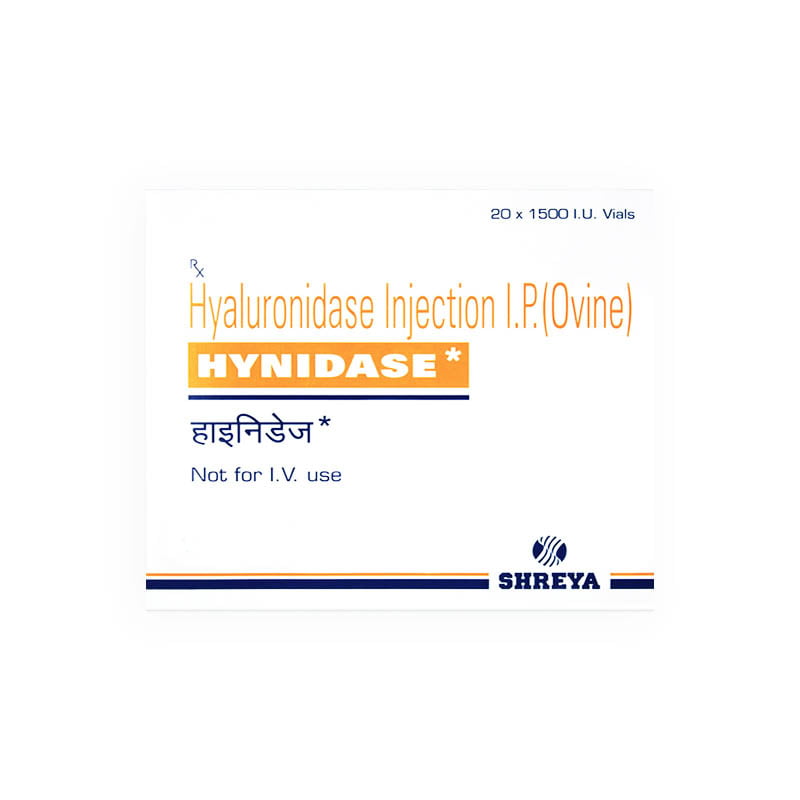
Hyndiase® 1500 iu (English Alternative)
Order Hyndiase® 1500 IU Injection for Clinics
Enzyme
$189.00
You save
Description
Hyndiase® 1500 IU is a sterile hyaluronidase preparation supplied in glass vials for professional clinical use. Licensed clinics and healthcare professionals can order the 20-vial English Alternative format for treatment-room protocols that require an enzymatic diffusion adjunct. Each Hyndiase 1500 IU vial is intended for professional reconstitution and aseptic handling according to clinic policy.
Hyaluronidase helps break down hyaluronic acid in the extracellular matrix, which can reduce tissue viscosity and support wider dispersion of compatible injected fluids. Clinics commonly use hyaluronidase products alongside local anesthetic infiltration, selected subcutaneous fluid administration workflows, and aesthetic protocols involving hyaluronic acid filler management. It should be used only by trained professionals with appropriate protocols, patient assessment, and documentation.
Hyaluronidase 1500 IU Injection for Professional Use
Hyndiase® contains hyaluronidase, an enzyme used as an adjuvant rather than a standalone treatment. In procedural settings, the enzyme can help coadministered solutions spread through the interstitial space more predictably. This role makes Hyaluronidase 1500 IU injection relevant to clinics that perform infiltration techniques, selected hydration protocols, or dermal filler correction services.
In aesthetic practice, hyaluronidase is commonly associated with the management of hyaluronic acid-based filler irregularities when correction is clinically appropriate. The enzyme does not replace assessment, consent, or emergency policies. It belongs within a controlled workflow that accounts for the treated area, the filler history, the patient’s allergy risk, and the clinician’s reconstitution and administration plan.
Hyndiase hyaluronidase 1500 IU may also be kept in clinic inventory for procedural readiness. A standardized product location, lot record, and expiry check help teams respond efficiently when an authorized protocol calls for hyaluronidase. For broader category planning, clinics can browse dermal filler removal supplies and related pharmaceutical products.
Vial Format, Pack Size, and Clinic Documentation
This English Alternative presentation is supplied as a box of 20 sterile glass vials. The multi-vial configuration supports clinics that schedule repeated procedures, maintain emergency or correction stock, or standardize supply levels across treatment rooms. Each vial should be received, stored, and prepared using the clinic’s standard medication-handling procedures.
Vial and carton identifiers support intake checks, lot tracking, and expiry rotation. The SKU for this item is 89273. English-language carton materials and information help clinical staff match the product to internal formularies, treatment records, and supply logs. For brand-level browsing, clinics can reference the Hynidase brand category.
Quick tip: Record the lot and expiry at receiving, then place the vials in the clinic’s designated injectable inventory area.
| Attribute | Clinic-use detail |
|---|---|
| Active component | Hyaluronidase enzyme |
| Strength | 1500 IU per vial |
| Presentation | Sterile powder for injection, reconstituted per professional protocol |
| Pack configuration | Box of 20 glass vials |
| Language format | English Alternative materials |
| SKU | 89273 |
How Clinics Use Hyndiase in Treatment Workflows
Clinicians deploy hyaluronidase when enzymatic dispersion is desired and the intended use fits professional policy. In local anesthesia workflows, it may support the spread of compatible infiltrates. In subcutaneous fluid administration, it may help improve dispersion of fluids when the protocol permits. In aesthetic medicine, it may assist with hyaluronic acid filler adjustment, overcorrection management, or selected complication workflows under clinician direction.
For filler-related protocols, staff should document the original filler type when known, the treatment area, clinical findings, consent, reconstitution approach, and follow-up plan. The enzyme’s role is procedural and context-dependent. It should not be treated as a routine add-on for every filler concern or used without a qualified professional’s assessment.
Clinics building a filler-correction workflow may find additional operational context in hyaluronidase workflow essentials for lip filler and clinical options for dermal filler removal. These materials can help teams think through consultation flow, documentation, and treatment-room readiness without replacing product labeling or institutional procedures.
Key Features for Inventory Planning
- Enzymatic adjuvant for professional protocols requiring compatible fluid dispersion.
- Hyaluronidase 1500 units powder for injection supplied for reconstitution.
- Sterile glass-vial format suitable for aseptic clinical handling.
- Box of 20 vials for multi-procedure scheduling and formulary stocking.
- English Alternative carton materials for staff reference and documentation.
- Non-animal derived source as stated for this product line.
- Clear vial and carton identifiers for receiving and expiry rotation.
- Useful across selected local anesthetic, hydration, and aesthetic correction workflows.
The 20-vial box can reduce repeated procurement steps for clinics that regularly perform aesthetic or procedural services. A consistent pack size also helps managers set par levels, assign storage locations, and track usage by department or provider. Stocking decisions should still reflect procedure volume, expiry dates, and the clinic’s approved indications for use.
Ordering, Price, and US Logistics
Licensed clinics can order Hyndiase® 1500 IU after account verification. Sign in to view current pack information, Hyndiase 1500 IU cost details, and any clinic-specific terms available to qualified accounts. Pricing may vary by account status, volume planning, and current supply arrangements.
When comparing Hyaluronidase 1500 IU vial price across suppliers, evaluate more than the unit cost. Clinical buyers should also consider pack size, labeling language, documentation, lot traceability, and whether the presentation fits established workflows. A lower quoted price may not be operationally useful if the format, paperwork, or receiving process does not match clinic requirements.
Our team supports US distribution for verified clinical buyers, with temperature-controlled handling when required and tracked US delivery. Clinics coordinating multi-site replenishment can consolidate eligible items into a planned supply order. For adjacent procedural preparation, see the Liporase hyaluronidase clinical discussion for another enzyme-focused perspective.
Composition, Reconstitution, and Handling Considerations
The active component is hyaluronidase enzyme, with sodium chloride listed among the excipients. The product is supplied as sterile powder for injection and should be reconstituted only according to professional protocols. Clinics should follow their internal aseptic technique requirements for preparation, labeling after reconstitution, administration, and disposal.
Handling should account for sterile-field practice, medication-room controls, and documentation expectations. Staff should verify vial integrity before use and avoid using vials with compromised seals, unclear identifiers, or expired dates. If a clinic maintains procedure kits, Hyndiase should remain controlled within medication inventory rather than being treated as a general accessory.
Storage and preparation steps should align with the manufacturer materials supplied with the carton and the clinic’s medication policy. If local policy requires pharmacist review, medical director approval, or protocol sign-off, complete those steps before placing vials into active treatment-room stock.
Safety, Contraindications, and Monitoring
Hyaluronidase products can cause adverse reactions, including local injection-site effects and hypersensitivity reactions. Clinics should assess allergy history, relevant medication history, and the clinical reason for use before administration. Emergency procedures and trained staff should be available when injectable medicines are administered.
Clinical caution is especially important in patients with known hypersensitivity to hyaluronidase or formulation components. Some uses may require careful consideration of infection, inflammation, tissue status, vascular concerns, or the behavior of coadministered drugs. Hyaluronidase can change the dispersion of other injected substances, so compatibility and protocol limits matter.
Monitoring should match the clinical setting. For aesthetic correction, clinicians may monitor local tissue response, symptoms, and whether additional assessment is needed. For coadministration with fluids or local anesthetics, the team should monitor according to the underlying procedure and the medicines involved. Any unexpected systemic symptoms, rapidly progressive swelling, breathing difficulty, or signs of serious allergy require urgent clinical response.
Authoritative drug information from NIH MedlinePlus: Hyaluronidase Injection describes hyaluronidase as an injectable medicine used to help other injected fluids or medicines spread through tissues. Clinic protocols should rely on current labeling, professional standards, and clinician judgment for patient-specific decisions.
Substitutes, Related Names, and Product Comparison
Hyaluronidase may appear under different brand names or product descriptors depending on the market. Hyndiase®, Hynidase®, Liporase, and generic hyaluronidase products all refer to hyaluronidase-based options, but they are not automatically interchangeable in a clinic formulary. Strength, vial quantity, excipients, labeling language, sourcing, and local policy can affect whether a substitute is appropriate.
Disolvidase and Hyalase are also names clinicians may encounter in hyaluronidase discussions. Whether one product can substitute for another depends on the active ingredient, strength, presentation, and professional requirements. Staff should not substitute products solely by name similarity, especially when treatment protocols specify a brand, concentration, or reconstitution method.
For alternatives within the same general class, clinics can review Liporase Hyaluronidase 1500U and Hyaluronidase 1500 UI in a 5-vial box. Compare vial count, labeling, internal approval status, and protocol fit before adding a substitute to treatment-room inventory.
Who Should Order This Product
Hyndiase® 1500 IU is intended for licensed clinics, med spas operating under appropriate medical oversight, aesthetic practices, and healthcare professionals that maintain injectable-treatment protocols. It is best suited to teams that already manage sterile injectable supplies and understand hyaluronidase use in procedural care.
This product is not appropriate for casual, unsupervised, or direct-to-consumer use. Safe use depends on professional assessment, reconstitution technique, injection knowledge, and the ability to respond to adverse reactions. Clinics should ensure staff training and written procedures are in place before adding Hyndiase to active inventory.
When adding the product to a formulary, consider who may authorize use, where the vials will be stored, how reconstitution will be documented, and how outcomes will be recorded. Clear workflow ownership reduces variation between providers and supports consistent handling across clinic sites.
Availability and Substitution Planning
Clinic supply teams may plan Hyndiase orders around procedure volume, expiry rotation, and stock thresholds. If a clinic also carries another hyaluronidase product, the formulary should define whether it is a true substitute or a separate line with its own protocol. This distinction helps avoid last-minute uncertainty during a filler-correction or procedural case.
If the exact presentation is not preferred for a specific clinic workflow, consider whether another hyaluronidase pack size or vial format better matches procedure frequency. Confirm strength, language materials, and internal documentation needs before changing products. Any substitution should be approved by the responsible clinician or clinic policy owner.
Ready to add Hyndiase® 1500 IU to your clinic formulary? Sign in to view current pack terms and coordinate a professional supply order for your practice.
This content is for informational purposes only and is not a substitute for professional medical advice.
Frequently Asked Questions
What is Hyndiase® 1500 IU used for in clinics?
Hyndiase® 1500 IU is a hyaluronidase preparation used by trained healthcare professionals as an enzymatic adjunct. Clinics may use it to help compatible injected fluids disperse, support selected local anesthetic or hydration workflows, or assist hyaluronic acid filler management protocols when clinically appropriate.
How is Hyndiase® supplied?
This English Alternative format is supplied as a box of 20 sterile glass vials. Each vial contains hyaluronidase 1500 IU and is intended for reconstitution and aseptic handling under professional clinic protocols.
What is a substitute for hyaluronidase?
Possible substitutes are other hyaluronidase-containing products, but clinics should not substitute by name alone. Compare active ingredient, strength, vial count, excipients, labeling language, and internal protocol requirements before using an alternative such as Liporase, Hyalase, Disolvidase, or a generic hyaluronidase product.
Is Disolvidase the same as hyaluronidase?
Disolvidase is a name associated with hyaluronidase products in some markets. The practical question is whether the specific product contains hyaluronidase at the required strength and presentation for the clinic’s protocol. Confirm labeling and clinical approval before substitution.
Does Hyndiase® require special clinic handling?
Yes. It is a sterile injectable product that should be stored, reconstituted, documented, and administered according to professional protocols and the supplied manufacturer materials. Staff should verify vial integrity, lot, and expiry before use.
Can clinics order Hyndiase® 1500 IU with US logistics?
Verified licensed clinical buyers can order through Med Wholesale Supplies and coordinate US distribution. Handling requirements and tracked delivery details can be aligned with the clinic’s receiving workflow during ordering.
Specifications
- Main Ingredient: Hyaluronidase
- Manufacturer: German Remedies Private Ltd.
- Drug Class: Adjuvant
- Generic Name: Hyaluronidase
- Package Contents: 1500IU x 20 Vials
- Storage Requirements: Room Temperature (2℃~25℃)
- Main Usage:
About the Brand
Hynidase
Hynidase is a reputable healthcare brand renowned for its efficacious reduction of inflammation and swelling in the tissues. It's deemed invaluable by healthcare professionals and people grappling with conditions such as cellulitis or edema. This potent enzyme facilitate the spread and absorption of body fluids, aiding in the expulsion of surplus fluids from inflamed regions. Its wide usage in the fields of ophthalmology, dermatology, and plastic surgery makes it a pivotal component of any professional medical practice or first aid kit. Acquiring Hynidase has been made straightforward and handy through our online portal, medwholesalesupplies.com. We are proud to feature an expansive collection of top-grade medical goods, ensuring that every individual and professional has the requisite supplies to execute their medical duties effectively. With our streamlined ordering procedure and fair pricing, our customers can rely on procuring authentic Hynidase at a budget-friendly cost, shipped directly to their homes. Additionally, when you buy Hynidase via medwholesalesupplies.com, you're assured of authentic and supreme quality. We procure our merchandise directly from accredited manufacturers and dealers, ensuring every customer receives genuine Hynidase in line with the rigorous industry standards. Our dedication to excellence and customer gratification has earned us a dependable reputation in the medical supplies sector, and we dedicate ourselves to delivering exceptional service to each patron. If Hynidase is what you need, look no further than medwholesalesupplies.com, your go-to source for all medical supply requirements.
Browse Hynidase Products
Here to help
Questions about ordering, delivery or products? You can email our team here or call now at 1-800-630-9757 and be connected with your dedicated Account Manager
Related Products
Evenity® (English Alternative)
Injectable Medication
$1,229.00 - $1,299.00
You save
You save
Intraline® For Men
Dermal Filler
$59.00 - $79.00
You save
You save
RejuvaNAD+ Pro
Injectable Medication
$237.00 - $249.00
You save
You save
Teosyal® RHA 4
Aesthetic Surgery Product
$259.00 - $279.00
You save
You save
Related Articles
Prednisone in Clinical Care: Uses, Risks, and Monitoring
Prednisone is a prescription systemic corticosteroid used to reduce inflammation or suppress immune activity in…
Lip Fillers Swelling Stages: Timeline, Safety, and Follow-Up
Lip fillers swelling stages usually follow a short inflammatory course: swelling appears soon after injection,…
Hypopigmentation of the Skin: Assessment and Care
Hypopigmentation of the skin means one or more areas look lighter than the surrounding skin.…
Radiesse vs Sculptra: Selection Factors for Clinics
Radiesse vs Sculptra is best understood as a comparison between two collagen-stimulating injectables with different…
Hyaluronic Acid Under-Eye Filler: Safety and Workflow
Hyaluronic acid under-eye filler is an injectable soft-tissue filler used by trained aesthetic clinicians to…
Dermal Filler Types: Materials, Uses, and Clinic Fit
Dermal filler types are usually grouped by their base material, tissue behavior, and expected role…
What Is Dysport? Clinical Uses, Safety, and Workflow
For clinic teams asking what is Dysport, the short answer is simple: Dysport is a…
Biostimulators in Aesthetic Care: Selection and Safety
Biostimulators are injectable aesthetic products used to encourage a controlled tissue response, often involving new…