
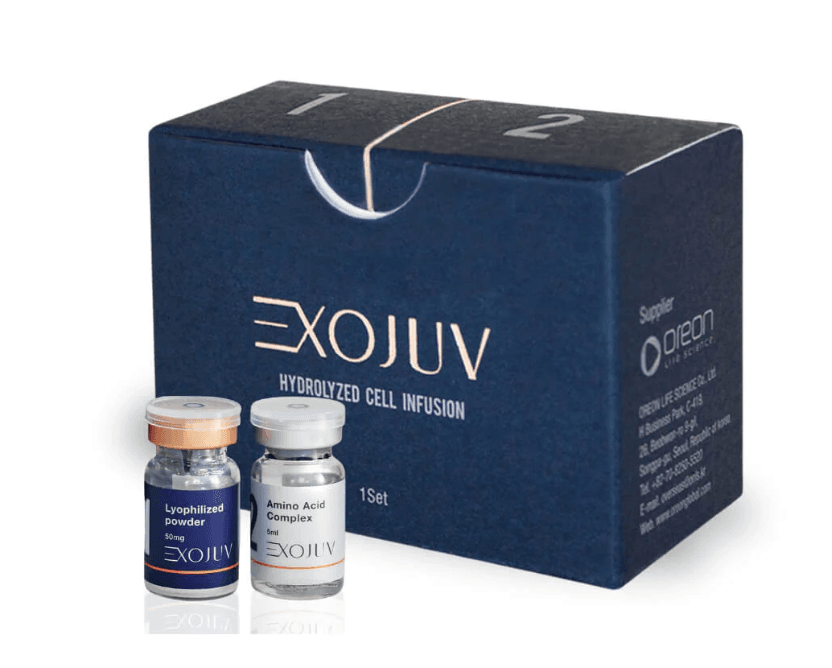
Description
Exojuv is a professional exosome-focused product used by licensed clinics in dermatologic, aesthetic, and scalp protocols. Clinics can order Exojuv for treatment-room workflows that involve topical use with micro-needling or intradermal placement by trained healthcare professionals. Its practical value is protocol fit: teams can build consistent regenerative services around sterile handling, staff preparation, and clear inventory controls.
This product is intended for qualified professional environments, including dermatology practices, aesthetic clinics, med spas, and hair-restoration teams. Use should follow manufacturer instructions, clinic policy, local requirements, and the clinician’s training for the selected delivery method.
Exojuv Price, Professional Ordering, and Account Access
Licensed clinics can sign in to view the current Exojuv price, product configuration, and ordering details. Pricing may depend on account terms, order quantity, and distributor supply, so clinic teams should align purchase timing with scheduled procedures rather than relying on informal market estimates. Account-based ordering also helps practices document lot numbers, expiry dates, and product movement for internal quality checks.
Ordering is limited to qualified professional purchasers. Facility documentation or professional-use confirmation may be required before an order is processed. This helps keep the product within appropriate clinical channels and supports a cleaner audit trail for staff who handle inventory, procedure setup, and post-procedure charting.
When planning Exojuv online purchasing, match the configuration shown during ordering to your protocol requirements. If your clinic uses a series-based schedule, account for procedure volume, staff training needs, and product rotation before booking patients into treatment slots. For adjacent regenerative categories, clinics may also browse skin boosters and mesotherapy supplies for compatible professional workflows.
What Exojuv Is and How It Works
Exojuv is an exosome-focused formulation designed for in-office use by licensed clinicians. Exosomes are small extracellular vesicles, meaning membrane-bound particles released by cells that can carry signaling molecules such as proteins, peptides, lipids, and nucleic-acid-related components. In aesthetic and regenerative medicine settings, this signaling role is used as an adjunct to controlled procedures that aim to support recovery and tissue remodeling.
The product is used in professional skin and scalp protocols rather than routine retail skincare. Clinics may apply the solution topically after micro-needling or use trained intradermal placement when that route is part of their protocol. The selected method should be based on product instructions, clinician competence, local practice rules, and the treatment plan documented for the patient.
Exosome products should be discussed carefully with patients because the category is biologically complex and regulatory expectations can differ by market and intended use. Clinics should avoid making unsupported claims about cure, disease treatment, stem cell replacement, or guaranteed cosmetic outcomes. Clear consent language, conservative claims, and evidence-based protocol notes help keep use aligned with professional standards.
Professional Applications in Clinic Protocols
Dermatology, aesthetic, and hair-restoration practices commonly consider this category as a regenerative adjunct. Exojuv may be incorporated into facial rejuvenation services, neck protocols, post-procedure topical application, or scalp-focused programs under professional supervision. Its role is usually supportive: it is paired with a controlled treatment plan rather than positioned as a stand-alone cure for skin aging, hair loss, inflammation, or scarring.
In micro-needling workflows, clinicians may use an Exojuv serum-style application across the treated field after creating controlled microchannels. For injection-based workflows, trained professionals determine placement depth, treatment area, spacing, and patient suitability according to their scope and protocol. The same product should not be used casually across different routes without written procedure steps, staff training, and appropriate consent.
Many practices evaluate Exojuv alongside other regenerative aesthetic products. For broader education on this category, our article on exosome therapy for skin rejuvenation explains how clinics think about professional treatment planning. Teams building a broader service menu can also review the skin booster education category for related clinical topics.
Key Features for Treatment-Room Use
- Professional exosome focus for aesthetic, dermatologic, and scalp protocols.
- Suitable for clinic workflows involving topical micro-needling application or trained intradermal placement.
- Liquid handling profile that supports controlled application across localized treatment areas.
- Sterile presentation intended for professional preparation and procedure-room use.
- Lot and expiry information to support receiving checks, stock rotation, and charting.
- Works within series-based protocols when scheduled according to clinic policy.
- Can complement device-based, needle-based, or regenerative aesthetic services.
- Supports staff consistency when incorporated into written SOPs and training checklists.
Quick tip: Assign one staff role to verify product identity, lot number, expiry date, and treatment plan before setup begins.
Benefits in Practice
Exojuv can help clinics standardize regenerative offerings without creating a completely separate service line. The product can be staged near micro-needling stations, injection trays, or scalp-procedure supplies when the clinic’s protocol allows that route. Consistent setup reduces staff uncertainty and helps clinicians keep appointment flow predictable.
The format also supports repeatable patient pathways. Practices can build pre-treatment screening, consent, photography, procedure notes, aftercare instructions, and follow-up timing into the same workflow used for other aesthetic procedures. That structure is especially useful for multi-provider clinics, where each team member must understand preparation steps and documentation expectations.
From an inventory standpoint, Exojuv vials or kit-style configurations should be received, stored, and rotated with attention to manufacturer labeling. Procedures should not be scheduled on assumptions about future supply. Confirm product on hand, lot status, and staff availability before assigning treatment times.
Composition, Exosome Science, and Evidence Limits
The formulation centers on an exosome-rich fraction suspended in a sterile vehicle. Extracellular vesicles can carry biologic signals involved in cell-to-cell communication, which is why they are being studied in wound repair, inflammation, tissue regeneration, and aesthetic medicine. This mechanism does not mean every exosome product has the same source, purity, concentration, safety profile, or clinical evidence.
Clinics should rely on the current manufacturer documentation for ingredient disclosures, handling instructions, and intended professional use. Exact composition and pack inclusions can vary by batch or distributor channel, so staff should avoid substituting online descriptions for package information. If a protocol depends on a specific configuration, confirm it during purchasing and receiving.
The “dark side” of exosomes is not that all exosome products are unsafe, but that the category requires careful sourcing, sterile handling, and conservative claims. Poorly characterized biologic products, non-sterile preparation, unsupported disease-treatment claims, or inappropriate patient selection can create avoidable risk. Clinics should apply the same diligence used for other biologic or regenerative products: confirm source, review documentation, train staff, and monitor outcomes.
Packaging, Supply, and Inventory Controls
Clinics commonly manage this product category as a procedure-linked supply. Depending on the distributor channel, Exojuv may be offered as vials or as a set-style configuration that supports standardized setup. Always use the product configuration displayed during ordering and the instructions provided with the package.
Receiving staff should inspect the outer package, confirm that the product matches the purchase record, record the lot and expiration date, and follow labeled storage requirements. If a package is damaged, labeling is unclear, or storage conditions are uncertain, quarantine the unit under clinic policy until the issue is resolved. Product used in a patient procedure should be traceable from receiving through chart documentation.
For operational planning, use internal SKU 100049 as a reference within your purchasing workflow. That reference does not replace the manufacturer label or the product information visible in your account dashboard. Clinics with higher procedure volume should build reorder points that account for training sessions, consultation conversion rates, and series-based treatment calendars.
Storage, Handling, and US Logistics
Follow the manufacturer’s storage instructions exactly, including any temperature, light, reconstitution, or use-after-opening directions shown on the package or insert. Staff should not infer handling rules from other exosome, skin booster, or mesotherapy products. Different biologic and aesthetic products can have different preparation requirements even when used in similar procedures.
Before use, keep the product within the clinic’s controlled inventory area and restrict handling to trained staff. Preparation should occur in a clean clinical environment with appropriate aseptic technique and procedure-specific supplies. If your protocol includes micro-needling, injection, or scalp application, document who prepared the product, who administered it, and how the treatment area was selected.
Orders are supported through US distribution, with temperature-controlled handling when required and tracked US delivery. Practices should time purchasing around clinic hours, receiving staff availability, and any storage checks required when the package arrives.
Safety, Patient Screening, and Consent
Exojuv should be used only after professional screening and informed consent. Clinicians should review the patient’s medical history, current skin or scalp condition, procedure tolerance, allergies, infection risk, medication profile, recent aesthetic treatments, and expectations. The product should not be presented as a guaranteed solution for wrinkles, pigmentation, hair growth, scarring, or inflammatory conditions.
Potential concerns depend on the delivery route and the procedure used with the product. Micro-needling and intradermal techniques can be associated with redness, swelling, tenderness, bruising, bleeding, infection, irritation, pigment changes, or delayed healing. Combining Exojuv with devices, peels, resurfacing, or injectable products may change the risk profile and should be addressed in the treatment plan.
Clinics should use conservative protocols for patients with active infection, compromised skin, uncontrolled inflammatory disease, poor wound healing, pregnancy-related considerations, immune concerns, or a history that raises procedural risk. If unexpected reactions occur, patients should be assessed by an appropriate healthcare professional and the event should be documented according to clinic policy.
Legal and Regulatory Considerations for Exosome Products
Questions about whether exosomes are legal in the USA require a careful answer. Exosome products are not a single regulatory category with one universal status. Their legal and regulatory treatment depends on source material, manufacturing, claims, route of administration, intended use, and applicable federal and state requirements.
For clinic operations, the practical rule is to purchase only through appropriate professional channels and avoid claims that exceed the product’s documentation. Do not market exosome procedures as FDA-approved disease treatments unless there is specific authorization for that exact product and use. Staff should also avoid implying that dietary sources, supplements, or “foods high in exosomes” are comparable to a sterile professional-use exosome product.
Patient-facing cost questions, such as the price of an exosome facial, should be handled at the clinic level because procedure fees depend on treatment area, device pairing, visit length, staff time, consumables, and follow-up. Wholesale product cost is only one component of the service fee. Clear internal costing helps practices build sustainable pricing without making unrealistic treatment promises.
Comparable Professional Products and Adjacent Categories
Clinics often evaluate Exojuv alongside skin boosters, mesotherapy solutions, polynucleotide products, peptide-based protocols, and device-assisted regenerative services. The right choice depends on treatment objective, patient selection, delivery route, staff training, and how the product integrates with the broader care plan. Product categories can overlap operationally, but they are not interchangeable without clinical review.
Skin boosters are commonly used when the protocol emphasizes hydration, dermal quality, or injectable rejuvenation. Mesotherapy products may support localized aesthetic protocols where small-volume placement and surface-level treatment planning are central to the service. Exosome-focused products such as Exojuv are selected when the clinic wants a biologic signaling adjunct within an established regenerative workflow.
When building a treatment menu, separate each category in staff training and consent language. Patients should understand what product is being used, why it was selected, which procedure delivers it, and what realistic follow-up looks like. This reduces confusion between exosome therapy, classic skin boosters, mesotherapy cocktails, and energy-device aftercare.
Authoritative Sources
For broader scientific context, peer-reviewed literature describes extracellular vesicles as biologic communication particles with emerging therapeutic and diagnostic interest. Regulatory agencies have also cautioned against unapproved exosome products promoted with unsupported medical claims. Clinics should use primary documentation and professional judgment rather than consumer marketing claims when evaluating this category.
This content is for informational purposes only and is not a substitute for professional medical advice.
Frequently Asked Questions
Who can order Exojuv?
Exojuv is intended for licensed clinics, med spas, dermatology practices, aesthetic practices, and healthcare professionals using professional protocols. Account verification or facility documentation may be required before ordering.
How is Exojuv used in clinic workflows?
Clinics may incorporate Exojuv into micro-needling protocols as a topical application or use trained intradermal placement when supported by the product instructions and local professional rules. Staff should follow written SOPs and clinician direction.
What should clinics review before using Exojuv?
Review manufacturer instructions, product identity, lot number, expiry date, storage requirements, patient screening criteria, consent language, and the planned delivery method. Do not rely on informal online claims for composition or use directions.
Does Exojuv require special handling?
Follow the storage and handling instructions supplied with the product. Clinics should maintain traceability, restrict preparation to trained staff, and document product use in the treatment record.
Can Exojuv be paired with other aesthetic procedures?
Exojuv may be used as an adjunct within professional regenerative protocols, including micro-needling or selected scalp and skin programs. Any combination with devices, injectables, peels, or resurfacing should be planned by the treating clinician.
Are exosome products FDA approved for all cosmetic or medical uses?
No single rule applies to all exosome products. Regulatory status depends on the specific product, source, manufacturing, claims, and intended use. Clinics should avoid unsupported disease-treatment claims and follow applicable professional requirements.
Specifications
- Main Ingredient:
- Manufacturer: Oreon Life Science
- Drug Class:
- Generic Name: Centella Asiatica Callus Extracellular Vesicles, Sodium Hyaluronate
- Package Contents: 50 mg x 1 Vial + 5mL x 1 Vial
- Storage Requirements: Room Temperature (2℃~25℃)
- Main Usage:
Here to help
Questions about ordering, delivery or products? You can email our team here or call now at 1-800-630-9757 and be connected with your dedicated Account Manager
Related Products
Evenity® (English Alternative)
Injectable Medication
$1,229.00 - $1,299.00
You save
You save
Intraline® For Men
Dermal Filler
$59.00 - $79.00
You save
You save
RejuvaNAD+ Pro
Injectable Medication
$237.00 - $249.00
You save
You save
Teosyal® RHA 4
Aesthetic Surgery Product
$259.00 - $279.00
You save
You save
Related Articles
Prednisone in Clinical Care: Uses, Risks, and Monitoring
Prednisone is a prescription systemic corticosteroid used to reduce inflammation or suppress immune activity in…
Lip Fillers Swelling Stages: Timeline, Safety, and Follow-Up
Lip fillers swelling stages usually follow a short inflammatory course: swelling appears soon after injection,…
Hypopigmentation of the Skin: Assessment and Care
Hypopigmentation of the skin means one or more areas look lighter than the surrounding skin.…
Radiesse vs Sculptra: Selection Factors for Clinics
Radiesse vs Sculptra is best understood as a comparison between two collagen-stimulating injectables with different…
Hyaluronic Acid Under-Eye Filler: Safety and Workflow
Hyaluronic acid under-eye filler is an injectable soft-tissue filler used by trained aesthetic clinicians to…
Dermal Filler Types: Materials, Uses, and Clinic Fit
Dermal filler types are usually grouped by their base material, tissue behavior, and expected role…
What Is Dysport? Clinical Uses, Safety, and Workflow
For clinic teams asking what is Dysport, the short answer is simple: Dysport is a…
Biostimulators in Aesthetic Care: Selection and Safety
Biostimulators are injectable aesthetic products used to encourage a controlled tissue response, often involving new…