
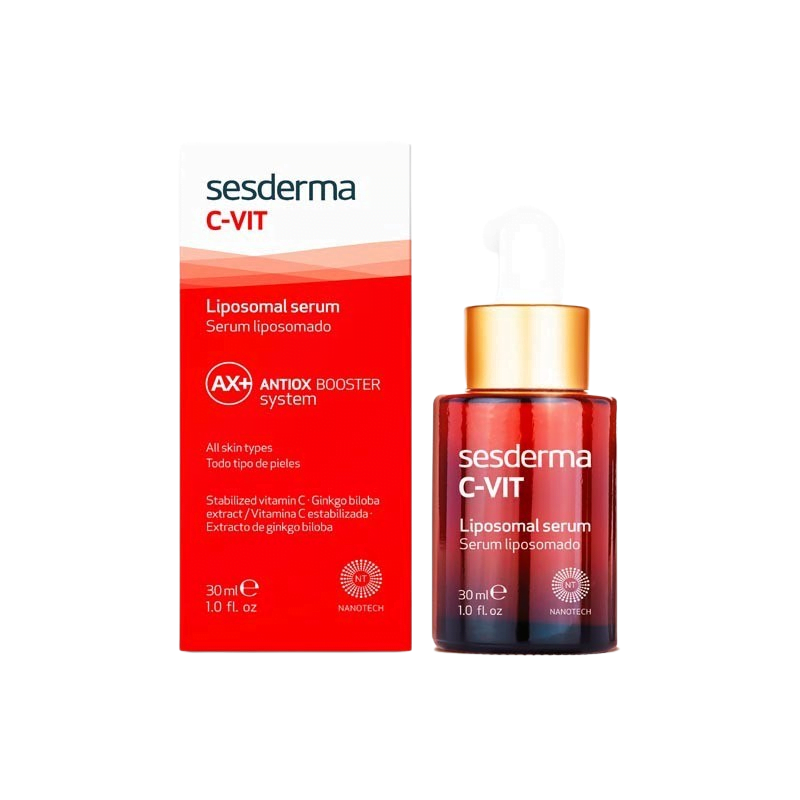
C-VIT Liposomal Serum
Order Sesderma C-VIT Liposomal Serum for Clinics
Liposomal Serum
$49.00
You save
Description
C-VIT Liposomal Serum is a topical Sesderma vitamin C serum supplied for licensed clinics and healthcare professionals. The 30 mL dropper bottle supports consistent dispensing for consult demonstrations, retail skincare plans, and procedure-adjacent home regimens. Clinics use it as a lightweight morning active that layers beneath moisturizer and sunscreen.
Sesderma C-VIT Liposomal Serum fits aesthetic, dermatology, and med spa workflows that need a repeatable antioxidant-support step. Its liposomal base helps distribute vitamin C across the skin surface while keeping the texture practical for daily use. Med Wholesale Supplies supports professional accounts with brand-name skincare products sourced through vetted distributor channels and reliable US logistics.
Price, Account Access, and Clinic Ordering
Licensed facilities can sign in to view current Sesderma C-VIT Serum price information and add the 30 mL format to a professional order. Account pricing may vary by product availability, order volume, and contract terms, so clinic teams should use the current account view for the most accurate purchase information. This approach helps purchasing staff align skincare replenishment with service demand rather than relying on static retail pricing.
For practices standardizing multiple treatment-room and take-home products, C-VIT Liposomal Serum 30ml can be grouped with related topical skincare in the same order cycle. Consolidating antioxidant serums, moisturizers, mists, and pigment-support products can reduce small emergency purchases and improve stock visibility across locations. Temperature-controlled handling when required and tracked US delivery support orderly receiving and inventory checks.
Quick tip: Match reorder quantities to your consultation volume, post-care kit usage, and retail sell-through cadence.
What Liposomal Vitamin C Serum Means
A liposomal vitamin C serum uses small lipid-based carriers to help disperse active ingredients in a topical formula. In professional skincare, the goal is not to replace clinical treatment, but to support a consistent antioxidant step that patients can follow at home. Vitamin C is commonly used in cosmetic routines because it is associated with brightening support, antioxidant protection, and care for dull-looking or photo-exposed skin.
Sesderma C-VIT Liposomal Serum is designed for topical use and is positioned as a daily serum within the C-VIT line. The liposomal system gives clinics a practical way to explain the product: cleanse, apply a measured amount of serum, layer moisturizer if needed, then finish daytime routines with SPF. That simple sequence is useful for staff education because it avoids complicated rotation instructions for a morning product.
For broader brand planning, the Sesderma collection can help teams keep product families together when building care sets. Clinics that organize products by category can also use the creams and serums category to review adjacent topical formats for routine support.
Professional Applications in Aesthetic Workflows
In clinic settings, this serum is most useful when staff need one recognizable vitamin C step across several complexion-support plans. It can be introduced during aesthetic consultations, included in maintenance regimens, or placed in take-home kits once skin is ready for active topical products. Its dropper format also allows staff to demonstrate a measured application method during education.
Many teams place Vitamin C Liposomal Serum as the first active layer after cleansing. Moisturizer and sunscreen usually follow in daytime routines, while stronger night-time products such as retinoids or acids remain on separate schedules when a clinician recommends them. This separation helps staff communicate morning and evening steps clearly, especially for new clients who are building adherence.
The serum may also support procedure-adjacent planning after non-invasive or light resurfacing services, but timing should be determined by the treating professional. Newly treated or irritated skin may not tolerate active products immediately. A practical clinic protocol should define when antioxidant serums are restarted, how sensitivity is assessed, and which barrier-support products are paired with them.
Key Features for Clinic Use
- Liposomal vitamin C format designed for topical application.
- 30 mL bottle size that fits retail shelves, starter kits, and back-bar storage.
- Dropper dispensing for measured demonstrations and consistent client instructions.
- Lightweight texture that layers under moisturizers and daytime sunscreen.
- Professional brand recognition within Sesderma skincare programs.
- Useful placement in morning routines for complexion and antioxidant support.
- Compatible with clinic education scripts that emphasize cleanse, serum, moisturize, and protect.
- External labeling supports routine lot, expiration, and shelf checks.
These features make the product practical for clinics that want a clear, repeatable C-VIT serum step without adding complex instructions. The serum can serve as a default antioxidant-support item in skincare plans, while more targeted products can be added when pigmentation, barrier repair, or texture concerns require a different emphasis.
Benefits and Use Expectations
Sesderma C-VIT Liposomal Serum benefits are best framed as cosmetic and regimen-supportive. A vitamin C serum can help professional teams address visible dullness, uneven-looking tone, and environmental stress support within a broader skincare plan. Results depend on skin condition, product tolerance, consistency, sunscreen use, and the rest of the regimen.
The product’s value in practice is partly operational. Staff can teach one morning sequence across many clients, use the same bottle format for demonstrations, and document the product within standardized skincare templates. That consistency reduces variation between providers and helps front-desk or retail staff answer basic routine questions accurately.
Because this is a topical cosmetic serum, it should not be positioned as a substitute for dermatologic treatment, prescription therapy, sun protection, or procedure-based care. Clinics should give clients realistic expectations: vitamin C products support visible radiance and antioxidant skincare routines, but they do not replace diagnosis or medical management of pigmentary disorders, inflammatory disease, or suspicious lesions.
Composition, Ingredients, and Formula Positioning
This preparation centers on vitamin C in a liposomal base. Liposomes are lipid-based carriers used in topical formulas to help distribute ingredients across the application area. The format is commonly described as an encapsulated vitamin C serum because the active is carried within a delivery system rather than presented only as a simple aqueous solution.
Clinics should rely on the product carton and bottle for the current ingredient list, lot information, and manufacturer labeling. Ingredient lists can change, and professional teams should avoid relying on outdated secondary references when screening for sensitivities. If a client has a history of cosmetic reactions, staff should follow the clinic’s patch-test or escalation process before recommending facial use.
For category education, antioxidant skincare articles can help teams explain why topical antioxidants are often paired with sun protection and barrier care. The article on antioxidants in skincare may support staff training, while treatment-planning content on skin elasticity assessment can help connect topical recommendations to broader aesthetic goals.
Packaging, Storage, and Inventory Controls
C-VIT Liposomal Serum 30ml is supplied in a compact bottle with a precision dropper. The format is suitable for retail display, consult-room demonstration, and inclusion in small post-care or starter kits. Outer packaging also helps protect the bottle during storage and gives staff a visible place to confirm product identity before dispensing or selling.
Clinics should store the serum according to the manufacturer’s label and keep it away from avoidable heat, direct light, and contamination. Staff should close the dropper bottle after use, avoid touching the applicator to skin, and keep testers separate from retail units. These basic handling steps reduce waste and support a professional presentation at checkout or during consults.
Inventory teams should record lot numbers and expiration dates during receiving. A first-expiry, first-out process is useful for skincare products that move through both retail and treatment-room areas. For multi-location practices, central purchasing can set par levels by location and use periodic counts to prevent overstocking one branch while another runs short.
Safety, Tolerability, and Client Screening
Topical vitamin C products are generally used in cosmetic skincare routines, but they can still cause local intolerance in some users. Possible reactions include stinging, redness, dryness, itching, or a temporary burning sensation, especially on compromised or recently treated skin. Clinics should provide clear instructions to pause use and contact the clinic if irritation persists or worsens.
Professional screening should cover known sensitivities, recent procedures, barrier impairment, active dermatitis, and use of other exfoliating or irritating products. Vitamin C serums are often compatible with moisturizers and sunscreen, but layering several actives at once can increase irritation. When clients use retinoids, hydroxy acids, benzoyl peroxide, or prescription topicals, providers should decide how to space products within the routine.
A patch test can be appropriate for clients with reactive skin or a history of cosmetic allergy. Staff should document recommended frequency, application area, and any product combinations to avoid. This helps protect the integrity of the care plan and gives every provider the same reference point at follow-up visits.
Building Regimens Around C-VIT
For simple morning routines, C-VIT Facial Liposomal Serum can be paired with a gentle cleanser, moisturizer, and broad-spectrum sunscreen. Clinics that want a more hydration-focused C-VIT pairing may consider C-VIT Mist or C-VIT Radiance Glowing Fluid when those formats fit the planned regimen. Keeping products within the same brand family can simplify education for clients who prefer fewer product-line changes.
For pigment-focused programs, Azelac RU Liposomal Serum may be a relevant companion or alternative depending on the clinic’s protocol. The article on Azelac RU for skin health and aesthetics can help staff distinguish general antioxidant support from pigment-oriented topical planning. Product substitution should remain under the clinic’s clinical lead or skincare director.
Clinics that offer broader rejuvenation plans may also review fine-line and radiance planning or peptide skincare education for staff training. These materials should support, not replace, individualized professional judgment and manufacturer instructions.
Comparable Serum Options
Vitamin C serums are often selected for radiance, antioxidant support, and daytime routine placement. Other concentrates may emphasize pigmentation, pollution exposure, barrier support, or peptide-focused rejuvenation. The best choice depends on the clinic’s treatment mix, patient education capacity, and how the product will be positioned in home-care instructions.
For practices comparing antioxidant-oriented concentrates, C-Defence MD Cskin Concentrate Serum and FR Antiox MD Anti-Pollution Concentrate Serum may be relevant to assortment planning. Keep comparison criteria concrete: active focus, texture, brand family, staff familiarity, protocol placement, and tolerance profile.
A strong retail assortment does not need several overlapping vitamin C products unless each one has a defined role. One product may serve as the standard morning antioxidant step, while another supports a specialized program. Documenting those roles helps staff recommend products consistently and prevents unnecessary SKU duplication.
Documentation and Staff Workflow
Clinic documentation should identify the product name, bottle size, application timing, and any clinic-specific cautions. A short template can help providers record whether the serum is recommended for daily morning use, alternate-day introduction, or delayed use after a procedure. Consistent documentation also supports staff handoffs when clients move between providers.
Training should focus on simple, repeatable language. Staff can describe Sesderma Vitamin C Liposomal Serum as a lightweight antioxidant-support serum used after cleansing and before moisturizer or SPF. They should also know when to escalate questions, such as irritation, active skin disease, pregnancy-related skincare concerns, or conflicts with prescription topicals.
Retail teams should avoid making disease-treatment claims or promising specific results. Product education can focus on routine fit, texture, vitamin C positioning, and the importance of sunscreen. When clinical questions arise, they should be routed to the appropriate licensed professional within the practice.
Authoritative Sources
For background on vitamin C and topical skincare, clinics may consult these references:
Ordering Recap for Professional Accounts
Sesderma C-VIT Liposomal Serum gives licensed clinics a practical 30 mL vitamin C serum for morning skincare routines, consult demonstrations, and take-home regimen planning. Its liposomal format, dropper packaging, and familiar sequence under moisturizer and SPF make it easy to integrate into staff education. The product is especially useful when clinics want a standardized antioxidant step across multiple aesthetic programs.
Sign in with your professional account to view current supply information, account pricing, and related skincare products. Align quantities with retail movement, post-care kit usage, and appointment cycles so replenishment remains predictable. This keeps the serum available for client education without overcomplicating your topical assortment.
This content is for informational purposes only and is not a substitute for professional medical advice.
Frequently Asked Questions
What is C-VIT Liposomal Serum used for in clinics?
Clinics use C-VIT Liposomal Serum as a topical vitamin C step in aesthetic skincare routines, retail programs, and procedure-adjacent home-care plans when skin is ready for active products. It is commonly positioned after cleansing and before moisturizer and sunscreen.
What does liposomal vitamin C mean?
Liposomal vitamin C means the formula uses lipid-based carriers to help disperse vitamin C in a topical serum. In practice, this supports a lightweight serum format that clinics can explain as a morning antioxidant-support step.
Can licensed clinics order the 30 mL format?
Yes. Professional accounts can order C-VIT Liposomal Serum 30ml for clinic inventory, retail shelves, consult demonstrations, and take-home skincare sets. Sign in to view current account pricing and supply information.
How should staff introduce this serum into a routine?
Staff commonly teach a simple sequence: cleanse, apply the serum as the first active layer, add moisturizer if needed, and finish daytime routines with sunscreen. Timing after procedures should follow the clinic’s protocol and the treating professional’s judgment.
What tolerability issues should clinics screen for?
Screen for cosmetic sensitivities, recent procedures, impaired barrier function, dermatitis, and concurrent use of irritating actives such as retinoids or exfoliating acids. Clients should pause use and contact the clinic if irritation persists or worsens.
How should clinics store and manage inventory?
Store the serum according to the manufacturer’s label, keep bottles closed, avoid unnecessary heat or direct light, and separate testers from retail stock. Record lot numbers and expiration dates during receiving and rotate stock by earliest expiry.
What products can be considered alongside C-VIT Liposomal Serum?
Clinics may consider C-VIT Mist, C-VIT Radiance Glowing Fluid, Azelac RU Liposomal Serum, or other antioxidant concentrates depending on protocol goals. Choose related products based on routine placement, tolerance, staff education needs, and the clinic’s treatment mix.
Specifications
- Main Ingredient: Vitamin C
- Manufacturer: Sesderma
- Drug Class: Skincare Product
- Generic Name: C-Vit
- Package Contents: 30 mL
- Storage Requirements: Room Temperature (2℃~25℃)
- Main Usage: Serum
About the Brand
Sesderma
Boasting a coveted position in the medical skincare market, Sesderma is a revered brand that delivers state-of-the-art solutions for a spectrum of skin-related concerns. With a history of over three decades in the sector, the respect for Sesderma stretches from health professionals to everyday consumers. Its products are conceived with avant-garde components and solidified by rigorous scientific research, enhancing their efficacy when treating varied skin complications. We, at medwholesalesupplies.com, take immense pride in making Sesderma's esteemed products available to our clientele. It is our conviction to offer access to first-rate medical provisions and skincare essentials, and in this regard, Sesderma aligns impeccably with our goal. When health professionals order Sesderma items through our portal, they are guaranteed authentic products straight from the creators themselves. Collaborating with Sesderma paves the way for an uncomplicated shopping experience, courtesy of competitive pricing structures and an extensive product lineup. Moreover, opting to purchase Sesderma through medwholesalesupplies.com lets health professionals effectually replenish their skincare stockpile. Our digital platform provides an intuitive user interface, simplifying browsing and placing orders in a matter of clicks. Combined with our expedient shipping procedure, health professionals will always have their prized Sesderma products on hand, receiving them speedily to use them effectively on their patients. Lean on Sesderma and medwholesalesupplies.com for all your skincare requisites.
Browse Sesderma Products
Here to help
Questions about ordering, delivery or products? You can email our team here or call now at 1-800-630-9757 and be connected with your dedicated Account Manager
Related Products
Evenity® (English Alternative)
Injectable Medication
$1,229.00 - $1,299.00
You save
You save
Intraline® For Men
Dermal Filler
$59.00 - $79.00
You save
You save
RejuvaNAD+ Pro
Injectable Medication
$237.00 - $249.00
You save
You save
Teosyal® RHA 4
Aesthetic Surgery Product
$259.00 - $279.00
You save
You save
Related Articles
Prednisone in Clinical Care: Uses, Risks, and Monitoring
Prednisone is a prescription systemic corticosteroid used to reduce inflammation or suppress immune activity in…
Lip Fillers Swelling Stages: Timeline, Safety, and Follow-Up
Lip fillers swelling stages usually follow a short inflammatory course: swelling appears soon after injection,…
Hypopigmentation of the Skin: Assessment and Care
Hypopigmentation of the skin means one or more areas look lighter than the surrounding skin.…
Radiesse vs Sculptra: Selection Factors for Clinics
Radiesse vs Sculptra is best understood as a comparison between two collagen-stimulating injectables with different…
Hyaluronic Acid Under-Eye Filler: Safety and Workflow
Hyaluronic acid under-eye filler is an injectable soft-tissue filler used by trained aesthetic clinicians to…
Dermal Filler Types: Materials, Uses, and Clinic Fit
Dermal filler types are usually grouped by their base material, tissue behavior, and expected role…
What Is Dysport? Clinical Uses, Safety, and Workflow
For clinic teams asking what is Dysport, the short answer is simple: Dysport is a…
Biostimulators in Aesthetic Care: Selection and Safety
Biostimulators are injectable aesthetic products used to encourage a controlled tissue response, often involving new…