Scalp injectables and regenerative aesthetics have expanded quickly in clinics. Many teams now evaluate mesotherapy for hair as a supportive option alongside established medical therapy. Your operational questions are often the hard ones. What goes into typical “cocktails,” how should outcomes be documented, and where are the safety and compliance pitfalls?
This guide focuses on practical clinic considerations. It aims to help you set expectations, standardize documentation, and compare adjacent modalities without overpromising results.
Key Takeaways
- Standardize consult notes and photo protocols early
- Expect heterogeneous formulas and variable evidence quality
- Screen for scalp and systemic risk factors
- Compare injectables by mechanism, downtime, and workflow burden
- Align sourcing and documentation with facility policy
Mesotherapy for Hair: Clinic-Oriented Overview
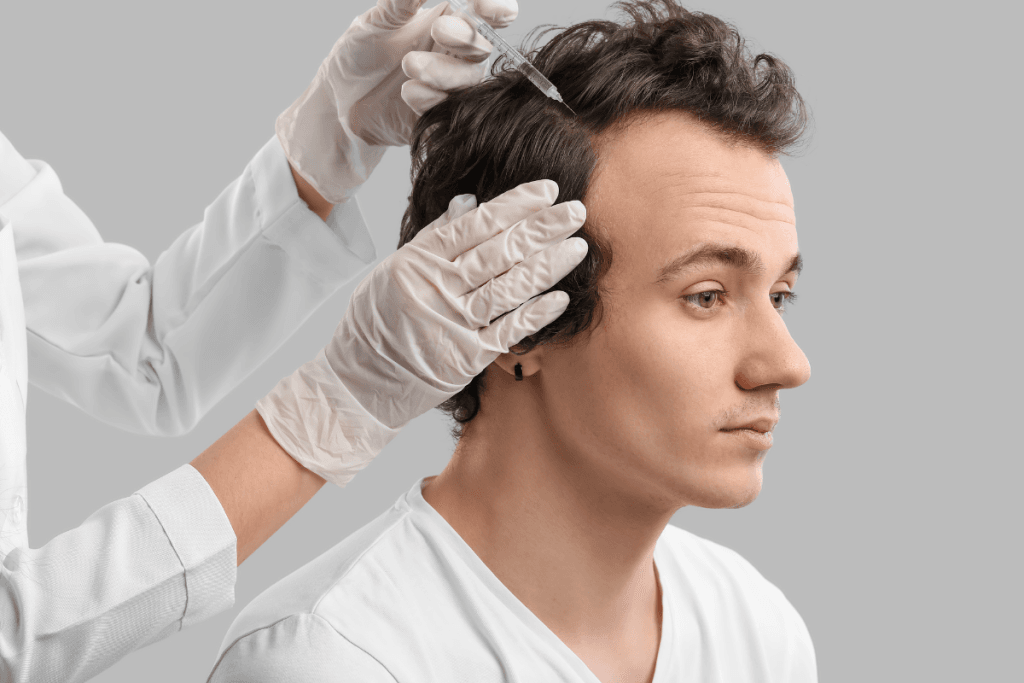
“Mesotherapy” generally describes intradermal or subcutaneous microinjections of selected ingredients. In hair-focused practice, injections are placed across thinning areas of the scalp. The intent is local delivery to the follicular environment and surrounding tissue.
Unlike a single labeled drug with a standardized insert, scalp mesotherapy often varies by formulation and protocol. That variability affects consent language, outcome tracking, and adverse event readiness. It also changes how you compare it with PRP (platelet-rich plasma), topical/oral therapy, and device-based approaches.
Supplier note: Many distributors limit fulfillment to licensed clinics and healthcare professionals.
Clinically, the most common use case is patterned thinning consistent with androgenetic alopecia (male/female pattern hair loss). Some practices also consider it for diffuse shedding after stressors, including postpartum hair loss, once other causes are addressed. For alopecia areata (autoimmune patchy hair loss), expectations differ because inflammation and relapse risk dominate planning.
Technique, Ingredients, and Devices That Shape Outcomes
Products and techniques under the “mesotherapy” umbrella can look very different. Some protocols focus on hyaluronic acid-based matrices, peptides, amino acids, or nucleotides. Others incorporate vitamins or other cosmeceutical-style components. Your workflow should treat these as distinct interventions, even if the appointment type is the same.
From an operational standpoint, define what “done” means in your facility. That includes site prep, depth targets, pain control options per policy, and post-procedure documentation. Small variations can change bruising rates, patient experience, and rework from incomplete charts.
Common ingredient categories (and why they matter)
Teams often ask what “ingredients” really mean in this space. In practice, ingredient categories are a proxy for expected behavior and risk. Hyaluronic acid may act as a hydrating scaffold and can affect post-injection swelling. Peptides and amino acids are typically positioned as signaling or building blocks, but clinical study designs vary and outcomes can be hard to compare across brands. Nucleotides or polynucleotides are often discussed as biostimulatory (supporting repair signaling), yet product type, sterility assurance, and injection depth strongly influence tolerability. Treat every category as a different counseling and consent scenario, not a single interchangeable class.
Needles, microinjection systems, and consistency
Delivery tools can influence consistency more than teams expect. Some clinics prefer multi-needle devices for speed and uniform spacing. Others use single-needle technique for control around sensitive areas and hairlines. If you use a dedicated delivery system, document it as part of the protocol so before-and-after review is interpretable. Examples of clinic-used tools include devices like MicronJet and related mesotherapy accessories.
When you evaluate products marketed for scalp revitalization, keep the discussion anchored to ingredients, sterility, and documentation. If you want examples of how suppliers group items, browse a hub such as Mesotherapy rather than treating any single item as a default protocol. Some clinics also compare branded hair-focused injectables such as Dr CYJ Hair Filler or Nucleofill Hair as part of their formulary review.
Why it matters: Protocol drift is a common reason results look inconsistent in chart review.
Setting Expectations: Photos, “Before and After,” and Reviews
Patients routinely request mesotherapy before and after comparisons, often based on marketing images. In clinic, your goal is to convert that interest into reproducible documentation. Standardize lighting, background, camera distance, and hair parting. Use the same angles every visit, and record styling variables such as blow-drying or fiber use.
When staff collect “mesotherapy before and after” sets, add at least one objective anchor. Many practices use a fixed part-width photo, a vertex shot, and a temporal recession view. Some also use hair density measurement tools when available. Even simple, consistent photos improve your ability to interpret whether change reflects true density, reduced shedding, or styling differences.
In consults, clarify what “results” typically mean. Hair cycling is slow, so visible density changes may lag behind patient-perceived shedding changes. Also address that mesotherapy hair reviews online often blend different diagnoses, concurrent therapies, and inconsistent photo methods. That context protects both clinical trust and operational time spent on re-education.
For additional background you can share internally, see Exploring The Benefits Of Mesotherapy and Hair Loss In Young Adults.
Scheduling, Timeline, Maintenance, and Aftercare Planning
Protocols differ widely on mesotherapy for hair how many sessions are used, and published regimens are not uniform. Many clinics structure an initial series followed by periodic reassessment. Your scheduling plan should reflect staffing, room turnover, and the reality that outcomes may need months to judge due to the hair growth cycle (anagen, catagen, telogen phases).
To keep expectations realistic, document an agreed review cadence. Align that cadence with your photo protocol rather than with a fixed promise of change. Also address the question is mesotherapy for hair permanent in neutral terms. If benefits occur, many practices still plan some form of maintenance, especially for androgenetic alopecia where the underlying miniaturization process can continue.
Aftercare instructions should be simple and consistent. Focus on infection prevention basics and local irritation management. Avoid overly detailed, one-off rules that staff cannot enforce. If you operate across multiple providers, keep aftercare language templated in your EMR to reduce variability.
Supplier note: Products are typically obtained through vetted distributor channels with traceability documentation.
Clinic workflow snapshot (high level)
- Verify patient identity and consent completion
- Document diagnosis and concurrent therapies
- Capture standardized baseline photography set
- Prepare sterile field and labeled materials
- Administer protocol per documented technique
- Record lot data per facility policy
- Schedule follow-up photography and review
Safety Profile: Side Effects, Risks, and Contraindications
Most day-to-day issues reported with scalp microinjections are local and self-limited, but they still affect clinic throughput. Typical mesotherapy for hair side effects can include transient pain, erythema (redness), edema (swelling), bruising, pruritus (itch), or tenderness. Less common but higher-impact events include infection, folliculitis, prolonged nodules, post-inflammatory hyperpigmentation, or hypersensitivity reactions.
Your pre-procedure screen should address mesotherapy for hair risks in a way staff can operationalize. That includes asking about active scalp dermatitis or infection, history of severe allergies, bleeding tendency, and immune status. Anticoagulants and antiplatelets require careful planning per prescriber oversight and facility policy. Also define your approach to pregnancy and lactation questions, recognizing that product-specific data can be limited.
Document mesotherapy for hair contraindications in a standardized checklist. If a factor is borderline, record your rationale and the discussion. This is also the place to reinforce that scalp injections are not a substitute for diagnosing reversible causes of shedding, such as iron deficiency, thyroid disease, traction, or inflammatory scalp conditions.
- Infection screen: scalp lesions, folliculitis, dermatitis flare
- Bleeding risk: history, meds, bruising tendency
- Allergy history: prior injectables or topical reactions
- Autoimmune context: alopecia areata stability discussion
- Expectation check: photos and timeline reviewed
- Emergency readiness: anaphylaxis kit access per policy
How to Compare Adjacent Options (PRP, PRF, Devices, Topicals)
A comparison conversation is easier when you separate mechanism, evidence, and operational load. When patients ask about mesotherapy for hair vs prp, note that PRP uses autologous blood-derived platelets, while mesotherapy typically delivers non-autologous ingredients. That difference affects consent, prep time, and supply needs.
Similarly, scalp PRF (platelet-rich fibrin) may involve different processing and handling than PRP. Device-based options, including microneedling, can overlap in concept but differ in what is delivered and how deep. If your team fields questions on mesotherapy for hair vs microneedling, it helps to map the discussion to downtime, appointment length, and whether you are delivering an active solution.
For pharmacologic comparators, topical minoxidil remains a common baseline. Discussions framed as mesotherapy for hair vs minoxidil should avoid “either/or” messaging because many patients use combination approaches under clinician supervision. Operationally, your role is to document concurrent therapies so outcome interpretation is not confounded.
Decision factors your team can document
- Evidence clarity: standardized vs heterogeneous protocols
- Time burden: prep, procedure, and follow-up cadence
- Comfort profile: pain control needs and downtime
- Compatibility: concurrent medical therapy documentation
For deeper internal reading, see PRP Therapy With Regenlab and Contrasts Between Mesotherapy And Microneedling. You can also review how clinics discuss hair-focused injectables in A Guide To Hair Fillers.
Supplier note: Many catalogs emphasize authentic, brand-name medical products with sourcing documentation.
Authoritative Sources
Because protocols and formulations vary, authoritative sources are most useful for the “surrounding” standards: diagnosis of hair loss, injection safety, and infection prevention. Use these references to support your clinic’s baseline counseling and safety checklists, then layer procedure-specific policies on top.
For hair loss diagnosis context, use this overview from the American Academy of Dermatology on hair loss. For injection safety standards that apply across procedures, see the CDC Injection Safety guidance.
This content is for informational purposes only and is not a substitute for professional medical advice.