

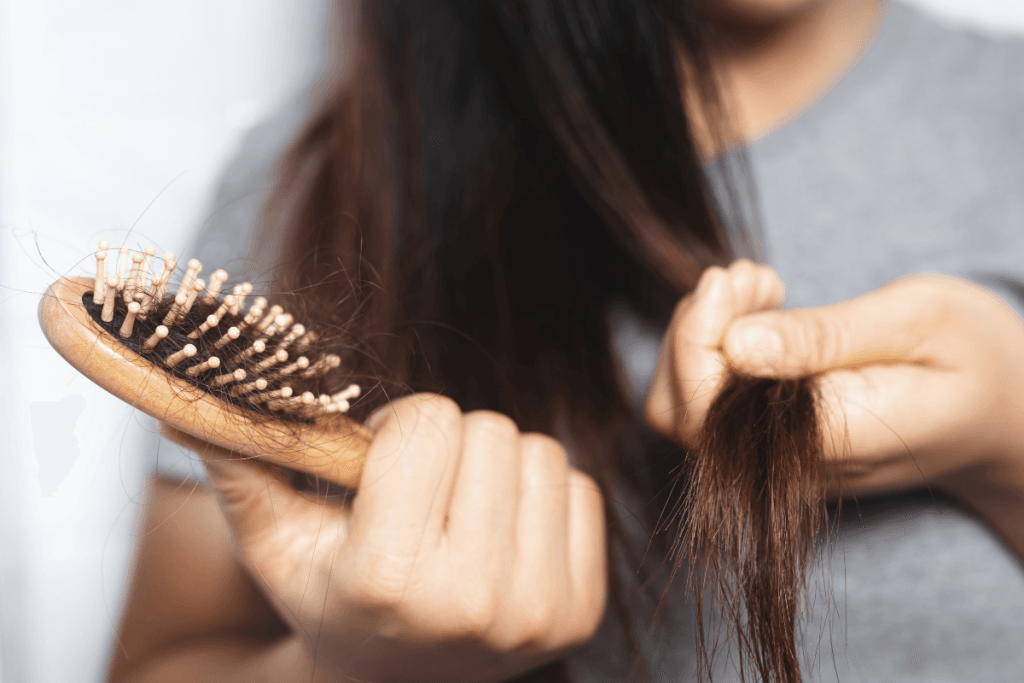
Hair Loss in Young Adults: Causes are best assessed by pattern, tempo, and scalp findings rather than by assuming one diagnosis. Early thinning may reflect androgenetic alopecia, telogen effluvium, alopecia areata, traction, scalp inflammation, nutritional deficiency, endocrine disease, medication exposure, or overlapping processes. For licensed clinics, a structured first visit reduces missed reversible causes and helps set expectations before medical therapy or office-based procedures are discussed.
This overview is written for licensed clinics and healthcare professionals who evaluate hair shedding, thinning, or patchy alopecia in younger patients.
Key Takeaways
- Pattern comes first — diffuse shedding, patterned thinning, patchy loss, and scarring disease have different differentials.
- Common causes include androgenetic alopecia, telogen effluvium, alopecia areata, traction, infection, and endocrine or nutritional factors.
- History and scalp exam guide testing — laboratory work should be targeted, not automatic for every case.
- Pain, scale, pustules, crusting, or visible scarring warrant earlier dermatology input.
- Office-based options may complement care, but diagnosis, documentation, and consent should come first.
How Pattern Clarifies Hair Loss in Young Adults
The fastest way to narrow hair loss in young adults is to sort the presentation into a working pattern. Most cases begin as gradual patterned thinning, diffuse shedding, patchy loss, or inflammatory and scarring alopecia. That first sort is often more useful than starting with a long cause list because it directs the history, exam, testing, and urgency.
It also helps to separate shedding from true follicular loss. Telogen effluvium, a diffuse shedding state after a trigger, increases the number of hairs released. Androgenetic alopecia gradually miniaturizes follicles and reduces visible density over time. Breakage from traction, heat, chemical processing, or scalp disease can mimic both. A brief hair-cycle explanation can help staff frame the intake: anagen is active growth, catagen is transition, and telogen is the resting phase before shedding.
| Presentation | Common causes | High-yield clue |
|---|---|---|
| Patterned thinning | Androgenetic alopecia | Gradual recession, crown change, or widening part with caliber variation |
| Diffuse shedding | Telogen effluvium, deficiency, endocrine triggers | Increased hair fall after illness, stress, weight change, or medication change |
| Patchy loss | Alopecia areata, tinea capitis, trichotillomania | Discrete areas of loss, broken hairs, smooth patches, or nail findings |
| Marginal or inflamed loss | Traction or scarring alopecia | Hairline involvement, erythema, scale, pain, pustules, or loss of follicular openings |
Overlapping patterns are common. A young adult with early androgenetic alopecia may also develop telogen effluvium after illness or rapid weight loss, making gradual thinning seem sudden. A young woman with diffuse shedding may have background female pattern hair loss that becomes apparent only after a trigger increases hair fall. Clinics that use standardized photography and repeat examination are better positioned to detect mixed presentations.
Why it matters: Early scarring alopecia can permanently damage follicles if recognition is delayed.
Common Causes to Consider First
The causes of hair loss in young adults vary by pattern, sex, medical history, and grooming practices. Androgenetic alopecia is common, but it should not be assumed without checking distribution, onset, triggers, and scalp findings. In young men, frontal recession or vertex thinning with hair-shaft caliber variation points toward male pattern hair loss. In young women, widening of the central part or diffuse crown thinning is more typical. Family history helps, but its absence does not exclude the diagnosis.
Diffuse shedding usually tells a different story. Telogen effluvium often follows a physiologic or emotional stressor, febrile illness, major dietary restriction, rapid weight change, surgery, medication change, or postpartum transition. The timing matters. Shedding often becomes noticeable weeks to a few months after the trigger, not immediately. Hair caliber usually remains similar, and the scalp exam may look normal even when shedding is substantial.
Patchy loss changes the differential again. Alopecia areata can present with smooth patches, short regrowing hairs, nail changes, eyebrow loss, or eyelash involvement. Tinea capitis, a fungal scalp infection, is less common in adults than in children, but it remains important when scale, broken hairs, tenderness, or lymph node enlargement are present. Traction alopecia favors marginal hairlines in patients with tension hairstyles. Trichotillomania often creates irregular patches with hairs of different lengths.
Medical contributors also matter. Iron deficiency, thyroid disease, significant protein restriction, eating disorders, hyperandrogenic states, and some medications can worsen shedding or unmask patterned thinning. Scalp conditions such as seborrheic dermatitis, psoriasis, and inflammatory cicatricial disorders may contribute through inflammation, itch, breakage, or follicular damage. When symptoms do not fit one pattern cleanly, mixed pathology should stay on the table.
Hormonal context is especially important in young women. Progressive central thinning with acne, hirsutism, cycle irregularity, or infertility history can point toward androgen excess or polycystic ovary syndrome. Fatigue, cold intolerance, menstrual change, or anemia history may support thyroid or iron evaluation. These features do not confirm a diagnosis by themselves, but they help decide whether the workup should move beyond a scalp-only explanation.
Not every complaint of hair fall is true alopecia. Hair-shaft disorders, harsh chemical processing, heat styling, and textured-hair grooming practices can create breakage that patients describe as shedding. Looking closely at shaft length variation and asking whether hairs are falling from the root or snapping mid-shaft can prevent an unnecessary endocrine or autoimmune workup.
- Hereditary miniaturization — gradual density loss with caliber variation.
- Cycle disruption — diffuse shedding after stress, illness, or physiologic change.
- Autoimmune disease — smooth patches, eyebrow loss, or nail findings.
- Mechanical injury — tension styling, grooming habits, or breakage.
- Inflammatory scalp disease — scale, erythema, tenderness, crusting, or pustules.
Focused Workup: What to Ask, Examine, and Document
A focused workup starts with history, morphology, and scalp examination. Laboratory testing can help, but it should follow the clinical picture rather than replace it. For hair loss in young adults, the highest-yield questions are about tempo, trigger timing, distribution, grooming practices, medications, endocrine symptoms, and systemic illness.
History should clarify whether the patient is shedding more hairs, seeing reduced ponytail volume, noticing a widening part, or developing discrete patches. Ask about recent illness, weight change, surgery, childbirth, restrictive diets, ferritin or anemia history, menstrual irregularity, acne, hirsutism, thyroid symptoms, new supplements, and family history. Itch, pain, burning, or scale should shift attention toward inflammatory or infectious causes.
Examination should document distribution, hairline changes, part width, shaft diameter diversity, broken hairs, exclamation-point hairs, perifollicular scale, and scalp erythema. Trichoscopy, or dermoscopic scalp examination, can improve confidence in pattern recognition. A gentle hair-pull test may support active shedding, while biopsy becomes more relevant when scarring alopecia is suspected or the diagnosis remains unclear.
Testing is most useful when it answers a specific question. A ferritin level may help when there is heavy menstrual loss, vegetarian or restrictive dieting, or known anemia history. Thyroid testing becomes more relevant when systemic symptoms are present. Hormonal testing is higher yield when clinical signs suggest androgen excess. By contrast, indiscriminate panels can create false leads, extra cost, and treatment drift without improving diagnostic confidence.
Biopsy should be considered earlier when the scalp is inflamed, painful, or scarred, or when trichoscopy and history remain discordant. In a busy clinic, that threshold matters. Waiting until density loss is obvious can delay diagnosis in cicatricial disorders, where the main objective is preserving follicles rather than restoring density after the fact.
Clinic Intake Checklist
- Document onset and pace — sudden, episodic, or gradual progression.
- Map the pattern — diffuse, patterned, patchy, or marginal loss.
- Capture trigger history — illness, stress, diet, medications, hormones.
- Record scalp findings — scale, erythema, tenderness, pustules, scarring.
- Note prior exposure — topical, oral, procedural, or cosmetic treatments.
- Standardize images — frontal, temporal, vertex, and part-line views.
Targeted laboratory evaluation may include a complete blood count, iron studies or ferritin, and thyroid testing when symptoms or risk factors support it. Hormonal assessment can be reasonable when menstrual irregularity, acne, infertility, or signs of androgen excess are present. Broad vitamin panels are less helpful when used without clinical indications. If your team also reviews procedure pathways, the Hair Restoration category can help organize related clinic-side reading.
Findings That Change Urgency or Referral
Some presentations need faster escalation. Pain, burning, perifollicular erythema, pustules, crusting, or visible scarring raise concern for inflammatory cicatricial alopecia. Rapidly progressive diffuse shedding after a major illness can warrant closer medical review, especially when accompanied by systemic symptoms, restrictive eating, or marked nutritional compromise.
Referral is also more important when the history and morphology do not match. A presumed telogen effluvium case with focal patches, broken hairs, or significant inflammation should be reassessed. Likewise, a young woman with progressive thinning plus acne, hirsutism, or irregular cycles may need broader endocrine evaluation. The same is true when medication exposure, autoimmune disease, or scalp infection is plausible.
Extensive patchy loss, eyebrow or eyelash loss, recurrent alopecia areata, or major psychosocial impairment may also justify earlier specialist input. When scarring disease is on the table, time matters more than density. Follicle preservation becomes the priority, and biopsy or dermatology-directed management may be needed before cosmetic intervention is discussed.
Care Options Depend on the Diagnosis
Management works best when it matches the diagnosis. In practice, that means treating reversible triggers, choosing evidence-based medical therapy when appropriate, and reserving office-based interventions for patients with a clear working diagnosis, stable expectations, and documented baseline status. Hair loss in young adults often becomes easier to manage when the primary driver is addressed first.
Pattern hair loss usually calls for longer-term management rather than a short corrective course. Depending on the case, clinicians may consider topical therapies, selected systemic agents, or referral for surgical restoration once disease stability and candidacy are clearer. Telogen effluvium is different. The main intervention is identifying and correcting the trigger, then avoiding over-treatment while regrowth is monitored. Alopecia areata, fungal infection, and inflammatory scalp disease each require diagnosis-specific care rather than generic hair-growth messaging.
It helps to frame options by mechanism. Some treatments aim to prolong the growth phase. Others suppress inflammation, correct an underlying deficiency or endocrine driver, or improve the appearance of density without changing disease biology. That distinction keeps counseling accurate. Patients with temporary shedding often need observation and trigger correction. Patients with chronic patterned thinning usually need a longer management plan and consistent monitoring.
Office-based options sit in a secondary role. Platelet-rich plasma, microneedling, and mesotherapy-style protocols are frequently discussed in aesthetic and dermatology settings, but evidence strength, protocol standardization, and patient selection vary. These approaches are best framed as adjuncts after diagnosis and informed consent. For broader internal reading, see Mesotherapy For Hair and Mesotherapy Workflow.
Procedure choice also affects operations. Clinics comparing intradermal or scalp-directed workflows may review Hair Fillers For Hair Loss or Dr. CYJ Hair Filler as related educational context. These pages are most useful for product and workflow familiarization, not for replacing diagnosis, documentation, or consent.
Platelet-rich plasma workflows require additional attention to collection systems, processing steps, labeling, and local scope-of-practice rules. Where PRP-related supplies are part of clinic evaluation, Plasmolifting PRP Gel can be reviewed as a product reference within the limits of its labeling and clinic protocol.
Hair transplantation has a narrower role in young adults than many first presentations suggest. Candidates need diagnostic clarity, stable donor assessment, and realistic expectations about ongoing native hair miniaturization. In diffuse unpatterned loss, active inflammatory disease, or rapidly evolving cases, surgery may be poorly timed or inappropriate. Referral decisions are stronger when the clinic has already documented progression and prior treatment response.
Early intervention can matter, but only when the diagnosis is right. Delayed treatment of scarring disease can cost follicles, while premature treatment of temporary shedding can create confusion about what is actually helping. Standardized photos, follow-up intervals, and clear endpoint definitions reduce that risk.
Clinic Operations: Documentation, Workflow, and Expectations
Good hair-loss workflows are built on documentation before intervention. For hair loss in young adults, that means baseline photographs, a reproducible description of pattern and severity, and a clear note on whether the clinic suspects shedding, miniaturization, inflammation, or scarring. Without that baseline, both the team and the patient can misread normal hair-cycle variation as treatment failure or success.
A simple workflow is often enough: verify the working diagnosis, document severity, rule out red flags, review contraindications, confirm product labeling, and record follow-up timing. Storage and handling should match manufacturer instructions and local policy. If office procedures are planned, prep documentation should also note anesthesia approach, scalp condition, lot tracking, and aftercare instructions.
- Confirm the diagnosis — do not build a procedure plan on symptoms alone.
- Set a baseline — standardized images reduce subjective drift.
- Track source data — record lot, expiry, and storage requirements.
- Define outcomes — shedding control and density gain are not the same.
- Review escalation steps — know when to pause and refer.
Quick tip: Repeat photos under the same lighting and hair parting at each review.
Outcome tracking should also be explicit. The clinic should decide in advance whether it is measuring shedding reduction, caliber change, improved coverage on photographs, or patient-reported ease of styling. Those are not interchangeable endpoints. A patient may report less shedding before visible density changes appear, while cosmetic improvement may reflect hairstyle changes rather than biological response. Clear endpoint language reduces overcalling results and helps with re-evaluation when progress stalls.
Procurement documentation should stay separate from clinical assessment. MedWholesaleSupplies serves licensed clinics and healthcare professionals with brand-name medical products sourced through vetted distributor and supply channels. That role can support clinic operations, but it does not replace clinical diagnosis, product-label review, or local regulatory requirements.
Expectation management is equally important. Pattern hair loss tends to require ongoing management. Stress-related shedding may recover over time once the trigger resolves. Patchy autoimmune disease can be unpredictable. Whatever the diagnosis, the safest clinic message is to match treatment goals to the biology in front of you, not to a general hair-growth promise.
Authoritative Sources
- AAFP review on common causes and treatment of hair loss
- Mayo Clinic background on symptoms, causes, and patterns
- NIAMS overview of alopecia areata symptoms and causes
Further reading should build from pattern recognition first, then move to targeted testing and diagnosis-specific treatment options. That sequence keeps a common complaint from becoming a missed diagnosis.
This content is for informational purposes only and is not a substitute for professional medical advice.




