
Md ceuticals sunscreen should be evaluated as a professional photoprotection product: confirm the label claims, review the UV filters, and decide whether the texture fits your clinic’s patient mix. For licensed clinics, the practical goal is not just SPF selection. It is consistent counseling, tolerability screening, and documentation that staff can repeat across aesthetic, dermatology, and skincare workflows.
This page focuses on clinic-facing selection. It does not replace product labeling, prescribing judgment, or patient-specific medical advice.
Key Takeaways
- Start with the label: verify SPF, broad-spectrum wording, water resistance, and directions.
- Check UVA coverage: use recognized label language, not marketing-only phrases.
- Review the vehicle: texture, finish, and layering affect adherence.
- Screen sensitivities: fragrance, alcohol, botanicals, and preservatives can matter.
- Document consistently: record lots, expiry, storage, and counseling scripts.
Where Md Ceuticals Sunscreen Fits in Clinic Skincare
Professional sunscreen supports risk reduction after procedures and during ongoing skin programs. Clinics often use it in pigment management, acne care, rosacea-prone routines, and routine daily photoprotection counseling. The same product may suit one workflow well and another poorly, depending on the formula base and patient tolerance.
In practice, the first question is simple: what does the label support? If the product is marketed as MD:Ceuticals 3D Moisturizing Sunscreen Protection SPF50+, capture that wording exactly in your formulary notes. Do not extend the claim beyond the carton, product insert, or official brand material available to your purchasing team.
Many practices organize sun protection inside a broader Clinical Skincare category so providers and front-desk staff use the same terminology. This helps reduce inconsistent advice when patients move between injectables, peels, laser services, and skincare consultations.
Why it matters: A sunscreen recommendation is only useful if patients can tolerate it and use it correctly.
Label Claims to Verify Before Adding It to a Formulary
A label-first review gives staff a shared reference point. Sunscreens are regulated differently across markets, so the clinic should rely on the exact claim language supplied with the product. That is especially important when teams compare SPF50, SPF50+, broad-spectrum statements, UVA icons, or PA ratings.
SPF and Broad-Spectrum Wording
SPF is mainly tied to UVB protection under standardized testing. UVB rays are strongly associated with sunburn. Broad-spectrum wording indicates that the product also meets a defined UVA protection threshold under the applicable regional standard. UVA rays contribute to photoaging (sun-related premature aging) and can worsen pigment concerns in susceptible patients.
For an internal md ceuticals sunscreen review, record the labeled SPF exactly. If the label states SPF50+ or broad-spectrum coverage, avoid translating that into unsupported claims such as all-day protection. Staff should also capture the directions for use, including timing, application amount language, and reapplication instructions.
UVA Indicators and PA Ratings
UVA labeling is not universal. Some regions use a UVA circle symbol, others use broad-spectrum wording, and some markets use PA systems. Patients may ask whether md ceuticals sunscreen has PA++++ protection because they have seen this language online. Your team should answer from the product label or official manufacturer documentation available for the stock you hold.
If your clinic stocks several sunscreens, create a one-page comparison sheet. List each product’s SPF, UVA statement, filter class, water-resistance wording, tint, and finish. This keeps staff from comparing unlike standards as if they were identical.
Water Resistance and Reapplication
Water resistance is a time-limited label claim, not a promise of full-day wear. If a sunscreen lists a water-resistance duration, document the exact duration and the conditions that trigger reapplication. Sweat, swimming, towel drying, and extended outdoor exposure can all change how staff should frame counseling.
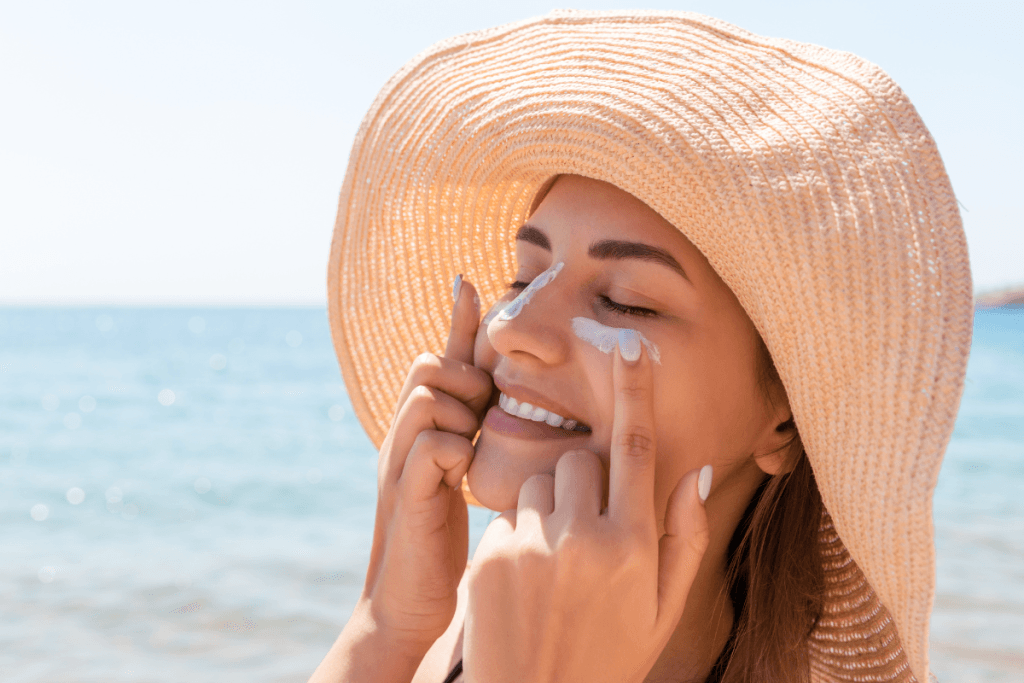
When patients ask how to use md ceuticals sunscreen under makeup, keep the answer practical and label-aligned. A common clinic script is to apply skincare first, allow layers to settle, apply sunscreen as directed, and then allow dry-down before makeup. If pilling occurs, review the moisturizer and primer combination before assuming the sunscreen has failed.
Ingredient and Tolerability Review
Ingredient review should separate UV filters from the rest of the formula. The active filter list tells you whether a product is mineral, chemical, or hybrid. The inactive ingredients often explain feel, sting, pilling, fragrance exposure, and compatibility with other skincare steps.
Mineral, Chemical, and Hybrid Filters
Mineral filters usually include zinc oxide, titanium dioxide, or both. They sit within a formula that reflects and scatters some UV while also absorbing UV energy. Chemical filters, also called organic filters, absorb UV and convert it to lower-energy forms. Hybrid products combine both approaches.
When staff receive questions about whether md ceuticals sunscreen is mineral or chemical, they should check the active ingredients list rather than rely on online summaries. Formula details can vary by market or product generation. This matters for patients who report eye sting, white cast, or previous irritation with certain filter types.
Non-Filter Ingredients
Moisturizers, silicones, humectants, antioxidants, film formers, and preservatives shape how a sunscreen performs in daily use. A product with a hydration-focused base may suit dry or post-procedure skin better than a very matte formula. A richer base may feel heavy for acne-prone or oilier cohorts.
Clinics that already use antioxidant skincare can treat sunscreen as part of a broader environmental-protection routine. For general ingredient context, Antioxidants And Skincare explains how antioxidant language appears in topical products. Antioxidants do not replace UV filters, but they may influence how a product is positioned within a skincare plan.
Some patients are sensitive to fragrance, essential oils, denatured alcohol, or botanical blends. Others react to preservatives or high-load active blends. For md ceuticals sunscreen ingredients, document both the active filters and the inactive components that are most relevant to your clinic’s common sensitivity patterns.
Texture, Finish, and Comedogenic Concerns
Texture often determines whether a patient keeps using sunscreen. A product can have strong label claims and still fail if it feels greasy, pills under makeup, stings around the eyes, or leaves an unwanted cast. This is why vehicle testing should be part of clinic evaluation.
For oily or acne-prone skin, avoid treating “non-comedogenic” as a guarantee. Comedogenicity (pore-clogging potential) depends on the full formula, the amount applied, and the products layered underneath. Acne programs often work best when sunscreen is paired with a simple moisturizer and non-irritating cleanser, especially when topical acne therapies already dry the barrier.
For sensitive or rosacea-prone patients, lower-sting vehicles are often preferred, but no category is universally tolerated. If rosacea and pigment concerns are part of your clinic’s patient mix, Azelac M Skin Therapy offers related context on how clinics discuss reactivity and hyperpigmentation in topical care.
Clinic Selection Checklist
A short checklist reduces inconsistent recommendations. It also helps procurement, clinical staff, and checkout teams use the same product language. Keep the checklist in your standard operating procedure or skincare formulary file.
- Product identity: record the full product name and size.
- SPF claim: capture SPF and broad-spectrum wording exactly.
- UVA statement: note any UVA symbol, PA rating, or equivalent wording.
- Filter class: identify mineral, chemical, or hybrid actives.
- Water resistance: record the exact claim, if present.
- Vehicle notes: document tint, finish, pilling, and dry-down.
- Sensitivity flags: check fragrance, alcohol, botanicals, and preservatives.
- Inventory controls: track lot number, expiry, storage, and receipt condition.
Quick tip: Use the same checklist for every sunscreen brand your clinic stocks.
MedWholesaleSupplies serves licensed clinics and healthcare professionals, so procurement discussions should stay tied to clinic use, verification, and documentation. When a supplier provides brand-name products through vetted channels, keep those records with receiving logs and internal product files.
Matching Sunscreen to Common Clinic Scenarios
Sunscreen selection is usually a workflow decision as much as a formula decision. Aesthetic clinics need products that patients can use after visits, while skincare-focused practices may prioritize long-term adherence and comfort. The best match depends on label claims, procedure context, skin type, and staff counseling consistency.
Post-Procedure and Pigment-Focused Workflows
Photoprotection is common in aftercare instructions for resurfacing, pigment work, and many aesthetic services. Skin that is irritated, inflamed, or recently treated may be less tolerant of fragrance and high-sting vehicles. Clinics should avoid broad claims such as “prevents pigmentation” unless the product label and care plan support the wording.
For pigmentation programs, tinted formulas may be useful when patients need cosmetic coverage or when visible-light discussions are part of provider counseling. If md ceuticals sunscreen tinted options are considered, verify shade range, transfer risk, and whether the tint suits the patient population your clinic serves.
Dry, Reactive, or Barrier-Impaired Skin
Hydrating sunscreens can support comfort when the barrier feels tight or compromised. Barrier impairment means the outer skin layer is not retaining water or resisting irritants well. A moisturizing sunscreen base may reduce the number of layers needed, but it should still be checked against other post-care products.
For a deeper look at the skin’s outer structure, Layers Of The Epidermis explains how the epidermis supports barrier function. This can help staff explain why simple, non-stinging routines often matter after procedures.
Oily, Acne-Prone, and Makeup-Wearing Patients
Oily and acne-prone groups often prefer lighter finishes. However, a very matte formula can feel drying when patients use retinoids, acids, or other active skincare. Staff should ask about the full morning routine before deciding whether a sunscreen is unsuitable.
For makeup wearers, pilling is a common complaint. It often comes from incompatible layers rather than the sunscreen alone. Encourage staff to test common combinations in-clinic: moisturizer, sunscreen, primer, and foundation. This gives the team a practical answer when patients report rolling or patchiness.
How It Compares With Adjacent Skincare Products
Sunscreen is not interchangeable with antioxidant serums, pigment products, or moisturizers. Those products may support comfort, tone, or barrier care, but they do not replace labeled UV protection. A clear category distinction helps staff avoid overpromising results.
For environmental-stress routines, a serum such as FR Antiox MD Serum belongs in a different category than sunscreen. It may be discussed as adjunct skincare, not a UV-filter substitute. Similarly, Mela 360 Spot Corrector is better framed around tone-focused skincare rather than daily photoprotection.
Moisturizers also sit in a separate role. A hydration product such as Hylanses MD HA Gel Cream may improve comfort under sunscreen for some users, but it does not provide sun protection unless the label states SPF. Clinics should document these category boundaries in staff training.
For broader brand context, Mediderma Skin Care may help teams understand how professional skincare lines are discussed in clinic settings. Keep comparisons neutral and based on role, label, and workflow fit.
Ordering, Storage, and Documentation Notes
Clinic procurement should treat sunscreen as part of the same documentation culture used for other professional products. The risk profile may be different from injectables or prescription medicines, but staff still need lot control, expiry review, and storage discipline.
At receiving, check that packaging is intact and that the product identity matches the purchase record. Record lot and expiry details according to your clinic’s internal policy. Store products according to the label, especially where heat exposure could affect product quality or patient perception.
When building an internal file for md ceuticals sunscreen, include the product label, active ingredient list, supplier record, and staff counseling script. If your clinic uses role-based purchasing permissions, confirm who can add skincare products, receive inventory, and update formulary notes.
MedWholesaleSupplies works as a B2B supplier for licensed clinics and healthcare professionals. That model supports clinic-facing procurement conversations, but each practice should still maintain its own compliance records and confirm local requirements where applicable.
Authoritative Sources
Use primary references when label terms or safety language become unclear. Regulatory and professional guidance can help staff avoid unsupported marketing interpretations.
- FDA sunscreen labeling and use overview
- European Commission sunscreen efficacy recommendation
- American Cancer Society UV protection guidance
In summary, evaluate md ceuticals sunscreen through a label-first, clinic-ready process. Confirm SPF and UVA/UVB language, review active and inactive ingredients, test the vehicle in realistic routines, and document storage and counseling steps. This keeps product selection practical, consistent, and easier for staff to explain.
This content is for informational purposes only and is not a substitute for professional medical advice.