


In most clinic settings, esthetician vs aesthetician is mainly a spelling and style difference, not a separate credential. The safer question is whether the person holds the right license, what services that license permits, and how your practice documents role boundaries. This matters because skin care services often sit close to medical assessment, device use, and procedure aftercare.
Some employers use “aesthetician” to sound more medical or international. Others use “esthetician” because that is the term used by their state board. Neither spelling alone proves a higher level of training. Clinics should treat the title as a naming convention and verify the underlying license, supervision model, and approved service menu.
Key Takeaways
- Spelling is not scope: state rules and facility policy define what staff may do.
- Titles vary: “medical esthetician” is often a workplace label, not a separate license.
- Documentation matters: chart notes should separate client-reported concerns from clinical assessment.
- Escalation protects patients: suspicious lesions, infection signs, severe acne, and complications need clinician review.
- Procurement needs controls: products, devices, and supplies should link to training, storage, and lot records.
What the Two Titles Mean in Clinic Practice
For US clinics, “esthetician” is the more common regulated spelling, while “aesthetician” appears often in international, academic, or brand-led settings. Both usually describe a skin care professional trained in cosmetic services such as cleansing, exfoliation, facials, and superficial skin care procedures. The exact scope depends on the jurisdiction.
Why this matters: patients, staff, and auditors may read titles differently. A job badge that says “aesthetician” can sound more medical to some readers. A service page that says “medical esthetician” can imply expanded authority if the wording is not clear. Your clinic should choose title language that matches state board terminology where possible, then use it consistently across job posts, consent documents, policy manuals, and chart templates.
In multi-site groups, the esthetician vs aesthetician distinction should not be handled by marketing alone. HR, compliance, medical leadership, and operations should agree on title use. That alignment helps teams verify the right license type, assign permitted services, and avoid confusing chart language.
Quick tip: Keep a single approved title list for HR files, website bios, name badges, and EHR templates.
Licensing, Education, and Role Boundaries
Licensing is the core issue, not the spelling on a resume. State boards set education-hour requirements, examination standards, renewal rules, and scope limits. A school may market its program as esthetician school or aesthetician school, but clinics should confirm whether the program supports the license required in that state.
Education Pathways and Onboarding Gaps
Esthetics programs commonly cover skin anatomy basics, sanitation, client consultation, cosmetic product use, and service technique. That foundation can be valuable in a clinic, but it may not fully prepare a new hire for medical-office workflows. Documentation standards, incident reporting, device sign-offs, and referral triggers often need separate onboarding.
For clinic teams building structured training plans, a deeper look at Esthetician License Requirements can help separate licensure checks from internal competency records. The two records serve different purposes. A license confirms regulatory status. A competency file shows how your facility authorizes specific tasks.
Common Title Variations
“Licensed esthetician” generally means the person holds an active state license. “Master esthetician” may be a formal tier in some states, often linked to additional education and a broader permitted service list. “Medical esthetician” is frequently a workplace title used in dermatology, plastic surgery, or med spa settings. It should not be treated as a separate legal category unless state rules define it that way.
When evaluating esthetician vs aesthetician titles during hiring, ask for verifiable documents rather than relying on wording. Useful records include license number, expiration date, disciplinary status when available, continuing education records, device training, infection-prevention training, and signed role descriptions.
Scope Limits That Often Cause Confusion
Most esthetics licenses focus on cosmetic skin services, not diagnosis or medical treatment. Boundary issues appear when a staff member describes a rash as eczema (itchy dermatitis), labels facial redness as rosacea, or tells a client that a lesion is benign. Even when the observation seems obvious, diagnosis belongs to appropriately licensed clinicians.
Acne, hyperpigmentation (dark spots), post-procedure irritation, and barrier damage can all create gray areas. Staff may describe what they see and what the client reports. They should avoid making diagnostic conclusions unless their license and facility role allow it. This distinction is especially important in dermatology-adjacent clinics, where cosmetic services and medical visits may occur in the same setting.
How Estheticians Work Alongside Dermatology and Aesthetics Teams
Esthetics staff can support clinic services when their role is defined and supervised appropriately. They may help with non-diagnostic skin care consultations, routine service preparation, patient education that follows approved clinic scripts, and cosmetic aftercare support. Medical clinicians remain responsible for diagnosis, prescribing decisions, medical clearance, and complication management.
Many teams field questions such as “esthetician vs dermatologist for acne” or “aesthetician vs dermatologist for pigmentation.” The practical clinic answer is role-based. Esthetics staff can support cosmetic routines and observe visible changes. Dermatology clinicians evaluate disease, prescribe medications, biopsy suspicious lesions, and manage medical risk. For a focused comparison, see Esthetician vs Dermatologist.
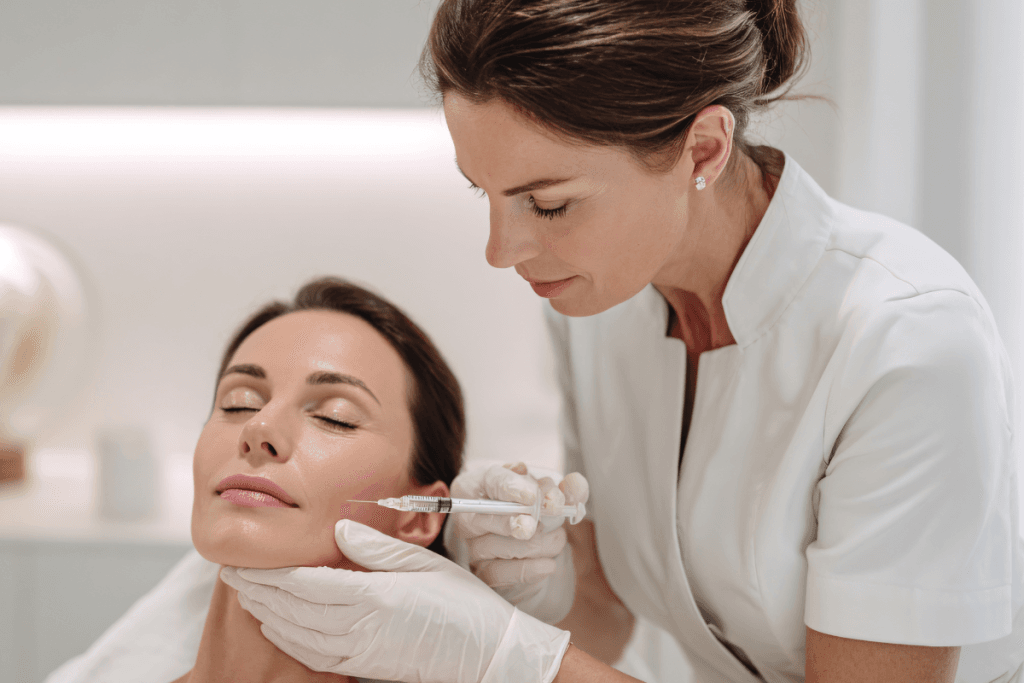
Botulinum toxin injections, dermal fillers, laser procedures, prescription acne therapy, and lesion assessment are not defined by the word “aesthetics.” They require the appropriate professional license, delegation structure, training, and facility policy. If a service carries medical risk, your clinic should treat it as a medical-governance issue, even when it is marketed as an aesthetic treatment.
Why it matters: A cosmetic service can still create medical documentation, consent, and escalation obligations.
Escalation Triggers for Clinic Policies
Each practice should set its own escalation criteria based on state law, medical director policy, and service mix. Common triggers include rapidly changing lesions, signs of infection, severe inflammatory acne, open wounds, unusual bruising, unexpected swelling, treatment complications, or symptoms that appear disproportionate to a cosmetic service. Staff should know who to contact, how quickly to escalate, and where to document the handoff.
Escalation language should be simple. For example, “client reports new painful lesion on cheek; referred to clinician per protocol” is clearer than a diagnosis-like statement. If a clinician evaluates the concern, the clinician note should carry the assessment and plan.
Documentation Language That Reduces Scope Risk
Clear charting helps prove that staff worked within their role. In esthetics notes, observable wording is safer than diagnostic wording unless a licensed clinician is making the diagnosis. “Uneven brown pigmentation noted on cheeks” is different from “melasma.” “Client reports burning after new product” is different from “contact dermatitis.”
Templates should make the separation visible. Use fields for client-reported concerns, observed findings, service performed, products used, tolerance, aftercare instructions from approved scripts, and escalation decisions. Avoid free-text templates that encourage staff to document medical conclusions.
Clinics can also reduce ambiguity by linking each service to the permitted role. If a treatment room offers facials, chemical exfoliation, microneedling support, or device-adjacent care, the policy should identify who may perform each task and what sign-off is required. For teams planning broader service workflows, Facial Aesthetic Planning offers related context on consultation flow and role coordination.
Examples of Safer Note Phrasing
- Client report: “Client reports stinging after home retinoid use.”
- Visible finding: “Mild redness observed on both cheeks.”
- Service record: “Gentle cleansing and non-ablative facial completed.”
- Referral note: “Routed to clinician for evaluation per protocol.”
- Product record: “Product name, lot, and expiration recorded when applicable.”
These examples do not replace your clinic’s EHR requirements. They show the principle: document what happened, who did it, and when medical review was triggered.
Credentialing and Workflow Checklist for Clinic Teams
A practical esthetician vs aesthetician policy should turn title questions into repeatable controls. The aim is not to limit appropriate cosmetic services. It is to make sure role authority, patient safety, and documentation align.
- Confirm board terminology: match job titles to state language where feasible.
- Verify active licensure: record license type, number, status, and renewal date.
- Map service scope: compare each menu item with state rules and facility policy.
- Define supervision: specify onsite, available, or delegated oversight requirements.
- Document competency: keep training records for devices, products, and protocols.
- Standardize templates: separate reported concerns, observations, and clinician assessments.
- Set escalation rules: list findings that require dermatology or medical review.
- Control purchasing: limit supply access to authorized staff and accountable workflows.
For treatment-room setup and non-prescriptive supply planning, Esthetician Supplies Checklist can support internal conversations about equipment, disposables, and documentation needs. Product selection should still follow your facility protocols and manufacturer instructions.
Procurement also intersects with role clarity. MedWholesaleSupplies serves licensed clinics and healthcare professionals, with brand-name medical products sourced through vetted distributors and verified supply channels. That context can support supply-chain traceability, but it does not replace your clinic’s duties for storage, receiving, lot tracking, staff authorization, and complaint handling.
For broader operational navigation, teams can browse the Clinic Operations category. For skin care-focused service planning, the Clinical Skincare category groups related editorial resources.
How This Role Compares With Related Titles
Role comparisons help staff avoid overpromising. A cosmetologist often has a broader beauty license that may include hair, nails, and skin services, depending on state rules. An esthetics license usually focuses more narrowly on skin care. A facialist may be a marketing term and may not identify a regulated credential by itself.
A dermatologist is a physician trained to diagnose and treat diseases of the skin, hair, and nails. Nurse practitioners, physician assistants, registered nurses, and other licensed professionals may also provide medical aesthetic services when state law, delegation rules, and facility policy allow. The word “aesthetic” does not determine who can inject, prescribe, biopsy, diagnose, or manage complications.
| Role label | What clinics should verify | Governance need |
|---|---|---|
| Esthetician or aesthetician | Active state license and permitted services | Defined menu and chart language |
| Master esthetician | Whether the tier exists in that state | Tier-specific competency records |
| Medical esthetician | Underlying license and facility training | Clear supervision and escalation rules |
| Cosmetologist | License scope across hair, nails, and skin | Service limits by task type |
| Dermatology clinician | Medical licensure and privileging | Diagnosis, prescribing, and complication care |
For anatomy training that supports shared vocabulary, Layers of the Epidermis can help teams use consistent skin-structure terms without expanding anyone’s scope of practice.
Marketing, Job Posts, and Patient-Facing Language
Patient-facing language should be accurate, restrained, and consistent. If your state uses “esthetician,” that spelling may be the cleanest choice for job posts and staff bios. If your brand uses “aesthetician,” compliance review should confirm that the title does not imply medical licensure or independent medical practice.
Service pages should avoid vague claims such as “treats acne,” “diagnoses skin conditions,” or “medical-grade correction” unless the claim fits the licensed clinician role, evidence standards, and regulatory environment. A safer structure names the cosmetic service, explains the licensed role, and states when medical evaluation is required. This is especially useful when esthetician vs aesthetician terminology appears alongside dermatology, injectable, or device-based service lines.
Tipping questions may appear in public discussions, but they are usually not a credentialing issue. In clinics, gratuity policies should be handled through facility policy, employment rules, and patient-experience standards. They should not influence clinical recommendations, escalation decisions, or documentation.
Authoritative Sources
Use primary sources when setting policy. Secondary articles can explain vocabulary, but they should not define your clinic’s scope of practice. Start with state board rules, facility policies, professional standards, and manufacturer instructions for use.
- The US Bureau of Labor Statistics occupational profile outlines general skincare specialist duties and employment context.
- The NIC testing and board resource site provides exam and state-board context for cosmetology and esthetics.
- The American Academy of Dermatology public resource center supports general dermatology role and skin-health education.
In summary, spelling should be standardized, but scope must be verified. Treat esthetician vs aesthetician as a credentialing, documentation, and governance topic. Confirm licensure, define permitted services, train staff on boundaries, and document escalation clearly.
This content is for informational purposes only and is not a substitute for professional medical advice.




