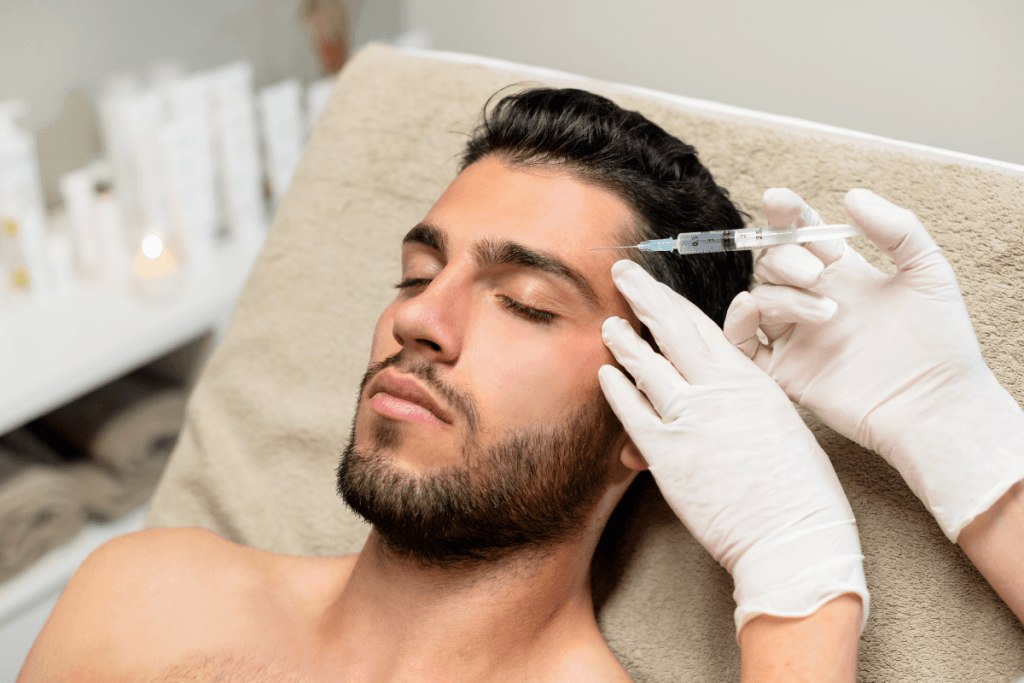
Men’s aesthetics is now a routine service line in many practices. Demand often centers on natural-looking refinement, not obvious change. For clinic teams, aesthetic treatments for men require a slightly different planning lens. You will often balance stronger facial structure, higher muscle mass, and “no one should notice” expectations.
Operationally, the work is less about trends and more about repeatable workflows. That means consistent consult language, complication readiness, and tight documentation. It also means sourcing from channels that fit your compliance standards.
MedWholesaleSupplies supports purchasing for licensed healthcare practices only.
Key Takeaways
- Start with goals: define “refreshed” in measurable terms.
- Plan by region: upper face, midface, jawline, neck, skin quality.
- Use layered care: injectables, devices, and skincare coordination.
- Document consistently: photos, consent, lot numbers, aftercare instructions.
- Standardize procurement: verify authenticity and track inventory.
Aesthetic Treatments for Men: How Demand Shapes Planning
Male aesthetics has moved beyond “Brotox” headlines into everyday practice. Many patients prefer subtle contour, skin quality improvement, and “less tired” eyes. They may also prioritize minimal downtime and fewer clinic visits. Those preferences shape scheduling, product selection, and your pre- and post-treatment instructions.
Expect patterns that differ from many female presentations. Men more often request forehead and glabellar softening without brow feminization, stronger jawline definition, and correction of under-eye hollows without puffiness. Skin concerns also skew toward sun damage, enlarged pores, acne scarring, and shaving-related irritation. You may also see interest in hair restoration services, including PRP (platelet-rich plasma) injections, alongside facial rejuvenation.
Why it matters: Clear planning reduces revisions and protects outcomes-focused schedules.
Consult Structure: Assessment Priorities and Clear Language
A male-focused consult works best when it is structured and concrete. Start with the patient’s “why now,” then translate that into treatable priorities. Many men describe goals in plain terms like “look less angry,” “tighten here,” or “sharpen the jaw.” Mirror their words, then map them to anatomy and modality options.
Risk communication also needs to be direct and non-alarming. Use a standard approach to contraindication screening, past procedure history, and medication review. If your team offers injectables and devices, clarify sequencing and realistic staging. This is where you prevent mismatched expectations, especially for under-eye volume, non-surgical rhinoplasty, and jawline contouring requests.
Use Goal-Based Language (Not Procedure-First Talk)
Many clinics get better alignment when they lead with goals, not brand names. For example, “soften strong expression lines” is easier to agree on than “forehead injections.” “Improve skin texture” is clearer than “laser.” This approach also supports consent, because you can tie each step to an identified concern. When you document, capture the patient’s words, your assessment, and the agreed endpoints. That documentation becomes a clinical and operational reference point at follow-up, especially when subtle outcomes are the target.
Within this framework, you can introduce aesthetic treatments for men as a menu of options, not a single pathway. It keeps the consult neutral and reduces the pressure to “do everything” at once.
Set Expectations Around Subtle Change and Follow-Up
Men may under-communicate concerns or avoid frequent follow-ups. Build follow-up touchpoints into your standard workflow. Use consistent photo angles and lighting. Confirm what “natural” means for that patient. For some, it means keeping forehead movement. For others, it means maintaining a rugged jawline while reducing lower-face heaviness.
As a practical step, many teams use a one-page plan that lists: treatment regions, modality type, and timing windows. Policies vary, but the principle is consistent: reduce ambiguity for staff and patient.
Modalities to Know: Injectables, Devices, and Regenerative Options
Most men’s aesthetic plans combine two lanes: expression management and structural or skin-quality support. Your modality mix will depend on staff skill set, patient mix, and your complication protocols. Keep the “tool selection” conversation high level and tied to anatomy.
When you present options, focus on what each category does in simple terms. Neuromodulators relax targeted muscles. Dermal fillers can restore volume or refine contour. Biostimulatory products support neocollagenesis (new collagen formation) over time. Energy-based devices target texture, laxity, or pigment through controlled thermal or light effects.
Explore broader demand signals in the High Demand For Non-Invasive Procedures overview, and track trend shifts in the Beauty Trends Hub.
MedWholesaleSupplies focuses on authentic, brand-name medical products for professional use.
| Modality | Common clinic use case | Operational notes |
|---|---|---|
| Neuromodulators | Soften dynamic lines while preserving natural expression | Standardize mapping, consent language, and post-care documentation |
| Hyaluronic acid fillers | Contour support (chin, jawline) and targeted volume replacement | Stock appropriate viscosities; train for vascular risk recognition |
| Biostimulatory injectables | Skin quality and structural support goals over staged visits | Document treatment plan and follow-up cadence; avoid overcorrection |
| Energy-based devices | Texture, pores, pigment, and tightening indications by protocol | Protocol-driven settings, patch-test practices where applicable |
| Hair removal / hair restoration services | Reduce grooming burden or support hair density goals | Screen for skin type and aftercare adherence; set outcome limits |
For teams expanding injectables, your category-level planning matters. See the Botox Category for neuromodulator-related inventory grouping, and the Dermal Fillers Category to review filler classes and formats.
In many practices, aesthetic treatments for men start with neuromodulators and then add contour work. A concise clinical refresher is available in Botox Gold Standard Overview.
High-Request Facial Zones: Jawline, Chin, Nose, and Under-Eye
Male facial shaping requests often cluster around profile and lower-face structure. “Jawline contouring” can mean different things: reducing masseter prominence, enhancing mandibular definition, or balancing chin projection. Each has a different risk profile and a different “natural” endpoint. Plan the consult around proportions, not a single feature, and use standardized photography to support that discussion.
Under-eye concerns can involve dark circles, tear trough hollowing, or true lower-lid bags. Patients may use one phrase to describe several etiologies. Your assessment should separate pigment, volume loss, edema, and skin laxity, then match the approach accordingly. For nose reshaping, non-surgical rhinoplasty is typically about subtle contour changes, which increases the importance of anatomy, product choice, and your adverse-event readiness.
For a men-specific filler planning perspective, see Dermal Fillers For Men. For planning decisions across filler types, review Sculptra Vs Filler Comparison.
In this zone-based approach, aesthetic treatments for men stays patient-centered. You present options, document priorities, and stage the plan without over-treating.
Skin Quality and Texture: Scars, Pores, Sun Damage, and “Tired” Skin
Men frequently ask for improvements in texture rather than “anti-aging.” Common drivers include acne scarring, enlarged pores, sun damage, and uneven tone. Many also want a smoother look that still reads as masculine. This makes skin quality services an important companion to injectables, not a separate track.
In practice, teams often combine a baseline skincare plan with in-office procedures such as chemical peels, microneedling, RF microneedling, and laser resurfacing protocols. The exact mix depends on skin type, downtime tolerance, and your device portfolio. When you describe these services, use plain-language synonyms. For example, “resurfacing” can be explained as controlled exfoliation and renewal. “Collagen remodeling” can be described as skin support rebuilding over time.
Newer non-surgical approaches continue to evolve. A helpful trend-oriented summary is Non-Surgical Aesthetic Treatments 2025. For clinics building injectable skin quality services, Skin Boosters Injections provides a high-level orientation.
When you position these services, aesthetic treatments for men can be framed as “skin performance” support. That language often resonates with male patients who prefer functional framing.
Beyond the Face: Sweat, Neck, and Body Contouring Requests
Some of the fastest-growing conversations in men’s aesthetics are not strictly facial. Hyperhidrosis (excessive sweating) treatment requests can be driven by work uniforms, athletics, and social discomfort. Neck and submental fullness concerns may be framed as “double chin” or “jawline lost.” Body contouring requests may follow weight changes or fitness plateaus.
Clinically, these requests span devices and injectables. For example, clinics may offer neuromodulator-based sweat reduction protocols, energy-based tightening, injection lipolysis options (such as deoxycholic acid products), and device-based fat reduction (for example, cryolipolysis systems). Keep language conservative. Avoid implying outcomes are guaranteed, and align the plan with candidacy screening and aftercare adherence.
- Common pitfalls: treating “fullness” without posture assessment.
- Common pitfalls: skipping standardized baseline measurements and photos.
- Common pitfalls: overpromising on single-session change.
- Common pitfalls: not defining follow-up responsibility and timing.
With a broader menu, aesthetic treatments for men becomes a coordination problem. Clear triage helps: what is best handled by injectables, what belongs to devices, and what should be referred for surgical evaluation based on clinic scope.
Clinic Operations: Consent, Sourcing, and Inventory Controls
Operational discipline protects patients and protects your schedule. Build repeatable steps for consult documentation, photography, consent, post-care instructions, and incident reporting. For injectables, lot tracking and expiration monitoring are non-negotiable. If you support multiple brands or classes, standardize how staff find IFUs, where they record product identifiers, and how they document adverse events and follow-up contacts.
Procurement choices matter as much as technique. Work only with suppliers who require professional verification and can support your documentation standards. In many practices, centralized purchasing reduces variation and helps with recall response if needed. If you operate across multiple locations, align storage checks and receiving logs across sites. Some clinics also prefer US distribution to simplify internal receiving and recordkeeping.
Quick tip: Use one intake form for all cosmetic visits.
For product examples that may appear in men’s plans, clinics sometimes stock neuromodulators such as Botox and a small, planned set of fillers and biostimulatory options. Examples include Sculptra and Radiesse 3 mL. Selection should reflect your protocols, training, and complication readiness rather than trend pressure.
Products are sourced through distributor networks that are vetted for legitimacy.
Documentation and Receiving Checklist (Clinic-Facing)
- Verify licensure: keep credentials current on file.
- Record consent: risks, alternatives, aftercare, photos.
- Standardize photos: lighting, angles, timing.
- Log identifiers: lot, expiration, product class.
- Track inventory: counts, location, access controls.
- Store per IFU: temperature and handling rules.
- Document outcomes: patient goals vs observed change.
- Escalation path: who responds to complications.
When these steps are in place, aesthetic treatments for men becomes easier to scale. Staff spend less time improvising and more time delivering consistent care.
Further reading: If you are building a men’s injectable pathway, compare staging approaches and follow-up planning across modalities before expanding your menu.
Authoritative Sources
For safety, labeling, and professional standards, consult primary sources:
- FDA Drugs@FDA (approved drugs and labeling access)
- American Academy of Dermatology cosmetic procedures overview
- American Society of Plastic Surgeons procedural statistics
This content is for informational purposes only and is not a substitute for professional medical advice.