

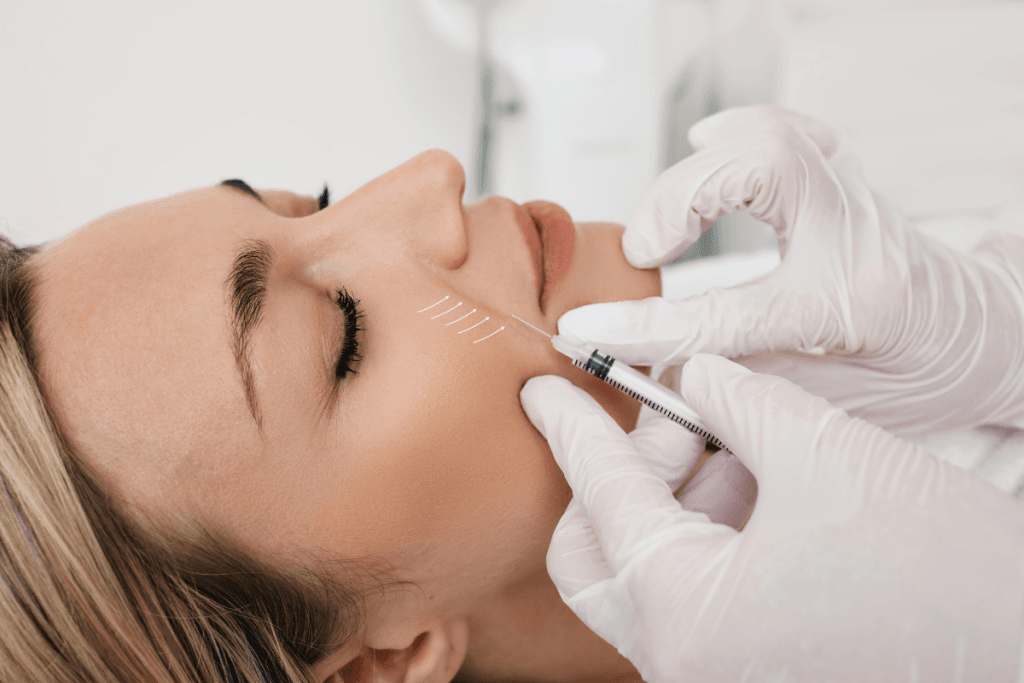
Ultracol injection is generally evaluated as a polydioxanone (PDO) collagen biostimulator for gradual skin-quality improvement, not as an instant-volume filler. For licensed aesthetic clinics, the key questions are practical: where it fits, who may suit treatment, what risks need discussion, and how the workflow should be documented before use.
That distinction matters because a collagen-stimulating injectable behaves differently from a hydration-focused skin booster, a volumizing filler, or a thread-based lift. Clinics should frame the decision around mechanism, patient goals, current labeling, and local regulatory status rather than social-media shorthand.
Key Takeaways
- PDO-based category: collagen support is the core concept, not immediate bulk volume.
- Best-fit goals: texture, firmness, and mild laxity are more realistic than dramatic lifting.
- Timeline matters: meaningful change is usually assessed over planned follow-up visits.
- Screening is essential: prior injectables, inflammatory history, and expectations need review.
- Workflow controls: verify labeling, handling, batch details, and traceable documentation.
Where Ultracol Injection Fits in Skin Rejuvenation
Ultracol injection sits in the collagen-biostimulation category, where the intended endpoint is progressive skin-quality support. In plain terms, clinics usually consider it when the treatment goal is firmer, smoother, or more resilient-looking skin over time rather than immediate contour creation.
Ultracol is commonly described as a liquid PDO biostimulator or PDO microspheres injection. PDO is a biodegradable synthetic polymer already familiar in some medical and aesthetic contexts. In injectable biostimulation, the clinical conversation centers on tissue response, collagen remodeling, and skin texture rather than direct water-binding or structural volumization.
This positioning places it between several aesthetic categories. It is not mainly a hyaluronic acid volumizer. It is also not the same as a suspension thread or a surgical lift. The first planning question is simple: is the clinic trying to improve skin quality over time, or create immediate shape, projection, or repositioning?
If the plan is hydration-led, a broader review of the Skin Boosters Category may be more useful. For product browsing, the Skin Boosters Product Hub can help teams separate hydration-focused injectables from collagen-stimulating options.
Common clinic conversations around Ultracol skin rejuvenation include facial rejuvenation, fine lines, elasticity support, and mild textural change in selected treatment zones. Exact indications, preparation steps, and approved areas may vary by market. Clinics should rely on current product documentation rather than informal summaries or assumptions drawn from adjacent PDO products.
Why it matters: A collagen-stimulating injectable needs different consent language than an instant-volume filler.
Candidate Selection and Decision Points
Best-fit candidates usually want progressive improvement in texture, firmness, and mild laxity. They also need realistic expectations, because collagen remodeling is not judged like a same-day filler result.
In practice, Ultracol injection often fits better for patients with early or moderate skin-quality concerns than for those seeking major lift or deep structural correction. A patient asking for a visible one-visit lift may be describing a different treatment goal. A patient willing to accept staged assessment, baseline photography, and follow-up review may be a better match for a biostimulator pathway.
Common Candidate Profiles
- Early laxity concerns: prefers gradual tightening over immediate reshaping.
- Texture-focused complaints: prioritizes skin quality more than projection.
- Maintenance mindset: accepts staged review and clinical photography.
- Combination planning: may pair with surface or hydration-focused treatments.
- Realistic expectations: understands change is progressive and variable.
Pause Points Before Treatment
- Active infection: postpone until skin is clinically clear.
- Unclear indication: confirm the target area matches current labeling.
- Immediate volume request: another class may fit the goal better.
- Recent procedures: spacing may matter after resurfacing or energy devices.
- Documentation gaps: resolve consent, history, and product checks first.
Screening should address prior filler or biostimulator history, inflammatory skin disease, bleeding risk, relevant systemic history, and known hypersensitivity to listed ingredients. Clinics should also ask about previous treatment in the same anatomical area. Layered product history can affect assessment, expectations, and complication review.
Not every rejuvenation complaint is a match. Deeper folds, advanced ptosis (tissue descent), and requests for clear structural lift may require a different approach or a combination plan. For adjacent collagen-focused context, clinics may compare concepts discussed in AestheFill Collagen Stimulators and Nithya Collagen Injections.
How Results Are Usually Assessed
Results are usually gradual because collagen remodeling takes time. Early swelling or tissue response can change how the area looks in the short term, so clinics should avoid using day-one appearance as the main measure of success.
Ultracol injection is positioned as a collagen-stimulating treatment rather than a simple hydrating injectable. After placement, the PDO-based material may act as a stimulus for tissue remodeling. The assessment should therefore focus on skin-quality endpoints such as texture, firmness, and mild laxity, not bold lifting claims.
Some patients may notice early visual change from edema, temporary tissue support, or surface-related factors. That is not the same as the intended longer remodeling pathway. Standardized photography, consistent lighting, and repeat assessment points help clinicians separate short-term procedure effects from meaningful clinical change.
Maintenance may be part of some biostimulator plans, but there is no universal schedule that fits every clinic or market. Repeat treatment decisions depend on labeling, local regulation, anatomical area, baseline skin quality, and the clinic’s endpoint definition. If a market lists different configurations such as Ultracol 100 or Ultracol 200, document the exact product used rather than assuming one protocol applies across all versions.
Area choice also matters. Facial zones, neck rejuvenation, and other skin-quality targets may not respond or recover in the same way. Before adapting a workflow from one area to another, confirm current instructions for use and local authorization.
Safety Considerations, Side Effects, and Escalation
Safety planning should cover familiar injectable risks and biostimulator-specific expectations. The main concerns include bruising, swelling, tenderness, infection risk, nodules, contour irregularity, delayed inflammatory reactions, and technique-related complications.
Ultracol safety considerations should begin before the procedure. Screening should cover active skin infection, recent resurfacing or energy-based treatments, inflammatory dermatoses, bleeding risk, prior injectable history, and relevant immune or hypersensitivity history when appropriate. Clinics should also confirm contraindications and preparation requirements from the current instructions for use.
Product choice does not replace anatomy. Safe injectable practice still depends on assessment, correct plane selection, careful technique, aseptic handling, and a documented escalation pathway. Clinics evaluating any PDO biostimulator should decide in advance which symptoms require same-day review and who will manage urgent follow-up.
Expected Reactions vs Red Flags
- Common short-term changes: tenderness, swelling, bruising, and temporary unevenness.
- Injection-site lumps: may reflect placement, edema, or early tissue response.
- Same-day escalation: severe pain, blanching, dusky color change, or livedo.
- Infection concern: fever, drainage, increasing warmth, or worsening redness.
- Delayed review: persistent nodules or inflammation beyond the expected course.
Aftercare should be simple, written, and product-specific. Many clinics avoid stacking additional procedures too quickly if that could confuse swelling, tenderness, or inflammatory review. Patients should receive a clear route for same-day contact if symptoms escalate.
Clinicians should also keep an escalation plan for suspected vascular compromise, infection, or delayed inflammatory response. Even when serious events are uncommon, rapid recognition and documented response are part of safe injectable practice. For general injection safety principles, CDC injection safety guidance outlines core prevention concepts relevant to clinical settings.
How It Compares With Fillers, Skin Boosters, and Threads
Ultracol injection should be compared by mechanism, not by brand hype. The useful question is what endpoint the clinic is trying to achieve.
| Approach | Main aim | What clinics usually expect | Key planning question |
|---|---|---|---|
| PDO biostimulator | Gradual collagen support | Progressive textural and firmness change | Is the goal skin quality rather than instant shape? |
| HA skin booster | Hydration and surface quality | Glow, hydration, and fine texture refinement | Is water-binding improvement the main priority? |
| PLLA or CaHA biostimulator | Material-specific collagen stimulation | Remodeling or support, depending on class and placement | Which mechanism fits the tissue target and workflow? |
| Dermal filler | Volume, contour, or projection | More immediate shape change | Is structure the primary endpoint? |
| Thread lift | Mechanical repositioning | Lift component with a different risk profile | Is suspension the actual treatment goal? |
Clinics often compare PDO biostimulators with hydration-led injectables, PLLA products, CaHA products, and threads. These are not direct substitutes. A thread lift answers a mechanical repositioning question. A skin booster usually answers a hydration or surface-quality question. A volumizing filler addresses contour and projection more directly.
For adjacent category context, teams can review Sculptra 2 Vials, Rejuran Healer, and Profhilo H+L. These examples should not be treated as interchangeable. They help frame how different mechanisms lead to different consent, handling, and follow-up conversations.
For a broader non-surgical rejuvenation lens, Skin Booster Injections and Mesotherapy Injections can help teams separate hydration, superficial revitalization, and collagen-stimulation goals.
Clinic Workflow: Verification, Handling, and Records
Before adding a PDO biostimulator, operational controls matter as much as treatment rationale. A clear workflow reduces avoidable confusion around product identity, patient selection, follow-up, and traceability.
Before adopting Ultracol injection, confirm the exact product identity, packaging, market authorization, and training expectations for your jurisdiction. Avoid relying on shorthand names, social posts, or assumptions drawn from a different PDO product. This is especially important when multiple product configurations may exist across markets.
MedWholesaleSupplies serves licensed clinics and healthcare professionals, so access and product discussions should remain clinic-facing. When procurement teams compare injectable options, they should record source documentation, batch details, expiry, and storage requirements in the same file pathway used for other advanced aesthetic products.
Pre-Treatment File Checklist
- Verify exact SKU: record product name, batch, and expiry.
- Confirm label status: review indications, areas, and IFU version.
- Screen the patient: document history, expectations, and recent procedures.
- Capture baseline data: include consent, photos, and treatment rationale.
- Plan the session: map areas and schedule review timing.
- Record handling steps: note storage and preparation requirements.
- Define escalation route: list same-day contacts and review triggers.
Quick tip: Record the exact product name, batch, and expiry at the treatment visit.
Storage, preparation, handling, and disposal should always follow the current instructions for use. If any detail is unclear, pause the workflow and verify it with manufacturer documentation or an authorized distributor. Clinics that treat product verification as routine usually reduce ambiguity later in the patient record.
Products obtained through MedWholesaleSupplies are sourced through vetted distributors and verified supply channels for licensed clinics. That sourcing context supports procurement review, but it does not replace local regulatory checks, clinical training, or product-specific instructions.
Regulatory and Evidence Context
Regulatory status can vary by country, product version, and intended use. Clinics should not assume that visibility in one market means authorization in another.
One common search question is whether Ultracol is FDA approved. Clinics should verify current regulatory status directly through official sources or manufacturer documentation for the specific product and jurisdiction. If a device or injectable is not listed for a given market or indication, that gap should be reflected in procurement review, consent language, and service planning.
Evidence should also be interpreted carefully. Some published studies have evaluated Ultracol 100 or Ultracol 200 in specific treatment contexts, but a single study design does not automatically establish broad use across all areas, patient types, or clinic protocols. Product-specific evidence is useful, yet it should be read alongside labeling, adverse-event monitoring, and local standards of practice.
For general context on cosmetic injectable risk, the FDA dermal filler resource describes risks relevant to soft-tissue injectables. Although fillers and PDO biostimulators are different categories, the safety themes around qualified administration, adverse events, and patient counseling remain important.
Authoritative Sources
- For safe injection standards, see CDC Injection Safety.
- For cosmetic injectable risk context, review FDA Dermal Fillers and Soft Tissue Fillers.
- For peer-reviewed Ultracol 200 evidence, see NIH/PMC Ultracol 200 Evaluation.
In practice, Ultracol injection is best assessed as a gradual collagen-supporting option for skin quality rather than a shortcut to instant lift or full-volume correction. The strongest clinic decisions come from careful screening, realistic timeline counseling, sound technique, product verification, and disciplined documentation.
This content is for informational purposes only and is not a substitute for professional medical advice.




