

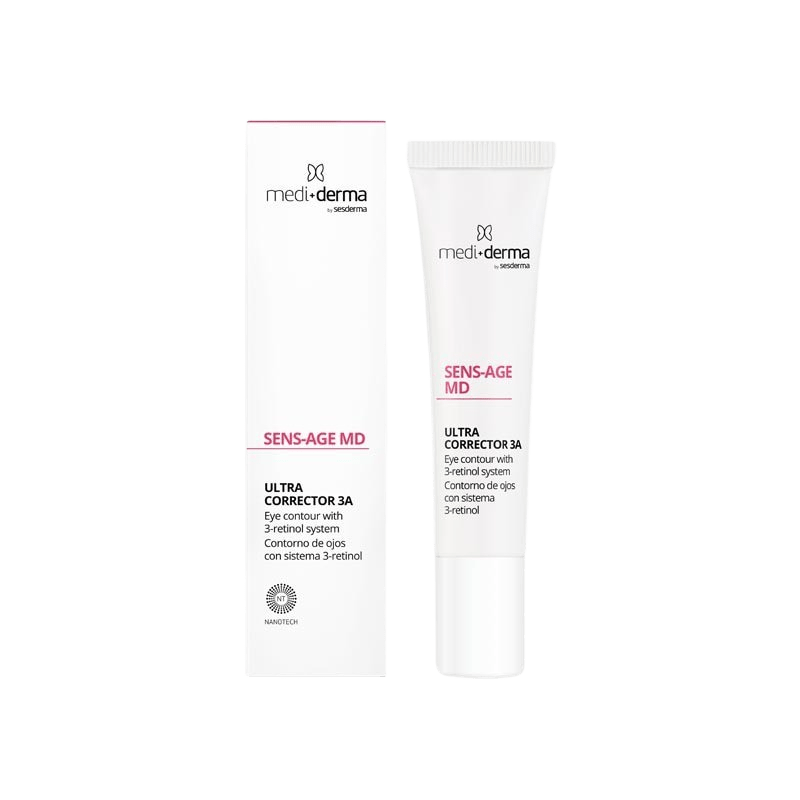
MEDIDERMA® SENS-AGE MD ULTRA CORRECTOR 3A EYE CONTOUR
Order MEDIDERMA® SENS-AGE MD Eye Contour for Clinics
Eye Contour Cream
$29.00
You save (%)
Description
MEDIDERMA® SENS-AGE MD ULTRA CORRECTOR 3A EYE CONTOUR is a professional eye-area cream supplied in a 15 mL tube for clinic-directed skincare protocols. Licensed clinics, med spas, aesthetic practices, and healthcare professionals can order it for structured periocular care, retail handoff, and regimen planning. The formula combines retinol, vitamin C, hyaluronic acid, and supportive botanicals for the delicate skin around the eyes.
This Mediderma Sens-Age MD Ultra Corrector 3A Eye Contour cream fits practices that want a compact, clearly positioned product for home-care support after non-ablative aesthetic routines or for ongoing eye-area maintenance. Its clinic-friendly format helps staff standardize counseling, document recommended use, and keep related facial-care products organized by protocol step.
Clinic Ordering, Price, and Professional Access
Clinics can sign in to view the current Mediderma Sens-Age MD Ultra Corrector 3A Eye Contour price, qualified purchasing terms, and live ordering information. Pricing may vary by account profile, order volume, and contract arrangements, so the ordering dashboard is the most practical place to align replenishment with clinic demand.
Access is intended for licensed professional settings. We supply brand-name medical and aesthetic products through vetted distribution channels for licensed clinics, with account-level documentation supporting routine purchasing controls. For broader stocking plans, the Creams and Serums category can help teams organize adjacent topical products by regimen step.
Quick tip: Match unit counts to real dispensing patterns, staff demonstrations, and aftercare kit usage rather than display needs alone.
What It Is and How It Works
MEDIDERMA® SENS-AGE MD ULTRA CORRECTOR 3A EYE CONTOUR is designed for periorbital topical use on intact skin. The eye contour area is thinner and more movement-prone than many facial zones, so clinics often select dedicated products rather than extending a general face cream too close to the orbital region.
The preparation uses a tri-active framework: retinol, vitamin C, and hyaluronic acid. Retinol is a cosmetic retinoid commonly used in anti-aging routines to support surface renewal. Vitamin C contributes antioxidant support against visible effects associated with daily environmental exposure. Hyaluronic acid acts as a humectant, binding water at the skin surface for a smoother feel and hydrated appearance.
Supportive botanicals listed in current product information include caffeine, ginseng, and chamomile. These ingredients are often used in eye-area cosmetics for a refreshed look, conditioning, and comfort-focused formulation design. Clinics should still review the carton and current label before dispensing, because ingredient lists and manufacturer materials are the source for batch-specific information.
Professional Applications Around the Eye Area
Practices use this Sens-Age MD eye contour cream when they want a dedicated product for fine-line, texture, hydration, and visible fatigue concerns around the eye area. It can be incorporated into clinic-directed daily routines, staged introductions, and peri-procedural skincare plans when compatible with the supervising professional’s protocol.
Because the formula includes a retinoid component, many clinics introduce it gradually and pair it with mild cleansing and barrier-supportive moisturizers. A staged plan can make staff instructions more consistent and help clients understand where the eye product sits in a morning or evening routine. Avoid layering multiple potent retinoid products near the periocular area unless the protocol specifically allows it.
The product is not a substitute for in-office procedures, medical evaluation, or individualized treatment planning. Its value for clinics is operational as well as cosmetic: it gives providers a defined eye-area step, reduces improvisation during retail counseling, and supports repeatable home-care guidance across multiple team members.
Key Features for Clinic Stocking
- 15 mL tube suited to eye-area application protocols.
- Professional topical format for clinic-directed skincare routines.
- Tri-active composition featuring retinol, vitamin C, and hyaluronic acid.
- Supportive botanicals including caffeine, ginseng, and chamomile.
- Lightweight texture appropriate for careful layering in planned routines.
- Periorbital focus for the delicate skin around the eyes.
- Compact shelf footprint for retail cabinets, kits, and back-bar organization.
- Useful companion to mild cleansers, hydrating creams, and sunscreen counseling.
- External use only on intact skin, away from mucous membranes and lash line.
- Appropriate for documented professional-use recommendations and staff training.
Composition and Ingredient Role
The active framework is built around three familiar aesthetic skincare categories. Retinol supports surface renewal within cosmetic skincare routines. Vitamin C helps protect the appearance of skin exposed to oxidative environmental stress. Hyaluronic acid provides water-binding hydration, which is especially useful when retinoid-containing products are introduced carefully.
| Ingredient highlight | Practical clinic relevance |
|---|---|
| Retinol | Supports cosmetic renewal routines and requires careful introduction in sensitive zones. |
| Vitamin C | Provides antioxidant support for appearance-focused daily skincare plans. |
| Hyaluronic acid | Helps maintain hydration and a smoother surface feel. |
| Caffeine | Common in eye-area products for a refreshed cosmetic appearance. |
| Ginseng | Botanical conditioning support in professional skincare formulations. |
| Chamomile | Often selected for comfort-focused topical care. |
No independent claim is made here regarding fragrance, dye, or paraben status. Clinics should use the manufacturer carton, tube label, and current professional materials to verify the complete INCI list before introducing the product to a client with known sensitivities.
How Clinics Can Integrate It Into Protocols
For many practices, the easiest workflow is to place the Mediderma Ultra Corrector 3A eye cream within a written facial-care sequence. Staff can identify which cleanser comes first, when the eye-area product is used, which moisturizer follows, and where daytime sun protection belongs. This reduces variation between provider instructions and front-desk reinforcement.
Clinics building a fuller Sens-Age routine may pair the eye contour product with Sens-Age MD Ultra Corrector 3A Renewer Facial Cream for broader face-care planning. If the goal is nourishment and barrier comfort, Sens-Age MD G Activator Nourishing Facial Cream may fit a complementary position in a curated regimen.
Hydration support is especially important when retinoid-containing products are introduced. A compatible moisturizer such as Hylanses MD HA Advance Hydration Gel Cream can help clinics build a more complete routine for clients who need added moisture balance during skincare transitions.
Packaging, Storage, and Handling
This product is supplied as a single 15 mL tube. The compact format helps teams manage shelf space, assemble aftercare kits, and perform quick cycle counts. Clinics should store it according to the manufacturer label and protect cosmetic products from unnecessary heat, contamination, and repeated exposure to open treatment-room environments.
Manufacturer labeling commonly supports lot and expiration tracking, which helps with first-expire, first-out rotation. Keep cartons or product records accessible for staff education, adverse reaction documentation, and reorder accuracy. During receiving, confirm that the unit, label, and quantity match the purchase record before adding it to retail or treatment-room stock.
Orders use reliable US logistics, with temperature-controlled handling when required and tracked US delivery. This phrasing does not replace the manufacturer’s storage directions; it simply describes the operational handling standard used when product characteristics call for added control.
Safety, Tolerability, and Professional Precautions
Eye-area skin can react more readily than thicker facial skin. Mild dryness, tingling, redness, or temporary irritation may occur, particularly when a retinoid-containing product is introduced too quickly or layered with other active topicals. Clinics should advise use only on intact external skin and avoid application to the lash line, mucous membranes, or compromised areas.
A patch test or staged introduction may be appropriate under clinic policy, especially for clients with sensitive skin histories. Discontinue use and evaluate the regimen if marked irritation, swelling, rash, or signs of allergy occur. Professional guidance should also consider recent procedures, barrier disruption, concurrent exfoliating products, and tolerance to vitamin A derivatives.
Daytime routines that include retinoid-based cosmetic products should also address sun exposure. Staff should reinforce sunscreen use and practical photoprotection when clients are using renewal-focused skincare. For deeper staff education on ingredient layering and aging-focused routines, the article on peptides for skin can support internal training discussions without replacing product labeling.
Related Mediderma Products and Category Planning
Clinics that carry MEDIDERMA® SENS-AGE MD ULTRA CORRECTOR 3A EYE CONTOUR often build surrounding regimens from the same professional skincare family. The Mediderma brand assortment is useful for reviewing adjacent products by treatment goal, texture, and routine position.
For antioxidant-forward facial care, C-Defence MD CSkin Concentrate Serum may support broader vitamin C planning outside the dedicated eye step. For lightweight moisture and brightness-focused routines, C-Defence MD CSkin Bright Moisturizing Facial Fluid can be considered as part of a separate face-care pathway.
Teams comparing procedure-adjacent programs can also review the professional article on Mediderma peel products. For wider assortment planning beyond this line, the Skincare category helps consolidate topical products used across consultation, aftercare, and maintenance routines.
Operational Benefits in Practice
Standardized eye-area products reduce friction during consultations. When every provider describes the same product role, application boundary, ramp-up approach, and companion moisturizer, clients receive clearer instructions and staff spend less time correcting routine confusion at follow-up visits.
The 15 mL tube also supports predictable inventory controls. It is small enough for front-desk merchandising, aftercare kit inclusion, and treatment-room demonstrations, while still being specific enough to avoid confusion with full-face products. Clear assignment to the eye contour step can improve product placement and reduce cross-use outside the intended area.
Why it matters: A defined periocular product helps clinics keep active skincare protocols precise, documented, and easier to teach.
Authoritative Sources
- NIH Office of Dietary Supplements: Vitamin C Fact Sheet for Health Professionals
- StatPearls: Hyaluronic Acid
This content is for informational purposes only and is not a substitute for professional medical advice.
Frequently Asked Questions
Who can order MEDIDERMA® SENS-AGE MD ULTRA CORRECTOR 3A EYE CONTOUR?
This product is intended for licensed clinics, med spas, aesthetic practices, and healthcare professionals using professional skincare protocols. Account verification and business ordering requirements may apply before pricing and purchasing details are shown.
What size is the Mediderma Sens-Age MD Ultra Corrector 3A Eye Contour cream?
The product is supplied as a 15 mL tube. The compact size is practical for eye-area routines, aftercare kits, staff demonstrations, and organized clinic inventory rotation.
How should clinics introduce this eye contour cream in a routine?
Many clinics introduce retinoid-containing eye products gradually and pair them with mild cleansing, hydration, and daytime sun protection. The product should be used externally on intact skin and kept away from the lash line and mucous membranes.
What ingredients are highlighted in this Mediderma eye contour product?
Current product information highlights retinol, vitamin C, hyaluronic acid, caffeine, ginseng, and chamomile. Clinics should review the current carton and full INCI list before dispensing to clients with sensitivity concerns.
Can this product be paired with other Mediderma skincare items?
Yes, clinics often place it within broader Mediderma routines that include gentle cleansing, hydration, antioxidant support, or renewal-focused face products. Compatibility should be confirmed against the clinic protocol and the client’s tolerance profile.
What safety precautions should staff communicate?
Staff should explain that irritation, redness, dryness, or sensitivity can occur, especially during initial use. Discontinue use and evaluate the routine if marked irritation, swelling, rash, or allergic-type symptoms appear.
Specifications
- Main Ingredient: Hyaluronic Acid, Retinol, Vitamin C
- Manufacturer: Sesderma Laboratories
- Drug Class: Topical Skincare
- Generic Name: Sens-Age Md Ultra Corrector 3A Eye Contour
- Package Contents: 15 mL
- Storage Requirements: Room Temperature (2℃~25℃)
- Main Usage: Eye Rejuvenation
About the Brand
Mediderma
BUY MEDIDERMA PRODUCTS ONLINE AT WHOLESALE PRICES ON MedWholesaleSupplies Mediderma is a reliable brand within the medical sector, delivering top-of-the-line skincare products. These can now be conveniently procured directly from our online platform, medwholesalesupplies.com. Buy MEDIDERMA® skincare products at wholesale prices – register an account on Med Wholesale Supplies today! What is MediDerma? Mediderma's commitment to research and invention ensures that their offerings cater effectively and safely to diverse dermatological needs. Whether you're a medical professional or an individual seeking superior skincare options, Mediderma stands as the brand of choice. MEDIDERMA® Product Range By availing Mediderma's range on medwholesalesupplies.com, we make it easy for you to access world-class skincare solutions without any hassles. As a highly-reputed online medical store, we offer a broad gamut of medical offerings, including Mediderma, satisfying an array of customer requirements. Our focus is consistently on customer satisfaction which is reflected in our competitive pricing, timely delivery, and unmatched customer assistance. With medwholesalesupplies.com, buying Mediderma skincare products is a breeze. ARGIPEEL Exfoliant gel for sensitive skin; contains arginine for hydration, antioxidant effects, and collagen stimulation, plus lactic acid for gentle exfoliation. AZELAC Skin-brightening line for inflamed, hypersensitive skin and rosacea; includes creams, serums, and peels for redness, swelling, hyperpigmentation, inflammation, and acne. C-DEFENSE Vitamin C and peptide-based products for tired, dull skin; brightens, firms, and protects against pollution and free radicals. FERULAC Anti-aging line with ferulic acid, vitamins, and retinoids; targets wrinkles, fine lines, and sun damage, stimulating collagen production. FR-ANTIOX Ferulic acid-based line with additional antioxidants; combats oxidative stress, sun damage, and aging, suitable for mature skin. HYLANSES Products with various types of hyaluronic acid; hydrates and addresses firmness and elasticity, ideal for sensitive, dry, and mature skin. MELA 360 Targets hyperpigmentation with products like the MELA 360 SPOT CORRECTOR; contains kojic acid, arbutin, and licorice extract for brightening dark spots. MELASES TRX Focuses on melasma and hormonal dark spots; tranexamic acid chemical peel reduces sun damage, inflammation, and aging effects. Where Can I Buy MEDIDERMA®? MEDIDERMA® Laboratories offer a wide range of products tailored to various patient needs. If you wish to order MEDIDERMA® online, our team can assist you in finding the best deals. Dermatological clinics should purchase MEDIDERMA® at wholesale prices to offer their patients the most affordable rates while ensuring product authenticity and quality. Contact our agents today to supply your clinic with genuine MEDIDERMA® products from trusted distributors.
Browse Mediderma Products
Here to help
Questions about ordering, delivery or products? You can email our team here or call now at 1-800-630-9757 and be connected with your dedicated Account Manager
Related Products
$339.00
You save (%)
You save (%)
Select options
This product has multiple variants. The options may be chosen on the product page
Juvéderm® SKINVIVE
Dermal Filler
$339.00 - $359.00
You save (%)
You save (%)
$86.00 - $119.00
You save (%)
You save (%)
$72.00
You save (%)
You save (%)
Select options
This product has multiple variants. The options may be chosen on the product page
Related Articles
Hyaluronidase in Aesthetic Practice: Safety and Workflow
Hyaluronidase is an enzyme that breaks down hyaluronic acid, a water-binding molecule found in skin,…
Jawline Filler in Aesthetic Care: Safety and Workflow
Jawline filler is a nonsurgical dermal filler approach used to refine lower-face contour, support the…
Dermal Fillers Before and After: Assessing Results
Dermal fillers before and after review should show whether an injectable treatment produced a visible,…
Elasticity of the Skin: Assessment and Treatment Planning
Elasticity of the skin is the skin’s ability to stretch, resist deformation, and return toward…
How Long Does Mirena Last? Duration, Labeling, and Workflow
Mirena is labeled to prevent pregnancy for up to 8 years, but its labeled duration…
Is Evenity a Bisphosphonate? Drug Class and Care Context
No. If you are asking is evenity a bisphosphonate, the short answer is no. Evenity…
What Causes Double Chin? Clinical Drivers and Red Flags
The main causes double chin presentations reflect are usually submental fat, inherited facial anatomy, chin…
Skyla Vs Kyleena: Differences That Matter in IUD Selection
In a Skyla vs Kyleena comparison, the main operational difference is duration on the label:…