
Description
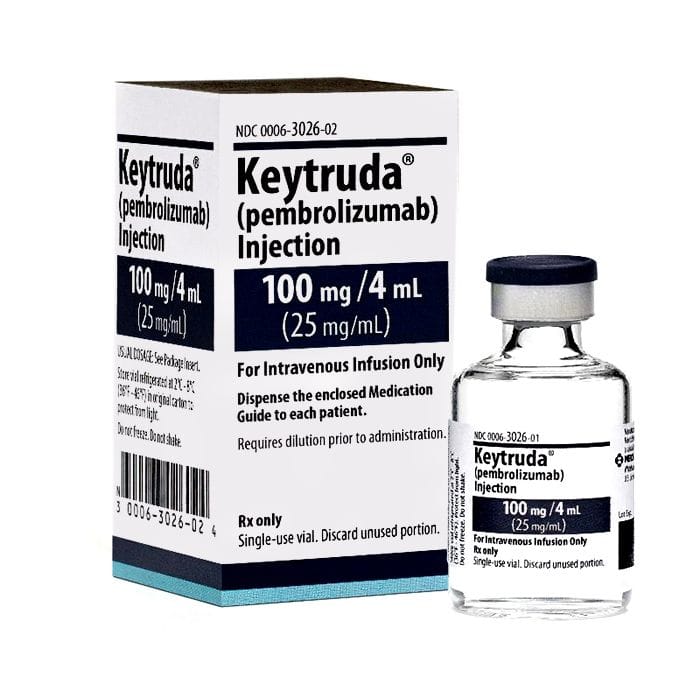
KEYTRUDA® is pembrolizumab, a sterile immune checkpoint inhibitor injection used in oncology infusion protocols. Licensed clinics and healthcare professionals can order KEYTRUDA® for professional use, including the 100 mg/4 mL single-use vial described for regulated pharmacy preparation and intravenous administration. The vial format supports cleanroom compounding, infusion scheduling, lot tracking, and protocol documentation across oncology practices.
Med Wholesale Supplies serves licensed clinical buyers that need authentic brand-name medical products sourced through vetted distributor channels. For oncology teams, the main ordering considerations are the vial strength shown during checkout, current clinic pricing, storage and receiving procedures, and alignment with the treating institution’s approved regimen library.
Clinic Pricing, Vial Selection, and Ordering
KEYTRUDA® price questions usually depend on contract terms, ordered quantity, presentation, and account status. Sign in through your facility account to view current purchasing information for the vial presentation available to your clinic. Public cost estimates, monthly treatment calculations, and consumer cash-pay comparisons do not replace institutional pricing because oncology protocols vary by indication, schedule, dose calculation, and combination regimen.
This product is supplied as a single-use vial containing 4 mL of solution equivalent to 100 mg pembrolizumab. Match the vial presentation to the order set, compounding workflow, and inventory par level established by your pharmacy and oncology leadership. Do not use search terms such as Keytruda 200 mg/20 mL vial or Pembrolizumab 200 mg vial as confirmation of a purchasable presentation unless that exact strength and pack are shown in your ordering portal.
Account verification is required for professional purchasing. Your facility profile can support order history, purchasing review, and multi-site planning for satellite infusion locations. Coordinate the receiving window with pharmacy hours so staff can inspect packaging, document lot and expiry, and move the product into storage according to the manufacturer label and institutional procedures.
Quick tip: Align purchase quantities with scheduled infusion demand, pharmacy compounding capacity, and site-specific par levels before placing a replenishment order.
How Pembrolizumab Works in Oncology Protocols
Pembrolizumab is a humanized monoclonal antibody that binds the programmed death receptor-1, commonly called PD-1. PD-1 is an immune checkpoint on T cells; blocking this pathway can help the immune system recognize and respond to tumor cells in appropriate clinical settings. KEYTRUDA® is not a general chemotherapy drug. It is an immunotherapy agent used under defined oncology criteria, often with biomarker, tumor type, stage, prior therapy, or combination-treatment requirements.
Facilities may map KEYTRUDA® to multiple tumor-specific regimens in formulary systems. Common clinical references include KEYTRUDA® for melanoma, KEYTRUDA® lung cancer, pembrolizumab lung cancer, KEYTRUDA® bladder cancer, and KEYTRUDA® metastatic melanoma. Those phrases should function as catalog or education tags only when they match the current prescribing information, tumor board decision, payer policy when applicable, and the institution’s pharmacy and therapeutics committee approvals.
Healthcare teams should avoid using broad questions such as what stage of cancer KEYTRUDA® treats as a substitute for indication review. The medication is used across certain early-stage, locally advanced, recurrent, unresectable, metastatic, or adjuvant treatment contexts depending on the cancer type and labeled criteria. The exact role in a regimen must be confirmed by the treating oncology team and current authoritative labeling.
Professional Applications in Infusion Settings
KEYTRUDA® fits oncology infusion center operations where sterile biologics are prepared by trained pharmacy personnel and administered by qualified clinical staff. Typical workflows include order verification, dose calculation according to the treatment plan, aseptic dilution, barcode scanning, chair assignment, nursing assessment, infusion documentation, and post-infusion observation under local policy.
Pharmacy teams often use the single-use vial format to support controlled compounding and waste documentation. Receiving staff can record lot number and expiry, while inventory managers can tie vial use to regimen forecasts. This structure helps multi-site practices standardize ordering across locations while preserving site-level accountability for storage, preparation, and administration.
For broader category navigation, purchasers can browse related pharmaceuticals used by healthcare practices. Brand-level procurement teams can also reference the Merck brand category when organizing manufacturer-specific purchasing workflows.
Key Product Features
- Active ingredient: Pembrolizumab, a humanized monoclonal antibody directed against PD-1.
- Professional-use format: Sterile solution intended for dilution and intravenous infusion by trained personnel.
- Vial detail: Single-use vial containing 4 mL of solution equivalent to 100 mg pembrolizumab.
- Oncology workflow fit: Supports pharmacy compounding, infusion scheduling, and standardized order sets.
- Traceability: Lot and expiry information support receiving, scanning, documentation, and recall procedures.
- Regimen mapping: Can be incorporated into EHR libraries when aligned with current labeling and institutional policy.
- Clinic procurement: Built for licensed healthcare facilities that require verified sourcing and professional documentation.
Composition, Preparation, and Handling
The active component is pembrolizumab. The vial is sterile and preservative-free, so it must be handled with aseptic technique and used according to the manufacturer’s preparation instructions. Pharmacy teams should consult the official label for excipients, dilution requirements, compatible diluents, storage conditions after preparation, inspection instructions, and any beyond-use limits that apply under institutional standards.
Because KEYTRUDA® is a biologic product, receiving and storage procedures should emphasize product identity, temperature documentation, security, and chain-of-custody. Facilities should follow their internal SOPs for biologic receiving, quarantine if inspection fails, and escalation to pharmacy leadership when a temperature or packaging concern is identified. Shipments can be coordinated with temperature-controlled handling when required and tracked US delivery.
Do not pool unused portions from single-use vials or retain residual medication for later administration unless the official label and facility policy allow a specific process. Staff training should cover vial inspection, aseptic preparation, labeling of admixtures, route verification, infusion pump programming, and waste handling. These steps protect product integrity and support consistent oncology documentation.
Safety, Warnings, and Monitoring
KEYTRUDA® can cause immune-mediated adverse reactions because it activates immune recognition pathways. These reactions may affect the lungs, colon, liver, endocrine glands, kidneys, skin, and other organs. Infusion-related reactions can also occur. Oncology teams should monitor patients according to the treatment plan, labeling, and institutional policies, including symptom review and laboratory surveillance when indicated.
Commonly discussed adverse reactions in pembrolizumab therapy may include fatigue, rash, itching, diarrhea, nausea, decreased appetite, cough, musculoskeletal pain, fever, and laboratory abnormalities. Serious immune-mediated events require prompt clinical assessment and may require treatment interruption, corticosteroids, hormone replacement, or permanent discontinuation depending on severity and organ involvement. This operational copy does not replace the full prescribing information or oncology protocol.
Before administration, the clinical team should verify regimen details, prior immune-related toxicity, concomitant therapies, transplant history, pregnancy considerations, baseline laboratory results, and symptom changes since the previous cycle. Combination regimens may add separate safety requirements from the paired anticancer medicines. Staff should escalate new shortness of breath, severe diarrhea, jaundice, severe rash, neurologic symptoms, endocrine symptoms, or suspected infusion reaction according to the clinic’s emergency and toxicity-management pathways.
Why it matters: Immune-related adverse reactions can develop during treatment or after discontinuation, so monitoring should extend beyond the infusion chair.
Documentation and Inventory Planning
Clinics that stock KEYTRUDA® should define responsibilities for purchasing, receiving, storage, compounding, administration, and documentation. Clear assignment reduces delays when a patient is scheduled for infusion and helps purchasing teams avoid overstocking high-value biologics. Inventory plans should consider vial count, expected regimen volume, appointment cadence, cancellation risk, and delivery schedule.
Receiving records should capture product identity, lot number, expiration date, condition at arrival, and temperature records when applicable. Pharmacy records should connect vial use to the prepared dose, patient-specific order, wastage documentation, and any required quality review. EHR build teams can improve consistency by using standardized drug dictionaries and avoiding free-text regimen names that can create selection errors.
For multi-location practices, central purchasing can set minimum and maximum par levels while allowing local pharmacy managers to adjust for chair utilization and tumor-board changes. If a specific vial presentation is unavailable in an ordering cycle, the substitution decision should remain with the prescriber, pharmacy lead, and institutional policy rather than purchasing alone.
Related Professional Categories
KEYTRUDA® is part of the oncology biologics and immunotherapy landscape, but it is not interchangeable with other infusion medications simply because they share a clinic workflow. Products such as monoclonal antibodies used in other specialties can help operations teams benchmark receiving, cold-chain procedures, chair scheduling, and staff training, but clinical substitution requires prescriber authorization and formulary approval.
Purchasers may use the broader pharmaceuticals category to organize regulated medications for clinical departments. Teams that source multiple manufacturer lines can use the Merck brand category for brand navigation and internal purchasing alignment. These links are for procurement organization, not clinical evidence or regimen selection.
Cost Questions and Treatment Expectations
Questions about Keytruda injection price, Keytruda cost per month, or pembrolizumab price are common because the medication is high value and used in complex regimens. For clinics, the practical answer is account-specific: sign in to view current purchasing terms and use your institution’s dosing, schedule, and wastage assumptions to estimate cycle or annual expense. A public monthly number can be misleading because labeled uses, body weight considerations when applicable, combination therapy, treatment duration, and site acquisition terms may differ.
Questions about life expectancy or treatment success cannot be answered by the vial alone. Outcomes depend on tumor type, stage, biomarkers, prior therapy, performance status, comorbidities, combination regimen, and response assessment. Clinical teams should use current labeling, trial data, guidelines, and patient-specific evaluation when discussing expected benefit. Procurement copy should not convert population-level study results into a promise for an individual patient.
Authoritative Sources for Clinical Reference
Use current medical sources when configuring order sets, dose references, monitoring parameters, and patient education materials. The following sources support clinical review and should be checked for updates before protocol changes.
- Manufacturer HCP information
- DailyMed prescribing information
- National Cancer Institute immunotherapy information
Ordering Support for Licensed Facilities
Ready-to-order clinics can sign in to confirm facility details, view current clinic pricing, and place a professional-use order for the vial presentation shown in the purchasing portal. Keep procurement records aligned with pharmacy SOPs, and verify that product handling matches the manufacturer label from receipt through administration.
For oncology networks, coordinated ordering can reduce last-minute procurement work and support consistent infusion scheduling. Purchasing, pharmacy, nursing, and oncology leadership should maintain a shared process for regimen updates, storage review, safety communications, and product reconciliation after each cycle.
This content is for informational purposes only and is not a substitute for professional medical advice.
Frequently Asked Questions
What vial presentation is described for KEYTRUDA®?
The described presentation is a single-use vial containing 4 mL of solution equivalent to 100 mg pembrolizumab. Clinics should select the vial strength shown in the purchasing portal and align it with the approved order set and pharmacy workflow.
How can clinics view KEYTRUDA® pricing?
Licensed facility accounts can sign in to view current purchasing terms. Institutional cost depends on the vial presentation, order quantity, contract terms, regimen schedule, and pharmacy wastage assumptions.
What is KEYTRUDA® used for in oncology care?
KEYTRUDA® is pembrolizumab, a PD-1 inhibitor used in certain oncology indications defined by current labeling and treatment protocols. The exact use depends on tumor type, stage, biomarkers, prior therapy, and institutional approval.
What handling steps matter for clinics stocking KEYTRUDA®?
Receiving teams should document lot, expiry, package condition, and temperature records when applicable. Pharmacy teams should follow the official label and internal SOPs for storage, aseptic dilution, single-use vial handling, and infusion documentation.
What safety monitoring is important with pembrolizumab?
Pembrolizumab can cause immune-mediated adverse reactions that may involve the lungs, colon, liver, endocrine glands, kidneys, skin, and other organs. Oncology teams should monitor symptoms and labs according to labeling and clinic protocol.
Specifications
- Main Ingredient:
- Manufacturer: Merck
- Drug Class: Biologic
- Generic Name: Pembrolizumab
- Package Contents: 25 mg/ml
- Storage Requirements: Cool Temperature (2℃~8℃)
- Main Usage:
Here to help
Questions about ordering, delivery or products? You can email our team here or call now at 1-800-630-9757 and be connected with your dedicated Account Manager
Related Products
Evenity® (English Alternative)
Injectable Medication
$1,229.00 - $1,299.00
You save
You save
Intraline® For Men
Dermal Filler
$59.00 - $79.00
You save
You save
RejuvaNAD+ Pro
Injectable Medication
$237.00 - $249.00
You save
You save
Teosyal® RHA 4
Aesthetic Surgery Product
$259.00 - $279.00
You save
You save
Related Articles
Prednisone in Clinical Care: Uses, Risks, and Monitoring
Prednisone is a prescription systemic corticosteroid used to reduce inflammation or suppress immune activity in…
Lip Fillers Swelling Stages: Timeline, Safety, and Follow-Up
Lip fillers swelling stages usually follow a short inflammatory course: swelling appears soon after injection,…
Hypopigmentation of the Skin: Assessment and Care
Hypopigmentation of the skin means one or more areas look lighter than the surrounding skin.…
Radiesse vs Sculptra: Selection Factors for Clinics
Radiesse vs Sculptra is best understood as a comparison between two collagen-stimulating injectables with different…
Hyaluronic Acid Under-Eye Filler: Safety and Workflow
Hyaluronic acid under-eye filler is an injectable soft-tissue filler used by trained aesthetic clinicians to…
Dermal Filler Types: Materials, Uses, and Clinic Fit
Dermal filler types are usually grouped by their base material, tissue behavior, and expected role…
What Is Dysport? Clinical Uses, Safety, and Workflow
For clinic teams asking what is Dysport, the short answer is simple: Dysport is a…
Biostimulators in Aesthetic Care: Selection and Safety
Biostimulators are injectable aesthetic products used to encourage a controlled tissue response, often involving new…