
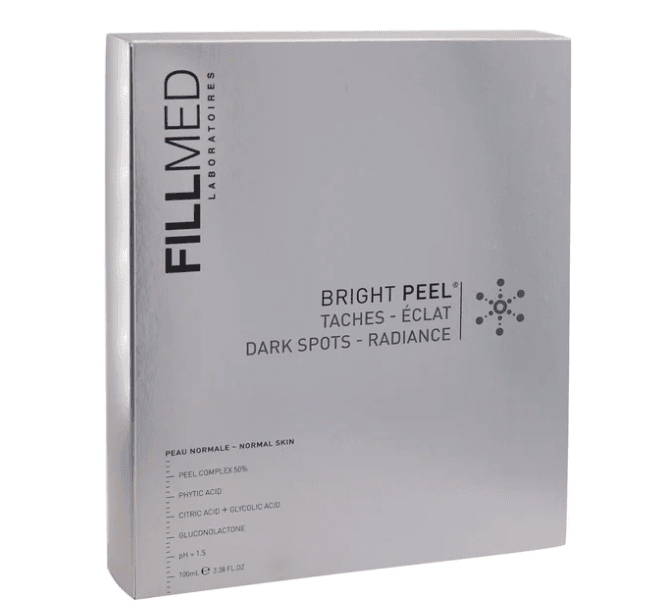
Fillmed® Bright Peel Normal Skin
Order Fillmed® Bright Peel Normal Skin for Clinics
Skincare Product
$249.00
You save
Description
Fillmed® Bright Peel Normal Skin is a professional chemical peel for normal skin types, used in clinic protocols for controlled superficial exfoliation and a brighter-looking, more even surface tone. Licensed clinics, med spas, and healthcare professionals can order Fillmed Bright Peel Normal Skin for treatment-room use, with professional documentation and handling requirements applied during account review. The preparation fits structured peel series where staff need consistent application steps, post-peel counseling, and reliable US logistics for back-bar planning.
Clinic Ordering, Price, and Supply Planning
Facilities can sign in to view the current Fillmed Bright Peel Normal Skin price and available supply format for professional purchasing. Pricing may vary by allocation, demand, and clinic ordering volume, so procurement teams should match planned series volume with room scheduling before placing an order. Internal reference for this item is MWS SKU 100063. Because this is a clinic-use peel, professional credentials or facility documentation may be requested before release. We source brand-name medical products through vetted distributors and verified supply channels for licensed clinical buyers. Order status and account-level details help purchasing teams coordinate stock with appointment calendars, staff training, and room utilization. For broader protocol planning, clinics can browse adjacent professional categories such as Peels and Masks and Skincare. These categories help teams coordinate exfoliation services with supportive cleansing, calming, or post-procedure care products already used in aesthetic workflows.
Professional Use and Treatment-Room Fit
FILLMED Bright Peel for Normal Skin is intended for trained professional application in a clinical setting. Practices commonly use this type of brightening chemical peel normal skin protocol to address dullness, mild pigment irregularity, and uneven texture when a superficial exfoliation approach is appropriate. Timing, contact duration, neutralization, and aftercare should follow manufacturer directions and the treating professional’s internal protocol. The peel works by promoting controlled desquamation, meaning the shedding of surface corneocytes from the outermost skin layer. This process can support a smoother-looking surface and better tone uniformity over a planned series. The current product positioning is for normal skin rather than highly reactive skin, active dermatologic disease, or cases requiring a different intensity peel. In daily workflow, the product suits practices that want a series-friendly professional peel with manageable chair time and clear staff steps. Intake should document skin type, recent procedures, topical exfoliant use, photosensitivity considerations, and history of irritation. Post-procedure instructions should emphasize strict photoprotection, gentle cleansing, and avoidance of aggressive exfoliation until the barrier has recovered.
What Fillmed Bright Peel Is and How It Works
Fillmed® Bright Peel Normal Skin is a clinic-only chemical peel formulated for controlled superficial exfoliation on normal skin types. Practices use it to refine surface uniformity and support a brighter appearance in structured aesthetic protocols. The formulation is designed to balance exfoliating effect with tolerability, helping clinics offer an entry-level or maintenance peel without moving directly to stronger resurfacing systems. Professional chemical peel normal skin protocols generally target the stratum corneum, the skin’s outer protective layer. By loosening spent surface cells, a peel can improve the look of roughness and dull coloration. Supportive post-care remains important because temporary dryness, tightness, redness, or sensitivity can occur after exfoliation, even when the peel is designed for comfort. Fillmed’s aesthetic portfolio may be used across staged rejuvenation plans when each step is spaced appropriately. Clinics reviewing brand-adjacent products can visit the Fillmed brand portfolio to coordinate peel procedures with other professional-use items carried by the store.
Appropriate Applications in Aesthetic Practice
Clinics may integrate the Fillmed Bright Peel Normal Skin solution into programs for early uneven tone, mild discoloration, dullness, and fine surface roughness. It can be used as a stand-alone peel in a planned series or alternated with hydration-focused facials when a clinic wants to maintain clarity while limiting downtime. Candidate selection should remain conservative for clients with recent sun exposure, compromised barrier function, or active irritation. This peel may also be scheduled around procedures such as LED care, light mesotherapy, or other skin-quality services when spacing is clinically appropriate. Teams should avoid stacking exfoliative procedures too closely, as cumulative irritation can affect comfort and visible recovery. For pigmentation-focused education, clinics can review chemical peel considerations for hyperpigmentation and apply those principles within their own protocols. Seasonal planning matters for brightening peel services because sun exposure can worsen post-peel irritation and uneven pigmentation. Many practices schedule superficial peel series during periods when clients can reliably follow sunscreen and avoidance guidance. Staff should document aftercare counseling so follow-up questions are handled consistently across providers.
Key Features for Clinic Workflows
- Professional-use positioning for licensed clinics, med spas, and trained healthcare personnel.
- Designed for normal skin protocols requiring controlled superficial exfoliation.
- Supports programs focused on dullness, mild discoloration, uneven tone, and texture refinement.
- Series-friendly format for initiation, seasonal refresh, or maintenance peel schedules.
- Consistent clinical steps help trained staff standardize room preparation and aftercare guidance.
- Post-procedure care centers on sun protection, gentle cleansing, and barrier recovery.
- Useful back-bar item for practices offering brightening chemical peel normal skin services.
- Lot and expiry documentation supports routine professional inventory control.
Quick tip: Align peel inventory with confirmed treatment series rather than single appointment demand.
Composition and Ingredient Considerations
FILLMED Bright Peel for Normal Skin uses exfoliating acid technology and supportive components to promote controlled desquamation. Current product copy describes a balanced blend intended to improve surface radiance while helping limit excessive stinging and dryness compared with stronger systems. The manufacturer’s materials should remain the primary source for exact ingredient declarations and use instructions. Professional peel architecture commonly includes exfoliating acids, brightening adjuncts, humectants, soothing components, buffers, stabilizers, and a solvent system that supports even spreadability. These categories matter operationally because staff must understand expected sensations, neutralization steps, and aftercare needs. Ingredient review should occur during intake for clients with known sensitivities or recent use of retinoids, acids, or other barrier-disrupting products. Glycolic and other alpha-hydroxy acid peels can cause transient erythema, dryness, stinging, peeling, and increased sun sensitivity. More intensive use can raise irritation risk, especially if a client has a compromised barrier or receives overlapping exfoliative treatments. Clinics should explain expected after-effects in practical language and define when a client should contact the practice for unexpected pain, swelling, blistering, or persistent discoloration.
Packaging, Documentation, and Handling
This product is supplied for professional application in a clinical environment. Labeling supports product identification, lot tracking, and expiry documentation for standard clinic records. Pack configurations can vary by market and lot, so purchasing teams should use the supply details displayed during ordering for the current format. Back-bar organization should keep the peel separated from non-compatible agents, consumer retail products, and unlabeled containers. Staff should not alter manufacturer contact times, mix with unapproved materials, or substitute neutralization steps without protocol review. Documentation should capture lot information, application area, contact time, response, neutralization, and aftercare instructions when required by clinic policy. For procedure support, clinics may consider compatible pre- and post-service supplies within the same professional peel family, such as Fillmed® Pre-Peel and Fillmed® Post-Peel. Use only when aligned with the clinic’s protocol and the product manufacturer’s directions.
Safety, Contraindication Screening, and Aftercare
Chemical peels should be performed only by trained personnel who can identify unsuitable candidates and manage expected skin responses. Screening should consider active infections, open lesions, dermatitis flare, recent isotretinoin history, recent laser or resurfacing procedures, photosensitizing medications, pregnancy-related clinic policies, and a history of abnormal scarring or pigmentary complications. When suitability is unclear, the treating professional should postpone or choose a different protocol. Expected short-term reactions may include warmth, tingling, redness, tightness, dryness, flaking, and temporary sensitivity. More concerning reactions include intense burning, blistering, marked swelling, crusting, infection signs, or pigmentary change that persists beyond the expected recovery window. Staff should provide written aftercare, including sunscreen use, avoidance of tanning, gentle cleansing, and temporary avoidance of exfoliating actives unless otherwise directed. Peels for hyperpigmentation require careful intensity selection. The strongest peel is not automatically the best choice for dark spots, because deeper or more aggressive exfoliation can increase post-inflammatory hyperpigmentation risk in susceptible skin. Selection should reflect skin type, Fitzpatrick phototype, pigment pattern, prior peel tolerance, season, and ability to follow photoprotection instructions.
How It Compares With Related Peel Options
Fillmed Bright Peel Normal Skin is best understood as a brightening professional peel for normal skin protocols. Clinics that need a similar normal-skin brightening pathway may also evaluate other peel options in the same category, depending on the format needed for the practice. Selection should be based on protocol fit, staff familiarity, client tolerance, and documented outcomes from previous series. For rejuvenation programs centered more on skin texture and visible aging cadence, Fillmed® Time Peel Normal Skin may be considered as a related professional peel. Sensitive-skin pathways may require a gentler alternative such as Fillmed® Light Peel Sensitive Skin, rather than adapting a normal-skin peel beyond its intended comfort range. Different brands’ brightening or clearing peels are not interchangeable solely because they share similar names. A brightening peel may focus on uneven tone and radiance, while a clearing peel may be positioned around congestion, blemish-prone skin, or oil control. Clinics should compare active acid profile, pH, intended skin type, contact time, neutralization, contraindications, and aftercare requirements before changing protocols.
Inventory and Logistics for Licensed Facilities
US distribution helps clinics plan procurement around scheduled treatment blocks and staff availability. When required for a product category, temperature-controlled handling when required and tracked US delivery can support facility receiving procedures. Receiving staff should record lot, expiry, package condition, and storage location according to internal policy. Peel utilization is usually more predictable when practices sell or schedule treatment series rather than isolated appointments. Procurement teams can estimate demand from consultation volume, seasonal promotions run internally by the clinic, and the number of rooms trained to perform chemical peel services. Avoid overextending inventory when staff availability or client suitability screening limits near-term use. Practices building broader resurfacing programs can use educational articles such as anti-aging solutions with chemical peels to support staff discussions and protocol planning. Internal education should still defer to manufacturer instructions, formal training, and professional judgment.
Authoritative Sources
Ready to allocate this preparation to your clinic back bar? Sign in to view current availability, account-specific supply details, and professional ordering requirements for Fillmed® Bright Peel Normal Skin. This content is for informational purposes only and is not a substitute for professional medical advice.
Frequently Asked Questions
What is Fillmed Bright Peel Normal Skin used for in clinics?
Fillmed Bright Peel Normal Skin is a professional chemical peel used in clinic protocols for superficial exfoliation on normal skin types. Practices typically use it for dullness, mild uneven tone, and surface texture refinement when a brightening peel is appropriate.
Who can order Fillmed Bright Peel Normal Skin?
This product is intended for licensed clinics, med spas, and healthcare professionals. Professional credentials or facility documentation may be requested before release, and the peel should be applied only by trained personnel following manufacturer directions.
How should clinics plan Fillmed Bright Peel Normal Skin cost and inventory?
Sign in to view current pricing and available supply details. Clinics should estimate demand from scheduled peel series, trained staff capacity, and seasonal treatment planning, then document lot and expiry information when stock is received.
Can Fillmed Bright Peel Normal Skin be used with other aesthetic procedures?
It may be incorporated into broader rejuvenation plans when spacing and protocols are appropriate. Avoid overlapping exfoliative procedures too closely, and confirm compatibility with the treating professional’s protocol and manufacturer guidance.
What precautions matter after a professional brightening peel?
Aftercare should emphasize sunscreen, gentle cleansing, and avoidance of aggressive exfoliants until the barrier recovers. Clients should be instructed to contact the clinic for intense burning, blistering, marked swelling, infection signs, or unexpected pigment changes.
Specifications
- Main Ingredient:
- Manufacturer: Fillmed Laboratories
- Drug Class: Skincare Product
- Generic Name: Gluconolactone
- Package Contents: 100 mL x 1 Bottle
- Storage Requirements: Room Temperature (2℃~25℃)
- Main Usage: Anti Ageing
About the Brand
Fillmed
Fillmed is a prestigious medical brand distinguished for supplying a broad spectrum of superior-quality products crafted exclusively for an array of cosmetic and aesthetic treatments. Offerings from Fillmed range from dermal fillers to skincare products and peels, earning the brand a reliable reputation among global medical practitioners. At medwholesalesupplies.com, we provide a seamless and dependable platform for procuring Fillmed products online. Our website features a secure and easy-to-navigate interface that enables medical professionals to sift through and purchase Fillmed products with a few simple clicks. Procuring from our platform allows professionals to access the latest Fillmed products while enjoying convenient home delivery. One primary reason for choosing Fillmed via medwholesalesupplies.com is the expansive variety of Fillmed products available. We house an exhaustive collection of Fillmed offerings, including in-demand dermal fillers such as Fillmed NCTF 135HA and the Fillmed Art Filler line. With an array of options at hand, professionals can identify the perfect Fillmed product aligning with their specific needs. Moreover, our platform provides comprehensive product details, including components, application instructions and specs, empowering professionals to make knowledgeable decisions when selecting the appropriate Fillmed product for their clientele. An additional benefit of acquiring Fillmed from medwholesalesupplies.com is the guarantee of product authenticity and excellence. We secure our Fillmed inventory directly from authorized makers and distributors, confirming their genuineness and conformity to the most rigorous quality and safety benchmarks. Our stringent quality assurance practices and adherence to industry norms ensure that professionals can rely on the Fillmed products procured from our platform. With a credible and dependable source like medwholesalesupplies.com, professionals can confidently incorporate Fillmed into their regime, providing their clientele with exceptional care and outcomes.
Browse Fillmed Products
Here to help
Questions about ordering, delivery or products? You can email our team here or call now at 1-800-630-9757 and be connected with your dedicated Account Manager
Related Products
Prolia® (International English)
Prescription Medication
$529.00 - $549.00
You save
You save
Evenity® (English Alternative)
Injectable Medication
$1,229.00 - $1,299.00
You save
You save
Intraline® For Men
Dermal Filler
$59.00 - $79.00
You save
You save
RejuvaNAD+ Pro
Injectable Medication
$237.00 - $249.00
You save
You save
Related Articles
Prednisone in Clinical Care: Uses, Risks, and Monitoring
Prednisone is a prescription systemic corticosteroid used to reduce inflammation or suppress immune activity in…
Lip Fillers Swelling Stages: Timeline, Safety, and Follow-Up
Lip fillers swelling stages usually follow a short inflammatory course: swelling appears soon after injection,…
Hypopigmentation of the Skin: Assessment and Care
Hypopigmentation of the skin means one or more areas look lighter than the surrounding skin.…
Radiesse vs Sculptra: Selection Factors for Clinics
Radiesse vs Sculptra is best understood as a comparison between two collagen-stimulating injectables with different…
Hyaluronic Acid Under-Eye Filler: Safety and Workflow
Hyaluronic acid under-eye filler is an injectable soft-tissue filler used by trained aesthetic clinicians to…
Dermal Filler Types: Materials, Uses, and Clinic Fit
Dermal filler types are usually grouped by their base material, tissue behavior, and expected role…
What Is Dysport? Clinical Uses, Safety, and Workflow
For clinic teams asking what is Dysport, the short answer is simple: Dysport is a…
Biostimulators in Aesthetic Care: Selection and Safety
Biostimulators are injectable aesthetic products used to encourage a controlled tissue response, often involving new…