
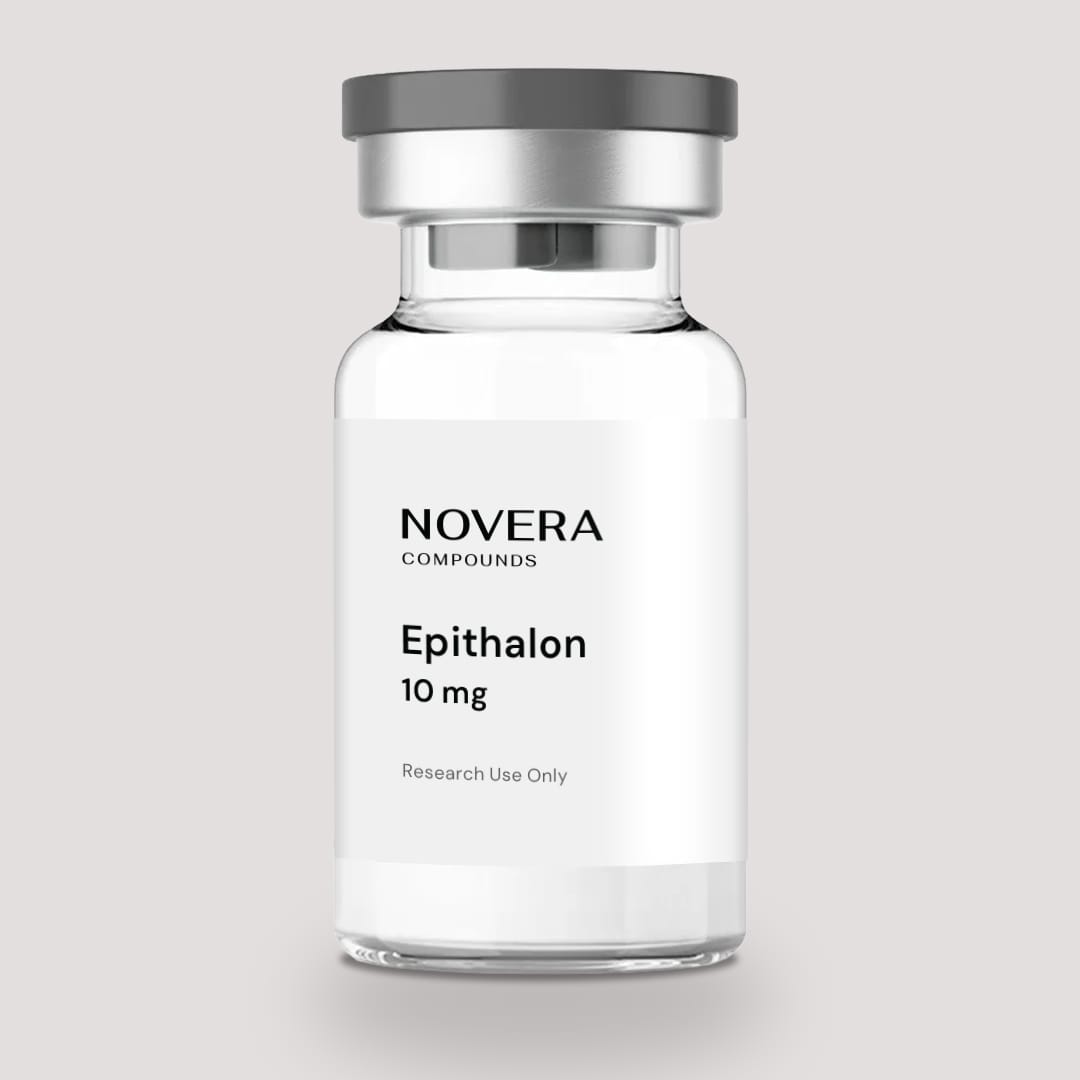
Description
Epithalon is a synthetic tetrapeptide used in professional peptide discussions involving cellular aging, circadian biology, and pineal signaling research. Licensed clinics and healthcare professionals can order Epithalon for practice inventory when a responsible clinician has defined the protocol fit, documentation needs, and handling workflow. Because peptide vial presentations can vary, clinics should match the strength, form, lot record, and storage instructions shown during ordering to their internal procurement file.
Epithalon is also discussed as epitalon, and literature commonly describes the sequence Ala-Glu-Asp-Gly. That naming overlap is useful for research review, but clinic purchasing should rely on the exact vial name, strength, salt form, and documentation provided with the product rather than on synonyms alone.
Epithalon Price, Strength, and Ordering Decisions
Clinics can view the current Epithalon price during ordering and select the vial strength shown for the product. Build the purchase decision around the protocol, expected inventory turnover, storage capacity, and documentation standards rather than around broad anti-aging claims. If staff are comparing Epithalon 10mg, epitalon 10mg, or other strength terms in outside materials, treat those as research or market references until the actual vial record is reviewed.
Professional ordering should start with a defined use category, a responsible clinician, and a written clinic workflow. MedWholesaleSupplies serves licensed clinics and healthcare professionals, and peptide purchases should align with professional-use requirements, local rules, and internal approval procedures. Clinics evaluating adjacent peptide inventory can review the Peptides category for broader catalog context.
- Clinic status: Maintain records showing the responsible healthcare professional or clinical entity.
- Protocol fit: Define whether the peptide belongs in a clinical, research, or administrative workflow.
- Vial identity: Record the exact product name, strength, lot, expiry, and salt form when shown.
- Handling plan: Assign trained staff for storage, preparation, and inventory logging.
- Safety process: Set consent, screening, monitoring, stop criteria, and adverse-event escalation before use.
Why it matters: Peptide products may not carry the same standardized labeling structure as approved prescription medicines.
Professional-Use Context and Research Status
Epithalon peptide is a synthetic tetrapeptide discussed in published literature for telomere biology, pineal peptide activity, circadian rhythm, and aging-related cellular pathways. These topics explain why clinics may evaluate epitalon peptide within professional protocols, but they should not be converted into guaranteed clinical outcomes. Claims about younger-looking skin, life extension, sleep improvement, or broad rejuvenation require careful evidence review before they enter patient-facing materials.
No universally accepted approved indication or official dosing label should be assumed for routine clinical treatment. Clinics should separate exploratory literature, international usage discussions, and vendor marketing language from the legal, clinical, and documentation standards that govern their own practice. If the intended workflow is patient-facing, the clinician responsible for the protocol should document rationale, monitoring, consent language, and adverse-event responsibilities before any product is used.
Search interest around Epithalon benefits often asks what the peptide does. A practical clinic answer is narrower: the compound is studied for biological signaling themes, but expected benefits, onset, duration, and long-term outcomes are not established in the way they are for medicines with formal prescribing labels. That distinction should be reflected in staff training and patient communication.
Vial Form, Packaging, and Documentation
Most professional discussions of Epithalon involve a lyophilized peptide vial that requires reconstitution before any injectable preparation, when such use is permitted and documented by the clinic. The current vial record, label, and supplied documentation should determine the strength, presentation, excipients, and storage instructions used in the inventory file. Do not assume diluent inclusion, concentration after reconstitution, vial count, sterility status, or route from outside articles.
Some materials refer to Epithalon acetate or epitalon acetate. If a salt form appears on the vial or certificate, record that name consistently across procurement, protocol, and administration documents. Consistent naming helps prevent confusion between Epithalon, epitalon, epithalone, and epithalamin references.
| Clinic record | What to document |
|---|---|
| Form | Whether the vial is lyophilized, reconstituted, sterile, or otherwise described by the product record. |
| Strength | The exact mg per vial shown during ordering and on the product documentation. |
| Diluent | Whether diluent is included, separately required, or specified by the protocol. |
| Lot controls | Lot number, expiry date, receipt date, storage location, and tamper evidence. |
| Supporting files | Certificates, supplier records, internal approval notes, and handling instructions when provided. |
Administration Planning and Clinic Workflow
Epithalon dosage decisions belong under licensed professional oversight. General web content may discuss cycle length, injection route, or reconstitution examples, but those sources should not replace a clinic-approved protocol. Staff should follow the supervising clinician’s instructions, applicable practice rules, aseptic preparation standards, and any product-specific directions supplied with the vial.
Administration planning should identify who prepares the vial, who documents reconstitution, who performs or supervises administration, and what criteria pause the protocol. If the clinic uses multiple peptide products, keep each protocol distinct. For example, Thymosin Alpha-1, SS-31, and Sermorelin should be evaluated by molecule identity, evidence, storage, route, and clinical rationale rather than grouped under a general peptide workflow.
- Route confirmation: Match the intended route to the clinic protocol before preparation.
- Aseptic technique: Use trained personnel for sterile handling and reconstitution steps.
- Concentration record: Log diluent, final concentration, preparation time, and beyond-use dating when applicable.
- Patient file link: Connect administration notes to consent, screening, and monitoring records.
- Stop criteria: Define symptoms, lab changes, or workflow errors that require clinician review.
Quick tip: Keep reconstitution notes with the lot record, not only in a general protocol binder.
Storage, Handling, and Logistics
Storage should follow the vial label and documentation rather than assumptions about peptide stability. Lyophilized material often has different handling considerations before and after reconstitution, so clinics should separate unopened vials from prepared material in inventory records. Staff should document receipt date, storage location, temperature requirements, preparation time, beyond-use dating when applicable, and discard criteria.
Clinic logistics should also account for temperature-controlled handling when required and tracked US delivery. On receipt, inspect packaging, confirm the product name and lot information, and reconcile the shipment against the purchase record. If a temperature excursion, damaged vial, or documentation mismatch is suspected, hold the product aside until the responsible staff member completes review.
Inventory planning should account for realistic use volume. Over-ordering peptides can increase waste if beyond-use limits or storage conditions are difficult to maintain. Under-ordering can disrupt scheduled protocols if clinic approval, documentation review, and staff preparation steps are required before use.
Warnings, Side Effects, and Monitoring
Epithalon safety information is limited compared with medicines supported by large controlled trials and formal labeling. For injectable use, local pain, redness, swelling, bruising, or irritation can occur. Nonspecific symptoms such as headache, fatigue, sleep changes, nausea, or dizziness should be assessed in context and should not automatically be attributed to the peptide without clinical evaluation.
No standardized contraindication list applies in the same way as a medicine with an approved prescribing label. Clinics should screen for hypersensitivity to listed components, prior reactions to injectable products, pregnancy or lactation considerations, and complex endocrine, oncologic, immune, hepatic, or renal history. The screening standard should match the clinic’s protocol and the uncertainty around long-term effects.
Interaction data are not well characterized. Clinicians should review concomitant medications, supplements, hormone therapies, sleep agents, immune-modulating treatments, and investigational products before incorporating Epithalon into a protocol. Absence of a known interaction is not proof that no interaction exists, especially when a patient has multiple prescribers or uses compounded products.
Monitoring should be planned before treatment begins. Practical safeguards include baseline medication review, symptom tracking, adverse-event reporting, and defined follow-up points. If the protocol relies on laboratory markers, sleep-related endpoints, or wellness questionnaires, specify those measures before administration so changes can be interpreted consistently.
What Clinics Should Know About Benefits and Duration
Questions such as whether Epithalon makes a person look younger or how long someone takes it are common in public-facing discussions. Clinics should answer them with evidence boundaries. Published research themes do not establish predictable cosmetic results, age-reversal effects, or a standard duration for all patients.
Any protocol duration should come from the supervising clinician’s rationale, patient screening, monitoring plan, and product documentation. Marketing language should avoid guaranteed outcomes, accelerated-aging claims, or unsupported timelines. Staff should be trained to distinguish research hypotheses from claims that could be understood as treatment promises.
For clinics that also provide aesthetic or skin-focused care, keep peptide discussions separate from procedure-specific injectable products. The article on anti-aging with peptides for skin may help teams frame evidence questions without treating every peptide as interchangeable with dermatologic procedures or regulated aesthetic products.
Alternatives and Adjacent Peptide Products
Epithalon is not interchangeable with every product described as a peptide. Comparison should focus on sequence, molecule identity, salt form, vial documentation, stability, route, evidence base, and regulatory status. Broad terms such as epitalon peptides or anti-aging peptides are too imprecise for purchasing or protocol decisions.
Clinics evaluating endocrine or metabolic peptide workflows may review Tesamorelin separately from Epithalon because the clinical rationale, evidence, and handling expectations differ. Research-oriented peptide discussions may also include FOXO4-DRI, but a similar category label does not make it a substitute. Each molecule should stand on its own documentation and protocol review.
| Comparison point | Clinic decision |
|---|---|
| Epithalon, epitalon, and epithalone | Verify the exact name, sequence, salt form, and certificate before adding to a protocol. |
| Epithalamin references | Distinguish synthetic tetrapeptide references from extract-based historical materials. |
| Other peptide vials | Compare molecule identity, handling requirements, strength, and evidence rather than category language. |
| Regulated therapies | Use therapies with clearer labeling when they best match a defined diagnosis or clinical objective. |
Substitution and Naming Controls
Substitutions should not be made only because another vial has a similar spelling, peptide category, or claimed use. Confirm sequence, salt form, strength, sterility expectations, excipients, intended route, storage needs, and documentation before approving any replacement for clinic inventory. The procurement file should show why the substitute matches the protocol or why the protocol was revised.
Naming controls are especially important when patient-facing documents, consent forms, and internal orders must remain consistent. Epithalon and epitalon are often used as synonyms in research discussions, but clinic records should follow the product name and documentation supplied with the vial. Avoid mixing epithalamin peptide language into active inventory records unless the source material specifically uses that term and the distinction is explained.
Authoritative Sources
Independent references can help clinics verify compound identity, research context, and the limits of available evidence. These sources support background review only and do not replace legal, pharmacy, or medical oversight.
- For compound identifiers and synonyms, see PubChem Epitalon compound record.
- For peer-reviewed background discussion, see the NCBI overview of epitalon.
This content is for informational purposes only and is not a substitute for professional medical advice.
Frequently Asked Questions
Who can order Epithalon from MedWholesaleSupplies?
Epithalon ordering is intended for licensed clinics and healthcare professionals. Clinics should maintain responsible clinician oversight, professional-use records, and protocol documentation before adding the peptide to inventory.
Is Epithalon the same as epitalon?
Epithalon and epitalon are commonly used as synonyms in literature for the synthetic tetrapeptide Ala-Glu-Asp-Gly. Clinic records should still follow the exact vial name, strength, salt form, and documentation supplied with the product.
How should clinics handle an Epithalon peptide vial?
Follow the vial label, product documentation, and clinic protocol. Record lot number, expiry date, storage conditions, reconstitution details when applicable, and discard criteria in the inventory file.
Can staff use online Epithalon dosage examples?
No. Epithalon dosage, route, cycle length, and monitoring should come from a clinician-approved protocol and applicable professional standards, not from general web articles or anecdotal schedules.
What safety checks should be completed before professional use?
Clinics should screen for prior injectable reactions, hypersensitivity to listed components, pregnancy or lactation considerations, relevant medical history, concomitant medications, and protocol-specific monitoring needs.
Can another peptide be substituted for Epithalon?
A substitute should not be approved only because it has a similar name or category. Confirm sequence, salt form, strength, sterility expectations, storage, route, and documentation before changing a protocol.
Specifications
- Main Ingredient: Peptides
- Manufacturer:
- Drug Class:
- Generic Name: Epithalon
- Package Contents: 1 vial
- Storage Requirements:
- Main Usage:
Here to help
Questions about ordering, delivery or products? You can email our team here or call now at 1-800-630-9757 and be connected with your dedicated Account Manager
Related Products
Prolia® (International English)
Prescription Medication
$529.00 - $549.00
You save
You save
Evenity® (English Alternative)
Injectable Medication
$1,229.00 - $1,299.00
You save
You save
Intraline® For Men
Dermal Filler
$59.00 - $79.00
You save
You save
RejuvaNAD+ Pro
Injectable Medication
$237.00 - $249.00
You save
You save
Related Articles
Prednisone in Clinical Care: Uses, Risks, and Monitoring
Prednisone is a prescription systemic corticosteroid used to reduce inflammation or suppress immune activity in…
Lip Fillers Swelling Stages: Timeline, Safety, and Follow-Up
Lip fillers swelling stages usually follow a short inflammatory course: swelling appears soon after injection,…
Hypopigmentation of the Skin: Assessment and Care
Hypopigmentation of the skin means one or more areas look lighter than the surrounding skin.…
Radiesse vs Sculptra: Selection Factors for Clinics
Radiesse vs Sculptra is best understood as a comparison between two collagen-stimulating injectables with different…
Hyaluronic Acid Under-Eye Filler: Safety and Workflow
Hyaluronic acid under-eye filler is an injectable soft-tissue filler used by trained aesthetic clinicians to…
Dermal Filler Types: Materials, Uses, and Clinic Fit
Dermal filler types are usually grouped by their base material, tissue behavior, and expected role…
What Is Dysport? Clinical Uses, Safety, and Workflow
For clinic teams asking what is Dysport, the short answer is simple: Dysport is a…
Biostimulators in Aesthetic Care: Selection and Safety
Biostimulators are injectable aesthetic products used to encourage a controlled tissue response, often involving new…