

$95.00
You save (%)
Description
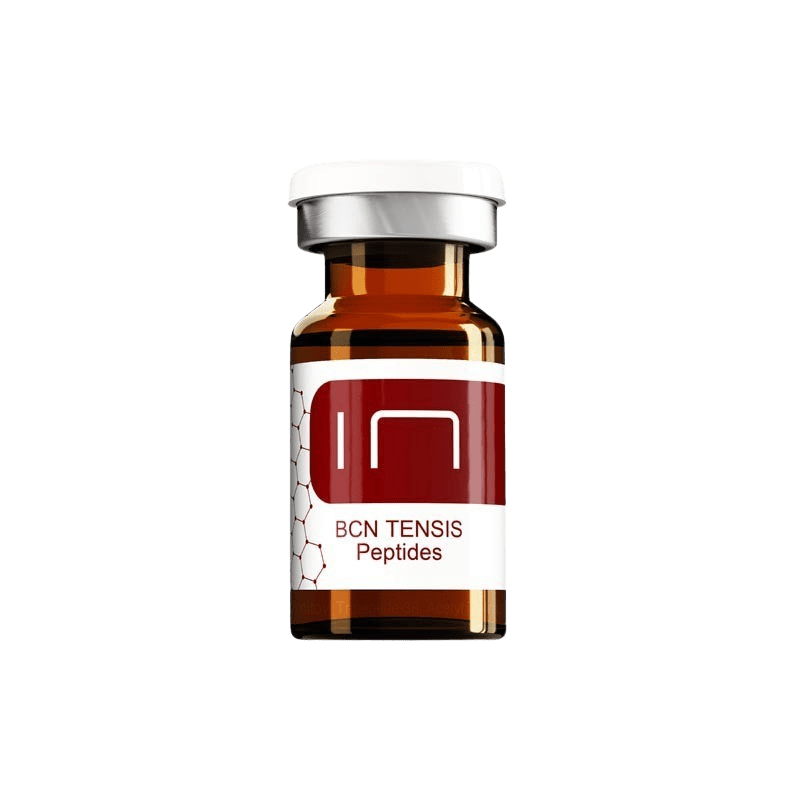
BCN Tensis – Peptides is a professional mesotherapy peptide solution used in clinic protocols focused on skin firmness, tone, and elasticity. Licensed clinics, med spas, aesthetic practices, and healthcare professionals can order BCN Tensis – Peptides for treatment-room use in the supplied box of five 5 mL vials. The practical purchasing decision should account for protocol fit, staff technique, vial traceability, storage controls, and current BCN Tensis – Peptides price at the time of ordering.
This product belongs in professional aesthetic inventory rather than retail skincare. It is typically evaluated for firmness-focused face and body protocols where the clinic has trained staff, documented consent, aseptic handling standards, and a defined follow-up process. Because peptide mesotherapy products can look similar across a product range, clinics should match the exact vial format, intended treatment objective, and current manufacturer labeling before adding stock to active use.
BCN Tensis Price, Pack Format, and Ordering Details
Clinics can buy BCN Tensis online and view current pricing during ordering. The listed format is a box of five vials, with each vial containing 5 mL, which supports straightforward stock counts, room allocation, and treatment scheduling. Procurement teams should assess cost by vial use, expected session volume, wastage controls, and compatibility with existing protocols rather than by headline pack price alone.
MedWholesaleSupplies serves licensed professional buyers and sources brand-name medical products through vetted distributors and verified supply channels. Practice information, purchaser identity, and product-use records may be requested as part of professional ordering controls. For multi-provider clinics, one staff member should own inventory intake so lot numbers, expiry dates, and treatment-room handoffs remain consistent.
US distribution and reliable US logistics can help clinics plan replenishment without separating product handling from quality checks. Final intake should still happen at the clinic level: inspect carton condition, vial seals, lot number, expiry date, and visible appearance before the product is placed into treatment stock.
| Attribute | Clinic-facing detail |
|---|---|
| Product name | BCN Tensis – Peptides |
| Product type | Professional mesotherapy peptide solution |
| Pack format | Box of 5 vials |
| Fill volume | 5 mL per vial |
| Use setting | Licensed clinic, med spa, or healthcare professional environment |
How Clinics Use BCN Tensis – Peptides in Practice
BCN Tensis – Peptides is generally considered for professional aesthetic protocols addressing visible laxity, reduced firmness, and diminished elasticity. It is not a contouring agent, a fat-dissolving solution, or an at-home maintenance product. The intended role is supportive skin-quality work within a clinician-directed plan, often alongside other aesthetic measures selected by the supervising professional.
Technique choice matters. Depending on the current manufacturer directions and the clinic’s approved protocol, teams may use peptide mesotherapy products with microinjection mesotherapy, microneedling-assisted delivery, or another professional technique. Route, depth, session frequency, and treatment area selection should follow product-specific instructions and internal clinical governance, not generic online patterns.
Clinics reviewing broader technique categories can use the mesotherapy range to separate firming, hydration, eye-area, hair, and contour-focused products. For clinical workflow context, mesotherapy clinical uses, risks, and workflow can support staff discussion without replacing the manufacturer’s current directions.
Why it matters: Products in the same aesthetic category may have different target areas, ingredient profiles, and procedural risks.
Ingredients, Label Review, and Product Identity
BCN Tensis – Peptides is identified as a peptide-based professional solution, but clinics should rely on the current carton, vial label, and manufacturer insert for the full ingredient list. Short catalog names do not capture every excipient or lot-specific labeling detail. Ingredient review is especially important before first use, when protocols change, or when a clinic treats clients with known sensitivity histories.
Common search questions ask what ingredients are in BCN Tensis peptides. The safest answer for procurement is direct label confirmation at receipt. Peptide-based aesthetic solutions may be selected for firmness-focused protocols, but the complete formulation, contraindication language, and handling instructions must come from the manufacturer materials supplied with the stock.
Product identity should also be protected during storage and room preparation. Do not treat another BCN vial as interchangeable because the brand family is familiar. Match the product name, vial size, pack count, intended treatment objective, and label instructions before substituting stock in a protocol.
Clinic Eligibility, Documentation, and Staff Workflow
This product is intended for professional settings with trained personnel and established procedure controls. A clinic should maintain current facility records, named purchaser details, lot traceability, and treatment notes linking each vial to the date of use and treatment area. These records help protect both clinical quality and inventory accountability.
Before adding BCN Tensis – Peptides to routine stock, confirm that staff can perform aseptic preparation, document consent, record post-procedure observations, and escalate unexpected reactions. If more than one location shares inventory, assign site-specific controls so cartons are not moved without lot and expiry records following them.
- Practice identity and professional purchaser details
- Lot number and expiry capture at receipt
- Storage location assigned before room use
- Consent wording aligned with the procedure
- Treatment notes tied to vial use
- Follow-up process for delayed reactions
Workflow should be practical, not burdensome. A standardized intake checklist, treatment-room sign-out, and post-treatment note template usually give clinics enough structure to trace stock from receipt through use.
Administration Planning and Treatment-Room Controls
Professional administration should be based on the manufacturer’s current directions, the supervising clinician’s protocol, and the patient-screening standards used by the practice. Key planning points include skin condition, treatment area, recent procedures, anticipated recovery, and whether the selected delivery method is appropriate for the intended outcome.
Common treatment-room checkpoints include:
- Pre-procedure skin assessment
- Ingredient sensitivity screening
- Aseptic site preparation
- Correct product and lot verification
- Technique matched to clinic protocol
- Immediate observation after treatment
- Aftercare and follow-up instructions
Combination planning should be handled carefully. Same-day peels, energy-based devices, resurfacing treatments, waxing, aggressive exfoliation, or other barrier-disrupting steps may increase irritation risk. When combining modalities, the sequence and recovery interval should be set by the clinician rather than by product category assumptions.
For teams building peptide-focused service menus, peptides for skin offers background on how peptide products are discussed in aesthetic practice. Clinics that want a broader procedural view can also review mesotherapy benefits and clinical considerations as a planning resource.
Storage, Handling, and US Delivery Logistics
Store BCN Tensis – Peptides exactly as directed on the current carton and vial labeling. At intake, staff should inspect the carton and vials before releasing the product to active stock. Any vial with damaged packaging, unclear labeling, compromised seal integrity, or unexpected visible changes should be isolated under the clinic’s quality procedure.
Useful intake checks include:
- Carton and vial names match
- Lot and expiry are legible
- Seal remains intact
- Appearance is consistent with labeling
- Storage location is documented
Inventory controls should support quick traceability. Many clinics record receipt date, storage location, staff handoff, and date allocated to the treatment room. Temperature-controlled handling when required and tracked US delivery can support logistics, but the clinic remains responsible for verifying the product on arrival and following label-based storage.
Quick tip: Keep the product’s handling instructions with the room setup checklist so staff do not rely on memory.
Safety, Contraindications, and Monitoring
Safety review should combine ingredient screening with procedure risk assessment. Contraindications and warnings depend on the complete formulation and delivery technique, so staff should consult the current manufacturer information before treatment. At a practical level, clinics commonly screen for known sensitivity to any component, active infection, inflamed skin, disrupted barrier, dermatitis, and recent aggressive procedures in the planned area.
Expected short-term effects from mesotherapy or microneedling-type procedures may include redness, stinging, tenderness, swelling, pinpoint bleeding, or bruising. These effects may reflect the delivery method, the solution, or both. Clear documentation helps the clinician distinguish routine recovery from a reaction that needs review.
More concerning findings include escalating pain, marked swelling, discharge, spreading rash, persistent nodules, prolonged erythema, worsening inflammation, pigmentary change, or signs of infection. Clinics should have a defined escalation pathway so delayed or unusual reactions are assessed by an appropriately qualified clinician and recorded under incident procedures.
Medication and history review also matter. Anticoagulant or antiplatelet therapy may increase bruising risk. Recent retinoid use, strong exfoliants, active acne treatments, sun injury, or laser procedures may make the skin less tolerant. Immunosuppressive therapy or conditions that affect healing can change procedural suitability and aftercare planning.
What Not to Mix With Peptide Mesotherapy Protocols
Clinics often ask what should not be mixed with peptides. For BCN Tensis – Peptides, the answer should be protocol-specific: do not combine it with other products in the same syringe, vial, or treatment step unless the manufacturer’s directions and the clinic’s clinician-approved protocol support that combination. Physical compatibility, sterility, pH, ingredient sensitivity, and procedure intensity can all affect risk.
Layering procedures too closely can also create avoidable problems. Strong chemical peels, ablative resurfacing, aggressive exfoliation, recent waxing, sunburn, active dermatitis, and device-based treatments may increase irritation when paired with a barrier-disrupting delivery method. If the clinic uses multi-step aesthetic plans, treatment sequencing should be written into the service protocol.
Internal education is useful when multiple staff members deliver similar services. A short protocol note should state which products may be used together, which require spacing, and which require clinician review before scheduling. This avoids informal mixing decisions during busy treatment sessions.
Related BCN Products and Treatment-Goal Comparisons
BCN Tensis – Peptides is best compared by treatment objective, target area, and vial format. A firming peptide solution should not be treated as equivalent to products designed for brightness, eye-area support, hair protocols, or hydration-focused plans. Clinics building a BCN inventory can start with the BCN brand range and then narrow choices by protocol need.
Adjacent BCN products may support different service lines. BCN Lumen – Peptides may be reviewed when clinics are assessing pigmentation or luminosity-oriented protocols. BCN Oculare – Peptides is a separate eye-area-focused product format. BCN Capillum – Peptides belongs in hair and scalp service evaluation rather than skin-firming protocols.
| Product or category | Typical clinic review point | Main distinction |
|---|---|---|
| BCN Tensis – Peptides | Firmness and elasticity-focused protocols | Box of five 5 mL vials |
| BCN Lumen – Peptides | Luminosity-oriented aesthetic planning | Different treatment objective |
| BCN Oculare – Peptides | Eye-area protocol evaluation | Different target area and vial format |
| BCN Capillum – Peptides | Hair and scalp service planning | Different service line |
Clinics evaluating hair-focused mesotherapy can use mesotherapy for hair to separate scalp protocols from skin-firming services. This distinction helps prevent substitution errors and keeps consent language aligned with the actual product used.
Availability, Substitution, and Inventory Planning
BCN Tensis vials are supplied in the 5 x 5 mL format described above, making unit planning simple for clinics that forecast by vial count. Stock decisions should consider expected session demand, practitioner availability, storage capacity, and expiry rotation. A low-use service may require tighter reorder controls than a high-volume protocol because older lots can remain unnoticed in secondary storage.
Substitution should be controlled. If another product has a similar name, similar packaging, or belongs to the same brand range, compare the vial size, ingredient profile, treatment objective, handling instructions, and intended delivery technique before use. Any meaningful difference should trigger a separate clinical review and updated room documentation.
For multi-site practices, substitution rules should be written centrally and followed locally. This prevents one location from replacing BCN Tensis – Peptides with a different BCN product while another continues the original protocol. Consistent product naming in charts, consent forms, and stock logs reduces errors during audit or follow-up.
Authoritative Product References for Clinics
The most important references for BCN Tensis – Peptides are the current manufacturer carton, vial label, and any instructions supplied with the lot. These materials should guide ingredient review, storage, handling, contraindication language, and procedure-specific use. Internal SOPs should then translate those directions into room setup, charting, and incident reporting steps.
- Current outer carton and vial label
- Manufacturer instructions supplied with the lot
- Clinic SOPs for aseptic handling and traceability
- Consent and aftercare documents approved by the supervising clinician
- Incident reporting and follow-up procedures
Professional teams should treat online descriptions as ordering and inventory support, not as a replacement for product labeling or clinical judgment. Final suitability depends on the full formulation, delivery method, client screening, and the clinic’s scope of practice.
This content is for informational purposes only and is not a substitute for professional medical advice.
Frequently Asked Questions
Who can order BCN Tensis - Peptides?
BCN Tensis – Peptides is intended for licensed clinics, med spas, aesthetic practices, and healthcare professionals. Professional-use ordering may require practice and purchaser details so the product can be linked to appropriate clinic records.
What is the pack size for BCN Tensis - Peptides?
The listed format is a box of five vials, with each vial containing 5 mL. Clinics should verify carton and vial labeling at receipt before placing the product into active treatment stock.
What are the ingredients in BCN Tensis peptides?
BCN Tensis – Peptides is identified as a peptide-based professional mesotherapy solution. The full ingredient and excipient profile should be confirmed from the current carton, vial label, and manufacturer instructions supplied with the lot.
Can BCN Tensis - Peptides be mixed with other aesthetic products?
Do not mix BCN Tensis – Peptides with other products or combine it in a procedure step unless the manufacturer directions and the clinic’s clinician-approved protocol support that combination. Compatibility, sterility, skin barrier status, and irritation risk should be assessed first.
How should clinics store and handle BCN Tensis vials?
Store and handle the vials exactly as directed on the current label. At receipt, inspect seals, expiry date, lot number, carton condition, and visible appearance, then document storage location and lot traceability.
What safety checks are important before professional use?
Clinics should screen for ingredient sensitivity, active infection, inflammation, disrupted skin barrier, recent aggressive procedures, and any factor that makes an elective procedure unsuitable that day. Unexpected pain, swelling, rash, discharge, nodules, or signs of infection should prompt clinical review.
Specifications
- Main Ingredient: Organic Silica, Vitamins, Peptide Complex €“ Dmae
- Manufacturer: BCN
- Drug Class: Cosmetic Injectable
- Generic Name: Peptide Complex – Dmae, Organic Silica, Vitamins
- Package Contents: 5 mL x 5 Vials
- Storage Requirements: Room Temperature (2℃~25℃)
- Main Usage:
About the Brand
INSTITUTE BCN
INSTITUTE BCN stands as a respected name in the medical industry, offering a vast assortment of premium medical equipment. Be it bandages, syringes, gauzes, or gloves, BCN's comprehensive selection ensures patient safety and superior care. Apt for healthcare professionals or households requiring medical supplies, INSTITUTE BCN is a trusted brand. BCN's extensive collection can be conveniently accessed and purchased on our online platform, medwholesalesupplies.com. This offers a tailored shopping experience, delivering BCN products directly to your location. Offering not just convenience, our online portal also guarantees the authenticity of BCN products at competitive prices. At medwholesalesupplies.com, we highly value the reliability and quality of medical supplies. This is reflected in our procurement selection, sourcing only from trusted brands such as BCN. By choosing to shop on our website, rest assured you are acquiring superior supplies fit for your needs. We invite you to explore the range of BCN products at medwholesalesupplies.com today.
Browse INSTITUTE BCN Products
Here to help
Questions about ordering, delivery or products? You can email our team here or call now at 1-800-630-9757 and be connected with your dedicated Account Manager
Related Products
$339.00
You save (%)
You save (%)
Select options
This product has multiple variants. The options may be chosen on the product page
Juvéderm® SKINVIVE
Dermal Filler
$339.00 - $359.00
You save (%)
You save (%)
$86.00 - $119.00
You save (%)
You save (%)
$72.00
You save (%)
You save (%)
Select options
This product has multiple variants. The options may be chosen on the product page
Related Articles
Wegovy Alternative Options for Obesity Care Workflows
A wegovy alternative is not one single substitute. It may be another prescription anti-obesity medication,…
FDA-Approved Dermal Fillers: Safety and Clinic Use
FDA-approved dermal fillers are soft tissue filler products that the U.S. Food and Drug Administration…
Glabellar Lines: Anatomy, Assessment, and Treatment Planning
Glabellar lines are the vertical frown creases between the eyebrows, often called 11 lines. In…
After Care for Botox: Clinic Instructions and Safety Checks
In clinical practice, after care for botox is the set of written and verbal instructions…
Hyaluronidase in Aesthetic Practice: Safety and Workflow
Hyaluronidase is an enzyme that breaks down hyaluronic acid, a water-binding molecule found in skin,…
Jawline Filler in Aesthetic Care: Safety and Workflow
Jawline filler is a nonsurgical dermal filler approach used to refine lower-face contour, support the…
Dermal Fillers Before and After: Assessing Results
Dermal fillers before and after review should show whether an injectable treatment produced a visible,…
Elasticity of the Skin: Assessment and Treatment Planning
Elasticity of the skin is the skin’s ability to stretch, resist deformation, and return toward…