
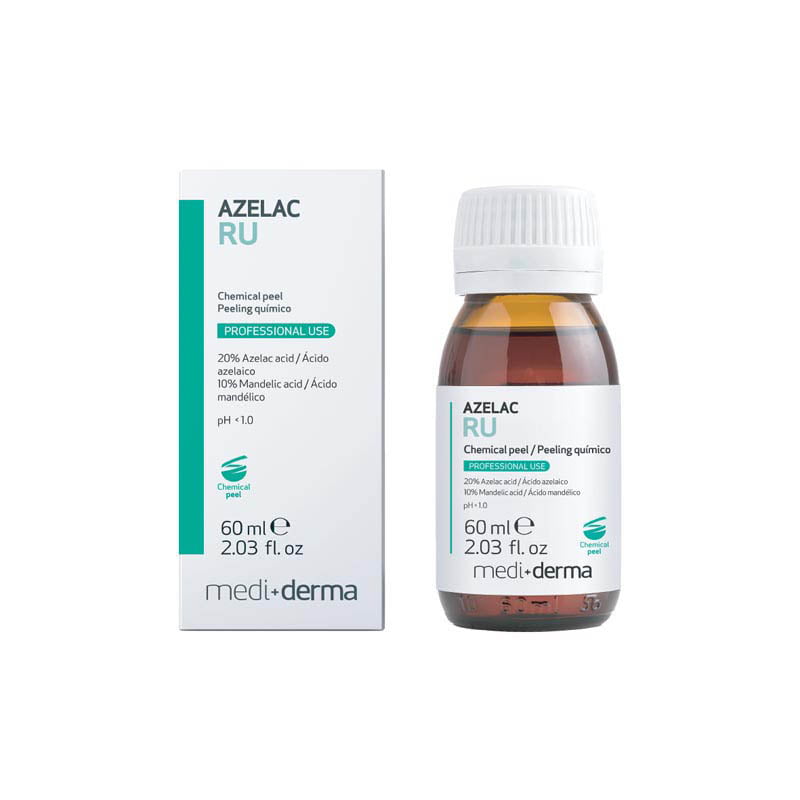
MEDIDERMA® AZELAC® RU
Order MEDIDERMA® AZELAC® RU for Clinics
Dermatological Product
$79.00
You save
Description
MEDIDERMA® AZELAC® RU is a professional topical serum used in clinic-directed aesthetic skincare protocols for the look of uneven tone and localized discoloration. Licensed clinics and healthcare professionals can order the 60 mL dropper bottle for treatment-room use, aftercare planning, or structured home-care regimens directed by the supervising provider.
The formula is built around azelaic acid in a leave-on serum vehicle, with antioxidant and moisturizing excipients that support skin comfort during routine use. In practice, teams commonly position this Azelac RU depigmenting serum under moisturizer or sunscreen, or use it as a targeted layer where discoloration concerns need consistent cosmetic support.
Clinic Ordering, Price, and Account Access
MEDIDERMA® AZELAC® RU is available for professional ordering through Med Wholesale Supplies for licensed clinics, med spas, aesthetic practices, and healthcare professionals. Sign in to view the current MEDIDERMA Azelac RU price, request volume guidance, and align quantities with expected protocol use across providers or locations.
Pricing may vary by account terms, purchase volume, and supply allocation. Clinics using pigment-care products frequently can plan inventory around consultation volume, post-procedure aftercare kits, and ongoing maintenance programs. The 60 mL dropper format supports controlled dispensing at the treatment counter and helps staff document usage consistently.
Account verification is required before professional purchasing. We source brand-name products through vetted distributors and verified supply channels for licensed clinics, so your ordering team should keep buyer permissions and clinic documentation current before placing recurring supply orders.
What This Serum Is Used For in Professional Skincare
MEDIDERMA® AZELAC® RU is used as a leave-on cosmetic serum within aesthetic workflows focused on a more uniform-looking complexion. It may fit protocols for visible discoloration, uneven tone, photoaging-related dullness, and maintenance between compatible in-clinic procedures when the treating professional considers it appropriate.
Azelaic acid is a dicarboxylic acid used topically in dermatology and cosmetic skincare. In this MEDIDERMA formulation, it supports surface refinement and tone-balancing routines without a heavy cream finish. The serum texture makes it useful when clinics want a lightweight MEDIDERMA Azelac RU face serum that can sit under daily SPF or a barrier-supporting moisturizer.
Professional judgment matters when building a pigment-care routine. Staff should consider skin sensitivity, recent procedures, seasonal sun exposure, other actives in the regimen, and whether the product is being used across the full face or as an Azelac RU spot treatment for localized areas.
Formulation and Practical Product Features
The primary active component is azelaic acid in a cosmetic serum base. Supportive antioxidant and moisturizing ingredients are included to help maintain comfort during repeated topical use. Because complete ingredient details can change by manufacturer documentation, clinics should consult the carton insert or current manufacturer materials for the full INCI list and any sensitizer disclosures.
- Professional leave-on serum for cutaneous application.
- 60 mL bottle with dropper applicator for measured dispensing.
- Azelaic acid base for tone-uniformity and pigment-care protocols.
- Antioxidant support for routine environmental stress exposure.
- Moisturizing excipients to help preserve barrier comfort.
- Lightweight texture suitable under sunscreen or moisturizer.
- Useful for full-face routines or targeted cosmetic application.
Quick tip: Keep a clinic protocol note that states application sequence, frequency, and compatible companion products so staff instructions remain consistent.
How Clinics Integrate It Into Protocols
In treatment workflows, MEDIDERMA® AZELAC® RU can be used as a daily serum layer or as part of a staged pigment-care plan. It is typically applied before richer creams, occlusive moisturizers, or sunscreen so the serum can contact clean, prepared skin. If a patient is using multiple actives, gradual introduction can reduce avoidable irritation.
Clinics may use the serum after professional evaluation when a lightweight brightening step is preferred over a cream. It can also support maintenance between compatible procedures, provided the provider reviews skin tolerance and timing. Avoid placing the serum into the same routine as aggressive exfoliating or sensitizing steps unless the clinical protocol specifically accounts for barrier recovery.
For category planning, teams can browse related professional skincare products or focus on creams and serums that complement daily regimen design. These categories help practices standardize product families across consultation, treatment-room, and post-care workflows.
Safety, Tolerance, and Staff Counseling Points
Topical azelaic acid products can cause transient stinging, tingling, dryness, redness, or peeling, especially when introduced too quickly or combined with other active ingredients. Although MEDIDERMA® AZELAC® RU is a cosmetic professional serum rather than a drug monograph, clinics should still treat tolerance screening as part of responsible product use.
Staff should advise gradual use for sensitive or reactive skin and monitor for persistent irritation. If discomfort continues, the supervising provider should reassess frequency, companion products, barrier support, and whether use should pause. Avoid application on compromised skin unless the clinical protocol and professional judgment support it.
Sun exposure can worsen the appearance of discoloration. Pigment-care routines should include daily sunscreen use and conservative post-procedure sun practices. The serum can be layered under SPF when tolerated, which makes it practical for daytime maintenance plans.
Patients with known allergies to topical skincare ingredients should be reviewed carefully before use. Clinic teams should also document any adverse reactions, the products used at the same time, and recent procedures so the provider can identify likely irritants.
Packaging, Storage, and Handling
MEDIDERMA® AZELAC® RU is supplied as a 60 mL bottle with a dropper applicator in professional packaging. The dropper supports measured use for targeted areas or full-face routines and helps limit unnecessary product waste during staff-led application or protocol demonstrations.
Store the bottle at controlled room temperature, away from direct heat and light. Keep the cap secured after each use to help protect the formula and reduce exposure to air. Lot and expiration details should be recorded according to the clinic’s inventory process, especially when products are allocated to multiple providers or locations.
Orders are processed with reliable US logistics, including temperature-controlled handling when required and tracked US delivery. Clinics should inspect the shipment upon receipt, rotate inventory by expiration date, and keep product cartons or inserts available for staff reference.
How It Compares With Other AZELAC RU and MEDIDERMA Options
MEDIDERMA® AZELAC® RU 60 mL is best understood as a professional serum format for pigment-oriented routines. It differs from richer creams or SPF fluids because it is designed as a leave-on layer that can be incorporated beneath other daily products. That makes it practical for clinics building stepwise regimens around cleansing, serum application, barrier support, and UV protection.
For a smaller serum format, review Azelac RU Liposomal Serum 30 ml. For daytime pigment-care support with sun protection, consider Azelac RU Luminous Fluid SPF50. Clinics that need a focused corrective product may also assess MELA 360 Spot Corrector Serum as part of a broader MEDIDERMA regimen.
If the clinical goal includes acne-prone or redness-prone skin alongside tone concerns, Azelac M 60 ml may be relevant for comparison. For procedure-adjacent pigment programs, professional peel selections such as Melases TRX Booster Peel should be evaluated only within trained provider protocols.
Inventory Planning for Aesthetic Practices
Practices using MEDIDERMA® AZELAC® RU regularly should estimate bottle turnover by protocol type. Full-face regimens, targeted discoloration routines, and post-procedure maintenance plans may consume product at different rates. A simple staff log can help the ordering lead match future quantities to actual clinic use instead of ordering by estimate alone.
Multi-site clinics may want consistent product placement across consultation rooms and procedure areas. Standardized staff instructions reduce variation and support clearer follow-up conversations. When a product is used in take-home regimens, the provider should document how it fits with sunscreen, moisturizers, and any procedure aftercare limits.
Why it matters: Consistent inventory and protocol notes help clinics reduce substitution errors in pigment-care workflows.
Brand and Professional Range Context
MEDIDERMA is widely used in professional skincare and aesthetic settings, including protocols involving topical care, chemical peels, and maintenance products. Clinics can explore the broader MEDIDERMA brand range to keep regimen components aligned by product family.
For staff education and category context, the article on Azelac RU for skin health and aesthetics discusses how this line is positioned within cosmetic tone-care routines. Practices evaluating peel-based pigment protocols may also find chemical peel considerations for hyperpigmentation useful when reviewing procedure-adjacent product choices.
Authoritative Sources
Use manufacturer and medical reference materials to support professional decision-making and ingredient review. External references should supplement, not replace, clinic protocols and manufacturer documentation included with the product.
This content is for informational purposes only and is not a substitute for professional medical advice.
Frequently Asked Questions
Who can order MEDIDERMA® AZELAC® RU?
MEDIDERMA® AZELAC® RU is intended for licensed clinics, med spas, aesthetic practices, and healthcare professionals ordering through a professional account. Account verification and clinic documentation may be required before purchasing.
What size is supplied for this product?
This MEDIDERMA® AZELAC® RU format is supplied as a 60 mL bottle with a dropper applicator. The dropper helps staff dispense measured amounts for full-face or targeted topical use.
How should clinics store the serum?
Store the bottle at controlled room temperature, away from direct heat and light, and keep the cap secured after use. Record lot and expiration details according to the clinic’s inventory process.
Can MEDIDERMA® AZELAC® RU be used with sunscreen or moisturizer?
Yes, it is commonly positioned as a lightweight serum layer under moisturizer or sunscreen when tolerated. The supervising provider should decide the sequence and frequency within the clinic’s protocol.
What tolerance issues should staff watch for?
Transient tingling, dryness, redness, or peeling may occur with topical azelaic acid products, especially during early use or with other active ingredients. Persistent irritation should be reviewed by the supervising provider.
What related MEDIDERMA products may clinics consider?
Clinics may compare Azelac RU Liposomal Serum 30 ml, Azelac RU Luminous Fluid SPF50, MELA 360 Spot Corrector Serum, Azelac M 60 ml, or compatible MEDIDERMA peel products depending on the protocol goal.
Specifications
- Main Ingredient: Azelaic Acid
- Manufacturer: Sesderma Laboratories
- Drug Class: Topical Skin Brightening Agent
- Generic Name: Azelaic Acid
- Package Contents: 60 mL
- Storage Requirements: Room Temperature (2℃~25℃)
- Main Usage: Skin Pigmentation
About the Brand
Mediderma
BUY MEDIDERMA PRODUCTS ONLINE AT WHOLESALE PRICES ON MedWholesaleSupplies Mediderma is a reliable brand within the medical sector, delivering top-of-the-line skincare products. These can now be conveniently procured directly from our online platform, medwholesalesupplies.com. Buy MEDIDERMA® skincare products at wholesale prices – register an account on Med Wholesale Supplies today! What is MediDerma? Mediderma's commitment to research and invention ensures that their offerings cater effectively and safely to diverse dermatological needs. Whether you're a medical professional or an individual seeking superior skincare options, Mediderma stands as the brand of choice. MEDIDERMA® Product Range By availing Mediderma's range on medwholesalesupplies.com, we make it easy for you to access world-class skincare solutions without any hassles. As a highly-reputed online medical store, we offer a broad gamut of medical offerings, including Mediderma, satisfying an array of customer requirements. Our focus is consistently on customer satisfaction which is reflected in our competitive pricing, timely delivery, and unmatched customer assistance. With medwholesalesupplies.com, buying Mediderma skincare products is a breeze. ARGIPEEL Exfoliant gel for sensitive skin; contains arginine for hydration, antioxidant effects, and collagen stimulation, plus lactic acid for gentle exfoliation. AZELAC Skin-brightening line for inflamed, hypersensitive skin and rosacea; includes creams, serums, and peels for redness, swelling, hyperpigmentation, inflammation, and acne. C-DEFENSE Vitamin C and peptide-based products for tired, dull skin; brightens, firms, and protects against pollution and free radicals. FERULAC Anti-aging line with ferulic acid, vitamins, and retinoids; targets wrinkles, fine lines, and sun damage, stimulating collagen production. FR-ANTIOX Ferulic acid-based line with additional antioxidants; combats oxidative stress, sun damage, and aging, suitable for mature skin. HYLANSES Products with various types of hyaluronic acid; hydrates and addresses firmness and elasticity, ideal for sensitive, dry, and mature skin. MELA 360 Targets hyperpigmentation with products like the MELA 360 SPOT CORRECTOR; contains kojic acid, arbutin, and licorice extract for brightening dark spots. MELASES TRX Focuses on melasma and hormonal dark spots; tranexamic acid chemical peel reduces sun damage, inflammation, and aging effects. Where Can I Buy MEDIDERMA®? MEDIDERMA® Laboratories offer a wide range of products tailored to various patient needs. If you wish to order MEDIDERMA® online, our team can assist you in finding the best deals. Dermatological clinics should purchase MEDIDERMA® at wholesale prices to offer their patients the most affordable rates while ensuring product authenticity and quality. Contact our agents today to supply your clinic with genuine MEDIDERMA® products from trusted distributors.
Browse Mediderma Products
Here to help
Questions about ordering, delivery or products? You can email our team here or call now at 1-800-630-9757 and be connected with your dedicated Account Manager
Related Products
Evenity® (English Alternative)
Injectable Medication
$1,229.00 - $1,299.00
You save
You save
Intraline® For Men
Dermal Filler
$59.00 - $79.00
You save
You save
RejuvaNAD+ Pro
Injectable Medication
$237.00 - $249.00
You save
You save
Teosyal® RHA 4
Aesthetic Surgery Product
$259.00 - $279.00
You save
You save
Related Articles
Prednisone in Clinical Care: Uses, Risks, and Monitoring
Prednisone is a prescription systemic corticosteroid used to reduce inflammation or suppress immune activity in…
Lip Fillers Swelling Stages: Timeline, Safety, and Follow-Up
Lip fillers swelling stages usually follow a short inflammatory course: swelling appears soon after injection,…
Hypopigmentation of the Skin: Assessment and Care
Hypopigmentation of the skin means one or more areas look lighter than the surrounding skin.…
Radiesse vs Sculptra: Selection Factors for Clinics
Radiesse vs Sculptra is best understood as a comparison between two collagen-stimulating injectables with different…
Hyaluronic Acid Under-Eye Filler: Safety and Workflow
Hyaluronic acid under-eye filler is an injectable soft-tissue filler used by trained aesthetic clinicians to…
Dermal Filler Types: Materials, Uses, and Clinic Fit
Dermal filler types are usually grouped by their base material, tissue behavior, and expected role…
What Is Dysport? Clinical Uses, Safety, and Workflow
For clinic teams asking what is Dysport, the short answer is simple: Dysport is a…
Biostimulators in Aesthetic Care: Selection and Safety
Biostimulators are injectable aesthetic products used to encourage a controlled tissue response, often involving new…