Non-invasive fat removal refers to device-based body contouring methods that aim to reduce localized fat without incisions or tissue removal. For aesthetic clinics, the clinical question is not which platform sounds newest. It is whether the patient’s concern, tissue type, medical history, and expectations match the modality. A structured consult helps teams separate fat reduction, muscle toning, and skin laxity before a treatment plan is discussed.
This article is written for licensed healthcare teams. It focuses on selection factors, risk controls, documentation, and patient communication. It also distinguishes truly non-invasive devices from minimally invasive injectable lipolysis, since that difference changes consent, infection control, and adverse event planning.
Why it matters: Consistent outcomes depend on workflow discipline as much as device choice.
Key Takeaways
- Match tissue first, then modality.
- Screen for contraindications and expectations.
- Separate fat, muscle, and skin goals.
- Use standardized photos and measurements.
- Document settings, aftercare, and follow-up.
How Non-Invasive Fat Removal Fits Modern Body Contouring
Non-invasive fat removal is best positioned as localized contour refinement, not weight-loss treatment. Patients may ask about belly fat, flanks, submental fullness, or post-weight-loss shape changes. The clinic’s role is to clarify whether the visible concern is adiposity (fat tissue), lax skin, muscle tone, edema, scar tissue, or a combination.
Across 2024 and 2025, the main shift has been better segmentation rather than one universal best device. Many practices now separate treatment goals into fat reduction, muscle stimulation, and skin quality. That approach reduces overpromising because each endpoint has different mechanisms, timelines, and limitations.
The overlap with medical weight management also matters. Anti-obesity medications can change body composition and patient priorities. Some patients seek contour refinement after broader weight reduction. In those cases, documentation should keep weight management and localized body contouring claims separate. Spot reduction should not be framed as obesity treatment.
For adjacent reading on service planning, the Body Contouring category collects related professional-facing resources. Clinics that compare device-based and injection-based approaches can also review Body Contouring Treatments for broader context.
Core Modalities and What They Actually Target
The main device categories work by applying cold, heat, acoustic energy, or electromagnetic stimulation. Each method affects tissue differently, so the consult should start with anatomy and endpoint, not brand preference. A patient asking for the “best” treatment may really need a discussion about fat thickness, skin laxity, treatment tolerance, and follow-up adherence.
Cryolipolysis uses controlled cooling to stress adipocytes (fat cells) in a defined treatment area. Radiofrequency and external laser systems use heat-based energy, with some platforms also addressing mild dermal effects. Ultrasound-based methods use acoustic energy that may create mechanical or thermal tissue effects. Electromagnetic muscle stimulation is different: it focuses on muscle contraction rather than fat-cell injury.
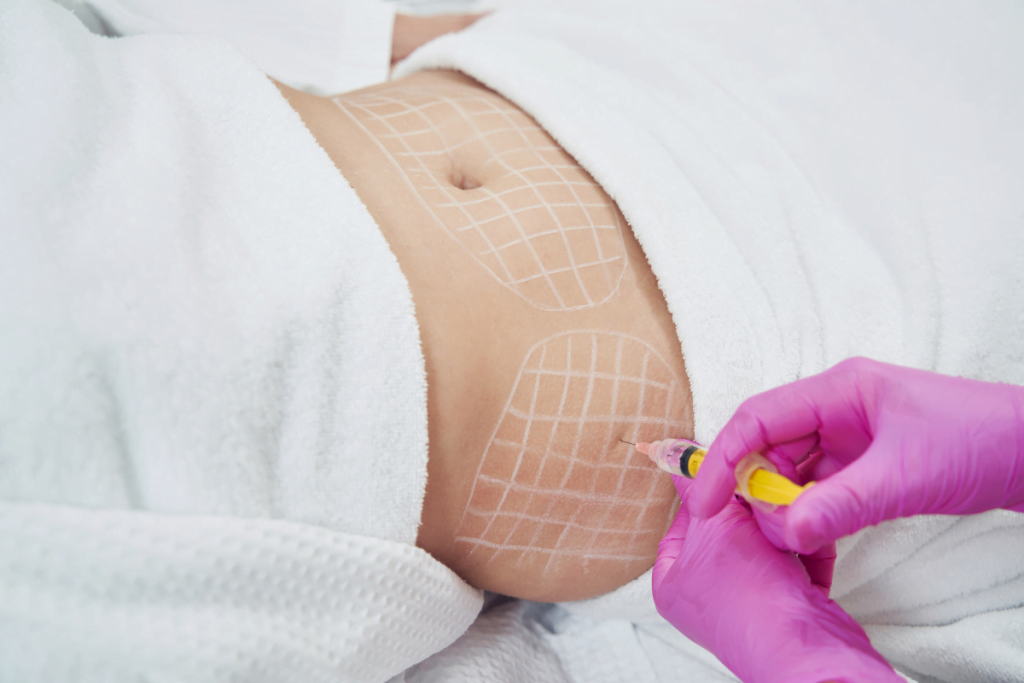
Terminology should stay precise. “Non-invasive” generally means no needles and no incisions. Injectable lipolysis products, even when marketed around fat reduction, are minimally invasive because they breach the skin. That distinction affects consent, aseptic technique, post-procedure instructions, and adverse event triage.
Quick Definitions for Consults
- Cryolipolysis: Controlled cooling for localized subcutaneous fat.
- Radiofrequency: Controlled heating that may affect fat and dermis.
- External laser: Light-based energy applied through the skin.
- Ultrasound contouring: Acoustic energy directed into selected tissue zones.
- Muscle stimulation: Electromagnetic contractions for tone-focused goals.
These definitions are useful during staff training because they keep counseling consistent. They also help avoid casual phrases such as “fat melting,” which can imply a mechanism or result that may not match the device labeling or evidence base.
Decision Factors Before Selecting a Platform
The most effective non-invasive fat removal option is the one that matches the treated area, tissue characteristics, risk profile, and expected endpoint. There is no single modality that is “best” for every abdomen, flank, thigh, arm, or submental case. A structured assessment gives the clinic a defensible reason for choosing one approach over another.
Start with the target tissue. A soft, localized fat pocket may fit one pathway, while mild laxity may lead to a different discussion. Muscle tone concerns require another category entirely. Prior pregnancies, weight change, diastasis recti (abdominal muscle separation), surgical scars, hernias, and skin redundancy can all alter what a patient sees and what a device can reasonably address.
Then evaluate tolerance and logistics. Some patients are comfortable with cold sensation, suction, heat, pressure, soreness, or temporary swelling. Others may prioritize comfort or minimal visible downtime. None of these preferences automatically select a device, but they help the clinician set realistic expectations.
Cost questions often appear in consultations, but clinics should avoid reducing the discussion to session counts alone. Pricing, treatment plans, and reassessment cadence vary by market, device, treatment area, and provider model. A clinic-facing discussion is usually more useful when it covers candidacy, documentation, and follow-up, rather than quoting generic ranges that may not apply.
Practical Comparison Points
- Area selection: Abdomen, flanks, arms, thighs, or submental region.
- Tissue type: Fat thickness, laxity, fibrous tissue, and scars.
- Risk history: Cold sensitivity, implants, prior procedures, or sensory changes.
- Endpoint clarity: Fat reduction, muscle tone, skin quality, or mixed goals.
- Follow-up plan: Photo timing, measurement method, and reassessment criteria.
For non surgical fat removal from stomach or flanks, the consult should also address weight stability. A changing baseline can distort before-and-after review. Standardized documentation protects the clinic and supports more accurate patient counseling.
Cryolipolysis, Heat-Based Devices, and Safety Screening
Safety screening should be modality-specific because risks differ across cold, heat, ultrasound, and muscle-stimulation technologies. A general medical history is not enough. The intake form should include questions that map directly to the intended device and its instructions for use.
For cryolipolysis, cold-related disorders are central screening considerations. These may include cryoglobulinemia, cold urticaria (cold-triggered hives), or paroxysmal cold hemoglobinuria. Practices should also assess skin integrity, sensation, prior procedures in the area, and any history that could complicate bruising, firmness, discomfort, or delayed concerns.
For heat-based platforms, contact quality, applicator movement, temperature monitoring, and skin assessment become operational priorities. Burns or surface injury may occur when technique, device condition, patient feedback, or skin contact are inconsistent. Pigmentation risk and sensitivity should be considered where relevant to device labeling and local protocols.
Ultrasound and muscle-stimulation systems have their own screening logic. Treated zone boundaries, implanted devices, pregnancy status, neurologic considerations, and local contraindications may matter depending on the platform. Policies should follow the device instructions for use, professional scope rules, and local regulations.
MedWholesaleSupplies serves licensed clinics and healthcare professionals, with products sourced through vetted distributors and verified supply channels where procurement is relevant. That sourcing context does not replace clinical screening; it supports operational documentation when clinics manage professional-use products.
Documentation Standards That Reduce Avoidable Friction
Clear documentation turns a body contouring program into a repeatable clinical service. It also reduces confusion when patients call about soreness, swelling, delayed visibility of results, or perceived asymmetry. The chart should show what was assessed, why a modality was selected, and how the clinic planned follow-up.
Photography is especially important. Use the same camera distance, lighting, background, posture, and anatomic landmarks. Record weight or relevant measurements when they help interpretation, but do not let a single number replace visual and clinical context. If the patient’s weight changes during follow-up, note it clearly.
Consent should reflect the modality. Non-invasive device treatments may involve temporary numbness, tenderness, bruising, swelling, firmness, soreness, altered sensation, or other device-specific events. Injectable lipolysis requires different language because it involves puncturing the skin and carries infection-control considerations.
Clinic Workflow Snapshot
- Confirm professional scope and device training.
- Document history, target tissue, and goals.
- Capture baseline photos and measurements.
- Review contraindications and consent language.
- Record device, applicator, settings, and treated zones.
- Provide written aftercare and escalation instructions.
- Schedule reassessment with repeat photography.
Quick tip: Use one photo protocol across modalities to improve comparisons.
If the practice offers injectable contouring alongside devices, keep records separate and clearly labeled. For deeper context on minimally invasive options, review Fat Dissolving Injections, Aqualyx Treatment, and Aqualyx Clinical Notes. These resources should be used for education and workflow context, not as substitutes for product labeling or local scope requirements.
Managing Expectations Around Results and Reviews
Expectation-setting is often the deciding factor in patient satisfaction. Non-invasive fat removal may support contour change in selected patients, but it does not replace surgery, treat obesity, or correct significant skin redundancy. That point should appear early in the consultation, not only after a patient is disappointed.
Before-and-after images need context. Lighting, posture, camera angle, weight change, hydration, garments, and menstrual-cycle-related bloating can all affect appearance. Social media examples rarely disclose these variables. A clinic’s own standardized image set is usually more useful for counseling than public review platforms.
When patients ask about non-invasive fat removal for belly fat, reframe the question around candidacy. Is the concern localized subcutaneous fat, visceral abdominal fullness, muscle separation, or loose skin? A device that may fit a small fat pocket will not address every abdominal shape concern.
Online reviews can still reveal practical concerns. Patients often comment on comfort, staff communication, downtime, or whether their expectations matched the outcome. Clinics can use that feedback to improve consult scripts, aftercare handouts, and follow-up timing. Reviews should not be treated as clinical evidence because baseline characteristics and documentation are usually unknown.
For practices comparing injection-based products in appropriate professional settings, product pages such as Aqualyx 10 8mL Vials or Phosphatidylcholine 5 Vials may support procurement review. Use product references sparingly in patient education, and keep claims aligned with regulatory status, labeling, and scope of practice.
How to Keep Device and Injectable Pathways Distinct
Device-based body contouring and injectable lipolysis may appear in the same service menu, but they should not share one generic workflow. The mechanism, procedure steps, adverse event profile, and aftercare language differ. Staff should know which pathway applies before consent is presented.
For device-based services, the clinic records energy type, applicator placement, settings, treatment duration, patient tolerance, and skin response. For injection-based services, the record typically needs product identification, lot information, anatomic mapping, aseptic technique, injection-related aftercare, and adverse event monitoring. Local requirements and product labeling should guide the exact documentation.
Training materials should also avoid blending claims. “Fat freezing,” “laser lipo,” “body contouring,” and “fat dissolving” are often used loosely in marketing. Internally, use precise terms so the clinical team can explain what the treatment does, what it does not do, and when referral or alternate care is more appropriate.
For related comparisons, Alidya and Aqualyx discusses injection-focused distinctions. The Body Contouring Products collection can help professional teams browse relevant categories without turning educational consults into product claims.
Authoritative Sources
Use regulator and professional sources when building internal policy. Device instructions for use and local rules should remain the final reference for any specific platform or product.
- FDA non-invasive body contouring technologies
- FDA medical device oversight
- FDA MedWatch adverse event reporting
Non-invasive fat removal programs work best when clinics define candidacy, document consistently, and communicate limitations clearly. Device choice matters, but process quality shapes the patient experience from consultation through reassessment.
This content is for informational purposes only and is not a substitute for professional medical advice.