

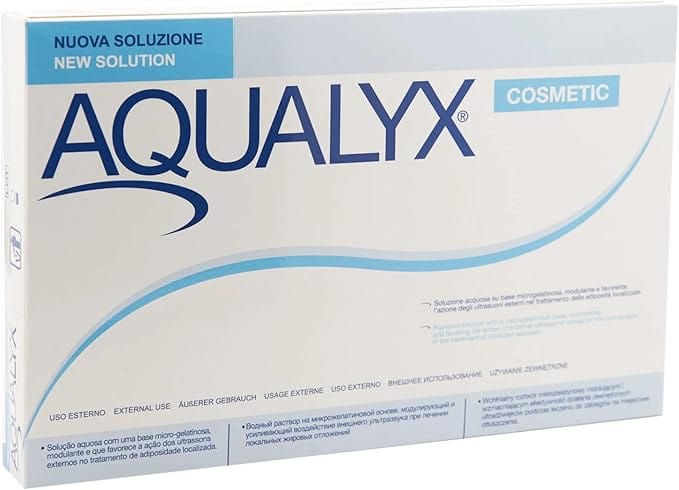
Aqualyx®
Order Aqualyx® for Clinics
Fat Dissolving Injection
$349.00
You save (%)
Description
Aqualyx® is a deoxycholate-based injectable preparation supplied in 10 x 8 mL vials for professional body-contouring protocols. Licensed clinics, med spas, and healthcare professionals can order Aqualyx 10x8ml packs for structured treatment-room use, inventory planning, and clinical documentation. The vial format supports staged assessment, aseptic preparation, and traceable use within provider-led aesthetic services.
This product is used by trained professionals as part of injection lipolysis workflows for carefully selected localized adipose pockets. It should be prepared and administered only by qualified personnel following applicable training, manufacturer directions, clinic protocols, and local professional standards.
Aqualyx® 10 x 8 mL Pack for Professional Use
Aqualyx® is supplied as a commercial 10 x 8 mL pack. Each vial contains an 8 mL presentation intended to fit session-based planning in aesthetic practices that offer injectable body-contouring services. The pack size helps clinics align stock rotation with appointment volume, follow-up schedules, and practitioner-specific treatment plans.
The preparation contains a modified compound of deoxycholic acid in a buffered aqueous solution. Deoxycholic acid is a bile acid derivative used in injection lipolysis contexts to disrupt adipocyte membranes when placed into targeted subcutaneous tissue by trained clinicians. Product selection, injection technique, treatment area, session spacing, and follow-up remain clinical decisions made by the provider.
Clinics commonly evaluate this type of lipolysis solution for localized fat pockets such as the submental region, abdomen, flanks, thighs, hips, or other appropriate areas. These references describe potential professional-use contexts, not a direction to treat every site or every patient. Patient selection, anatomical assessment, contraindication screening, consent, photography, and aftercare instructions should be standardized before the product enters a treatment workflow.
Clinic Ordering, Price, and Stock Planning
Licensed accounts can order Aqualyx® and view current Aqualyx price information after account sign-in. Pricing may depend on account status, order quantity, and purchasing profile, so clinics should use the active account view for current cost planning rather than relying on historical treatment fees or third-party estimates.
For practical forecasting, the 10-vial presentation can be allocated across planned sessions, provider schedules, and treatment-area demand. A clinic offering submental contouring, abdominal protocols, and thigh-focused plans may use different vial counts according to assessment and technique. Keep ordering decisions tied to your practice protocols rather than consumer-facing treatment-package language.
Receiving teams should record lot numbers and expiry dates when stock arrives, then reconcile vials with appointment usage. That documentation supports internal quality processes, reordering, and any future review of product movement. Med Wholesale Supplies serves licensed clinics and healthcare professionals through vetted supply channels, with temperature-controlled handling when required and tracked US delivery.
How It Fits Injection Lipolysis Workflows
Aqualyx® is used within injection lipolysis, a professional technique in which a fat-dissolving solution is placed into subcutaneous tissue by a trained provider. In practice, this means the product belongs in a complete clinical workflow: consultation, medical history review, anatomical marking, aseptic preparation, administration, post-care counseling, and scheduled follow-up.
Clinics may incorporate Aqualyx® into broader body-contouring, mesotherapy, fat-removal, and body-sculpting service lines. The product should not be positioned as a general weight-loss medication or a substitute for metabolic treatment. Its role is localized contour refinement when the provider determines that an injection lipolysis approach is suitable.
Common search questions often ask whether Aqualyx® is similar to Ozempic. It is not. Ozempic is a GLP-1 receptor agonist, an incretin-based medicine used in metabolic disease management, while Aqualyx® is a localized injectable lipolysis preparation used in aesthetic practice. The clinical goals, route, training requirements, patient screening, and follow-up expectations differ substantially.
Composition and Ingredient Profile
The supplier-provided ingredient profile describes a deoxycholate-based system with supportive excipients that help define the solution characteristics. The composition includes the following listed components:
- Modified compound of deoxycholic acid
- Buffering chemicals
- Red microalgae sugars
- Other sugars
- Sodium chloride
- Water
The buffered aqueous matrix is relevant to clinic handling because injectable products must be prepared under appropriate aseptic technique. Staff should follow manufacturer instructions, product labeling, and facility policies for inspection, preparation, sharps handling, and disposal. Do not combine the solution with other products unless the manufacturer’s instructions and professional standards support that specific approach.
Some marketplace searches mention Aqualyx with lidocaine. Do not infer an anesthetic component unless it appears on the product label or your clinic has a separate, protocol-approved anesthetic plan. If topical, local, or other comfort measures are used, they should be selected and documented by the treating professional.
Professional Applications and Treatment Areas
Aqualyx® fat dissolving injections are used by trained providers for localized adipose deposits rather than generalized fat reduction. Common practice discussions include submental contouring, sometimes described as chin or double-chin treatment, as well as stomach, flank, thigh, and hip areas. Suitability depends on anatomy, skin quality, treatment goals, medical history, and the provider’s technique.
For clinics building protocols, the most useful question is not simply whether Aqualyx® works. A better clinical question is whether the product is appropriate for a specific patient, target area, and endpoint. Outcomes can vary, and documentation should include baseline images, measurements when relevant, consent, product lot data, administration notes, and follow-up observations.
Teams developing or refining service pathways may find the practice-focused article on Aqualyx treatment useful for contextual planning. Additional procedural considerations are covered in Aqualyx procedure preparation and aftercare, which can help staff align consultation, patient education, and post-visit instructions.
Key Features for Clinics
- Professional-use injectable preparation for trained aesthetic providers.
- 10 x 8 mL pack supports multi-session clinic stock planning.
- Deoxycholate-based formulation used in injection lipolysis workflows.
- Buffered aqueous solution with sodium chloride, sugars, and red microalgae sugars.
- Vial format supports controlled draw-up under aseptic technique.
- Batch and expiry information supports traceability in treatment records.
- Suitable for structured consent, photography, documentation, and follow-up protocols.
- Can be integrated into body-contouring and mesotherapy service lines.
Quick tip: Assign received vials to a stock log before they enter treatment-room inventory.
Handling, Storage, and Treatment-Room Controls
Store and handle Aqualyx® according to the manufacturer’s labeling and your facility’s written procedures. Inspect packaging before use, verify batch and expiry details, and do not use a vial if integrity, labeling, or appearance raises a concern. Preparation should occur in a clean clinical environment using aseptic technique and appropriate sharps controls.
Each 8 mL vial should be managed according to clinic policy and local regulations for professional injectable products. Treatment-room staff should document opening, draw-up, administration, and disposal steps in a way that supports audit readiness and patient record completeness. If your practice uses centralized purchasing or multiple rooms, maintain clear separation between received inventory, active room stock, and discarded materials.
Training is also part of handling. Staff who receive, store, prepare, or assist with the product should understand the clinic’s escalation process for packaging discrepancies, temperature concerns, adverse events, and product questions. Written workflows reduce variation between providers and help maintain consistent service standards.
Safety, Risks, and Patient Screening
Aqualyx® should be used only after professional screening and informed consent. Injection lipolysis may be associated with expected local reactions such as swelling, bruising, tenderness, redness, firmness, itching, or temporary discomfort at the treated area. Providers should explain anticipated post-treatment effects, escalation symptoms, and follow-up timing before administration.
More serious risks can include infection, tissue injury, nerve-related symptoms, asymmetry, nodularity, prolonged inflammation, vascular or anatomical complications, and unsatisfactory cosmetic outcomes. Risk depends on patient factors, anatomical area, product handling, injection technique, and aftercare. Clinics should have procedures for adverse-event recognition, documentation, patient communication, and referral when medical evaluation is needed.
Screening should address medical history, current medicines, allergies, skin conditions, active infection near the treatment site, pregnancy or breastfeeding considerations, bleeding risk, prior procedures, and expectations. The provider should decide whether to proceed, defer, use an alternative approach, or refer for another modality. Patients should not self-administer Aqualyx® or receive treatment outside an appropriately supervised professional setting.
Benefits for Inventory and Documentation
The Aqualyx 8ml vials presentation gives clinics a practical unit for session planning, procedure-room setup, and controlled inventory movement. A defined vial size helps staff estimate stock needs across scheduled services without opening more product than the protocol requires. It also supports consistent receiving and reconciliation across multi-provider practices.
Documentation should connect the product to the clinical record. Best-practice logs usually include date received, storage location, batch number, expiry date, provider, treatment area, amount used according to the protocol, and disposal notes. These operational details help clinics evaluate supply use, prepare for internal reviews, and maintain traceability if a product question arises.
For broader training and service positioning, clinics can review Aqualyx clinical practice notes and the article on fat-dissolving injections. These internal materials can support staff discussion, but product administration should still follow manufacturer directions and practitioner judgment.
Comparable Products and Category Choices
Clinics evaluating lipolysis-focused products may also consider Phosphatidylcholine 5 x 10 mL vials as an adjacent option within aesthetic body-contouring workflows. Selection should reflect provider training, patient characteristics, clinic protocol, ingredient preferences, and documentation requirements.
If your team is comparing Aqualyx® with other aesthetic injectables or practice protocols, the article Alidya vs Aqualyx can help frame differences for professional discussion. For brand-specific browsing, use the Aqualyx brand category to keep related items and educational materials organized.
Comparable-product decisions should not rely only on consumer before-and-after claims, forum reports, or treatment-price advertising. Evaluate formulation, training requirements, adverse-event planning, stock management, and whether the product fits your clinic’s current consent and follow-up model.
Authoritative Sources
For class-level information on deoxycholic acid and injection lipolysis, clinicians may consult the following references. These sources support general YMYL context and do not replace product labeling or local professional requirements.
- MedlinePlus: Deoxycholic Acid Injection
- PubChem: Deoxycholic Acid
- FDA label: Deoxycholic Acid Injection
This content is for informational purposes only and is not a substitute for professional medical advice.
Frequently Asked Questions
Who can order Aqualyx® from Med Wholesale Supplies?
Aqualyx® is intended for licensed clinics, med spas, and healthcare professionals using professional injectable body-contouring protocols. Account verification and professional-use requirements may apply before ordering.
What pack size is supplied for Aqualyx®?
This product is supplied as a 10 x 8 mL pack. The vial configuration supports session-based inventory planning, stock rotation, and traceability in aesthetic practices.
Is Aqualyx® the same as a weight-loss medicine like Ozempic?
No. Aqualyx® is a localized injectable lipolysis preparation used in professional aesthetic workflows. Ozempic is a GLP-1 receptor agonist used for metabolic disease management, so the clinical purpose and use pathway are different.
What areas do clinics commonly evaluate for Aqualyx® protocols?
Clinics may evaluate localized adipose pockets such as the submental region, abdomen, flanks, thighs, or hips when appropriate. Final treatment-area selection depends on provider assessment, anatomy, medical history, and clinic protocol.
What safety issues should clinics consider before using Aqualyx®?
Clinics should screen for contraindications or factors that increase risk, document informed consent, use aseptic technique, and counsel patients on expected local reactions and escalation symptoms. Administration should be performed only by trained professionals.
How should Aqualyx® vials be documented in clinic records?
Record batch number, expiry date, date of use, provider, treatment area, amount used according to protocol, and disposal notes. This supports traceability, inventory reconciliation, and internal quality processes.
Specifications
- Main Ingredient: Deoxycholate
- Manufacturer: Marllor
- Drug Class:
- Generic Name: Deoxycholate
- Package Contents: 10 x 8 mL Vials
- Storage Requirements: Room Temperature (2℃~25℃)
- Main Usage:
About the Brand
Aqualyx
Aqualyx has earned a reputation as a leading name in the medical sector, renowned for its ground-breaking solutions in fat dissolution and body refinement. It's acclaimed for its significant success in getting rid of persistent fat collections, specifically in zones like the chin, neck, and abdomen. Aqualyx provides individuals the opportunity to realize their desired physique, omitting the need for intrusive operations such as liposuction, making it a highly desired product among both patients and health professionals. Acquiring Aqualyx is made simple through our portal, medwholesalesupplies.com. We function as a reliable distributor of medical commodities, inclusive of Aqualyx, and deliver an effortless approach for medical professionals to acquire and replenish their inventory. Our service guarantees a smooth and dependable ordering experience, ensuring that you receive the items you require without any complications. Our easy-to-navigate site layout combined with secure payment methods, makes purchasing Aqualyx more straightforward than ever. By choosing to shop with medwholesalesupplies.com, you can appreciate the ease of having Aqualyx brought directly to your medical practice or clinic. This eliminates unnecessary hassle, thereby allowing you to concentrate more on providing top-notch care to your patients. Additionally, our portal features fair pricing and regular promotional offers, giving you best bang for your buck. With Aqualyx accessible through our service, you can offer your patients a secure and efficient body contouring option that delivers observable outcomes.
Browse Aqualyx Products
Here to help
Questions about ordering, delivery or products? You can email our team here or call now at 1-800-630-9757 and be connected with your dedicated Account Manager
Related Products
$339.00
You save (%)
You save (%)
Select options
This product has multiple variants. The options may be chosen on the product page
Juvéderm® SKINVIVE
Dermal Filler
$339.00 - $359.00
You save (%)
You save (%)
$86.00 - $119.00
You save (%)
You save (%)
$72.00
You save (%)
You save (%)
Select options
This product has multiple variants. The options may be chosen on the product page
Related Articles
After Care for Botox: Clinic Instructions and Safety Checks
In clinical practice, after care for botox is the set of written and verbal instructions…
Hyaluronidase in Aesthetic Practice: Safety and Workflow
Hyaluronidase is an enzyme that breaks down hyaluronic acid, a water-binding molecule found in skin,…
Jawline Filler in Aesthetic Care: Safety and Workflow
Jawline filler is a nonsurgical dermal filler approach used to refine lower-face contour, support the…
Dermal Fillers Before and After: Assessing Results
Dermal fillers before and after review should show whether an injectable treatment produced a visible,…
Elasticity of the Skin: Assessment and Treatment Planning
Elasticity of the skin is the skin’s ability to stretch, resist deformation, and return toward…
How Long Does Mirena Last? Duration, Labeling, and Workflow
Mirena is labeled to prevent pregnancy for up to 8 years, but its labeled duration…
Is Evenity a Bisphosphonate? Drug Class and Care Context
No. If you are asking is evenity a bisphosphonate, the short answer is no. Evenity…
What Causes Double Chin? Clinical Drivers and Red Flags
The main causes double chin presentations reflect are usually submental fat, inherited facial anatomy, chin…