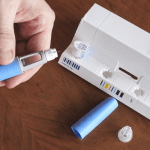
For many eye-care practices, prostaglandin analogs are a routine part of glaucoma care. Yet day-to-day questions keep coming up: how to explain expected tolerability, how to handle “brand vs generic” conversations, and how to keep inventory compliant. This guide uses lumigan drops as a practical example for clinic teams supporting glaucoma and ocular hypertension pathways.
The goal here is operational clarity, not prescribing direction. You will find a high-level overview of where this therapy class fits, what adverse effects are commonly documented, and what to verify when you are comparing products, packaging, or supplier documentation.
Key Takeaways
- Confirm the exact labeled product and concentration.
- Expect patient-reported ocular tolerability to vary.
- Document baseline ocular appearance when appropriate.
- Compare alternatives using labeling and formulary constraints.
- Standardize receiving, lot capture, and storage processes.
Where lumigan drops Fit in Glaucoma Care
Lumigan is a brand-name ophthalmic product containing bimatoprost, a prostaglandin analog. In plain language, it is a pressure-lowering eye drop used in glaucoma and ocular hypertension (elevated eye pressure). For clinics, the “fit” question is often less about mechanism and more about repeatability: consistent patient education, consistent documentation, and predictable procurement.
At a high level, prostaglandin analogs work by increasing aqueous humor outflow. That mechanism matters because it drives both expectations and monitoring. You will see recurring themes in chart notes and patient messages, such as redness, irritation, or changes around the eye that are visible in photos over time. Those themes influence refill adherence and follow-up workload.
Accounts are typically restricted to verified licensed healthcare entities.
When you are building protocols, treat this as part of a broader glaucoma eye drops list rather than a one-off SKU. Many practices keep a small set of “usual” options to reduce downstream complexity. For example, a practice may stock or regularly dispense from a defined ophthalmology set while referring staff to an internal hub for related lines and updates, such as the Ophthalmology Products collection.
Even if your site does not dispense directly, procurement and clinical staff still benefit from shared terminology. “Lumigan eye drops” and “bimatoprost ophthalmic solution” often get used interchangeably in conversations, but the label, NDC, and packaging details are what drive correct selection and documentation.
What to Know About Bimatoprost and Label Basics
When people search for “lumigan indication,” they usually mean the approved use on the official label. In clinic operations, “indication” also becomes a documentation shorthand that affects prior authorization packets, chart templates, and patient-facing instructions. Keep the wording consistent with the product’s labeling and your practice standards, and avoid copying third-party summaries that may be incomplete.
It can help to separate three concepts: active ingredient, formulation, and presentation. Active ingredient is the drug itself (bimatoprost). Formulation includes factors like concentration and any preservative system. Presentation covers bottle fill volume, tip design, outer carton language, and any unit-dose vs multi-dose packaging. These details drive confusion behind searches like “lumigan drops per ml,” because drop size varies by container geometry and technique. Inventory planning should rely on labeled volume (mL) and expected utilization patterns, not on drop-count conversions.
Why some labels specify evening use
Staff also hear: “why is lumigan taken at night.” Many prostaglandin analog labels direct once-daily use and may specify evening administration. Clinics often align workflows to the label because it reduces errors across handoffs. There is also a practical, patient-experience aspect: visible redness or mild burning may be noticed less during sleep, and routines are easier to anchor to a consistent time. Your role operationally is to ensure the team references the approved labeling and your clinical protocols, rather than improvising instructions during intake calls.
Why it matters: Small labeling differences can trigger dispensing errors and rework.
If you are maintaining a centralized reference library, link out to internal educational content that staff already uses for ophthalmic decision support. For example, some teams cross-train using broader ophthalmology articles, such as Ophthalmology Articles, so that non-specialty staff can recognize common terms and escalation triggers.
Products supplied to clinics should be traceable to legitimate distribution channels.
Safety Profile and Monitoring Considerations
Searches for “bimatoprost side effects” and “lumigan eye drops side effects” reflect an operational reality: tolerability issues drive callbacks. Most discussions are about local ocular effects, such as conjunctival hyperemia (eye redness), irritation, dryness, or a foreign-body sensation. These are common reasons patients stop using drops or use them inconsistently, which then shows up as variable intraocular pressure at follow-up.
From a clinic workflow perspective, plan for two streams of documentation. First is what the patient reports (symptoms, timing, and whether it is unilateral). Second is what is observed and recorded during exams. Standard templates help reduce ambiguous notes like “eye looks different.” If a patient shares “lumigan side effects photos” or references “lumigan side effects reviews,” treat that as a cue to document specifics with neutral language and to follow your escalation pathway.
Longer-term ocular changes and documentation
Clinics also see interest in “long-term side effects of lumigan,” especially when changes are subtle and develop over months. With prostaglandin analogs, the label and major references discuss the potential for iris pigmentation changes and eyelash changes. Some patients also report periorbital changes that may be described as prostaglandin-associated periorbitopathy (PAP; changes in eyelid/eye-socket appearance). Not every report is attributable to the drop, and many factors can contribute. Still, baseline documentation can be valuable for continuity, especially when multiple clinicians share care.
Practically, consider whether baseline external photos are part of your normal process, and ensure consent and storage policies are clear. If you do capture photos, note date, lighting, and laterality to keep comparisons meaningful.
Many suppliers require clinic credentials before distributing prescription ophthalmics.
Comparing Prostaglandin Analogs and Alternatives
“Lumigan vs latanoprost” is often framed as a simple preference question. In reality, clinics compare products across multiple constraints: patient tolerability history, the prescriber’s protocol, payer and formulary rules, and the specific labeled product available through the clinic’s channels. Keep the comparison grounded in labeling and operational fit, not anecdote.
It also helps to set expectations with staff about what “alternative” means. A “lumigan alternative” may be another prostaglandin analog, which is the closest within-class switch. A “latanoprost alternative” might still be within the same class, or it might be a different mechanism entirely, depending on the clinician’s plan. Your non-prescribing team should avoid implying interchangeability and should route substitution questions to the prescriber or pharmacist per policy.
How to compare products without oversimplifying
When you are comparing Lumigan vs bimatoprost (brand vs generic), the clinical intent is usually “same active ingredient.” Operationally, you still need to verify the exact labeled concentration, bottle volume, and preservative status. Staff should also confirm whether labeling language and carton configuration meet your facility requirements. If a patient asks, “is there a generic for lumigan,” a safe, accurate response is that generic bimatoprost products may exist in some markets and may be considered therapeutically equivalent when approved, but that substitution depends on local regulations and the prescriber’s direction.
Use a structured checklist so the comparison is consistent across team members and locations.
| Comparison Point | What to Verify in Clinic Operations |
|---|---|
| Active ingredient | Brand name vs generic name; match to the prescription and label. |
| Concentration and presentation | Confirm the exact labeled concentration and bottle fill volume (mL). |
| Preservative system | Check whether a preservative is used and note contact lens guidance on label. |
| Packaging and language | Ensure outer carton and insert meet your facility and regulatory needs. |
| Patient tolerability history | Document prior irritation, allergy history, and adherence barriers for the prescriber. |
| Traceability | Record lot/expiry and keep receiving logs aligned to your policy. |
For teams balancing multiple ophthalmic service lines, it can be useful to keep cross-links to other product education, even when it is outside glaucoma. For example, retinal injection workflows differ from glaucoma drop workflows, but both require strong inventory controls. See Eylea HD Overview for an example of how some clinics structure ophthalmic product education.
Clinic Operations: Verification, Documentation, Handling
Glaucoma drops are “small bottles,” but they carry outsized operational risk. Most issues are preventable: wrong product selected, incomplete documentation, or unclear patient instructions transcribed from a phone call. Start by defining who owns each step: procurement selects suppliers, receiving verifies the shipment and records identifiers, and clinical staff confirms the dispensed product matches the chart and prescription.
If your clinic sources through MedWholesaleSupplies, keep your account documentation current and aligned with your licensing status. The practical reason is simple: prescription ophthalmics are commonly distributed only through channels that verify professional use.
Quick tip: Build a one-page receiving checklist and keep it at intake.
Procurement and receiving checklist (non-clinical)
- Verify product name: match carton to request.
- Confirm labeling: concentration and form are correct.
- Capture identifiers: lot number and expiration date.
- Check packaging: seals intact; no leakage.
- Log quantities: reconcile against packing list.
- Store per label: temperature/light requirements.
- Record exceptions: isolate questionable items.
Standardized documentation helps later when questions arise about “lumigan eye drops discontinued” or sudden backorders. Discontinuation language can be misleading because it may refer to a specific concentration, bottle size, or supplier channel rather than the molecule itself. If you log the exact product and presentation, you can switch processes faster while the prescriber evaluates clinical alternatives.
A simple clinic workflow snapshot can also reduce training time for new staff and float personnel.
- Verify: confirm clinic credentials and permitted ordering channel.
- Document: record requested item, reason, and authorization pathway.
- Receive: check integrity, label, lot, and expiry.
- Store: follow labeled conditions and segregation rules.
- Dispense/admin: match patient record to labeled product.
- Record: update inventory and incident logs as needed.
For practices that also stock other ophthalmic products, keep your internal inventory map tidy. Staff can browse related SKUs used in eye care, such as Lumigan 1x3mL as an example listing, without treating the product page as a protocol.
Supply Questions: Generics, Discontinuation, and PF Options
Pricing chatter often shows up as “why is lumigan so expensive.” In a clinic context, higher cost is usually linked to brand status, limited generic competition at a given time, distribution contracts, or shifting demand. Your best operational response is to keep comparison pathways ready: identify acceptable substitutes per clinician policy, and document what changes (preservative status, bottle size, or labeling language) when you switch.
Preservative questions are also common. People search “lumigan preservative-free” or “lumigan pf” when ocular surface irritation is a concern. Some patients and clinicians prefer preservative-free (PF) options in certain scenarios, but availability varies by market and product. Keep this simple for staff: verify the label for preservative information, record it in your reference sheet, and avoid assumptions based on brand name alone.
- Assuming “PF” exists everywhere: verify local regulatory availability.
- Equating brand and generic packaging: confirm bottle size and labeling.
- Relying on drop counts: plan inventory by labeled mL.
- Interpreting “discontinued” broadly: confirm which SKU is affected.
- Skipping lot capture: hampers traceability and audits.
Some clinics also ask about “lumigan samples.” Manufacturer samples, when used, should still follow your facility’s policies for storage, documentation, and reconciliation. Treat them as inventory with the same traceability expectations, even if acquisition differs from standard procurement.
When your staff is cross-covering other ophthalmic services, it can help to reference separate operational guides for non-glaucoma products. For example, see Tobradex Ophthalmic Suspension for a different category of ophthalmic therapy and how clinics often approach documentation and use boundaries. Product listings can also support internal education on what is stocked, such as Tobradex Ophthalmic Suspension Product and Eylea Alternative Product for practices that manage multiple eye-care lines.
Authoritative Sources
When you need to settle labeling, storage, adverse effect listings, or formulation details, use primary sources. This is especially important when staff are fielding questions based on online reviews or social media photos.
The links below are a starting point for neutral, evidence-based reference. Always confirm that you are viewing the correct product and the most current labeling for your market.
- For official U.S. labeling text and updates, see DailyMed (NIH) drug labeling database.
- For clinical care frameworks and terminology, see American Academy of Ophthalmology Preferred Practice Patterns.
- For a general disease overview and patient-education baseline, see National Eye Institute glaucoma information.
Further reading can also include practice-facing education on adjacent ophthalmic workflows. For example, teams supporting aesthetic periocular services sometimes review Botox For Eyes and Nucleofill Treatment to keep intake language and documentation consistent across service lines. For glaucoma programs, keeping your materials aligned reduces rework and improves handoffs when staff float between clinics.
In summary, lumigan drops-related questions usually come down to verification: match the label, document what matters, and use structured comparisons when alternatives are needed.
This content is for informational purposes only and is not a substitute for professional medical advice.