

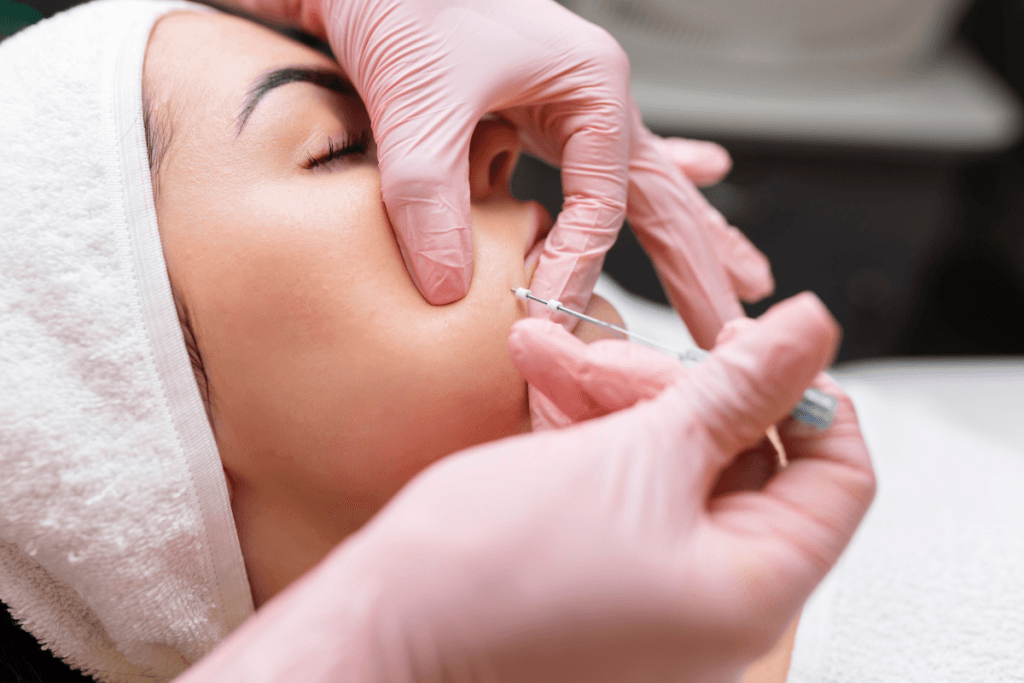
For clinics asking what are PDO threads and how they work in clinics safely, the short answer is this: PDO threads are absorbable polydioxanone sutures placed beneath the skin to provide temporary tissue support and, in selected cases, a modest lifting effect as the material gradually resorbs. In aesthetic practice they are used as a minimally invasive option for mild to moderate tissue laxity, not as a substitute for a surgical facelift. Safety depends on patient selection, anatomy, thread design, aseptic technique, clear consent, and consistent follow-up. A clinic that treats PDO threads as a workflow issue, not just a product choice, is usually better positioned to avoid preventable problems.
Key Takeaways
- PDO refers to the absorbable suture material, not one single treatment style.
- Lift, tension, and longevity vary by thread design, plane, and patient anatomy.
- Best candidates usually have mild to moderate laxity and realistic expectations.
- Common early effects include bruising, soreness, dimpling, and temporary asymmetry.
- Clinics need documented consent, verified product details, and a clear escalation plan.
What Are PDO Threads and How Do They Work?
PDO stands for polydioxanone, an absorbable suture material used in multiple medical settings. In aesthetics, absorbable PDO sutures are adapted into smooth, spiral, screw, or barbed designs that can support soft tissue, stimulate a controlled healing response, or create limited repositioning depending on the case. The phrase thread lift is convenient, but it can be misleading because the same material may be used for very different goals.
The effect is partly mechanical and partly biologic. A smooth or mono thread may act more like a scaffold with subtle support. A spiral or screw thread may provide more local structure in selected areas. A cog or barbed thread is designed to catch tissue and distribute tension along a planned vector. As the material breaks down over time, the surrounding tissue response may contribute to collagen remodeling, although the visible result varies and should not be presented as equivalent to surgery.
How threads stay in place
Threads stay in place through a combination of placement plane, tissue engagement, and early healing. Barbs or cogs can grip tissue immediately. Smooth threads rely more on precise positioning and a gradual fibrosis (scar-like tissue response) around the suture. If the vector is poorly planned, the tissue is too heavy, or aftercare is lax, the initial support can be lost sooner than expected.
In other words, the material matters less than the treatment plan. The same PDO family can be used quite differently in the midface, jawline, or neck, and thin crepey skin behaves differently from heavy, mobile tissue. Safe use starts with recognizing that PDO is a material platform, not a single guaranteed aesthetic outcome.
This supplier model is intended for licensed clinics and healthcare teams.
Thread Design Matters More Than the Headline Term
Not every PDO thread behaves the same way. When a clinic reviews a Threads Product Hub, the useful questions are practical: What is the thread geometry? Is it smooth, spiral, screw, or cogged? What are the needle or cannula specifications? Which areas and tissue planes does the manufacturer describe? The broad term PDO threads does not answer those points.
| Thread Style | Common Clinic Use | Main Trade-Off |
|---|---|---|
| Mono | Light support or scaffold-focused plans | Limited repositioning and often higher thread counts |
| Spiral or screw | Added local structure in selected areas | Can become palpable if placed too superficially |
| Cog or barbed | Mechanical lift and vector control | More tension-sensitive and more visible if poorly planned |
Small specification changes can alter performance. Length, gauge, barbing pattern, entry tool, and whether the product is intended for a needle or cannula approach all affect insertion feel, tension control, and visibility risk. That is why clinics should review each item at the SKU level rather than assuming that two products with similar marketing terms are clinically interchangeable.
Examples from real catalogues show the range. A Mono PDO Thread is not interchangeable with a Spiral PDO Thread or a Cog PDO Thread. More directional lift designs, such as Dimension 360 PDO Threads, may be chosen for different tissue engagement patterns. Naming conventions vary by brand, so clinics should verify the instructions for use, intended treatment area, and handling details for each SKU before standardizing stock.
Clinics should also resist extrapolating from before-and-after marketing images without matching the anatomy, number of threads, and treatment goal. A thread designed for support in one area may behave quite differently in another. Area selection, skin thickness, and vector planning all change the risk of visibility, palpability, and early relaxation.
That distinction matters in both counseling and complication review. A post-procedure irregularity after multiple smooth threads is not the same operational problem as dimpling or palpable tension after a barbed lift thread. Good documentation should record the thread type, vector, entry points, lot number, and the rationale for choosing that design.
Who Is Usually a Candidate and Where Do Threads Fit?
PDO threads generally fit patients with mild to moderate laxity, reasonable skin quality, and goals that match a limited, minimally invasive intervention. They may help when the issue is early descent or contour softening rather than major excess skin. The best screening questions are about tissue quality, vector, facial balance, and recovery expectations, not just age.
That is why questions such as Is 60 too old for a thread lift do not have a simple yes or no answer. Age alone is a weak screening tool. Some older patients with lighter tissues and realistic goals may be considered, while younger patients with heavier tissues, marked laxity, or poor skin quality may be poor candidates. Contraindications (reasons not to treat) and relative cautions can include active infection, broken skin at entry sites, significant inflammatory activity, impaired healing, unmanaged bleeding risk, or any history that makes later revision more complex. Product labeling and local protocol should guide the final screen.
Assessment should also include the patient’s tolerance for temporary irregularity and a modest result. Someone seeking a dramatic lower-face change after one minimally invasive visit may be technically treatable but still operationally unsuitable because the expectation gap is too large. Conservative case selection protects both patient trust and clinic workflow.
Where threads fit relative to fillers and surgery
Threads do not replace every other rejuvenation tool. Fillers mainly restore or redistribute volume. Threads aim to support or reposition tissue. Surgery addresses larger degrees of laxity and excess skin. A clinic already working from a structured plan, such as the framework in Facial Aesthetic Planning, is less likely to use threads as a one-size-fits-all answer. In practice, PDO threads often work best when the indication is narrow and the endpoint is conservative.
Combination planning matters. If volume loss is the main driver, a thread may not solve the visible concern. If laxity is advanced, surgery may still be the more logical referral pathway. The label nonsurgical facelift is better treated as shorthand than as a true equivalence claim.
Some surgeons are skeptical of thread lifts because results can be oversold, durability is limited, and poorly placed threads may create asymmetry, palpability, or scar tissue that complicates later dissection. That does not mean later facelift or neck lift surgery is impossible. It means accurate records, honest counseling, and restraint matter. If a patient may later seek surgery, clear documentation of thread type and placement can help the next treating team understand the anatomy they are inheriting.
Why it matters: Selection errors usually create more trouble than the PDO material itself.
Safety, Side Effects, and Complications
The short-term side effects of PDO threads are usually local and expected: bruising, swelling, tenderness, tightness, mild puckering, small entry-point irritation, and temporary asymmetry. These issues can be common in the early phase and do not automatically mean the procedure has failed. What matters is whether they improve as the tissue settles and whether the findings match the documented plan.
What should trigger closer review
Escalation is more appropriate when pain is disproportionate or worsening, asymmetry is increasing rather than settling, the thread becomes visible or extrudes, skin blanching or dusky color appears, or signs of infection develop. Clinics should also take persistent contour deformity, unusual sensory change, or prolonged tethering seriously. A problem that starts as minor dimpling can reflect poor vector choice, superficial placement, or excess tension rather than a simple cosmetic nuisance.
Poor candidates are often easier to identify by mismatch than by one single rule. A patient with very heavy tissue, marked lower-face or neck descent, severe photodamage, or expectations of a facelift-like change may simply be outside the useful range of a thread lift. Active infection, untreated nearby skin or dental infection, and any condition that raises concern about healing or infection control deserve extra caution or deferral. Local protocol and product labeling should drive the final decision.
The main disadvantages of thread lift treatment are also the main counseling points. Results are temporary. The lift is limited. Heavy tissue can overwhelm the vector. Volume loss may still need a different approach. And a marketed nonsurgical facelift can set the wrong expectation if the actual goal is modest support, not surgical repositioning. For clinics, safety is therefore as much about language and case selection as it is about sterile technique.
Products should come through vetted distributors and verified supply channels.
What to Expect During Placement, Recovery, and Longevity
A safe clinic process starts before the first entry point. Assessment usually includes medical history, treatment goals, photography, facial mapping, consent, and a review of alternatives. The procedure itself is commonly performed with local anaesthesia under aseptic technique. The clinician marks vectors, prepares the skin, places the selected threads in the planned plane, trims or secures the ends as required by the product, and reassesses symmetry before the patient leaves.
Recovery is usually described in phases rather than a fixed timeline. In the first several days, patients may notice soreness, swelling, bruising, tightness, and expressions that feel unusual. Over the following days to weeks, minor irregularities may soften as edema settles and the tissue adapts. Clinics usually advise patients to follow the product-specific aftercare instructions and to avoid pressure or exaggerated movement that could disturb the early result. Clear written aftercare reduces avoidable calls and mixed messages.
Follow-up should be structured enough to catch problems early. A brief early review can help distinguish normal swelling from superficial placement, excessive tension, or infection. Standardized photography at follow-up also gives the team a clearer basis for discussing whether the result is settling as expected or drifting away from the original vector plan.
Aftercare plans need to be specific enough for staff to repeat consistently. That includes who takes early concern calls, what symptoms trigger a same-day review, and how post-treatment photographs are filed. Clinics that promise a fixed recovery path for every case often create avoidable confusion because bruise burden, tenderness, and tissue settling are highly individual.
How long PDO threads last is a separate question from how long the cosmetic effect lasts. The material itself is absorbable. The visible result depends on thread design, tissue quality, treatment area, degree of laxity, and whether volume loss or deeper structural change is also present. In practice, longevity is often discussed in months rather than years, and highly promotional claims deserve caution. As interest in Safe Non-Invasive Cosmetic Procedures grows, expectation management remains one of the most important safety tools.
Quick tip: Standardize aftercare wording before the first case with any new thread SKU.
Clinic Workflow: Documentation, Product Review, and Follow-Up
If a clinic is adding or expanding threads, the operational work matters as much as the clinical concept. Stock review should cover instructions for use, needle or cannula configuration, intended treatment area, storage conditions, expiry control, and lot traceability. Training should align with the specific thread design rather than the category name alone. Clinics comparing broader options can review the editorial Threads Hub and wider trend context in 2025 Non-Surgical Aesthetic Treatments.
Procurement shortcuts are a common weak point. If a clinic substitutes a different geometry because it appears similar on the shelf, the handling characteristics and indication may change without the paperwork reflecting it. The safer approach is to keep source verification, product documents, and internal naming conventions aligned so the treatment room, inventory log, and consent record all refer to the same item.
- Define indication — separate laxity from volume loss or surgical-level descent.
- Capture baseline photos — keep lighting and angles consistent.
- Verify product data — confirm lot, expiry, IFU, and storage.
- Document the plan — area, vector, thread type, and rationale.
- Standardize consent — discuss temporary results and key complications.
- Set escalation rules — identify who reviews pain, extrusion, or infection.
- Record follow-up — note settling, adverse events, and next-step decisions.
If your clinic is new to threads, avoid assuming all SKUs share the same handling or intended depth. Even within one catalogue, the entry tool, length, thread count, and barbing pattern may differ. A tight workflow also supports later review if a patient needs retreatment, surgical referral, or an adverse-event discussion.
Documentation should stay usable after the day of treatment. If another clinician later reviews a complication, they should be able to identify the exact product, area, plane, vector, and post-procedure advice that were used. That level of detail also helps when a patient asks about repeat treatment, combination therapy, or future surgical referral.
Authoritative Sources
- Cleveland Clinic overview of thread lift expectations and complications
- FDA MedWatch safety information and adverse event reporting
PDO threads can be useful when the clinic goal is a modest, well-selected lift with disciplined documentation and follow-up. They are less helpful when volume loss, heavy tissue, or surgical-level laxity is the dominant issue. The safest practice is to match the thread design to the indication, keep expectations conservative, and record enough detail for any future review.
This content is for informational purposes only and is not a substitute for professional medical advice.