Aesthetic treatments for men usually focus on subtle refinement, skin quality, and stronger facial definition rather than visible transformation. For clinics, that means planning around anatomy, communication style, downtime tolerance, and repeatable documentation. The practical goal is not to create a separate service line for every male patient. It is to build consults and workflows that support natural-looking outcomes, clear risk discussions, and consistent product handling.
Men may ask for “looking less tired,” “sharpening the jaw,” or “softening angry lines.” Those phrases often map to neuromodulators, dermal fillers, skin resurfacing, hair restoration, body contouring, or sweat reduction services. Your role is to translate broad goals into staged options while staying within training, scope, and safety protocols.
Key Takeaways
- Start with the goal: define “natural” and “refreshed” in observable terms.
- Plan by anatomy: assess upper face, midface, jawline, neck, skin, and hair concerns separately.
- Sequence modalities: combine injectables, devices, and skincare only when timing supports safe follow-up.
- Document consistently: record photos, consent, treatment rationale, lot numbers, and aftercare.
- Control sourcing: use verified professional channels that match clinic procurement standards.
Aesthetic Treatments for Men in a Clinic Setting
Aesthetic treatments for men work best when clinics treat them as goal-based care plans, not a fixed list of procedures. The most common categories include expression-line management, facial contouring, skin rejuvenation, hair-related services, sweat treatment, and body or submental contouring. Each category has different consent needs, follow-up points, and complication planning.
Demand often centers on changes that colleagues or friends cannot easily identify. Many male patients want to preserve forehead movement, avoid an arched brow, keep a defined lower face, or improve texture without long visible downtime. Those preferences influence product choice, device scheduling, photography, and the language used during consent.
Search interest often frames these services as “best” or “top” treatments. Clinic planning should be more disciplined. A useful approach is to ask which concern is driving the visit, which anatomical finding supports that concern, and which modality can address it with the least ambiguity. That keeps the conversation clinical rather than trend-led.
Why it matters: Clear goal mapping reduces mismatched expectations and unnecessary revisions.
Consult Priorities: Goals, Masculine Features, and Risk Language
A male-focused consult should clarify the patient’s desired look before naming any product or procedure. Many men use direct, functional language. They may say they want to look less stressed, less tired, more defined, or more polished for work. Reflect that language, then connect it to anatomy and realistic endpoints.
“Masculine aesthetic” is not a single template. In practice, it often refers to preserving or enhancing traits such as a flatter brow position, stronger chin projection, defined mandibular angle, balanced nose profile, and skin that looks healthy without appearing over-treated. These preferences vary by age, facial structure, ethnicity, personal style, and occupational needs.
Risk communication should be direct and specific. Cover expected effects, alternatives, limits, bruising or swelling potential, vascular risk where relevant, device-related downtime, pigment risk in some skin types, and the clinic’s escalation pathway. Avoid language that implies any procedure can “take years off” in a guaranteed way. A better frame is “which concerns can be improved, which may need staging, and which may require referral.”
Use Goal-Based Language Before Procedure Names
Procedure-first language can make patients anchor on a brand or single technique. Goal-first language keeps the plan neutral. For example, “soften strong frown activity” is clearer than starting with a toxin brand. “Support chin and jaw balance” is more useful than promising a sharper jawline. “Improve texture and pores” is more precise than saying “laser” without context.
Documentation should capture the patient’s own words, your assessment, treatment options discussed, and the agreed endpoint. This is especially important when subtle change is the goal. Baseline photos and follow-up photos give staff a shared reference when patients notice small changes that are hard to describe.
Screen for Follow-Up Fit
Some men prefer fewer appointments, shorter visits, and minimal social downtime. That preference can help or hinder safe care depending on the plan. Before treatment, confirm whether the patient can attend follow-up, follow aftercare, report concerns promptly, and avoid activities that may conflict with the clinic’s post-care instructions.
A simple one-page plan can help staff and patients stay aligned. Include treatment regions, modality type, expected staging, follow-up windows, and who to contact for concerns. Policies vary, but the principle is consistent: reduce ambiguity before treatment begins.
Core Treatment Categories and How Clinics Position Them
Most aesthetic treatments for men fall into a few broad clinical categories. Clinics can explain these categories in plain language while keeping the underlying consent and safety framework professional. This helps patients understand why a plan may include more than one modality.
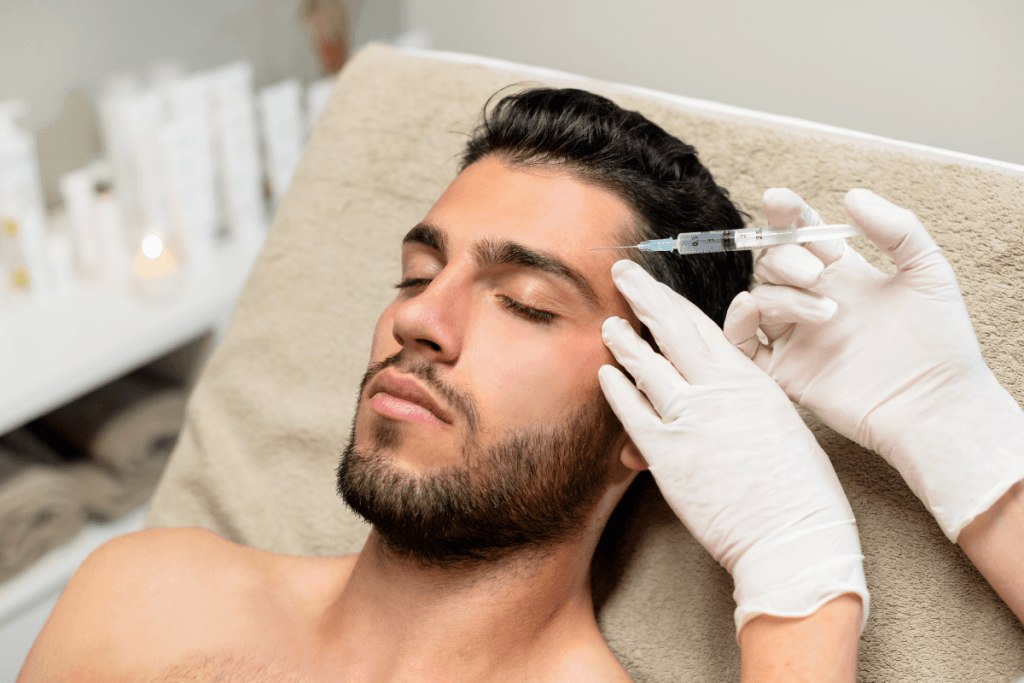
Neuromodulators reduce targeted muscle activity and may soften dynamic lines caused by repeated expression. In male patients, planning often focuses on avoiding over-relaxation and preserving a natural brow position. For a broader clinic-facing review of toxin options, see Botulinum Toxin Injections.
Dermal fillers can support contour, volume, or proportion when anatomy and candidacy fit. Men frequently ask about chin, jawline, under-eye, or nose-related refinements. These requests require careful vascular-risk awareness, product selection by tissue plane and region, and conservative staging. For a men-specific discussion, review Dermal Fillers for Men.
Biostimulatory injectables support collagen-related goals over staged visits. They are often discussed when patients want gradual structural support or skin-quality improvement rather than immediate volume change. Energy-based devices, chemical peels, microneedling, and radiofrequency microneedling may target texture, scars, laxity, or pigment concerns when patient selection and skin type screening support use.
Hair services and body-focused requests also belong in many men’s aesthetics menus. Clinics may see interest in platelet-rich plasma for hair-related services, laser hair reduction, body contouring devices, submental fullness treatment, or hyperhidrosis (excess sweating) management. Each area needs its own candidacy screen and outcome limits.
| Category | Common male patient goal | Clinic planning point |
|---|---|---|
| Neuromodulators | Soften frown lines or forehead movement | Map muscle activity and avoid unwanted brow change |
| Dermal fillers | Support chin, jawline, or selected volume concerns | Stage treatment and document vascular-risk counseling |
| Biostimulatory injectables | Improve gradual structure or skin support | Set expectations around staged assessment and follow-up |
| Energy-based devices | Improve texture, pigment, pores, or laxity | Screen skin type, downtime tolerance, and aftercare fit |
| Hair and body services | Address hair density, grooming, sweat, or contour concerns | Use separate protocols for candidacy and outcome tracking |
For broader planning across non-surgical services, the Non-Surgical Aesthetic Treatments update can help teams compare emerging demand areas. Clinics building a full consult pathway may also find Facial Aesthetic Planning useful for workflow structure.
High-Request Zones: Upper Face, Jawline, Under-Eye, and Skin
Male aesthetic requests often cluster around a small number of regions. The upper face, lower face, under-eye area, and skin surface usually drive the first consult. Treat each region as a separate assessment, even when the patient describes the concern in one phrase.
Upper-face requests often involve forehead lines, glabellar lines, or crow’s feet. Patients may ask for “masculine Botox” or “Brotox,” but the clinical issue is muscle activity and expression balance. The plan should account for baseline brow position, frontalis compensation, eyelid heaviness, and how much movement the patient wants to keep.
Jawline and chin requests can involve several different anatomical issues. A patient may want a sharper jawline because of weak chin projection, soft tissue fullness, masseter prominence, skin laxity, or submental fat. These are not interchangeable. The treatment path could involve filler, neuromodulator use in selected contexts, device-based tightening, fat-reduction services, or referral when surgical evaluation is more appropriate.
Under-eye concerns need especially careful classification. “Dark circles” may reflect pigment, hollowing, visible vessels, edema, skin laxity, or lower-lid bags. Filling every under-eye complaint can create poor outcomes. Separate pigment, volume, fluid tendency, and lid support before discussing options.
Skin-quality requests are common, even when patients do not use cosmetic language. Men may ask about acne scars, pores, rough texture, sun damage, redness, or shaving irritation. Framing care as skin health or skin performance can help patients understand why home skincare, resurfacing, or collagen-support procedures may complement injectables.
Safety, Candidacy, and Outcome Boundaries
Safety planning starts before the procedure. Clinics should screen for medical history, prior procedures, allergies, medications or supplements relevant to bleeding risk, active skin infection, immune or healing concerns, and procedure-specific contraindications. The level of detail depends on the modality, but the process should be consistent.
Patients also need clear boundaries around outcomes. No non-surgical procedure reliably produces the same effect as surgery. No injectable or device treatment can guarantee a set number of years of visible rejuvenation. Conservative phrasing protects the consent process and keeps expectations realistic.
For injectables, teams should maintain adverse-event protocols, product identification records, and escalation pathways. For devices, staff should follow device-specific training, parameters, skin-type screening, and post-procedure instructions. If a requested change falls outside clinic scope, referral is part of safe care.
Quick tip: Use the same photo angles for consults, treatment visits, and follow-up reviews.
Clinic teams should also avoid overcorrecting features that contribute to a patient’s identity. In men, this may mean preserving a strong brow, avoiding excessive midface fullness, and keeping jawline work proportional to the full face. Natural results depend on proportion, not one isolated feature.
Procurement and Workflow Controls for Practice Teams
Operational discipline helps clinics scale aesthetic treatments for men without relying on improvised staff decisions. The basics include intake consistency, consent forms, photography, treatment mapping, product logs, aftercare instructions, and follow-up documentation. These steps protect continuity when multiple clinicians or locations are involved.
Procurement should align with professional verification and inventory controls. MedWholesaleSupplies serves licensed clinics and healthcare professionals, with brand-name medical products sourced through vetted distributors and verified supply channels. That type of sourcing context matters when clinics need clear product records, lot tracking, and consistent receiving processes.
Product examples may appear in men’s treatment plans depending on clinic protocols and training. Some practices evaluate biostimulatory options such as Sculptra 2 Vials or neuromodulator products such as Innotox 100U. Product selection should follow scope, labeling, clinician training, storage requirements, and complication readiness rather than social trends.
Clinic Workflow Snapshot
- Verify credentials: keep licensure and account requirements current.
- Document goals: record patient language and clinical assessment.
- Capture photos: standardize lighting, angles, and timing.
- Record identifiers: log product name, lot, expiration, and location.
- Store correctly: follow the applicable instructions for use.
- Track follow-up: note outcomes, concerns, and next planned review.
- Define escalation: assign responsibility for urgent post-treatment calls.
When teams expand inventory, it can help to separate stock by use case rather than by popularity. For example, one set may support expression management, another contour work, and another skin-quality or collagen-support protocols. The exact model depends on clinic scope and supplier documentation.
For demand planning, Non-Invasive Cosmetic Procedures provides context on why lower-downtime services remain central to many practices. Use trend information as a planning input, not as a substitute for training or candidacy screening.
Authoritative Sources
For labeling, procedural statistics, and professional patient-safety context, consult primary or major medical sources:
- FDA Drugs@FDA database for approved drug labeling
- American Academy of Dermatology cosmetic procedure information
- American Society of Plastic Surgeons procedural statistics
For clinics, the strongest men’s aesthetics programs are not built around one product or one trend. They combine goal-led consults, anatomical assessment, conservative staging, safety planning, and reliable procurement records. That structure helps staff deliver consistent care while keeping patient expectations grounded.
This content is for informational purposes only and is not a substitute for professional medical advice.