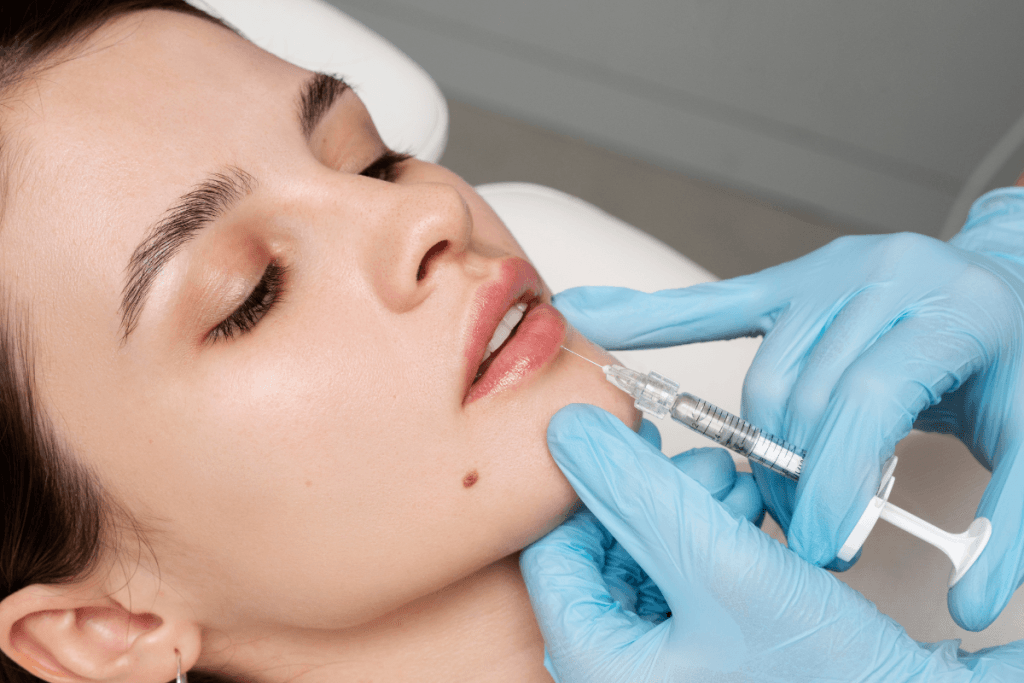
The main types of lip fillers include hyaluronic acid gels, less common non-HA fillers, autologous fat transfer, and permanent materials. In most aesthetic clinics, hyaluronic acid remains the practical core because it offers a broad range of handling profiles and may be reversible when clinically appropriate. For licensed providers, the real decision is not simply which brand to stock. It is how product class, gel behavior, patient anatomy, documentation, and procurement controls fit the same workflow.
This clinic-facing comparison keeps the focus on selection logic, consent language, photo standards, and inventory discipline. For a broader starting point, see Lip Augmentation Basics.
Key Takeaways
- Start with material class, reversibility, and safety planning.
- Match gel behavior to lip anatomy and shape goals.
- Use consistent consult language, photos, and chart notes.
- Limit substitutions by mapping products to defined use cases.
- Verify sourcing, lot numbers, expiry, and storage records.
What Lip Fillers Are in Clinic Practice
Lip fillers are injectable soft-tissue products used to adjust volume, contour, border definition, and hydration effect in the lips and perioral area. Patients often describe a desired look. Clinics must translate that request into a safe, documented product-and-technique plan.
Most modern lip filler workflows center on hyaluronic acid (HA), a water-binding glycosaminoglycan found naturally in connective tissue. HA fillers are crosslinked gels. Their firmness, spread, cohesivity, and integration vary by product family and intended use. These differences affect how a filler supports the vermilion border, blends into lip body tissue, or behaves during speech and expression.
Other approaches exist, including collagen-based products, biostimulatory materials, fat transfer, and permanent fillers. They are not interchangeable with HA gels. Each changes the consent discussion, reversibility assumptions, follow-up planning, and complication pathway.
Why it matters: A shared classification helps reduce inconsistent product selection across providers.
Types of Lip Fillers and How They Compare
The practical way to compare types of lip fillers is to start with material class, then narrow by tissue behavior. This avoids a brand-first discussion and helps teams explain why two products in the same broad category may still perform differently.
| Filler Type | What It Means | Common Lip Context | Clinic Workflow Note |
|---|---|---|---|
| Hyaluronic acid gel | Crosslinked HA designed for soft-tissue injection | Border support, contour, hydration effect, and volume | Often the easiest class to standardize across providers |
| Collagen-based filler | Collagen material used for soft-tissue augmentation | Less common in many current lip workflows | Requires product-specific consent and history review |
| Non-HA biostimulator | Material intended to stimulate tissue response over time | More often discussed for facial structure than lips | Follow-up expectations and reversibility differ from HA |
| Autologous fat transfer | Processed patient adipose tissue used for augmentation | Volume-focused lip enhancement in selected cases | Procedure workflow differs from syringe-based filler visits |
| Permanent filler | Non-resorbable material | Generally approached with caution in mobile lip tissue | Long-term management can be more complex |
HA gels are the dominant category because they cover many common lip goals. A clinic may still stock more than one HA option. A softer, more spreadable gel may support subtle contouring, while a more supportive gel may be selected when projection or shape maintenance is the priority. For a broader class-level comparison across facial areas, review Types Of Dermal Fillers.
Product names can help with inventory planning, but they should not replace clinical assessment. Brand families often include several gel designs. For example, a clinic may evaluate a lip-labeled HA product differently from a firmer filler intended for deeper structural support. If your team compares popular options, keep the discussion tied to handling, anatomy, labeling, and provider familiarity rather than social-media trends.
How Clinics Match Filler Behavior to Lip Goals
Clinics match lip filler to the requested shape by assessing tissue quality, baseline anatomy, and the specific area being treated. The same volume can look subtle in one patient and prominent in another. That is why a simple “1 mL result” comparison rarely gives reliable expectations.
Useful goal categories include vermilion border definition, cupid’s bow refinement, central tubercle support, overall soft volume, hydration effect, commissure support, and correction of visible asymmetry. Each goal may require a different plane, injection pattern, and gel behavior. This is where types of lip fillers becomes a practical internal decision tool rather than a consumer-facing list.
Shape goals that affect product choice
Border-focused treatment usually prioritizes precision, smooth integration, and conservative volume. Lip body augmentation often requires a different balance of softness and support. Perioral fine lines may need separate assessment because lines can reflect skin quality, muscle movement, photodamage, or volume loss. Treating every concern as a lip volume problem can create dissatisfaction.
Thin lips also require careful language. “Thin” may mean low baseline volume, limited vermilion show, or a longer cutaneous lip that changes proportion. Older patients may prioritize border support and proportional restoration. Male patients may request conservative volume with minimal feminization. For terminology and technique context, see Lip Augmentation Techniques.
Natural-looking results and realistic limits
A natural-looking outcome usually comes from proportion, restraint, and tissue-appropriate product selection. It does not come from a single filler type alone. Baseline anatomy, prior filler, dental support, lip competence, and swelling response can all change the visible result.
Reference images can be useful, but they should not drive the plan by themselves. Ask patients to describe whether they want more border definition, more central volume, improved symmetry, or a softer hydrated look. Then document anatomy-based limits in plain language.
Safety, Reversibility, and Patient History Checks
Safety planning begins before product selection. Clinics should document medical history, prior aesthetic procedures, allergies, current medications when relevant, autoimmune conditions, pregnancy or lactation status when applicable, and any history of adverse reactions. Local laws, product labeling, and professional standards should guide final eligibility and consent.
HA fillers may be dissolved with hyaluronidase in many clinical settings, but this is not a casual feature. Use depends on product, clinical scenario, training, protocols, and local requirements. Non-HA and permanent materials can require different management pathways. That difference should be reflected in consent forms and adverse-event plans.
Patients may ask whether a condition such as Hashimoto’s thyroiditis affects filler eligibility. The answer is not a universal yes or no. Providers should assess disease stability, medications, immune history, prior reactions, and labeling or guideline considerations. When uncertainty remains, coordinate with the patient’s treating clinician before proceeding.
Escalation criteria should be visible to the care team. Pain out of proportion, blanching, dusky discoloration, ulceration, neurologic symptoms, or visual symptoms require urgent clinical assessment under the clinic’s emergency protocol. Staff should know who to contact, what to document, and how to preserve product and lot information.
Before-and-After Planning and Documentation
Before-and-after images should support clinical assessment, not promise a result. The best comparisons use consistent lighting, distance, focal length, head position, expression, and lip posture. Capture baseline asymmetry, scars, prior filler history when known, and any features that may affect expectations.
Volume documentation also needs context. A patient may ask about “1 mL before and after,” but syringe volume does not predict the final appearance. Distribution across the border and body, edema, baseline lip size, and product behavior all matter. For counseling on duration and follow-up variables, see Lip Filler Duration.
Quick tip: Use the same photo protocol before every treatment and review visit.
Chart notes should include the product name, lot number, expiry, treatment map, injection areas, relevant baseline findings, tolerance, and follow-up plan. If substitutions occur, document why. This is especially important in multi-provider or multi-location practices where inventory changes can affect consistency.
Clinics should also standardize language for early swelling, bruising, asymmetry, and palpable areas. Neutral descriptions are safer than definitive conclusions when findings may change during early healing. Re-photograph when clinically useful, and separate cosmetic dissatisfaction from urgent safety findings.
Inventory and Procurement Considerations
Procurement decisions affect clinical consistency. If stockouts force last-minute substitutions, providers may need to change counseling language, technique assumptions, and documentation fields. A limited formulary can reduce variability when each product has a defined role.
MedWholesaleSupplies serves licensed clinics and healthcare professionals with brand-name medical products sourced through vetted distribution channels. In a clinic workflow, that sourcing context matters because product verification, lot traceability, and access controls support both patient safety and operational consistency.
Some teams evaluate specific HA products, such as Restylane Kysse, Juvederm Volbella, or Belotero Lips Shape, within a broader HA protocol. Product pages can support item-level review, but final use should follow labeling, clinician training, and clinic policy.
Clinic procurement checklist
- Vendor verification: confirm permitted professional access.
- Product reconciliation: match item, lot, and expiry.
- Storage controls: follow manufacturer instructions.
- Access limits: restrict handling to authorized staff.
- Chart fields: capture product, lot, and site map.
- Substitution notes: record reason and counseling changes.
- Adverse-event pathway: keep contacts and steps accessible.
For broader browsing, the Dermal Fillers Collection can help teams review available product categories. Educational planning can continue through the Dermal Fillers Hub, which groups related filler content.
Common Planning Errors That Affect Satisfaction
Many disappointing outcomes come from mismatched expectations rather than one isolated technical issue. The first risk is failing to define whether the patient wants border, body, hydration effect, or symmetry correction. Each goal changes product choice and documentation.
A second error is over-reliance on celebrity or influencer references. Patients may ask what filler a public figure used, but those reports are often unverified and clinically irrelevant. Anatomy, prior procedures, photo editing, makeup, and lighting can all change the perceived result.
A third issue is judging early swelling as the final outcome. Staff should explain normal post-procedure variability within the clinic’s approved counseling language, while still preserving clear escalation instructions for concerning symptoms. This balance helps avoid both underreaction and unnecessary alarm.
Finally, do not ignore historic filler. Unknown prior product, uncertain injection plane, or older permanent material can change risk assessment. If the history is unclear, document that uncertainty and adjust the plan according to clinic protocol.
Authoritative Sources
Use regulator and professional-organization materials when updating consent language, safety protocols, or patient education templates.
- FDA dermal filler safety information
- American Society of Plastic Surgeons dermal filler overview
- American Board of Cosmetic Surgery lip enhancement overview
In practice, the best comparison of types of lip fillers is structured and clinic-specific. Define the material class, map gel behavior to anatomy, document expectations, and verify every product through the procurement workflow. That approach keeps selection decisions clearer for providers and more consistent across the practice.
This content is for informational purposes only and is not a substitute for professional medical advice.