
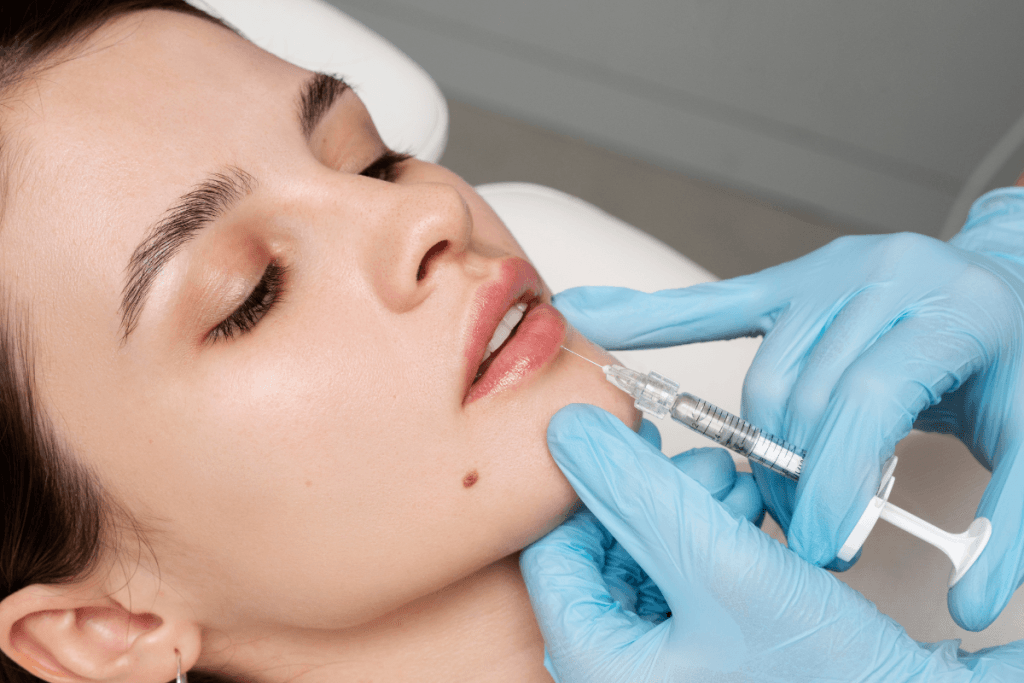
Lip augmentation decisions often get reduced to “brand preference,” but clinics manage more variables. Product class, gel behavior, patient anatomy, and documentation standards all matter. This guide frames lip augmentation basics in a clinic-operations context, with a practical way to evaluate types of lip fillers. It is written for licensed healthcare professionals who need consistent selection, consent, and inventory processes.
Plan for standardization early. Your consult language, photo protocol, and sourcing checks should align with your complication pathway.
Key Takeaways
- Start with material class and reversibility.
- Match gel behavior to tissue and goals.
- Standardize photography and charting language.
- Use a procurement checklist for lot traceability.
- Build guardrails for “before-and-after” interpretation.
What Lip Fillers Are (And Why Clinics Standardize Them)
Lip fillers are injectable soft-tissue augmentation products used to modify volume, contour, and hydration. In day-to-day practice, they also function as a documentation and risk-management problem. The same “lip enhancement” request can mean border definition, central volume, correction of age-related thinning, or asymmetry management. A standardized framework keeps consult notes and product selection consistent across providers.
Most lip filler conversations center on hyaluronic acid (HA) gels. HA is a glycosaminoglycan (water-binding sugar polymer) found in connective tissue. HA-based gels are widely used because they can be adjusted with technique and, in many settings, may be reversible with hyaluronidase (per labeling and local protocols). Non-HA options exist, but they usually bring different tradeoffs in reversibility, palpability, and complication management.
MedWholesaleSupplies works with verified healthcare customers and distributes brand-name medical products through vetted channels.
Key properties that affect clinical “feel” and workflow
Product selection is not only about which brand is popular. It is about how a gel behaves under dynamic movement. Lips are high-motion tissue with thin skin and a visible vermilion border. That makes minor irregularities more noticeable. Rheology (how a material flows and resists deformation) influences projection, spread, and the risk of lumpiness. Crosslinking level and particle structure also affect cohesivity (how well the gel holds together).
Operationally, these same properties influence how you document expected outcomes. A “definition-first” plan is different from a “volume-first” plan. If your clinic stocks multiple options, align them to repeatable use cases. For broader context on filler classes used across the face, see Types Of Dermal Fillers For Facial Volume and the Dermal Fillers category hub.
Types of Lip Fillers for Clinic Decision-Making
In practice, your selection framework should start with material class, then narrow to handling and patient factors. Most clinics keep HA gels as the core inventory because they cover a wide range of indications in the perioral region. Other approaches may be considered in specific contexts, but they can change your consent language and complication planning.
HA gels are the most common in lip augmentation workflows. They are generally selected for their balance of softness, tissue integration, and the option to dissolve when clinically appropriate. Clinics that stock only HA products often still carry more than one gel behavior to support different goals, such as border refinement versus body volume. To browse HA-focused inventory groupings, refer to Hyaluronic Acid Fillers.
Comparison Factors (Simple Chart)
| Category | What it is | Common lip-related use cases | Operational note |
|---|---|---|---|
| Hyaluronic acid gel | Crosslinked HA designed for soft tissues | Contour, hydration effect, volume, border support | Typically simplest to standardize across providers |
| Non-HA biostimulator | Materials that stimulate collagen over time | Often used more for facial structure than lips | Different counseling and follow-up expectations |
| Autologous fat transfer | Patient’s own processed adipose tissue | Volume-focused augmentation in select patients | Procedure workflow differs from syringe-based fillers |
| Permanent fillers | Non-resorbable materials | Generally avoided for lips in many practices | Complication management can be complex |
Why it matters: A shared classification reduces inconsistent consult language and charting.
Brand families (for example, Juvéderm, Restylane, Belotero, and others) may offer multiple HA gels that differ by cohesivity and lift. Clinics often compare a “soft, spreadable” option for subtle enhancement against a “more supportive” option for projection. For a brand-to-brand overview that stays high-level, see Restylane Vs Juvederm and Hyaluronic Acid Vs Non-Hyaluronic Acid Fillers.
Matching Product Behavior to Lip Anatomy and Shape Goals
Patients rarely request a rheology profile. They ask for shapes. You still need to translate that request into a product-and-technique plan. Useful “goal buckets” include: vermilion border definition, cupid’s bow enhancement, central tubercle support, overall hydration/softening, and commissure support. The plan changes again with age-related changes like perioral rhytids (fine lines) and philtral column flattening.
A simple way to stay consistent is to map shape goals to tissue planes and gel behavior. Softer gels often suit superficial placement and subtle contour work. More supportive gels may be used when projection and structural support are priorities. Your clinic can frame this as an internal decision tool rather than a marketing promise. That internal mapping is often where types of lip fillers becomes a practical, repeatable concept.
Thin lips, older lips, and male patients: how the goal shifts
“Thin lips” can mean low baseline volume, limited vermilion show, or a naturally long cutaneous lip. Older patients may prioritize border support and proportion more than absolute volume. They also may have increased visibility of perioral lines, which can change product selection and the amount of “acceptable” swelling during early healing. Male patients commonly request minimal feminization, with more conservative emphasis on central volume and symmetry.
In all groups, avoid over-reliance on reference images. Use standardized consult prompts: desired change, tolerance for swelling, and whether the patient values sharp border definition or a softer transition. For technique-level discussion and terminology, the clinical overview in The Art And Science Of Lip Augmentation can help align staff language.
Before-and-After Planning: Photos, “1 mL” Expectations, and Notes
“Before and after” is a clinical tool, not a promise. The most useful photos are consistent in lighting, head position, facial relaxation, and lip posture. Train staff to capture front and oblique views, with a neutral expression. Document product, lot number, injection plan summary, and immediate tolerance notes. Record any baseline asymmetry and prior procedures, including historic filler if known.
Patients frequently ask about “1 mL before and after.” Treat volume numbers as context, not as a guarantee. Outcomes depend on starting anatomy, edema, and distribution across border and body. A “small” volume can look dramatic on thin lips, while it can look subtle on larger lips. If you need a clinic-facing overview of what affects duration and follow-up intervals, use How Long Do Lip Fillers Last as a reference framework for counseling points.
Quick tip: Use the same camera distance and focal length every time.
Also plan how your clinic interprets complications in photos. Lumps, asymmetry, and bruising can be transient. Set internal standards for when you re-photograph and when a provider re-check is indicated. Keep the language neutral in charts, and avoid definitive statements that are not supported by exam findings.
Common Pitfalls That Drive Dissatisfaction (Even With “Good” Technique)
Many negative “after” results trace back to planning and documentation gaps, not a single technical error. Use the list below in staff training and pre-injection time-outs. It also helps with consistent messaging when patients reference social-media trends.
- Goal mismatch: border vs body not clarified
- Photo inconsistency: lighting and posture changed
- Baseline not charted: asymmetry and scars missed
- Swelling misread: early edema judged as outcome
- Over-reliance on images: anatomy constraints ignored
- Unclear product history: prior filler not verified
When reviewing complaints like “lip filler before and after bad,” keep your internal analysis structured. Separate appearance issues (shape, projection, symmetry) from safety issues (pain, blanching, ulceration, vision symptoms). Your escalation pathway should be written, accessible, and practiced. This is another reason clinics maintain a standardized approach to types of lip fillers across providers and locations.
Procurement, Verification, and a Clinic Workflow Checklist
Procurement decisions affect clinical consistency. Stockouts can push last-minute substitutions, which complicate counseling and “expected feel.” Build an inventory list that matches your most common shape goals. Keep a small number of options, but cover distinct handling profiles. Many practices standardize around a few HA gels and document when substitutions occur.
For example, some clinics evaluate product families such as Restylane Kysse Listing or Juvederm Volbella Listing within an HA-only protocol. If you compare multiple brands, keep the comparison focused on operational fit and handling, not marketing claims. For broader inspiration on how clinics talk about “natural” outcomes, you can review Best Lip Fillers 2025 and extract only the clinically relevant descriptors.
MedWholesaleSupplies supplies products to licensed clinics and healthcare professionals, with customer verification steps.
If you are building multi-site supply reliability, confirm whether your supplier supports US distribution with clear lot traceability. Your internal policy should specify how to document lot numbers, expiration dates, and any temperature indicators provided by the manufacturer.
Clinic procurement checklist (non-clinical)
- Vendor vetting: verify authorized sourcing
- Receipt checks: match lot and expiry
- Storage log: follow manufacturer instructions
- Access control: restrict to licensed staff
- Chart fields: product, lot, site map
- Adverse event plan: escalation contacts documented
- Waste handling: follow local requirements
Clinic workflow snapshot
- Verify account credentials and permitted purchasing.
- Document product criteria for each use case.
- Receive shipment and reconcile packing records.
- Store per labeling; log excursions if applicable.
- Dispense for procedure; record lot to patient chart.
- Track outcomes and adverse events for QA review.
MedWholesaleSupplies sources authentic, brand-name medical products through screened distribution partners.
Standardization also helps with training. If your clinic expands, a limited formulary reduces learning curves and variability. That approach works best when you align the formulary to consult categories and photo standards, then audit charts periodically. If you rely on reliable US logistics, still treat each delivery as a verification event and document discrepancies.
Authoritative Sources
Use primary sources when you update protocols or consent language. These links support general safety, regulation, and labeling concepts.
- FDA overview of dermal fillers and key safety points
- American Academy of Dermatology filler safety overview
- American Society of Plastic Surgeons dermal filler overview
Further reading on this site: Aesthetic Treatments For Beautiful Lips and Aliaxin LV Lips Volume Guide.
This content is for informational purposes only and is not a substitute for professional medical advice.