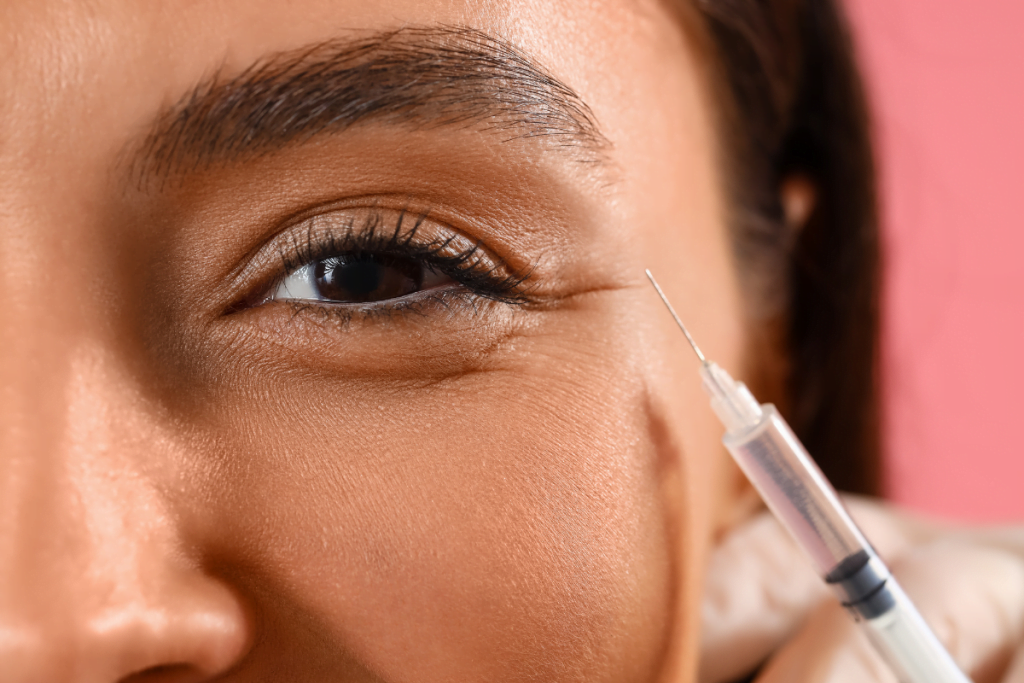
Radiesse under eyes is a high-caution, often off-label consideration rather than a routine tear trough choice. The under-eye area has thin skin, complex vascular anatomy, and limited tolerance for swelling or contour error. For clinics, the key question is not whether calcium hydroxylapatite can add structure. It is whether the patient, anatomy, consent process, and complication plan support that choice.
Patients may ask for it after seeing before-and-after images, reading forums, or comparing collagen-stimulating fillers. Your role is to separate marketing language from clinical suitability. Under-eye hollowing, eye bags, pigment, laxity, and midface volume loss can look similar in photos, but they need different plans.
Key Takeaways
- Confirm the driver: hollowing, edema, pigment, laxity, or fat prolapse.
- Check labeling: periorbital use may be off-label by product and jurisdiction.
- Plan reversibility: CaHA lacks a simple HA-style enzymatic reversal pathway.
- Standardize photos: lighting, angles, expression, and timepoints matter.
- Document sourcing: record product, lot, expiry, consent, and follow-up.
MedWholesaleSupplies serves licensed clinics and healthcare professionals, so this article frames the topic around clinical workflow, sourcing discipline, and risk communication rather than patient self-selection.
Can Clinics Use Radiesse Under Eyes?
Clinics may encounter requests for Radiesse under eyes, but the periorbital region demands conservative evaluation. Radiesse is a calcium hydroxylapatite (CaHA) filler class product. CaHA products are often discussed for structural support and collagen biostimulation, yet under-eye placement may fall outside labeled indications depending on the market and exact product label.
That distinction matters. Off-label use is not unusual in aesthetic medicine, but it raises the documentation burden. Clinics should confirm local labeling, injector training, consent language, adverse event planning, and professional standards before adding any periorbital protocol. Avoid reducing the discussion to brand preference.
The under-eye region also magnifies small issues. Mild edema can look prominent. A small contour irregularity can cast a shadow. Thin lower-lid skin may reveal product texture. These factors explain why many clinics consider hyaluronic acid (HA) fillers first for selected tear trough cases, especially when adjustability and potential enzymatic reversal are important.
For a broader review of CaHA behavior, see Calcium Hydroxylapatite Filler. Clinics comparing collagen-stimulating categories can also review Sculptra vs Radiesse.
Separate Tear Trough Hollowing From Eye Bags
Under-eye complaints are rarely one diagnosis. “Dark circles” may mean pigment, vascular show-through, or shadowing from a tear trough depression. “Bags” may mean lower-lid fat herniation, fluid retention, or a sharp lid-cheek transition. Adding volume to the wrong problem can worsen the appearance.
Start with anatomy and pattern recognition. Evaluate the lower lid, orbital rim, midface support, skin quality, and facial movement. A patient with midface descent may appear hollow under the eyes because cheek support has changed. Another patient may have true fat prolapse, where injectable volume is not the primary answer.
Use plain language in the chart alongside clinical terms. For example, note whether the visible concern is shadow, depression, puffiness, discoloration, or skin crepiness. Then add the clinical descriptor, such as tear trough deformity, midface volume loss, dermatochalasis, pigmentary change, or lower-lid fat prominence.
Patients often ask about creams, “Korean eye bag treatments,” skin boosters, or filler after seeing social media results. Topicals may improve hydration or pigment appearance in some cases, but they do not correct structural volume loss. Skin-quality injectables may suit crepey texture better than deep hollowing, depending on training and local approvals.
Why it matters: The same under-eye complaint can require volume support, skin treatment, observation, or surgical referral.
Product Choice: Structure, Reversibility, and Tissue Behavior
Product selection for the tear trough should follow anatomy, not popularity. Radiesse under eyes discussions usually center on collagen stimulation and support. In practice, clinics also need to weigh reversibility, swelling behavior, placement depth, visibility risk, and follow-up capacity.
HA fillers remain a common reference point because many clinicians value adjustability in this region. They still carry risks, including edema, Tyndall effect (a bluish hue from superficial placement), lumpiness, and vascular complications. CaHA products may provide structural support in selected facial areas, but they do not offer the same straightforward hyaluronidase pathway used for many HA-related corrections.
Poly-L-lactic acid and other collagen-stimulating options introduce different planning issues. Results may appear gradually, protocols are staged, and reversibility is limited. Skin boosters and eye-focused injectable products may be considered when texture or hydration is the primary concern rather than a clear volume deficit.
For HA-oriented under-eye planning, see Under-Eye Filler Duration. If your clinic needs a browseable category for broader filler education, use the Dermal Fillers Category.
Practical comparison points
- Primary driver: hollow, puffiness, pigment, or laxity.
- Reversal pathway: possible HA reversal versus limited non-HA options.
- Skin thickness: higher visibility risk in thin lower-lid skin.
- Edema tendency: history of fluid retention or malar swelling.
- Follow-up burden: staged visits, photo review, and patient contacts.
When patient questions include specific product names such as Restylane Eyelight or Radiesse, keep the conversation anchored to indication, anatomy, and local labeling. Product pages can support internal procurement alignment, but they should not replace clinical protocol review. Relevant examples include Radiesse 1.5 mL and Restylane Eyelight.
Safety Risks and Consent Language
Safety planning should be explicit before any periorbital injectable treatment. The lower eyelid and tear trough sit near important vascular structures, and complications can carry aesthetic and functional consequences. Clinics should avoid casual language that makes the area sound routine.
Expected injection-site effects may include swelling, bruising, tenderness, redness, and temporary asymmetry. More concerning issues include persistent edema, visible irregularity, nodules, skin color change, vascular compromise, infection, and visual symptoms. Risk profiles vary by product, technique, anatomy, and patient factors.
Consent should state whether the intended use is off-label in your jurisdiction. It should also explain that CaHA products are not reversed in the same way as HA gels. Patients should understand the expected follow-up plan, photo requirements, aftercare boundaries, and symptoms that need urgent evaluation.
Staff should treat severe pain, skin blanching or dusky color change, coolness, progressive swelling, neurologic symptoms, or visual changes as time-sensitive. The goal is not to diagnose by phone. It is to move the patient quickly into the clinic’s emergency assessment or referral pathway.
Quick tip: Keep escalation contacts current and rehearse rare-event workflows before offering high-risk zones.
Before-and-After Reviews Need Clinical Context
Before-and-after images can help patients describe goals, but they are weak evidence without context. Searches for Radiesse under eyes before and after often omit product amount, injection plane, lighting, lens distance, timepoint, and concurrent procedures. Reviews may also blend true complications with expectation mismatch.
Build a photo protocol that protects both patient communication and clinical review. Use consistent lighting, background, camera distance, and lens settings. Capture neutral expression, mild smile, frontal view, and oblique views. Lower-lid contours change with orbicularis movement, head position, fatigue, and fluid shifts.
Chart what else changed between image sets. Weight change, skincare changes, sleep disruption, allergies, illness, and other treatments can affect the lower eyelid. Save original files when possible, not only cropped or filtered exports.
When your clinic uses images for education, label them carefully. Include the timepoint and disclose combined treatments when applicable. Avoid presenting a single image pair as proof of predictable outcomes, especially in a zone where lighting can exaggerate or hide shadows.
Clinic Workflow and Sourcing Checks
Under-eye treatments create more operational load than many facial zones. They require better intake, more precise photography, careful consent, and clear follow-up. If your clinic is evaluating Radiesse under eyes, review workflow capacity before adding it to service menus.
Documentation checklist
- Credential status: confirm authorized prescriber and injector roles.
- Label review: document indication status and relevant cautions.
- Anatomy notes: record hollowing, edema, laxity, pigment, and midface support.
- Photo protocol: store standardized views and consent permissions.
- Product record: capture lot, expiry, and exact product used.
- Aftercare plan: list expected effects and urgent symptoms.
- Escalation route: define referral and emergency contacts.
Procurement should support traceability. MedWholesaleSupplies focuses on brand-name medical products sourced through vetted distributors and verified supply channels for licensed clinics. That does not replace local compliance review, but it helps procurement teams keep product sourcing separate from social media-driven product requests.
If your protocol includes eye-focused skin-quality options, review the specific product label and training requirements. For internal navigation, clinics may compare eye-area products such as Jalupro Young Eye with broader collagen-support resources such as Radiesse Collagen Support. Use product pages as sourcing references, not as treatment algorithms.
Cost Conversations Without Overpromising
Patients often ask how much under-eye filler costs before they understand the plan. Clinics should avoid quoting generic online ranges as if they apply to every case. Periorbital cost depends on assessment time, product class, treatment staging, follow-up, photography, and the clinic’s complication-readiness infrastructure.
Cost discussions should also address when treatment is not appropriate. A patient with true lower-lid fat herniation may need surgical consultation rather than filler. A patient with pigment-dominant dark circles may need skin or dermatologic management. A patient with significant edema tendency may need more conservative planning.
Use consult language that separates product cost from clinical complexity. This helps patients understand why a single syringe comparison can be misleading. It also reduces pressure on clinicians to treat a high-risk area simply because the patient requested a specific brand.
Authoritative Sources
Use regulator and professional organization resources to support policy language, patient handouts, and staff training. Always cross-check the product label used in your jurisdiction, because indications, contraindications, and safety language can differ.
- FDA dermal filler safety information
- American Society of Plastic Surgeons dermal filler overview
- Official Radiesse product safety information
Radiesse under eyes planning should remain conservative, documented, and anatomy-led. The decision involves more than filler selection. It requires labeling review, candidacy screening, photo standards, consent clarity, sourcing traceability, and a real escalation plan.
This content is for informational purposes only and is not a substitute for professional medical advice.