
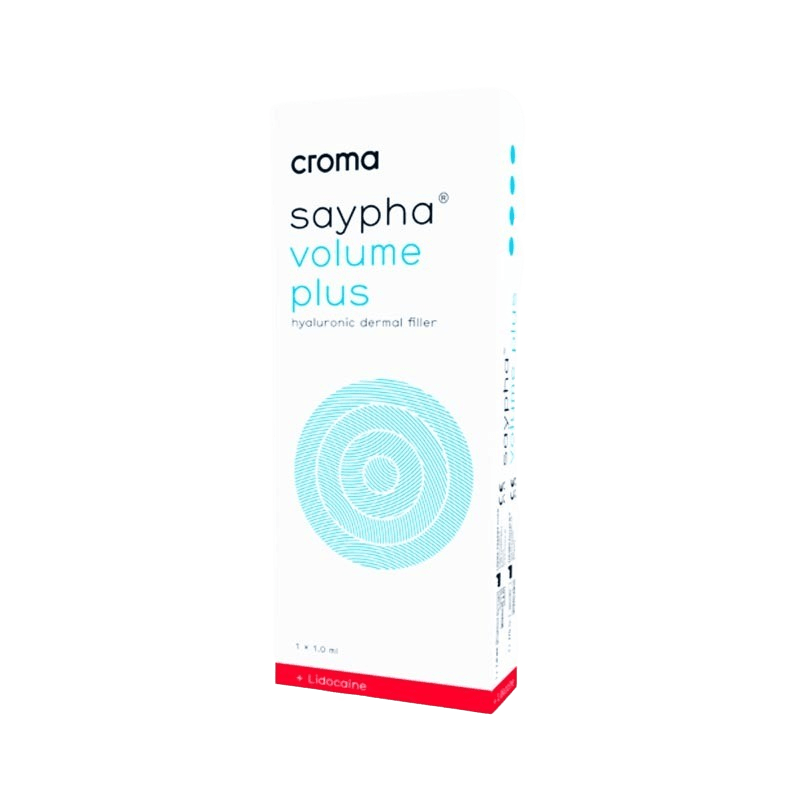
Saypha® Volume Plus w/ Lidocaine
Buy Wholesale Saypha® Volume Plus w/ Lidocaine
Dermal Filler
$99.00
You save
Description
Saypha® Volume Plus w/ Lidocaine is a sterile hyaluronic acid injectable gel for professional soft-tissue augmentation. Licensed clinics, med spas, and healthcare professionals can order this 25 mg/mL HA filler with 0.03% lidocaine for volume-focused aesthetic protocols. Each Saypha Volume Plus 1x1mL unit supports treatment-room planning with a prefilled syringe, included needles, and product documentation.
This preparation is intended for trained injectors using established dermal filler techniques. It fits clinic workflows that require a cohesive volumizing gel, predictable syringe handling, and clear unit-level inventory control. We supply brand-name medical products through vetted distributors and verified supply channels for professional accounts.
Clinic Ordering, Price, and Pack Details
Clinics can buy Saypha Volume Plus w/ Lidocaine after account review for professional-use ordering. Sign in to view current Saypha Volume Plus price information, volume tiers, and ordering quantities available for your facility. Because pricing can vary by account terms and order size, your team should use the live cart view for the most current cost.
The standard pack described for this item is Saypha Volume Plus 1x1mL. Each carton contains one 1mL prefilled syringe, two 27G 1/2 needles, and one leaflet. This format helps clinics align tray setup, procedure scheduling, and stock rotation around a consistent single-syringe unit.
| Attribute | Clinic-use detail |
|---|---|
| Product type | Hyaluronic acid dermal filler with lidocaine |
| Hyaluronic acid concentration | 25 mg/mL |
| Lidocaine hydrochloride | 0.03% |
| Pack format | 1 prefilled 1mL syringe |
| Needles | 2 x 27G 1/2 needles |
| Use setting | Professional administration by trained clinicians |
Quick tip: Match reorder timing to scheduled filler sessions and lot rotation rather than waiting until the last syringe is opened.
What the Filler Is and How It Works
Saypha Volume Plus with Lidocaine is a hyaluronic acid dermal filler lidocaine preparation supplied as a sterile prefilled injectable gel. Hyaluronic acid is a hydrophilic material, meaning it attracts water and helps support shape within treated soft tissue. In a volumizing filler, the gel provides immediate structural support after placement by a qualified injector.
The integrated lidocaine can improve procedural comfort by adding a local anesthetic component within the syringe. This may reduce the need for additional numbing steps in some clinic protocols, although anesthetic choices remain a professional decision. For a closer look at the role of anesthetic in filler procedures, see the article on lidocaine in dermal filler procedures.
Clinicians often evaluate croma Saypha Volume Plus by extrusion feel, tissue integration, projection, and kit completeness. Those practical attributes matter because filler selection affects chair time, injection technique, and staff preparation. The product should be used only by healthcare professionals trained in facial anatomy, aseptic technique, and management of injection-related events.
Professional Applications and Treatment-Room Fit
This filler is used in medical aesthetic settings for volume restoration and contour-focused work as determined by the treating professional. Common clinic protocols may involve midface support, cheek or zygomatic contouring, chin projection, mandibular contouring, and structural reinforcement in areas appropriate for the injector’s training and assessment.
Saypha Volume Plus filler can be incorporated into needle-based or cannula-based workflows according to clinical preference. The included 27G 1/2 needles help keep the unit complete at the point of care, while clinics that prefer cannulas can prepare their standard accessory kits separately. For broader planning across this product family, review the Saypha portfolio.
Practices building a fuller aesthetic menu may use this volumizing product alongside other HA filler textures or hydration-focused injectables. The article on dermal filler types for facial volume can help teams structure training conversations around filler category, placement depth, and treatment objective without treating different products as automatic substitutes.
Key Features for Licensed Practices
- Volumizing gel designed for professional soft-tissue augmentation.
- 25 mg/mL hyaluronic acid concentration for structural filler work.
- 0.03% lidocaine hydrochloride included for procedural comfort.
- Prefilled sterile syringe helps streamline room setup.
- Dermal filler lidocaine 1mL format supports predictable inventory counts.
- Two 27G 1/2 needles included in each carton.
- Product leaflet supports professional reference and documentation.
- Single-patient use format supports standard infection-control practice.
These features make the product practical for clinics that standardize specific syringes for defined service lines. Consistent pack contents also make it easier for support staff to audit room supplies, prepare trays, and reconcile used inventory after appointments.
Composition, Handling, and Documentation
The formulation contains hyaluronic acid 25 mg/mL and lidocaine hydrochloride 0.03%. Units should be kept sealed until use and inspected before administration. Do not use a syringe if the carton, sterile barrier, labeling, or syringe appears compromised.
Clinic teams should record lot and unit information according to their internal medical-record and traceability procedures. Documentation is especially important for injectable implants because follow-up, adverse-event review, and inventory reconciliation depend on accurate product identification. The included leaflet should remain accessible to clinical staff for product-specific reference.
Use aseptic technique during preparation and administration. A prefilled syringe can reduce setup steps, but it does not replace clinical judgment, anatomical assessment, or emergency preparedness. Facilities should maintain appropriate supplies and written protocols for managing local reactions, vascular compromise concerns, hypersensitivity events, and aftercare instructions.
Safety, Side Effects, and Clinical Precautions
Dermal fillers can cause local injection-site reactions. Reported events may include tenderness, swelling, redness, bruising, irritation, or localized discomfort. Most routine reactions are local, but clinics should counsel patients on expected aftercare and provide clear instructions for concerning symptoms.
Serious complications are uncommon but clinically important. Intravascular injection can lead to tissue injury, visual symptoms, or other urgent events, so injectors must understand facial vascular anatomy and use risk-reduction techniques appropriate to the treatment area. Treatment should be delayed or avoided when the clinician identifies contraindications, active infection at the intended site, or other suitability concerns.
Because this product contains lidocaine, practices should consider patient history related to local anesthetic sensitivity and relevant medical conditions. Concomitant procedures, anticoagulant use, recent dental work, skin inflammation, or prior filler placement may affect clinical planning. The FDA’s dermal filler guidance notes that injectable fillers should be administered by licensed, trained healthcare providers who understand risks and complications.
Patient questions from general search results often ask whether Saypha filler is good or how long a filler lasts. For clinics, the safer answer is that suitability depends on anatomy, treatment area, injector technique, product choice, and follow-up. Avoid promising a fixed duration or outcome, and document the rationale for product selection in the treatment record.
Workflow Benefits for Aesthetic Teams
A clinic-ready prefilled syringe can reduce nonclinical setup steps and help maintain efficient room turnover. The 1mL format also supports straightforward appointment planning when injectors build protocols around defined syringe counts. Staff can prepare the carton, needles, antiseptic supplies, documentation tools, and aftercare materials before the patient enters the room.
The lidocaine component may support patient comfort during injection, which can help keep sessions organized. It does not eliminate the need for careful assessment or separate anesthetic planning when the injector decides additional measures are appropriate. Questions such as whether topical lidocaine or nerve blocks are useful before lip filler should be answered by the treating clinician, based on treatment area, technique, patient history, and clinic policy.
For practices standardizing patient instructions, the article on post-treatment care after dermal fillers can support staff education and consistent messaging. Clinics should still follow the product leaflet, professional training, and their own medical protocols.
Related Saypha Products and Comparison Points
Clinics often stock more than one Saypha preparation to match treatment goals, tissue characteristics, and injector preference. For a related volumizing option, consider Saypha Volume w/ Lidocaine. Teams that prefer to evaluate a non-lidocaine option for certain protocols may also review Saypha Volume.
For smoothing or correction-focused work where a different gel profile may be preferred, review Saypha Filler w/ Lidocaine and Saypha Filler. Hydration-oriented protocols may involve products such as Saypha Rich, depending on practitioner assessment and training.
When comparing fillers, avoid treating brand names as interchangeable without injector review. Practical decision factors include intended facial area, placement depth, extrusion force, cohesivity, lidocaine preference, needle or cannula workflow, and staff familiarity. The article on facial volume restoration approaches may help teams frame product selection discussions across a broader aesthetic plan.
Inventory, Storage, and US Logistics
Clinics should store and handle dermal filler stock according to the product leaflet and internal medical-supply procedures. Keep cartons organized by lot and date received so staff can rotate inventory properly. Segregate any damaged, questionable, or recalled units until they are reviewed through your facility’s quality process.
Ordering through a B2B medical supplier helps clinics centralize procurement for brand-name aesthetic products. Account teams can coordinate Saypha Volume Plus 1mL syringe quantities with broader filler and device needs, reducing scattered purchasing across multiple sources. Orders are supported by reliable US logistics, with temperature-controlled handling when required and tracked US delivery.
Why it matters: Consistent sourcing and documentation help clinics maintain traceability for every injectable unit used in care.
Authoritative Sources
Ready to proceed? Sign in to verify professional account access, view current pricing, and add the needed quantity to your clinic order.
This content is for informational purposes only and is not a substitute for professional medical advice.
Frequently Asked Questions
Who can order Saypha® Volume Plus w/ Lidocaine?
This product is intended for licensed clinics, med spas, and healthcare professionals using dermal fillers in professional aesthetic settings. Account review and professional-use ordering requirements may apply before checkout.
What is included in the Saypha Volume Plus 1x1mL pack?
Each carton contains one prefilled 1mL syringe, two 27G 1/2 needles, and one leaflet. The formulation contains hyaluronic acid 25 mg/mL and lidocaine hydrochloride 0.03%.
How should clinics use the lidocaine component in planning?
The integrated lidocaine may support procedural comfort and reduce separate setup steps in some protocols. Additional topical anesthetic or nerve-block decisions should remain with the treating clinician and clinic policy.
Can Saypha Volume Plus be substituted for other dermal fillers?
Substitution should be reviewed by trained injectors. Product choice depends on anatomy, treatment area, technique, gel characteristics, lidocaine preference, and the clinician’s familiarity with the filler.
What safety points should staff review before administration?
Staff should inspect packaging, maintain aseptic technique, document lot information, assess suitability, and be prepared to manage local reactions or urgent complications. Treatment decisions belong to licensed professionals trained in filler injection.
Specifications
- Main Ingredient: Hyaluronic Acid
- Manufacturer: Croma Pharma
- Drug Class: Aesthetic Surgery Product
- Generic Name: Cross-Linked Hyaluronic Acid
- Package Contents: 1 mL x 1 Pre-Filled Syringe
- Storage Requirements: Room Temperature (2℃~25℃)
- Main Usage: Volume Filler
About the Brand
Saypha
Saypha has made a dependable name for itself in medical aesthetics, providing a broad spectrum of superior-quality dermal fillers for enhancing physical appearance. Enjoying decades of industry dominance, Saypha has positioned itself as the go-to brand for healthcare professionals aiming to augment their patients’ allure. Saypha is synonymous with products that are not only superior in quality but also guarantee enduring results, facilitating the attainment of a younger, refreshed look. At Med Wholesale Supplies, we appreciate the importance of availing top-notch products to our clientele. Thus, we delightfully present Saypha’s range of dermal fillers through our online exchange. By choosing Med Wholesale Supplies as your provider, you acquire authentic, trustworthy merchandise directly from the original manufacturer. Our platform not only assures reasonable rates but also streamlined shipping mechanisms, thereby simplifying access for healthcare professionals to the necessary resources for delivering excellent patient care. Selecting dermal fillers for your practice calls for choosing a brand that exudes trust. Saypha, due to its consistent performance and efficacy, emerges as an excellent choice for healthcare specialists aspiring to boost their patients’ appeal. Your acquisition of Saypha products from Med Wholesale Supplies guarantees peace of mind derived from the knowledge of sourcing superior-quality products straight from the manufacturing center. Opt for Saypha and make your purchases from Med Wholesale Supplies, for the sake of your patients' well-being. Don't compromise on quality - make the wise choice today.
Browse Saypha Products
Here to help
Questions about ordering, delivery or products? You can email our team here or call now at 1-800-630-9757 and be connected with your dedicated Account Manager
Related Products
Evenity® (English Alternative)
Injectable Medication
$1,229.00 - $1,299.00
You save
You save
Intraline® For Men
Dermal Filler
$59.00 - $79.00
You save
You save
RejuvaNAD+ Pro
Injectable Medication
$237.00 - $249.00
You save
You save
Teosyal® RHA 4
Aesthetic Surgery Product
$259.00 - $279.00
You save
You save
Related Articles
Prednisone in Clinical Care: Uses, Risks, and Monitoring
Prednisone is a prescription systemic corticosteroid used to reduce inflammation or suppress immune activity in…
Lip Fillers Swelling Stages: Timeline, Safety, and Follow-Up
Lip fillers swelling stages usually follow a short inflammatory course: swelling appears soon after injection,…
Hypopigmentation of the Skin: Assessment and Care
Hypopigmentation of the skin means one or more areas look lighter than the surrounding skin.…
Radiesse vs Sculptra: Selection Factors for Clinics
Radiesse vs Sculptra is best understood as a comparison between two collagen-stimulating injectables with different…
Hyaluronic Acid Under-Eye Filler: Safety and Workflow
Hyaluronic acid under-eye filler is an injectable soft-tissue filler used by trained aesthetic clinicians to…
Dermal Filler Types: Materials, Uses, and Clinic Fit
Dermal filler types are usually grouped by their base material, tissue behavior, and expected role…
What Is Dysport? Clinical Uses, Safety, and Workflow
For clinic teams asking what is Dysport, the short answer is simple: Dysport is a…
Biostimulators in Aesthetic Care: Selection and Safety
Biostimulators are injectable aesthetic products used to encourage a controlled tissue response, often involving new…