
Description
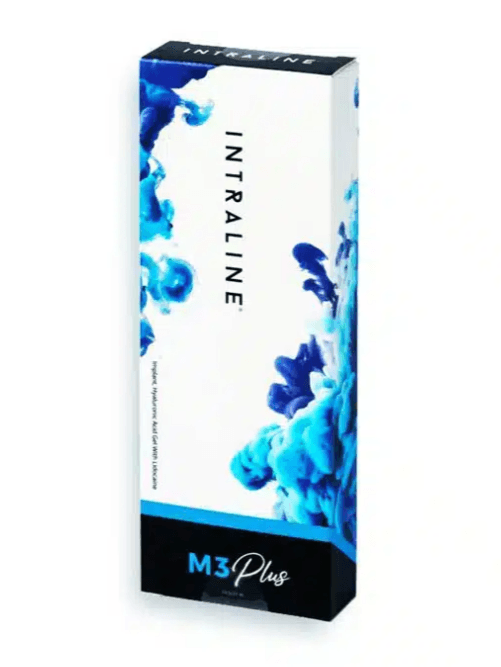
Intraline® M3 Plus is a monophasic hyaluronic acid dermal filler with lidocaine for professional injection. Licensed clinics, med spas, dermatology practices, and healthcare professionals can order Intraline M3 Plus for medium to deep line correction and localized contour work. Each unit is supplied as a sterile prefilled syringe for treatment-room use, with 1.1 ml of gel, lidocaine 3 mg/ml, and two 27G needles.
The product is commonly selected for lips, nasolabial folds, marionette lines, and chin refinement when a smooth, cohesive gel is appropriate for the protocol. Its homogenized structure supports controlled extrusion and even placement, helping trained injectors manage borders, fold softening, and contour transitions. Account teams can use current Intraline M3 Plus price visibility after sign-in to plan clinic supply and recurring purchasing.
Clinic Ordering, Price, and Supply Planning
Buy Intraline M3 Plus through a verified professional account to support clinic inventory, lot tracking, and purchasing controls. Current pricing is shown during account ordering, allowing procurement teams to assess Intraline M3 Plus cost by requisition size, contract terms, and ordering cadence. This is a professional-use product, so clinics should align purchases with injector training, treatment schedules, and internal approval processes.
Med Wholesale Supplies serves licensed clinics and healthcare professionals with brand-name medical products sourced through vetted distributors and verified supply channels. For broader purchasing alongside this product, the dermal fillers category helps teams review adjacent HA fillers by treatment zone and handling profile. Orders can be coordinated with temperature-controlled handling when required and tracked US delivery.
Quick tip: Keep filler requisitions tied to scheduled demand, injector preference, and lot-control documentation.
What Intraline M3 Plus Is Used For
Intraline M3 Plus dermal filler is designed for medium to deep wrinkles and localized facial contouring. In clinic workflows, it is often considered for nasolabial folds, marionette areas, lip shaping, and chin definition. The goal is to restore localized volume, soften crease appearance, and support contour transitions without using a permanent implant or aggressive volumization strategy.
The gel is placed according to practitioner judgment, anatomy, treatment goals, and training. Current product information supports mid-to-deep dermal use for suitable candidates, but injection depth and technique should be determined by the licensed professional performing the procedure. For broader contouring considerations within this brand family, see the Intraline facial contouring article.
Searches around marionette lines, lip borders, and chin contouring often reflect a practical clinic question: which filler texture fits the zone? M3 Plus sits between softer fine-line products and more structural volumizing fillers, making it relevant when moderate support and smooth distribution are both priorities. Clinics may stock it as part of a tiered HA filler menu rather than as a one-product solution for every facial area.
Formulation, Gel Behavior, and Mechanism
Intraline® M3 Plus is a cross-linked, monophasic hyaluronic acid gel. Monophasic means the gel has a uniform, cohesive structure rather than distinct particle phases. This consistency can support predictable extrusion, controlled molding, and smooth integration during professional placement.
Hyaluronic acid is a water-binding molecule used in many aesthetic fillers to add temporary volume and support. In this product, lidocaine 3 mg/ml is included to improve comfort during injection and may reduce the need for separate anesthetic steps in some clinic protocols. Comfort planning should still account for the treatment area, patient sensitivity, topical anesthetic policy, and the injector’s usual technique.
The gel’s handling profile makes it suitable for providers who need a balance of definition and flexibility. It can help refine lip shape, soften deeper fold transitions, and support chin contouring when the patient and facial anatomy are appropriate. For treatment planning within the broader Intraline portfolio, clinics can also review the Intraline brand collection.
Package Details and Treatment-Room Readiness
Each Intraline M3 Plus syringe is intended for single use in a professional clinical setting. The supplied configuration supports treatment-room setup, inventory intake, and sterile handling procedures. Staff should inspect packaging, confirm lot information, and follow clinic policy before adding the product to active stock.
| Attribute | Supplied detail |
|---|---|
| Product | Intraline® M3 Plus |
| Configuration | Prefilled syringe |
| Volume | 1.1 ml |
| Syringe count | 1 |
| Needles | 2 x 27G |
| Lidocaine | 3 mg/ml |
| SKU | 89553 |
Because this is a sterile injectable device, use aseptic technique and dispose of sharps according to clinic policy. The syringe should not be shared between patients or reused. Treatment records should capture the product name, lot number, treated area, injector, and any immediate observations required by the clinic’s documentation standards.
Professional Workflow Benefits
Reliable extrusion helps injectors maintain steady hand dynamics during linear threading, border refinement, and fold correction techniques. The smooth gel can reduce interruptions caused by inconsistent flow, which supports efficient pacing during scheduled aesthetic appointments. Included 27G needles also simplify preparation when that needle size fits the provider’s planned technique.
Intraline M3 Plus filler 1 x 1ml purchasing language is common, but the supplied unit contains 1.1 ml. Clinics should train ordering staff to match the SKU and volume shown in the ordering system, not informal shorthand used in appointment notes or supply spreadsheets. This helps reduce procurement errors when similar Intraline products are stocked together.
Teams with multiple injectors may appreciate a product that fits familiar HA filler workflows. Standardization can help with staff orientation, reorder timing, and post-treatment documentation. For educational context on treatment categories and benefits within the brand family, see Intraline applications in aesthetic treatments.
Safety, Reactions, and Candidate Checks
Dermal fillers should be administered only by trained healthcare professionals who understand facial anatomy, vascular risk, sterile technique, and emergency protocols. Candidate screening should include relevant medical history, prior filler use, allergy history, skin condition at the treatment site, and any clinic-specific contraindication checks. Do not inject into areas with active infection or inflammation.
Expected local reactions may include redness, swelling, tenderness, itching, discoloration, firmness, bruising, or temporary discomfort at the injection site. These effects are generally transient, but clinics should provide appropriate aftercare instructions and escalation guidance. More serious complications can occur with injectable fillers, including vascular compromise, tissue injury, infection, nodule formation, inflammatory reactions, or unintended placement.
Providers should use the smallest suitable volume for the plan, avoid forceful injection, aspirate or use other risk-reduction methods according to training, and stop immediately if concerning symptoms appear. Emergency protocols should cover vascular occlusion recognition, hyaluronidase access where clinically appropriate, and timely referral pathways for urgent assessment. Product selection should never replace anatomical judgment or hands-on injector training.
How It Compares Within the Intraline Range
Clinics often build a filler formulary around different HA textures, not one universal gel. M3 Plus is positioned for medium to deep lines and lips, while neighboring products may be selected for finer correction or stronger structural support. This range-based approach helps providers tailor spread, projection, and molding characteristics by facial zone.
For lighter correction needs, review Intraline® M2 Plus as part of product planning. For areas where a firmer or more volumizing profile may be preferred, Intraline® M4 Plus can be evaluated by clinical leadership. Clinics that use non-Plus Intraline HA options may also consider Intraline Two when building a complete brand-specific inventory.
Safety comparisons with other filler brands, such as Juvederm or Restylane, depend on product formulation, injector training, patient factors, and technique. No filler should be described as universally safer for every candidate or indication. A documented consultation, appropriate product selection, and careful injection practice are more meaningful than brand-only comparisons.
Inventory Controls and Documentation
Intraline M3 Plus wholesale purchasing should fit a clinic’s controlled intake process. Receiving staff should confirm unit count, packaging condition, SKU, lot information, and storage instructions before releasing stock for treatment use. Any discrepancy should be addressed before the product enters procedure-room inventory.
Lot traceability matters for injectable aesthetics because clinics may need to identify which unit was used for a specific procedure. Maintain records according to professional standards and local policy. Treatment documentation should connect the product used with the patient chart, injection site map, and aftercare instructions.
Practices with multiple locations may standardize ordering calendars to avoid overstock and prevent last-minute substitutions. When inventory is tight, choose substitutes by treatment objective, HA behavior, lidocaine status, needle compatibility, and provider familiarity. Substitutions should be approved by clinical leadership before they are used in scheduled appointments.
Authoritative Product and Safety References
Professional aesthetic teams should pair supplier information with manufacturer materials, training, and recognized medical guidance. The official manufacturer source provides brand-specific positioning and product-family context. Broader medical literature can support understanding of hyaluronic acid filler use, reactions, and risk-management principles.
Ready to add this product to your clinic formulary? Sign in with your professional account to view current purchasing details, coordinate documentation, and order the Intraline M3 Plus syringe for licensed clinical use.
This content is for informational purposes only and is not a substitute for professional medical advice.
Frequently Asked Questions
What is Intraline® M3 Plus used for in clinics?
Intraline® M3 Plus is a hyaluronic acid dermal filler with lidocaine used by trained professionals for medium to deep lines and localized contouring, including lips, nasolabial folds, marionette areas, and chin refinement when clinically appropriate.
What comes in one Intraline M3 Plus unit?
One unit includes one sterile prefilled syringe containing 1.1 ml of gel, lidocaine 3 mg/ml, and two 27G needles. The product is intended for single use in a professional clinical setting.
How can clinics view Intraline M3 Plus price?
Qualified clinics can sign in with a professional account to view current purchasing details. Pricing may depend on account terms, order size, and clinic procurement arrangements.
How does M3 Plus differ from M2 Plus or M4 Plus?
M3 Plus is positioned for medium to deep lines and lips. M2 Plus may be considered for lighter correction needs, while M4 Plus may be evaluated for protocols requiring more structural support. Final selection should follow injector training and clinical leadership guidance.
What reactions should clinics discuss before treatment?
Common local reactions can include redness, swelling, tenderness, itching, bruising, discoloration, or firmness. Clinics should also screen for risk factors and maintain protocols for rare but serious filler complications such as vascular compromise or infection.
Is Intraline M3 Plus for patient self-use?
No. Intraline M3 Plus is a professional injectable filler for administration by trained healthcare professionals in an appropriate clinical setting. It should not be self-injected or reused.
Specifications
- Main Ingredient: Cross-Linked Hyaluronic Acid
- Manufacturer: INTRALINE
- Drug Class: Dermal Filler
- Generic Name: Cross-Linked Hyaluronic Acid
- Package Contents: 1.1 mL x 1 Pre-Filled Syringe
- Storage Requirements: Room Temperature (2℃~25℃)
- Main Usage: Lip Filler
About the Brand
Intraline
Counted among the cream of the crop in the medical sphere, Intraline is famed for its extensive array of groundbreaking, top-notch products tailored for the health sector. From cutting-edge dermal fillers to industry-leading PDO threads, Intraline has carved out a niche for itself as a credible entity within aesthetic medicine. A major distinguishing factor for Intraline lies in its unwavering dedication to delivering safe and result-oriented solutions for both health practitioners and patients. We, at medwholesalesupplies.com, take pride in featuring Intraline products for sale. Our digital platform is crafted to simplify the procurement process, providing a convenient shopping experience for medical professionals. Be it dermal fillers or PDO threads you're in search of, you can confidently rely on our platform to bring you the finest Intraline products, competitively priced. Thanks to our secure payment gateway and dependable shipping options, we offer you the peace of mind that comes with knowing you're investing wisely in the finest products for your practice. Shopping for Intraline products via medwholesalesupplies.com presents numerous advantages. First off, you're guaranteed authentic Intraline products, directly sourced from the manufacturer, attesting to their quality and safety. Furthermore, our compelling prices coupled with bulk buying options equate to significant cost savings while ensuring a consistent inventory of Intraline products for your practice. With our speedy, trusted shipping methods, you can comfortably expect to receive your Intraline items promptly. Choose medwholesalesupplies.com, your trusted source for premier Intraline solutions tailored to your health requirements.
Browse Intraline Products
Here to help
Questions about ordering, delivery or products? You can email our team here or call now at 1-800-630-9757 and be connected with your dedicated Account Manager
Related Products
Evenity® (English Alternative)
Injectable Medication
$1,229.00 - $1,299.00
You save
You save
Intraline® For Men
Dermal Filler
$59.00 - $79.00
You save
You save
RejuvaNAD+ Pro
Injectable Medication
$237.00 - $249.00
You save
You save
Teosyal® RHA 4
Aesthetic Surgery Product
$259.00 - $279.00
You save
You save
Related Articles
Prednisone in Clinical Care: Uses, Risks, and Monitoring
Prednisone is a prescription systemic corticosteroid used to reduce inflammation or suppress immune activity in…
Lip Fillers Swelling Stages: Timeline, Safety, and Follow-Up
Lip fillers swelling stages usually follow a short inflammatory course: swelling appears soon after injection,…
Hypopigmentation of the Skin: Assessment and Care
Hypopigmentation of the skin means one or more areas look lighter than the surrounding skin.…
Radiesse vs Sculptra: Selection Factors for Clinics
Radiesse vs Sculptra is best understood as a comparison between two collagen-stimulating injectables with different…
Hyaluronic Acid Under-Eye Filler: Safety and Workflow
Hyaluronic acid under-eye filler is an injectable soft-tissue filler used by trained aesthetic clinicians to…
Dermal Filler Types: Materials, Uses, and Clinic Fit
Dermal filler types are usually grouped by their base material, tissue behavior, and expected role…
What Is Dysport? Clinical Uses, Safety, and Workflow
For clinic teams asking what is Dysport, the short answer is simple: Dysport is a…
Biostimulators in Aesthetic Care: Selection and Safety
Biostimulators are injectable aesthetic products used to encourage a controlled tissue response, often involving new…