

Out Of Stock
- You must be logged in to add items to the cart.
Description
This listing covers a high-viscosity, cross-linked hyaluronic acid (a water-binding gel) dermal filler used for soft-tissue volume support in aesthetic practice. It summarizes indications by local labeling, packaging expectations, and key handling and safety points for clinic procurement. The details below are designed to support consistent stocking decisions and documentation.
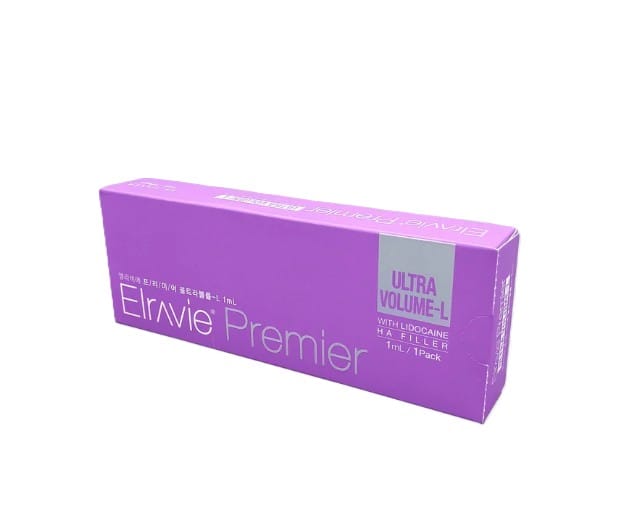
Orders are managed via US distribution. For licensed clinics and healthcare professionals. Product-specific notes in this guide refer to Elravie® Premier Ultra Volume-L and should be confirmed against the carton instructions for use (IFU) and applicable regulations. For broader catalog navigation, clinics can browse Dermal Fillers and review background context in Elravie Filler Overview.
Scope note: dermal filler indications and permitted injection depths vary by jurisdiction and product authorization. This page does not replace hands-on training, manufacturer education, or local policy.
Product Overview and Indications (Elravie® Premier Ultra Volume-L)
This product is part of the Elravie Premier line of injectable gels commonly used in medical aesthetics to support facial contour and volume where clinically appropriate. As with other HA fillers, the gel provides a temporary space-occupying effect and attracts water, which can support soft-tissue fullness. “Cross-linked” (chemically stabilized) HA is designed to resist rapid breakdown compared with non-cross-linked HA used in topical or intra-articular products.
Indications, eligible anatomical areas, and any included anesthetic (such as lidocaine (local anesthetic)) are defined by the specific IFU and the market where the product is supplied. Clinics comparing HA rheology concepts (firmness, lift, and spread) may also find general contouring context in Hyaluronic Acid Contours.
Eligibility and Ordering Requirements
MedWholesaleSupplies is structured for professional procurement, not consumer self-selection. Account access generally requires verification of facility and/or prescriber credentials, and some organizations maintain additional documentation to meet internal compliance expectations. In practice, that may include medical license details, business registration, and an authorized shipping location aligned to clinic operations.
Supply is limited to verified healthcare accounts.
When adding Elravie® Premier Ultra Volume-L to inventory, clinics typically align ordering to documented protocols for receiving, lot tracking, and incident reporting. Product selection should also reflect staff training, scope of practice, and any required patient-facing consent language used by the facility. For related workflow planning in aesthetic injectable programs, Neuramis Injectable Guide provides additional category-level considerations.
Forms, Strengths, and Packaging
Dermal fillers in this class are commonly supplied as sterile, single-use prefilled syringes intended for injection by trained healthcare professionals. Some listings may include needle(s), labels, and an IFU within the carton. Exact contents can vary by manufacturer configuration and distribution channel, so receiving staff should verify what is present on arrival against the packing slip and the carton panel.
Because strengths (such as HA concentration), syringe volume, and lidocaine inclusion can differ across regions and presentations, clinics should confirm the specific configuration shown on the product carton and IFU. Availability of particular presentations may also change as manufacturers update labeling or packaging.
| Packaging element | What to verify at receiving |
|---|---|
| Primary container | Sealed sterile syringe; intact tamper features |
| Label details | Product name, lot/batch, expiry, storage statement |
| Instructions | IFU present and legible; matches the shipped item |
Administration and Use in Practice
Use of injectable HA fillers is a procedure requiring training, appropriate patient evaluation, and familiarity with facial vascular anatomy. Administration should follow the manufacturer IFU, applicable regulations, and facility protocols for aseptic technique. Many clinics incorporate standardized steps for pre-procedure preparation, skin antisepsis, and post-procedure observation to support consistent outcomes and timely identification of complications.
For Elravie® Premier Ultra Volume-L, high-level use considerations include selecting suitable candidates per labeling, using appropriate injection technique for the intended tissue plane, and documenting product identifiers in the medical record. Patient-specific dosing, injection depth, and treatment planning should be determined by the treating clinician and not inferred from general product summaries.
Technique considerations and complication readiness
All injectable fillers carry a risk of unintended intravascular injection, which can lead to vascular occlusion (a blocked blood vessel) and tissue ischemia (reduced blood flow). Clinics commonly mitigate risk through training, careful anatomical landmarking, conservative technique, and readiness to escalate when concerning symptoms appear. Observation for disproportionate pain, blanching, livedo, or vision symptoms is a standard safety practice in aesthetic injection settings.
Why it matters: Rare vascular events require rapid recognition and escalation pathways.
Post-procedure guidance often includes expectations about transient swelling and bruising, and instructions on when to seek urgent evaluation. Documentation practices generally include the injection site(s), technique summary, and the lot number for traceability.
Storage, Handling, and Clinic Logistics
Storage requirements for HA fillers are product-specific and should be taken from the carton and IFU. Many sterile prefilled syringes are stored at controlled room temperature, protected from excessive heat and direct light, and kept in original packaging until use. Clinics should avoid freezing unless the IFU explicitly allows it, and should not use product past its labeled expiration date.
Inventory is sourced through vetted distributor channels.
Receiving workflows often include: verifying seal integrity, confirming lot/expiry, and recording storage statements in the inventory system. For operational planning across multiple filler lines, Fillmed Filler Guide offers a practical lens on stocking and rotation across aesthetic injectables. Any excursion handling (temperature deviations) should follow the IFU and clinic policy, with clear quarantine steps when needed.
Contraindications, Warnings, and Monitoring
Contraindications and warnings are defined by the product’s IFU and local authorization. In general, clinics avoid injection into areas with active infection or inflammation and screen for known hypersensitivity to product components. If a presentation contains lidocaine, hypersensitivity to amide-type local anesthetics is a relevant consideration.
When Elravie® Premier Ultra Volume-L is used in practice, clinics typically implement monitoring steps before, during, and after the procedure to reduce risk and support early detection of adverse events. Special caution is commonly applied in patients with a history of severe allergies, those prone to hypertrophic scarring, and those with conditions that may complicate wound healing, as described by the manufacturer and local policy.
- Active infection at site
- Known component hypersensitivity
- Uncertain skin integrity
- High-risk anatomy history
- Need for urgent follow-up plan
Adverse Effects and Safety
Common, usually self-limited reactions after HA filler injection can include localized swelling, erythema (redness), tenderness, bruising, pruritus (itching), and temporary lumpiness at the injection site. These events are typically managed according to clinic protocols and the treating clinician’s judgment, with clear documentation and follow-up instructions.
More serious risks include infection, delayed nodules, granulomatous reactions, and vascular complications such as occlusion, which may present with significant pain, color change, blistering, or tissue breakdown. Visual symptoms after facial injection warrant urgent evaluation. For broader context on how safety considerations can differ across filler classes used for volume restoration, CaHA And PLLA Comparison provides useful background without replacing product-specific labeling.
Drug Interactions and Cautions
Most concerns are procedural rather than classic drug–drug interactions, but medication history still matters for risk management. Anticoagulants, antiplatelet agents, and frequent NSAID use can increase bruising or bleeding at injection sites. Herbal supplements with anticoagulant effects may contribute similarly. Clinicians typically document these factors as part of pre-procedure screening and consent.
Timing considerations can also include recent dermatologic procedures (such as laser, peel, or microneedling) performed in the same area, as these may affect skin integrity and inflammation. Any planned sequencing should be guided by clinician judgment, patient factors, and the IFU, with conservative interval planning when uncertainty exists.
Compare With Alternatives
Within the HA filler category, alternatives may differ by gel firmness, cohesivity, presence of lidocaine, and intended tissue plane per labeling. Biostimulatory injectables (such as calcium hydroxylapatite or poly-L-lactic acid) are often compared at a program level for volume strategies, but they have different mechanisms and safety considerations. Educational context on cheek volumization programs is also discussed in Voluma Cheek Lift and product-line planning perspectives appear in Revanesse Precision Aesthetics.
For teams evaluating Elravie® Premier Ultra Volume-L alongside other HA options, cross-comparison is typically based on IFU indications, clinician familiarity, and complication protocols rather than marketing claims. Examples of other HA filler products carried in the catalog include Revolax Deep Lidocaine and Stylage L Bi Soft. For technique and expectations discussions around Stylage, see Stylage Results Guide.
Availability and Substitutions
Availability can vary by lot release, packaging updates, and distributor allocation. Clinics should confirm that the received carton matches the ordered presentation, including any stated storage conditions and included components. If a substitution is required (for example, a different presentation within the same brand family), it should be reviewed for labeling alignment, staff familiarity, and documentation implications before being used in patient care.
Authentic, brand-name inventory is prioritized for clinical supply.
When Elravie® Premier Ultra Volume-L is temporarily unavailable, facilities often select alternatives based on the same filler class, comparable indications, and consistent complication readiness tools, while documenting any product change in the patient record. Batch traceability remains essential for adverse event follow-up and quality audits, regardless of the selected product.
Authoritative Sources
Regulatory and professional references can support clinic SOPs for patient counseling, consent language, and complication escalation. For a regulator overview of filler risks and patient safety themes, see this FDA resource: FDA dermal fillers (soft tissue fillers).
For a professional-organization discussion of expected effects and potential complications, clinics may also reference: American Academy of Dermatology dermal fillers. Always defer to the specific product IFU and local requirements for final indications, contraindications, and handling instructions.
Quick tip: Record lot and expiry at receiving to support traceability.
Place orders through your clinic account with temperature-controlled handling when required and tracked US delivery.
This content is for informational purposes only and is not a substitute for professional medical advice.
Frequently Asked Questions
What is Elravie® Premier Ultra Volume-L used for?
Elravie® Premier Ultra Volume-L is an injectable hyaluronic acid dermal filler used in aesthetic practice for soft-tissue augmentation and volumizing support, as permitted by its local labeling and the manufacturer’s instructions for use (IFU). Specific indications (such as eligible facial areas and injection depth) can differ by country and presentation. Clinics generally use HA fillers within a structured protocol that covers patient screening, informed consent, aseptic technique, and documentation of lot numbers for traceability.
Is Elravie Premier Ultra Volume-L a hyaluronic acid filler?
This product is positioned within the hyaluronic acid (HA) dermal filler category. HA is a water-binding gel material that can temporarily add volume and support contours after injection. Many HA fillers are “cross-linked,” meaning the HA is chemically stabilized to slow breakdown compared with non-cross-linked HA. The exact gel properties, labeling indications, and any included anesthetic are defined by the specific carton and IFU, which clinics should review for each lot received.
Does this dermal filler contain lidocaine?
Some dermal filler presentations on the market include lidocaine, a local anesthetic, while others do not. Lidocaine inclusion is not universal across brands or even across different products within the same brand family. The most reliable way to confirm is to check the carton label and the IFU for the exact presentation being stocked, and to document that information in the clinic inventory system. This is also important for screening patients with known anesthetic sensitivities.
What symptoms after a filler injection require urgent evaluation?
Concerning symptoms can include severe or escalating pain, skin blanching or a dusky color change, blistering, rapidly increasing swelling, fever, drainage, or any vision changes after facial injection. These may indicate complications such as infection or vascular occlusion (blocked blood vessel), which require prompt clinical assessment and established escalation steps. Clinics typically provide written post-procedure guidance and ensure that patients know how to reach urgent care pathways after hours. The treating clinician should direct evaluation and management.
What should patients ask their clinician before receiving a dermal filler?
Common questions include: what product is being used, what the expected short-term reactions are (swelling, bruising), what risks are most relevant for the planned treatment area, and what the clinic’s plan is for managing complications. Patients may also ask about allergies (including local anesthetics if present), prior filler history, recent dental or skin procedures, and medications that can increase bruising. The clinician can then tailor counseling to the individual’s medical history and the product’s IFU.
What documentation should a clinic keep for dermal filler inventory?
Clinics typically maintain records that support traceability and compliance: product name, lot/batch number, expiration date, storage statement from the carton/IFU, receiving date, and where the lot is stored. Many practices also document which lot was used for each patient encounter, along with treatment notes and any reported adverse events. If temperature excursions or packaging damage occurs, quarantine documentation and disposition notes are commonly retained. Specific requirements can vary by facility policy and local regulations.
Specifications
- Main Ingredient: Cross-Linked Hyaluronic Acid
- Manufacturer: Humedix Co., Ltd.
- Drug Class: Dermal Filler
- Generic Name: Cross-linked Hyaluronic Acid and Lidocaine
- Package Contents: 1 pre-filled syringe (1.0 mL)
- Storage Requirements: Room Temperature (2℃~25℃)
- Main Usage: Volume Filler
Here to help
Questions about ordering, delivery or products? You can email our team here or call now at 1-800-630-9757 and be connected with your dedicated Account Manager
Related Products
Xela Rederm 1.1%
Dermal Filler
$111.75 - $126.99
MCCOSMETICS® exosome pdrn
Skincare Product, Cosmetic Injectable
$86.23 - $97.99
JUVELOOK
Anti-Aging Skincare Product
$276.31 - $313.99
RRS® HA EYES
Dermal Filler
$156.63 - $177.99
Related Articles
Botox vs Dysport vs Xeomin Comparison for Clinic Teams
Choosing a botulinum toxin type A product is rarely just a clinical preference. It affects…
Sculptra vs Radiesse Guide For Collagen-Stimulating Fillers
Collagen-stimulating injectables are often discussed as “biostimulators” in clinic settings. They can support volume restoration…
Phosphatidylcholine Benefits and Clinical Use Considerations
OverviewPhosphatidylcholine benefits are often discussed in two very different contexts: nutrition supplements and procedure-adjacent clinic…
Botox Wholesale Compliance Guide for Clinics and Med Spas
Neurotoxin procurement is not a routine office supply task. For many practices, botox wholesale purchasing…
Sculptra Clinical Guide to Volume Restoration Planning
Volume restoration planning is rarely about a single syringe. It is a structured process that…
Phosphatidylcholine Clinical Overview and Practice Considerations
Key Takeaways Phosphatidylcholine is a membrane phospholipid used as a supplement ingredient and, in some…
Wholesale Dysport Procurement Standards for Clinic Teams
Clinic teams that source injectable neurotoxins face a different risk profile than routine medications. Your…
Xeomin Clinical Guide For Safety, Units, And Brand Comparisons
Neuromodulator procurement is rarely just “pick a brand.” It touches patient expectations, adverse-event readiness, documentation,…