
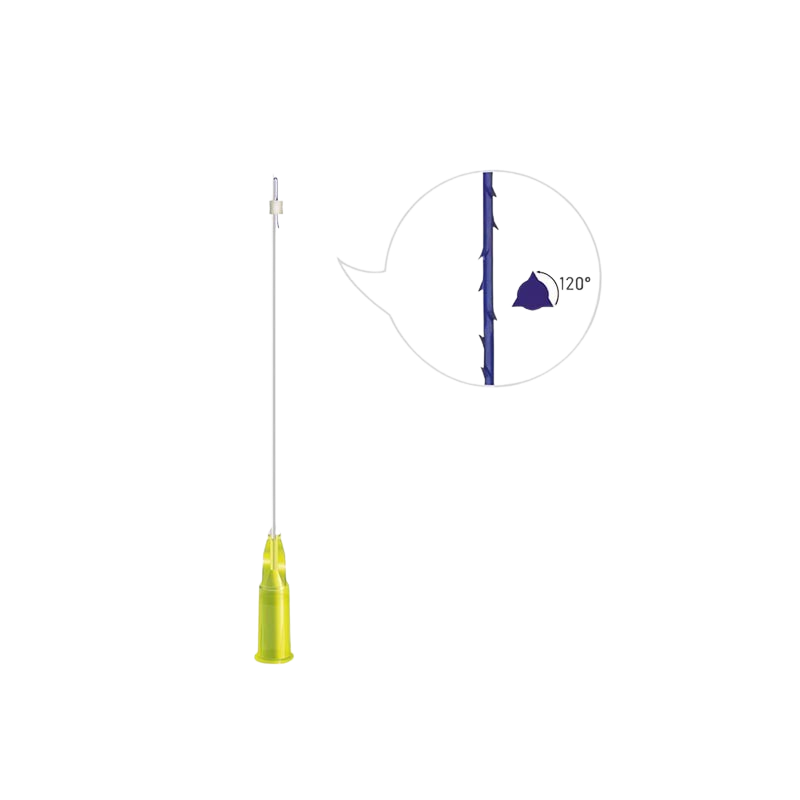
RAINBOW® 3D COG 21G90-L (20 pcs)
Order RAINBOW® 3D COG 21G90-L for Clinics
Medical Device
$119.00
You save
Description
RAINBOW® 3D COG 21G90-L (20 pcs) is a sterile barbed PDO thread format used by licensed clinics and healthcare professionals for aesthetic tissue support. The 21G90-L configuration supports planned subdermal placement in trained thread-lifting protocols, with each pack supplying 20 pieces for treatment-room inventory. Clinics can order RAINBOW® 3D COG 21G90-L through a professional account and align purchases with case volume, documentation, and sterile handling procedures.
Clinic Ordering, Price, and Pack Planning
RAINBOW® 3D COG 21G90-L price access is account-based for licensed professional buyers. Sign in to view current clinic-tier pricing, confirm the 20-piece pack configuration, and allocate units to the appropriate requisition before scheduled aesthetic procedures. Pricing may vary by purchasing tier, allocation status, and replenishment cadence, so practices should base reorder timing on active treatment demand rather than last-minute case needs.
For inventory managers, this product is most relevant when the clinic needs a barbed PDO thread in a 21G, 90 mm format for lift-vector planning. The supplied quantity can support procedure kits, room stocking, and standardized staff preparation when protocols call for this gauge-length pairing. Maintain lot and expiration records during receiving so clinical teams can trace units used in each treatment session.
Med Wholesale Supplies serves licensed clinics and healthcare professionals with brand-name medical products sourced through vetted distributors and verified supply channels. Professional-use ordering requirements may apply, and order details should match your clinic documentation, procedure planning, and receiving process.
What the 3D Cog PDO Thread Is
This preparation is a cogged polydioxanone thread intended for subdermal placement by trained clinicians using aseptic technique. PDO, or polydioxanone, is a biodegradable suture material used in medical and aesthetic applications. The 3D cog structure is designed to engage soft tissue mechanically along multiple vectors at the time of placement, helping practitioners create support and repositioning within an individualized treatment plan.
Practitioners select insertion depth, vector direction, entry points, and thread count according to anatomy, training, and clinic protocol. The product class is commonly used in non-surgical facial support workflows where mechanical tissue engagement is desired, especially when a clinic needs a stronger lifting thread than smooth monofilament PDO formats. For broader clinical background on thread materials and placement principles, use the internal thread lift risk and planning discussion as staff education support.
RAINBOW® 3D COG threads 21G90-L 20 pcs should be handled as sterile single-use medical devices. Do not use a unit if the sterile barrier is damaged, if labeling is unclear, or if storage conditions have not followed manufacturer guidance. Device selection and procedural planning remain the responsibility of the qualified practitioner.
Professional Applications in Aesthetic Workflows
Clinics incorporate 21G90-L PDO cog threads into treatment plans focused on mechanical support, contour refinement, and tissue repositioning. Common professional applications include midface vector support, cheek support, jawline definition, and selected neck protocols when the patient assessment and practitioner training support use. These applications should remain within the clinic’s established scope, consent process, and post-procedure monitoring standards.
Cog threads differ from smooth mono threads because their barbed surface provides tissue engagement immediately after placement. Smooth threads are often selected for fine support or textural protocols, while cog threads are chosen when controlled lift-vector support is the procedural priority. Many practices carry several PDO formats to support staged treatment planning, combination protocols, and follow-up refinements.
For adjacent device planning, browse the broader medical devices category. To evaluate related RAINBOW products by manufacturer, visit the RAINBOW brand category.
Key Features for Treatment-Room Use
- 3D cog profile: barbed geometry supports multi-vector tissue engagement during placement.
- PDO material: polydioxanone is a biodegradable suture polymer that gradually resorbs after implantation.
- 21G90-L format: gauge and length pairing supports planned thread-lift protocols that call for this size.
- Sterile single-use presentation: sealed packaging supports aseptic preparation and procedural consistency.
- 20-piece pack: quantity supports clinic stocking, kit building, and scheduled case planning.
- Traceable supply: lot and expiration information should be recorded at receiving and use.
Quick tip: Keep cog-thread units grouped by gauge, length, lot, and expiration to reduce room-prep errors.
Composition, Mechanism, and Expected Resorption
The active implantable material is polydioxanone in a monofilament thread with cogged geometry. No additional excipients are listed for the thread itself in the supplied product information. The thread is provided sterile for single-use professional placement and should be opened only when the clinician is ready to proceed under aseptic conditions.
PDO threads provide their initial effect through mechanical engagement after subdermal placement. Over time, the material undergoes hydrolytic degradation and is absorbed by the body. The clinical plan should account for immediate mechanical support, the expected resorption profile of PDO, patient anatomy, tissue quality, and the clinic’s follow-up protocol.
The degree and duration of visible correction can vary. Avoid unsupported promises about results, longevity, or superiority. Provider technique, vector design, thread selection, patient selection, and aftercare all influence the outcome and complication risk.
Storage, Sterility, and Receiving Checks
Store RAINBOW® 3D COG 21G90-L in a clean, dry environment away from direct sunlight and in line with manufacturer instructions. Receiving staff should inspect outer cartons, confirm product name and pack quantity, and record lot number and expiration date before units enter clinical stock. Any package with a compromised sterile barrier should be removed from use according to clinic policy.
Sterile handling is especially important because PDO threads are implanted beneath the skin. Open the unit only in a controlled treatment setting, avoid contact with non-sterile surfaces, and discard unused opened units according to local medical waste procedures. Staff should understand the difference between package integrity checks performed at receiving and sterile-field handling performed during the procedure.
Orders are supported by reliable US logistics, including temperature-controlled handling when required and tracked US delivery. Use receiving logs and internal inventory controls to maintain continuity between purchasing, storage, treatment-room use, and chart documentation.
Safety, Training, and Patient Selection Considerations
PDO cog threads are for trained professional use. A qualified clinician should assess anatomy, medical history, skin condition, previous procedures, anticoagulant or antiplatelet use, infection risk, and suitability for thread placement before treatment. Clinics should also use informed consent that explains expected effects, aftercare, limitations, and possible adverse events.
Thread-lift procedures can be associated with bruising, swelling, tenderness, asymmetry, dimpling, thread visibility, extrusion, infection, nerve irritation, and dissatisfaction with cosmetic outcome. Serious complications are uncommon but require prompt clinical assessment. Contraindications and precautions should be defined by the manufacturer instructions, local standard of care, and the practitioner’s clinical judgment.
Training matters because the 3D cog design is intended to anchor in tissue and create mechanical support. Incorrect plane, poor vector planning, excessive tension, or inadequate aseptic technique can increase complication risk. Clinics should keep procedure checklists, emergency escalation protocols, and follow-up instructions accessible to staff involved in thread-lift services.
How Clinics Use Cog Threads Alongside Other PDO Formats
Cog threads are typically selected when the treatment objective includes stronger mechanical support or repositioning. Smooth mono threads may be used for fine support or texture-focused protocols, while screw or spiral designs may be selected for different tissue-response goals. A balanced PDO inventory lets providers match thread design to the treatment area instead of forcing a single format into every plan.
Clinics evaluating comparable cog formats may consider Intraline PDO Dimension 360 B2190-C for another 21G-related configuration. Practices needing a broader cog assortment can also review Intraline Cog or Intraline PDO Threads Cog Dimension 360 C19100M-C.
For protocols that call for non-cog thread support, PCLA Screw 29G50 may be relevant to review as a separate thread-design category. Product selection should be based on clinician training, desired vector, anatomical site, and the manufacturer’s intended-use information.
Ordering Workflow for Licensed Practices
To buy RAINBOW® PDO 3D COG threads 21G90-L, use your professional account to view current purchasing details and build a requisition that matches clinic demand. Confirm pack quantity, SKU references, lot documentation needs, and receiving procedures before checkout. The current SKU referenced for this product is 89885.
Procurement teams should coordinate ordering with service schedules, provider availability, and expected thread counts per protocol. Building procedure kits in advance can reduce room turnover time, but kits should preserve sterile packaging and remain organized by gauge, length, and expiration. Staff preparing kits should never open sterile units before the treatment setting is ready.
When substitution is needed, select alternatives by thread type, gauge, length, cog design, and practitioner familiarity. Do not substitute a product solely because it is another PDO thread; mechanical behavior and placement technique can differ between designs.
Authoritative Sources
- Peer-reviewed discussion of barbed threads for soft tissue support
- Manufacturer overview of Rainbow Thread products
Ready to proceed? Sign in to add this SKU to your clinic requisition and align ordering with your treatment schedule, storage process, and professional documentation requirements.
This content is for informational purposes only and is not a substitute for professional medical advice.
Frequently Asked Questions
Who can order RAINBOW® 3D COG 21G90-L?
RAINBOW® 3D COG 21G90-L is intended for licensed clinics, med spas, aesthetic practices, and healthcare professionals using trained thread-lift protocols. Professional account review and clinic documentation may apply before purchase.
What does 21G90-L mean for clinic planning?
The 21G90-L designation identifies the supplied gauge-length format used for procedure planning. Clinics should match this configuration to practitioner training, anatomical goals, and the protocol calling for this thread size.
How should clinics store PDO cog threads before use?
Store sealed units in a clean, dry environment away from direct sunlight and follow manufacturer instructions. Inspect the sterile barrier, product name, lot number, and expiration date during receiving and before treatment-room use.
Can this thread be used with other PDO thread types?
Clinicians may use cog, mono, screw, or other thread designs within a broader treatment plan when training and protocol support it. Each format should be selected for its intended mechanical role and anatomical placement needs.
What safety checks matter before a thread-lift procedure?
A qualified clinician should assess anatomy, medical history, infection risk, medications that affect bleeding, prior procedures, and suitability for subdermal thread placement. Aseptic technique, informed consent, and follow-up instructions are essential.
How do clinics view the current RAINBOW® 3D COG 21G90-L price?
Current clinic-tier pricing is available after signing in with a professional account. The displayed purchasing details should be reviewed with pack quantity, case volume, and replenishment timing in mind.
Specifications
- Main Ingredient:
- Manufacturer: PCLA Medical Devices Inc.
- Drug Class: Medical Device
- Generic Name: 3D Cog 21G90-L
- Package Contents: 8 pcs
- Storage Requirements: Room Temperature (2℃~25℃)
- Main Usage:
About the Brand
Rainbow
Rainbow, a highly regarded medical brand, offers an extensive selection of superior medical supplies. From gloves and masks to surgical tools and machines, Rainbow provides everything necessary for flawless patient care, adhering to the highest medical industry standards. One of the exceptional features about Rainbow is its availability via our online platform, medwholesalesupplies.com. This user-friendly site provides a smooth and trouble-free process for bulk ordering of medical supplies. Healthcare professionals can effortlessly peruse Rainbow's comprehensive product list and add required items to their shopping cart— a quicker and more efficient alternative to conventional purchase methods. Opting to procure Rainbow via medwholesalesupplies.com is also economically beneficial due to the competitive pricing structure. Our platform offers wholesale rates on Rainbow items, resulting in a cost-effective solution for healthcare institutions and practitioners. Purchasing in large quantity allows customers to appreciate significant savings without quality trade-offs. Furthermore, our site includes detailed images and product descriptions, thereby helping clients make well-informed purchasing decisions. In summary, medwholesalesupplies.com serves as an ideal online marketplace for healthcare professionals to acquire Rainbow products effortlessly, economically, and with outstanding value.
Browse Rainbow Products
Here to help
Questions about ordering, delivery or products? You can email our team here or call now at 1-800-630-9757 and be connected with your dedicated Account Manager
Related Products
Evenity® (English Alternative)
Injectable Medication
$1,229.00 - $1,299.00
You save
You save
Intraline® For Men
Dermal Filler
$59.00 - $79.00
You save
You save
RejuvaNAD+ Pro
Injectable Medication
$237.00 - $249.00
You save
You save
Teosyal® RHA 4
Aesthetic Surgery Product
$259.00 - $279.00
You save
You save
Related Articles
Prednisone in Clinical Care: Uses, Risks, and Monitoring
Prednisone is a prescription systemic corticosteroid used to reduce inflammation or suppress immune activity in…
Lip Fillers Swelling Stages: Timeline, Safety, and Follow-Up
Lip fillers swelling stages usually follow a short inflammatory course: swelling appears soon after injection,…
Hypopigmentation of the Skin: Assessment and Care
Hypopigmentation of the skin means one or more areas look lighter than the surrounding skin.…
Radiesse vs Sculptra: Selection Factors for Clinics
Radiesse vs Sculptra is best understood as a comparison between two collagen-stimulating injectables with different…
Hyaluronic Acid Under-Eye Filler: Safety and Workflow
Hyaluronic acid under-eye filler is an injectable soft-tissue filler used by trained aesthetic clinicians to…
Dermal Filler Types: Materials, Uses, and Clinic Fit
Dermal filler types are usually grouped by their base material, tissue behavior, and expected role…
What Is Dysport? Clinical Uses, Safety, and Workflow
For clinic teams asking what is Dysport, the short answer is simple: Dysport is a…
Biostimulators in Aesthetic Care: Selection and Safety
Biostimulators are injectable aesthetic products used to encourage a controlled tissue response, often involving new…