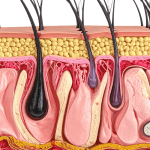

Long-lasting dermal fillers can simplify treatment planning, but they also raise the stakes. When a material remains in tissue for longer, your clinic needs tighter documentation, clearer patient counseling, and a conservative approach to complications. ellanse filler is often discussed in this context because it is positioned as a longer-duration, collagen-stimulating option rather than a short-lived gel.
This guide is written for licensed healthcare providers and clinic teams. It focuses on mechanism, risk discussions, and operational readiness. It avoids dosing, step-by-step injecting, or patient-specific recommendations. Always follow your local regulations and the product’s Instructions for Use (IFU).
Why it matters: Longer persistence can reduce retreatment frequency, but it may complicate revision planning.
Key Takeaways
- Plan for longevity: align expectations, photos, and follow-up cadence.
- Prioritize reversibility discussions: not all fillers have a “dissolver.”
- Document thoroughly: lot numbers, consent, anatomy, and aftercare steps.
- Operationalize safety: protocols for vascular events and delayed nodules.
Supplier accounts are typically limited to licensed healthcare facilities.
What It Is and Why Longevity Changes Your Planning
Ellansé is commonly described as a polycaprolactone (PCL) dermal filler. Polycaprolactone is a biodegradable polymer used in medical applications. In aesthetic use, PCL-based fillers are discussed as “collagen stimulators,” meaning they may trigger gradual collagen stimulation (a process where fibroblasts lay down new collagen) alongside any immediate space-occupying effect.
That “two-phase” concept matters operationally. Patients may notice an early change, then a more subtle evolution over time. It also means you should treat early satisfaction and late dissatisfaction as different problems with different solutions. For an overview of filler categories and how practices group them, see the site’s Types Of Dermal Fillers explainer.
Polycaprolactone microspheres in brief
Within this product class, PCL is often described as being present as smooth microspheres suspended in a carrier gel. Over time, the carrier gel component is expected to dissipate sooner than the microspheres. The microspheres can persist longer and are associated with a longer remodeling phase. The clinical takeaway is not a promise of duration. It is a planning framework. You may need a longer runway for evaluating results, documenting “before and after” changes, and responding to late-onset concerns.
Because of that longer horizon, clinics often tighten baseline capture. Standardized photography, consistent lighting, and repeatable patient positioning become less optional. They protect your team when a patient brings in “ellansé before and after” images from social media that do not match your documentation quality.
Setting Expectations at Week 1, Month 3, and Beyond
Many patient searches focus on timelines such as “ellanse after 3 months.” In practice, patients may be trying to answer several questions at once: “Will it look the same?”, “Will it keep changing?”, and “When will it settle?” Your role is to translate a marketing-style timeline into a cautious clinical monitoring plan. Avoid implying a guaranteed curve of improvement.
Use plain language. Explain that some fillers behave more like a gel that sits and gradually integrates. Others act more like a scaffold that can prompt longer-term tissue response. Emphasize that individual variability, anatomy, and technique can change the apparent trajectory. For clinics comparing counseling approaches across products, the article Sculptra Vs Filler Comparison Guide offers a useful planning lens.
How to make “before and after” evidence usable
Patients frequently reference ellanse filler reviews and “before-and-after” galleries. Treat those materials as expectations data, not outcomes evidence. You can keep the conversation grounded by building a simple, repeatable capture protocol. Document baseline in at least two expressions, consistent angles, and a neutral head position. Record any concurrent skin treatments, weight changes, or recent dental work that might influence facial appearance. When a patient later asks about subtle changes, your team can compare like-for-like images rather than argue from memory.
Also decide, in advance, how your clinic defines “touch-up” versus “revision.” Those terms can feel interchangeable to patients. Internally, they drive different consent language and different safety discussions.
Safety Conversations: Immediate Reactions, Delayed Nodules, and Uncertainty
All injectable fillers share baseline risks. These include bruising, swelling, pain, infection, vascular compromise, and inflammatory reactions. Longer-acting stimulatory fillers add a planning nuance: if tissue response continues over time, delayed issues may present later than your standard post-injection window. This is why clinics often formalize a longer follow-up pathway for patient-reported lumps, firmness, or asymmetry.
When discussing ellanse filler side effects, keep language precise. Separate common short-term reactions (such as swelling or tenderness) from less common but higher-impact events (such as vascular compromise) and late inflammatory nodules. Avoid quoting incidence figures unless you are reading directly from approved labeling or a high-quality consensus statement.
Irreversibility and “how to dissolve” questions
One of the most operationally important questions you will hear is “how to dissolve ellanse filler.” Clinically, the point is broader than one product. Hyaluronic acid (HA) fillers have an established enzymatic reversal pathway in many settings (for example, hyaluronidase use, under appropriate clinical judgment and protocols). Collagen-stimulating or non-HA materials may not have a comparable “on-demand” dissolver. That does not mean complications are unmanageable. It does mean your clinic should set expectations early, document that discussion, and have a referral pathway for complex adverse events.
Patients may also search for “ellanse problems after 2 years.” You cannot predict who will experience a late inflammatory response. What you can do is standardize intake questions (autoimmune history, prior filler reactions, and prior procedures) and maintain traceability so you can respond with specifics if a concern arises months later.
ellanse filler in Clinic Procurement and Workflow
Longer-lasting injectables amplify procurement and governance details. Your team should treat product selection, receiving, and recordkeeping as a clinical safety function, not only a purchasing function. Many practices start by aligning on which indications and anatomical regions they will not treat with long-duration materials until staff are fully trained and documentation templates are stable.
Stock is sourced via vetted distributor networks to support authenticity.
From an operations standpoint, set up a consistent “verify and record” loop. Confirm license requirements with your supplier. Clarify what provenance documents can be provided if you are audited. If your clinic relies on US distribution for inventory planning, make sure your receiving staff know who can accept packages and where they are logged.
Clinic workflow snapshot
A simple workflow snapshot helps reduce variation across shifts. Keep it high-level and adapt to your local policies. The goal is repeatability: the same checks, the same documentation fields, and the same escalation triggers. This also helps practice managers support clinicians without drifting into clinical decision-making.
- Verify account: license and facility credentials on file.
- Document sourcing: supplier name and distributor channel noted.
- Receive stock: inspect packaging, expiry, and integrity.
- Store correctly: follow IFU and facility policy.
- Prepare visit: consent, photos, and aftercare handout ready.
- Record treatment: lot/serial, site map, and amount used.
- Monitor events: standardized follow-up and incident logging.
When you are reviewing inventory options, it can be helpful to browse a curated hub such as Dermal Fillers to keep teams aligned on product classes rather than brand impressions. If you need a concrete example of how products may be listed for clinic procurement, see Ellanse S 2 x 1 mL Prefilled Syringes as a reference point for how packaging formats are typically described.
How to Compare Collagen Stimulators, CaHA, HA, and Skin Boosters
Clinicians often frame the decision as ellanse vs sculptra, or ellanse vs radiesse, because those products are discussed as longer-duration, biostimulatory (collagen-stimulating) options. Patients may also ask about ellanse vs hyaluronic acid fillers, since HA is familiar and is commonly viewed as more “reversible.” Another common comparison is ellanse vs profhilo, where the patient may be seeking skin quality improvement rather than structural volumization.
Keep comparisons grounded in mechanisms and workflow implications. When two products have different preparation steps, different onset patterns, and different revision options, those differences affect staffing, scheduling, and follow-up scripts. For deeper reading on the broader category comparisons, see Comparing CaHA And PLLA Fillers and the longevity discussion in How Radiesse Boosts Collagen.
| Filler class | What patients perceive | Clinic planning considerations |
|---|---|---|
| PCL collagen-stimulating filler | Early correction with potential gradual change | Longer monitoring window; limited “dissolve” options |
| PLLA collagen stimulator | More gradual onset often discussed | Preparation and follow-up protocols may differ by product |
| CaHA (calcium hydroxylapatite) filler | Immediate lift with remodeling discussions | Consider rheology, anatomy, and complication pathways |
| HA gel filler | Immediate volume and contour | Reversibility pathway exists; still requires safety protocols |
| HA-based “skin booster” products | Hydration and skin texture goals | Set expectations: skin quality vs structural projection |
When teams need examples of category-adjacent products for procurement reference, some clinics keep a small “comparison basket” in their formulary. A CaHA example that is commonly referenced is Radiesse 3 mL. For PLLA-focused comparison reading, Lanluma Vs Sculptra highlights the operational questions practices tend to ask.
Technique Considerations, High-Risk Zones, and Aftercare Messaging
Clinicians searching “ellanse injection technique” are usually looking for practical guidance. From a clinic governance perspective, the most valuable “technique” work is often pre-procedure: patient selection criteria, standardized mapping language, and escalation pathways for adverse events. Your protocols should specify who can inject which product class, what supervision is required, and what training documentation is retained.
Use clear internal language for high-risk zones. The under-eye region is a common example because patients ask about “ellanse filler for under eye,” usually as a proxy for tear trough correction. Regardless of product choice, the periorbital area has thin tissue planes and a higher consequence of contour irregularities and vascular events. Many practices treat reversibility and edema risk as key decision factors in that region and document the rationale explicitly.
Quick tip: Keep your aftercare handouts version-controlled and tied to each filler class.
Aftercare messaging should be consistent and conservative. Focus on what patients should monitor and when they should contact the clinic, rather than promising a recovery timeline. If your clinic uses the phrase “ellanse filler aftercare,” translate it into: expected short-term injection-site reactions, hygiene basics, and red-flag symptoms that require prompt clinical assessment.
- Over-relying on anecdotes: treat “reviews” as expectations, not evidence.
- Under-documenting: missing lot numbers complicates adverse event workups.
- Loose photo standards: inconsistent angles weaken outcome discussions.
- Unclear escalation: staff unsure who handles late nodules.
- One-size consent: long-duration materials need explicit revision language.
Documentation to support product provenance is usually available for audit needs.
For operational continuity, you may also centralize educational updates in a team-readable location, such as your internal policy library. Some clinics tag relevant posts in a public-facing hub like Dermal Fillers for quick access during training refreshers.
Authoritative Sources
Long-lasting fillers can fit well in a mature aesthetic formulary. They also demand more rigor around consent, traceability, and late-issue workflows. If your clinic is scaling services with reliable US logistics, keep governance steps as standardized as your clinical skills.
This content is for informational purposes only and is not a substitute for professional medical advice.