
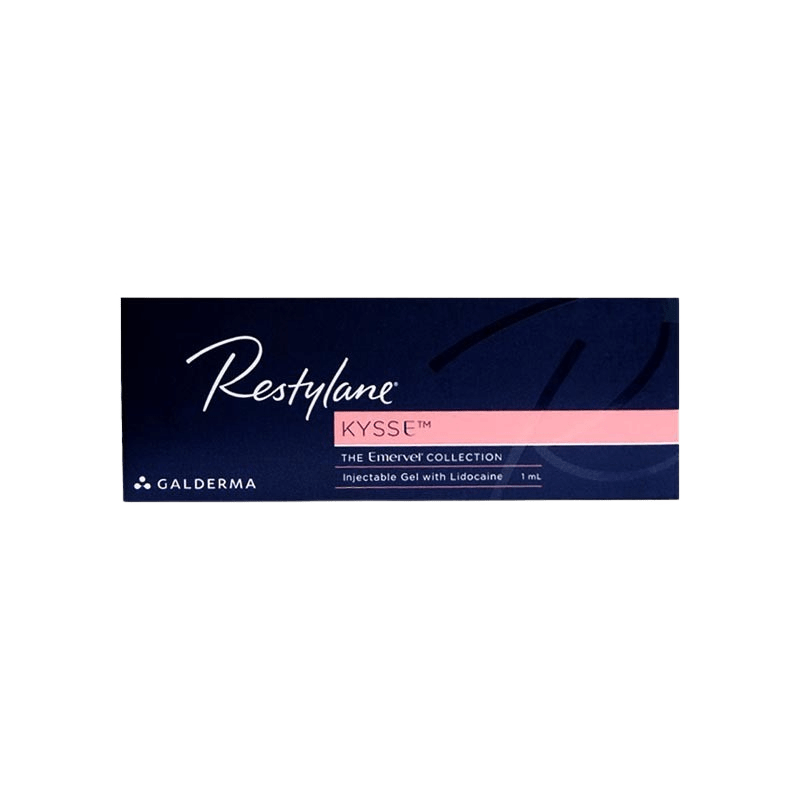
Restylane® Kysse w/ Lidocaine
Order Restylane® Kysse w/ Lidocaine for Clinics
Hyaluronic Acid-Based Filler
$189.00
You save
Description
Restylane® Kysse w/ Lidocaine is a hyaluronic acid injectable filler for professional lip and perioral enhancement. Licensed clinics and healthcare professionals can order the 1 mL prefilled syringe presentation for treatment-room use, inventory planning, and procedure scheduling. The formulation contains 20 mg/mL hyaluronic acid and 3 mg/mL lidocaine, with two sterile 30G 1/2-inch needles included.
This lip-focused gel is designed for refined contouring, soft volume, and natural movement during animation. It can support vermilion border definition, symmetry work, perioral line softening, and Cupid’s bow articulation when clinically appropriate. Med Wholesale Supplies serves licensed clinics with brand-name medical products sourced through vetted distributors and verified supply channels.
Clinic Ordering, Price, and 1 mL Presentation
Restylane Kysse with Lidocaine price depends on clinic account terms, order volume, and contract structure. Sign in with a verified professional account to view current wholesale tiers and align quantities with your purchasing workflow. The 1 mL syringe format is familiar for lip-focused treatments, touch-ups, and staged aesthetic plans.
Each unit contains one 1 mL prefilled syringe, two sterile 30G 1/2-inch needles, and the manufacturer package insert. Labeling supports receiving and inventory records with lot and expiration details. Product SKU 87904 can be used by purchasing teams when standardizing reorder lists or matching internal formulary records.
For teams that stock multiple injectable categories, consolidating dermal filler purchasing can reduce receiving complexity and support more predictable appointment planning. Practices evaluating adjacent products can browse the full Restylane range for compatible brand-line options used in aesthetic workflows.
What the Filler Is and How It Works
This preparation is a crosslinked hyaluronic acid gel formulated for injection into the lips and perioral dermis by trained professionals. Hyaluronic acid is a naturally occurring molecule that binds water in soft tissue, while crosslinking helps the gel provide structure after placement. The cohesive gel profile supports controlled definition and soft volumization in a highly mobile area of the face.
Restylane Kysse lip filler with Lidocaine uses XpresHAn Technology, a manufacturing approach associated with flexibility during facial movement. That property matters in the lips because speech, smiling, and expression can reveal filler stiffness or poor blending. In appropriate cases, clinicians use this handling profile to balance visible contour with natural expression.
The formulation includes lidocaine to improve procedural comfort during injection. Lidocaine does not replace clinical assessment, sterile technique, or anatomy-aware injection planning, but it can reduce the need for separate comfort measures in some workflows. For a broader look at anesthetic use in fillers, see lidocaine in dermal filler procedures.
Professional Applications in Lip and Perioral Treatment
Clinicians select this product for lip augmentation, vermilion border refinement, symmetry correction, and subtle structural support. It may also be used to soften vertical perioral lines and refine landmarks such as the Cupid’s bow when patient anatomy and treatment goals support that plan. The gel’s smooth extrusion supports fine adjustments during contour-focused procedures.
The product is often chosen when the desired endpoint is soft definition rather than exaggerated projection. In practice, placement depth, injection plane, volume, and technique influence the final appearance more than product choice alone. Teams developing lip protocols may find lip augmentation technique considerations useful for staff discussion and case planning.
Restylane Kysse w Lidocaine can be scheduled as a standalone filler or integrated into staged treatment plans with other hyaluronic acid products. When combining products, clinicians should consider rheology, lift, tissue mobility, and the total filler burden in the perioral area. A documented plan helps maintain consistency across providers and follow-up visits.
Key Features for Treatment-Room Workflow
- Expression-friendly design: XpresHAn Technology supports dynamic movement while maintaining contour support.
- Integrated anesthetic: 3 mg/mL lidocaine is included for procedural comfort.
- Known HA concentration: The formulation contains 20 mg/mL hyaluronic acid.
- Practical format: One 1 mL prefilled syringe supports lip-focused plans and touch-ups.
- Included needles: Two sterile 30G 1/2-inch needles are supplied in the box.
- Cohesive handling: The gel supports controlled placement through fine-gauge needles.
- Single-use sterility: Components are intended for one patient session only.
- Inventory traceability: Package labeling includes lot and expiration details for clinic records.
- Duration profile: Visible effects may last up to 12 months, depending on technique and patient factors.
Composition, Ingredients, and Duration
Active components include non-animal stabilized hyaluronic acid and lidocaine hydrochloride. The hyaluronic acid gel provides hydration and structural support after injection, while lidocaine provides a local anesthetic effect. Excipients listed in the manufacturer insert help maintain pH and isotonicity appropriate for soft tissue injection.
Restylane Kysse with Lidocaine 0.3% lidocaine reflects a commonly used anesthetic concentration in hyaluronic acid fillers. For clinical teams, that information is useful when documenting product selection, counseling on expected comfort measures, and screening for relevant lidocaine sensitivity. Staff should also confirm that the insert in the received box matches the product being prepared for use.
Visible duration varies by injection technique, tissue characteristics, metabolism, movement, and maintenance planning. In many treatment plans, results may persist for up to one year, but longevity is not uniform across patients. Clinics should set follow-up intervals according to clinical response rather than relying on a fixed timeline.
Packaging, Handling, and Inventory Controls
The Restylane Kysse w/ Lidocaine 1 mL presentation is designed for professional administration in a sterile procedural environment. Each box includes one prefilled syringe, two sterile 30G 1/2-inch needles, and the official package insert. All components are intended for single use, and unused material should be handled according to clinic policy and manufacturer directions.
Receiving teams should record lot number, expiration date, quantity, and storage location at intake. This supports recall readiness, internal audits, and procedure-room traceability. Maintain separation between opened, expired, quarantined, and ready-to-use inventory so staff can prepare treatments without uncertainty.
Follow manufacturer handling instructions before and during administration. Do not use a syringe if packaging appears damaged, sterility is compromised, or labeling cannot be matched to receiving records. Shipments are supported by temperature-controlled handling when required and tracked US delivery, which helps clinics coordinate intake with scheduled procedure days.
Safety, Contraindications, and Professional Screening
Common transient reactions after hyaluronic acid filler injection can include injection-site pain, itching, swelling, bruising, and tenderness. These effects are typically discussed during informed consent and follow-up planning. Clinics should also be prepared to recognize less common but clinically important complications associated with dermal filler injections, including vascular compromise, infection, hypersensitivity, nodules, and tissue changes.
Contraindications listed in the current product information include bleeding disorders and a history of hypersensitivity to amide-type local anesthetics, including lidocaine. Screening should also account for current medications, prior filler history, inflammatory skin conditions near the treatment area, and any history suggesting elevated procedural risk. Product selection should follow the supervising clinician’s protocol and the manufacturer insert.
Injection in the lip and perioral area requires detailed anatomical knowledge. Professional users should follow aseptic technique, aspirate or use other risk-reduction steps according to their training and protocol, and monitor tissue response during placement. Any unexpected blanching, severe pain, visual symptoms, or signs of vascular compromise require immediate clinical action under established emergency procedures.
Benefits in Practice
Predictable handling supports measured placement, controlled microbolus technique, and even contouring. The gel’s cohesivity helps preserve intended shape when layered carefully in appropriate soft tissue planes. This can be useful for practices that aim to deliver subtle enhancement with clear border definition.
Built-in lidocaine can improve comfort without adding another product to the procedure tray in many cases. The included 30G 1/2-inch needles provide familiar tactile feedback for common lip and perioral entry points. A consistent 1 mL format also helps inventory teams forecast usage across consultation, treatment, and follow-up schedules.
For clinics that train across several Restylane products, consistent brand-line documentation can simplify internal education. A broader clinical discussion of product selection, placement goals, and expected handling is available in Restylane dermal filler treatment planning.
How It Compares With Related Fillers
Restylane Kysse with Lidocaine is best viewed as a lip and perioral filler with a balance of softness, support, and movement. It is not automatically the best lip filler for every case; selection depends on anatomy, desired lift, tissue quality, prior filler history, and injector technique. Clinics should compare rheology and intended placement rather than relying on brand familiarity alone.
Practices evaluating fine lines and dynamic areas may also consider Restylane Refyne with Lidocaine. For deeper structural support in suitable facial areas, Restylane Defyne with Lidocaine may be part of a broader treatment menu. Selection should remain indication-aware and technique-specific.
For clinics comparing competing HA filler families, Restylane and Juvederm differences can help frame staff education around texture, lift, and patient-experience discussions. Lip-focused category planning can also be supported by types of lip fillers, especially when building a formulary that covers subtle definition, volume, and correction work.
Ordering and Logistics for Licensed Practices
Licensed clinics, med spas, and healthcare professionals can add Restylane Kysse with Lidocaine wholesale quantities to their supply plan after account verification. Business credentials may be required for professional-use items. Your team can use account tools to view current purchasing tiers, request documentation support, and coordinate replenishment around booked procedures.
US distribution helps practices plan intake with receiving staff and procedure-room schedules. Keep reorder points tied to actual usage, upcoming campaigns, provider availability, and expiration dating. Clinics that standardize preferred fillers can reduce rushed purchasing and minimize substitutions that require technique changes.
If a temporary supply constraint occurs, the supervising clinician should approve any alternative before treatment plans change. Substitutions should account for lip mobility, gel firmness, lift, lidocaine content, and needle compatibility. Document any product change in the patient record and internal inventory system.
Authoritative Sources
Use the package insert supplied with the box as the primary source for current handling, contraindications, warnings, and administration information. Clinic protocols should also reflect professional training, applicable scope-of-practice requirements, and current safety guidance for dermal filler procedures. Manufacturer labeling and regulator-backed safety materials should be consulted directly by clinical leads when updating consent forms or staff education.
This content is for informational purposes only and is not a substitute for professional medical advice.
Frequently Asked Questions
Does Restylane Kysse have lidocaine in it?
Yes. The supplied formulation contains 3 mg/mL lidocaine, described as 0.3% lidocaine, along with 20 mg/mL hyaluronic acid. The anesthetic is included to improve procedural comfort during professional injection.
How much is one syringe of Restylane Kysse w/ Lidocaine?
The clinic price depends on your verified account terms, order volume, and contract structure. Sign in to view current wholesale tiers for the 1 mL prefilled syringe presentation.
What comes in the Restylane Kysse w/ Lidocaine box?
Each unit includes one 1 mL prefilled syringe, two sterile 30G 1/2-inch needles, and the official package insert. The label includes lot and expiration information for clinic inventory records.
How long can Restylane Kysse results last?
Visible effects may last up to 12 months in many treatment plans. Duration varies with injection technique, treatment area, tissue characteristics, metabolism, movement, and maintenance timing.
Is Restylane Kysse the best lip filler for every patient?
No single lip filler is best for every case. Product choice should reflect anatomy, treatment goals, tissue mobility, prior filler history, desired softness or lift, and the injector’s technique.
What safety checks matter before clinic use?
Clinics should screen for bleeding disorders and hypersensitivity to amide-type local anesthetics such as lidocaine. Staff should also follow the manufacturer insert, aseptic technique, and established protocols for recognizing filler complications.
Specifications
- Main Ingredient: Hyaluronic Acid 20Mg/Ml Lidocaine 3Mg/Ml
- Manufacturer: Galderma
- Drug Class: Dermal Filler
- Generic Name: Hyaluronic Acid-Based Filler
- Package Contents: 1 mL x 1 Pre-Filled Syringe
- Storage Requirements: Room Temperature (2℃~25℃)
- Main Usage: Lip Filler
About the Brand
Restylane
Restylane stands as a trusted medical brand, providing an extensive variety of injectable dermal fillers designed to rejuvenate facial appearance and minimize aging signs. These products, infused with hyaluronic acid, are renowned for results that embody natural aesthetics and exhibit prolonged effectiveness. On medwholesalesupplies.com, we present Restylane offerings at market competitive rates, facilitating medical experts in keeping these premium dermal fillers on hand. By choosing to acquire Restylane via medwholesalesupplies.com, medical practitioners stand to gain numerous advantages. To begin with, our online platform simplifies the ordering process and lessens the exertion involved in sourcing these medical essentials. Furthermore, by offering Restylane at wholesale prices, we provide an opportunity for practitioners to achieve monetary savings when making bulk purchases. Finally, we place a high emphasis on customer contentment and guarantee only authentic products on our website. Therefore, when purchasing Restylane from medwholesalesupplies.com, you can rest assured you are obtaining genuine articles. In summary, Restylane represents a reliable medical brand furnishing prime quality dermal fillers to aid in facial revival. Through medwholesalesupplies.com, medical specialists can swiftly secure Restylane products at wholesale prices, saving both time and resources while ensuring product genuineness. Unlock the potential of Restylane, a trusted name in cosmetic fillers, through Med Wholesale Supplies. Whether you're looking to enhance lips with Restylane for lips or seeking the best Restylane filler for various treatments, we have you covered. Explore Restylane prices to find affordable solutions that meet your needs. Our expert-curated selection ensures you can deliver the best results to your clients with confidence. Choose Med Wholesale Supplies for all your Restylane products and more!
Browse Restylane Products
Here to help
Questions about ordering, delivery or products? You can email our team here or call now at 1-800-630-9757 and be connected with your dedicated Account Manager
Related Products
Prolia® (International English)
Prescription Medication
$529.00 - $549.00
You save
You save
Evenity® (English Alternative)
Injectable Medication
$1,229.00 - $1,299.00
You save
You save
Intraline® For Men
Dermal Filler
$59.00 - $79.00
You save
You save
RejuvaNAD+ Pro
Injectable Medication
$237.00 - $249.00
You save
You save
Related Articles
Prednisone in Clinical Care: Uses, Risks, and Monitoring
Prednisone is a prescription systemic corticosteroid used to reduce inflammation or suppress immune activity in…
Lip Fillers Swelling Stages: Timeline, Safety, and Follow-Up
Lip fillers swelling stages usually follow a short inflammatory course: swelling appears soon after injection,…
Hypopigmentation of the Skin: Assessment and Care
Hypopigmentation of the skin means one or more areas look lighter than the surrounding skin.…
Radiesse vs Sculptra: Selection Factors for Clinics
Radiesse vs Sculptra is best understood as a comparison between two collagen-stimulating injectables with different…
Hyaluronic Acid Under-Eye Filler: Safety and Workflow
Hyaluronic acid under-eye filler is an injectable soft-tissue filler used by trained aesthetic clinicians to…
Dermal Filler Types: Materials, Uses, and Clinic Fit
Dermal filler types are usually grouped by their base material, tissue behavior, and expected role…
What Is Dysport? Clinical Uses, Safety, and Workflow
For clinic teams asking what is Dysport, the short answer is simple: Dysport is a…
Biostimulators in Aesthetic Care: Selection and Safety
Biostimulators are injectable aesthetic products used to encourage a controlled tissue response, often involving new…