
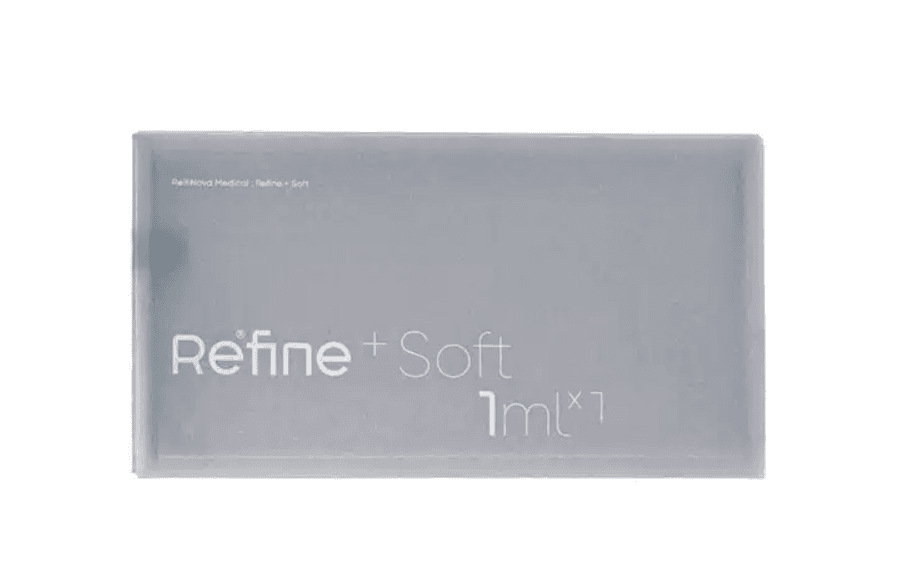
Description
Refine+ Soft is a cross-linked hyaluronic acid dermal filler used by licensed clinics for soft-tissue refinement in aesthetic practice. Clinics can order Refine+ Soft for professional treatment-room use when a smooth, lower-viscosity HA gel is appropriate for delicate contour work, fine-line softening, and subtle hydration-focused outcomes. The sterile prefilled presentation supports controlled handling, lot traceability, and streamlined inventory planning for aesthetic teams.
This filler is intended for qualified healthcare professionals trained in dermal filler assessment, injection technique, aseptic preparation, and adverse-event response. It should be selected according to manufacturer guidance, patient anatomy, treatment goals, and the supervising clinician’s protocol. Refine+ Soft fits clinic menus that need a softer HA option alongside firmer fillers for structure or projection.
Refine+ Soft Price and Clinic Ordering
Refine+ Soft price access is available to verified clinical accounts. Sign in to view current B2B terms, select the configuration shown during ordering, and align purchasing with your clinic’s treatment menu, expected procedure volume, and internal approval process. Volume planning can help reduce last-minute substitutions when multiple injectors rely on the same soft HA filler for fine-detail work.
Med Wholesale Supplies serves licensed clinics, med spas, and healthcare professionals with professional-use medical products sourced through vetted distributors and verified supply channels. Order details may be reviewed for clinic account requirements, product documentation, and appropriate professional-use purchasing. Temperature-controlled handling when required and tracked US delivery can support receiving workflows for practices coordinating procedure schedules and inventory checks.
Quick tip: Match filler selection to the injector’s planned tissue plane, technique, and documented treatment protocol before adding stock to a procedure room.
What This HA Filler Is and How It Works
Refine+ Soft is a cross-linked hyaluronic acid gel designed for superficial to mid-dermal placement in suitable candidates. Hyaluronic acid is a water-binding molecule used in many aesthetic injectables because it can support hydration and soft tissue contouring. Cross-linking helps the gel maintain structure after placement while preserving the softer behavior needed in delicate or dynamic facial areas.
The product’s lower-viscosity profile supports smooth extrusion through fine needles or compatible cannulas when used by trained injectors. Its rheology is intended to allow even distribution in fine planes, helping clinicians refine shallow lines, soften transitions, and add modest support without a firm or overbuilt feel. This makes Refine+ Soft useful when the clinical goal is refinement rather than high projection.
Clinics commonly keep softer HA fillers in inventory to complement more robust gels. A single treatment plan may require different filler characteristics in different regions, and a soft gel can help maintain natural movement around areas involved in speech and expression. For broader planning around delicate facial lines, your team may find the clinic education article on fine-line treatment planning useful when building patient-facing explanations and staff training notes.
Professional Applications in Aesthetic Practice
Typical in-clinic uses include lip border definition, subtle vermilion hydration, superficial perioral rhytids, oral commissure refinement, and small contour adjustments in the lower face. The softer gel profile may be preferred when injectors want gentle integration in areas where mobility, thin tissue, and conservative correction are important. Final product choice should remain based on clinical assessment, anatomy, contraindication review, and the injector’s training.
Refine+ Soft may be used as part of a multi-product HA filler strategy. For example, a clinic may use a firmer filler for deeper structural support and reserve a softer preparation for superficial finishing or hydration-focused refinement. This separation helps staff choose products by tissue plane and desired response instead of relying on one filler for every indication.
Delivery method depends on clinician training, anatomy, and the manufacturer’s instructions for use. Some practices pair soft HA fillers with fine needles or microcannula techniques when appropriate. If your team is standardizing lip-service supplies, the article on types of lip fillers can support discussion of product behavior, while category browsing for medical devices can help coordinate compatible accessory purchasing.
Key Features for Clinic Workflows
- Cross-linked HA matrix for soft tissue support and hydration-focused refinement.
- Smooth gel handling for predictable extrusion during trained professional use.
- Lower-viscosity behavior suited to superficial lines and delicate contour finishing.
- Cohesive consistency designed to integrate softly in appropriate tissue planes.
- Sterile prefilled presentation intended for single-patient clinical use.
- Packaging traceability with lot and expiry information where provided.
- Professional-use positioning for qualified aesthetic injectors and licensed clinics.
- Useful role in menus that separate soft finishing from firmer volumizing protocols.
These features matter most when a clinic needs repeatable handling across operators. A soft HA filler can help reduce overcorrection risk in fine-detail areas when used conservatively and according to training. It also gives supervising clinicians a clearer way to define which product belongs in superficial finishing protocols versus deeper contouring protocols.
Benefits in Practice
Reliable flow can support steady hand positioning and controlled placement during low-volume aesthetic work. When a gel spreads evenly in the intended plane, injectors may spend less time correcting stop-start placement patterns and more time evaluating symmetry, expression, and endpoint. This can make chair time more predictable for practices with structured appointment templates.
Refine+ Soft also helps clinics avoid using high-lift fillers in situations that call for a more restrained finish. Around the lips, perioral region, and other dynamic areas, a softer HA can support natural expression while providing subtle contour smoothing. This is especially useful when a patient’s goals emphasize refreshed texture, hydration, or fine-line improvement rather than visible enlargement.
For inventory managers, a defined soft-filler role can simplify training and restocking. Staff can document which protocols use Refine+ Soft, which cases require escalation to a firmer gel, and which devices or consumables should be prepared before the appointment. Clinics that routinely perform fine-line or lip-refinement services can reduce workflow variation by assigning clear product-use boundaries.
Composition and Ingredients
Refine+ Soft contains cross-linked hyaluronic acid supplied as a smooth, cohesive injectable gel. Hyaluronic acid attracts and binds water, which is why HA fillers can contribute to soft hydration and contour support after placement. The preparation is designed for professional handling and should be used only in accordance with the manufacturer’s instructions and applicable clinical standards.
- Cross-linked hyaluronic acid gel for soft-tissue refinement.
- Physiologic buffer components and water for injection as typical excipients.
- Highly purified composition intended for consistent professional use.
The exact clinical effect depends on injection plane, volume, placement technique, tissue condition, and patient-specific factors. Clinics should avoid treating the ingredient list as a substitute for a full contraindication, allergy, medication, and procedure-history review. Any product-specific documentation supplied with the shipment should be retained according to facility policy.
Packaging, Storage, and Handling
Each sterile prefilled syringe is intended for single-patient use in a clinical setting. Packaging should be inspected on receipt for seal integrity, labeling, lot number, expiry date, and any signs of damage. Do not use a syringe if the package appears compromised or if labeling does not meet your facility’s receiving standards.
Storage and preparation should follow the latest manufacturer documentation. Keep the product in its original packaging until use, protect it from inappropriate environmental exposure, and rotate inventory according to expiry. Treatment rooms should maintain aseptic setup, approved sharps disposal, and immediate access to the materials required by the clinic’s filler safety protocol.
Inventory records should connect each syringe to the procedure documentation required by the practice. Lot-level traceability supports quality assurance, recall readiness, and post-treatment follow-up if a concern arises. Clinics purchasing accessories at the same time can review guidance on buying cannulas and needles wholesale to align device selection with injector training and procedure needs.
Safety, Contraindications, and Monitoring
Dermal fillers must be administered by trained healthcare professionals who understand facial anatomy, vascular risk, aseptic technique, and emergency response. Injection-related reactions may include redness, swelling, tenderness, bruising, firmness, itching, discoloration, or temporary discomfort at the treatment site. More serious complications can occur, including infection, nodules, hypersensitivity reactions, tissue compromise, or vascular occlusion.
Clinicians should evaluate each candidate for relevant contraindications and risk factors before treatment. Important screening points include active infection or inflammation near the intended area, known hypersensitivity to product components, history of severe allergies or anaphylaxis, bleeding risk, immune status, prior filler or implant history, pregnancy or breastfeeding considerations, and medications or supplements that may increase bruising. The supervising clinician should decide whether treatment, deferral, referral, or alternative therapy is appropriate.
Practices should maintain a documented filler complication plan. Staff should know how to recognize urgent symptoms, escalate care, and document adverse events. Patients should receive aftercare instructions and clear guidance on when to contact the clinic, especially for severe pain, skin color change, visual symptoms, progressive swelling, fever, or signs of infection. Refine+ Soft should not be injected into blood vessels, and injection should stop immediately if vascular compromise is suspected.
Comparable Refine+ and Soft HA Options
Refine+ Soft works best as part of a broader clinic formulary rather than as a universal filler. When a more delicate finish is required, Refine+ Ultra Soft may be considered for finishing protocols that require an even softer handling profile. When deeper support or more structure is needed, Refine+ Forma may better match projection-oriented plans, depending on clinician assessment and training.
Clinics that also use hydration-focused injectables may compare Refine+ Soft with products such as Revofil Aquashine Soft Filler or Nucleofill Soft Plus when designing skin-quality protocols. These products should not be treated as interchangeable without reviewing composition, intended use, device compatibility, instructions for use, and clinical training requirements.
For practical selection, start with the treatment objective. Fine superficial lines, lip hydration, and delicate contour blending may call for softer gel behavior. Deep fold support, lift, or projection generally requires a different rheological profile. A clear formulary map helps injectors select the appropriate product and gives procurement staff better direction when restocking.
Ordering and Logistics for Licensed Clinics
Clinical accounts can order Refine+ Soft online after account verification. Sign in to view current price information, select the available configuration, and coordinate purchasing with your facility’s ordering policy. If your practice operates across multiple locations, centralize documentation so each site can track lot numbers, expiry dates, and responsible staff handoff.
Receiving teams should inspect shipments promptly, record product identifiers, and store inventory according to manufacturer instructions. Any discrepancy, damage, or documentation concern should be escalated before the product enters treatment-room stock. This process supports accountability and helps prevent last-minute appointment disruption caused by incomplete receiving checks.
Clinics should also plan compatible supplies before booking procedures that rely on Refine+ Soft. Needles, cannulas, antiseptic supplies, sterile preparation materials, sharps containers, and emergency protocol materials should be available and appropriate for the planned technique. Product purchasing works best when filler stock, device stock, and staff training are managed together.
Authoritative Safety References
Professional filler use should be guided by manufacturer documentation, local clinical standards, and evidence-based safety education. The following sources provide general dermal filler safety context and should supplement, not replace, product-specific instructions:
Final product selection, injection technique, treatment timing, and adverse-event management should remain under the direction of qualified healthcare professionals. Maintain current training, emergency readiness, and documentation standards for every filler procedure.
This content is for informational purposes only and is not a substitute for professional medical advice.
Frequently Asked Questions
Who can order Refine+ Soft?
Refine+ Soft is positioned for licensed clinics, med spas, and qualified healthcare professionals using dermal fillers in professional aesthetic settings. Account requirements and documentation may apply before clinic ordering is completed.
What is Refine+ Soft used for in clinic protocols?
Clinics use Refine+ Soft as a softer cross-linked hyaluronic acid filler for fine-line softening, subtle lip refinement, superficial perioral work, and delicate contour finishing when the supervising clinician considers it appropriate.
How should clinics store and handle Refine+ Soft?
Store and prepare Refine+ Soft according to the manufacturer’s current instructions. Receiving staff should inspect packaging, record lot and expiry details, and keep the sterile syringe in appropriate inventory conditions until professional use.
Is Refine+ Soft the same as firmer Refine+ fillers?
No. Refine+ Soft is selected for a softer handling profile and delicate tissue integration. Firmer Refine+ options may be more appropriate when the protocol requires deeper structural support or greater projection.
What safety precautions matter most with Refine+ Soft?
Qualified injectors should screen for contraindications, use aseptic technique, avoid intravascular injection, monitor for adverse reactions, and maintain a documented filler complication plan. Product use should follow manufacturer guidance and clinical training.
Specifications
- Main Ingredient: Cross-Linked Hyaluronic Acid
- Manufacturer: ReNOVA
- Drug Class: Dermal Filler
- Generic Name: cross-linked hyaluronic acid
- Package Contents: 1 x 1mL Pre-Filled Syringe, 2 X 30G Needles
- Storage Requirements: Room Temperature (2℃~25℃)
- Main Usage: Volume Filler, Hydrating Filler
Here to help
Questions about ordering, delivery or products? You can email our team here or call now at 1-800-630-9757 and be connected with your dedicated Account Manager
Related Products
Evenity® (English Alternative)
Injectable Medication
$1,229.00 - $1,299.00
You save
You save
Intraline® For Men
Dermal Filler
$59.00 - $79.00
You save
You save
RejuvaNAD+ Pro
Injectable Medication
$237.00 - $249.00
You save
You save
Teosyal® RHA 4
Aesthetic Surgery Product
$259.00 - $279.00
You save
You save
Related Articles
Prednisone in Clinical Care: Uses, Risks, and Monitoring
Prednisone is a prescription systemic corticosteroid used to reduce inflammation or suppress immune activity in…
Lip Fillers Swelling Stages: Timeline, Safety, and Follow-Up
Lip fillers swelling stages usually follow a short inflammatory course: swelling appears soon after injection,…
Hypopigmentation of the Skin: Assessment and Care
Hypopigmentation of the skin means one or more areas look lighter than the surrounding skin.…
Radiesse vs Sculptra: Selection Factors for Clinics
Radiesse vs Sculptra is best understood as a comparison between two collagen-stimulating injectables with different…
Hyaluronic Acid Under-Eye Filler: Safety and Workflow
Hyaluronic acid under-eye filler is an injectable soft-tissue filler used by trained aesthetic clinicians to…
Dermal Filler Types: Materials, Uses, and Clinic Fit
Dermal filler types are usually grouped by their base material, tissue behavior, and expected role…
What Is Dysport? Clinical Uses, Safety, and Workflow
For clinic teams asking what is Dysport, the short answer is simple: Dysport is a…
Biostimulators in Aesthetic Care: Selection and Safety
Biostimulators are injectable aesthetic products used to encourage a controlled tissue response, often involving new…