
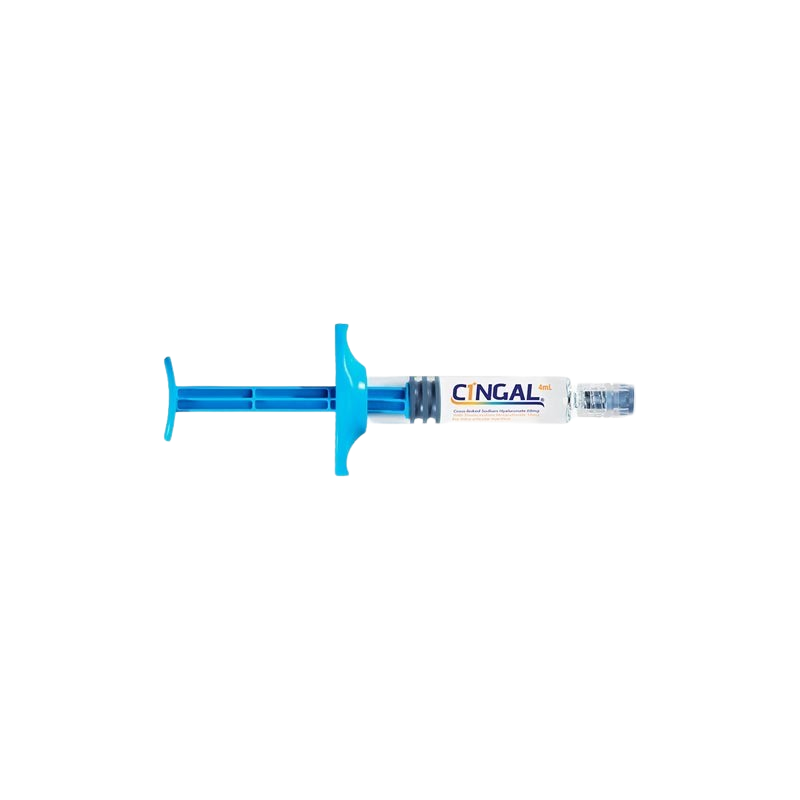
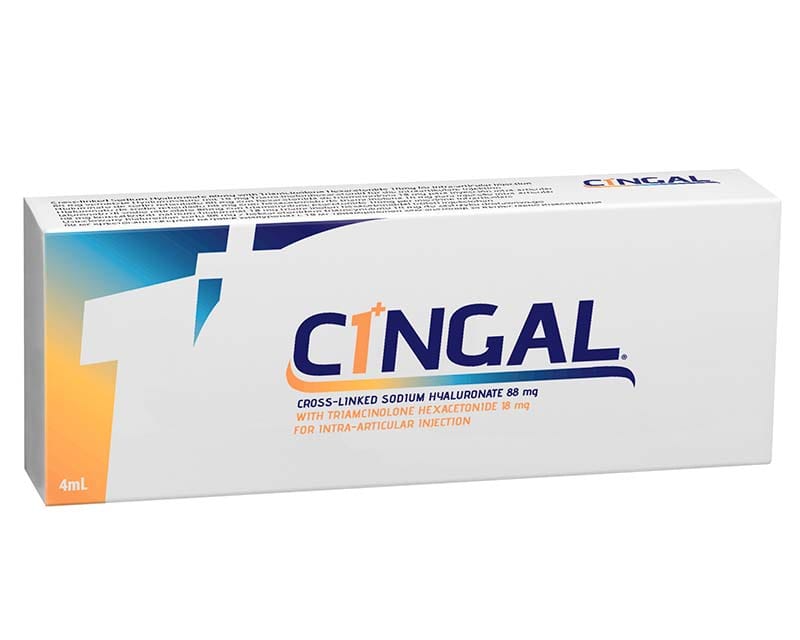
Cingal Injection
Order Cingal Injection for Clinics
Prescription Medication
$259.00
You save
Description
Cingal Injection is an intra-articular viscosupplement for knee osteoarthritis that combines hyaluronic acid with triamcinolone hexacetonide. Licensed clinics and healthcare professionals can order Cingal Injection for professional administration when it fits their osteoarthritis protocols. The product is supplied as a single-dose prefilled syringe for injection into the synovial space of the knee by trained clinical staff.
Cingal is used in orthopedic, rheumatology, sports medicine, and interventional pain settings where teams need a sterile, procedure-room-ready knee injection. It supports a single-visit workflow because the hyaluronic acid and corticosteroid components are provided together in one syringe. Clinics should use the product according to the full labeling, local protocols, and clinician judgment.
Price, Clinic Ordering, and Account Access
Cingal Injection price and purchasing terms are handled through verified professional accounts. Sign in or request account access to view current unit cost, volume brackets, and contract terms for your facility. Pricing may vary by order size, purchasing profile, and current manufacturer supply conditions.
Clinic teams can add the Cingal intra-articular injection to their purchasing workflow after account review. Receiving staff should match the product name, lot, expiration date, and packaging condition during intake. For multi-site practices, ordering by expected procedure volume can help keep stock aligned with scheduled knee osteoarthritis appointments without overextending inventory.
Quick tip: Keep procedure logs, receiving records, and lot documentation aligned so staff can trace each syringe from purchase through clinical use.
What Cingal Is and How It Works
Cingal is a hyaluronic acid steroid knee injection intended for intra-articular use in the knee. Hyaluronic acid, also called sodium hyaluronate, is a viscoelastic substance used in viscosupplementation to help lubricate and cushion the joint space. Triamcinolone hexacetonide is a corticosteroid that provides a local anti-inflammatory effect after administration.
The combination is designed for professional injection into the synovial compartment, not for oral use, self-administration, or non-joint routes. Cingal is commonly considered when conservative measures are not enough and a clinician determines that viscosupplementation with an added corticosteroid component is appropriate. For broader class planning, clinics can review Orthopedic Injections and related Rheumatology products.
Within treatment planning, Cingal Injection for knee pain should be understood as a clinic-administered option for osteoarthritis-related knee symptoms. It does not replace diagnosis, imaging, physical therapy planning, weight-bearing guidance, or other individualized care decisions. Staff should confirm the treated joint, patient history, and any contraindications before preparing the injection field.
Professional Applications in Knee Osteoarthritis Care
Typical use settings include musculoskeletal clinics, orthopedic departments, rheumatology practices, and pain programs that perform knee injections. Cingal may be scheduled as part of an osteoarthritis pathway when a clinician wants both viscosupplementation and a local steroid effect in a single treatment visit. The procedure may be performed using landmark-guided or image-guided technique according to clinician training and facility policy.
The product fits practices that already maintain sterile injection supplies, sharps disposal, consent documentation, and post-procedure observation workflows. Because Cingal is an intra-articular injection, staff should prepare the knee using aseptic technique and maintain sterility from syringe handling through administration. Teams evaluating how Cingal differs from other joint products may find cortisone and HA injection considerations useful for protocol discussions.
Patient-facing expectations should be set by the treating clinician. Some individuals may notice early symptom changes related to the corticosteroid component, while the viscosupplement component is used for joint lubrication and cushioning over time. Response varies, and clinicians should base repeat care decisions on examination, symptom history, and the product labeling.
Key Features for Clinic Inventory
- Dual-component profile with hyaluronic acid and triamcinolone hexacetonide.
- Single-dose prefilled syringe designed for intra-articular knee administration.
- One syringe is intended for one patient and one treated joint.
- Professional labeling supports lot tracking and expiration management.
- Sterile packaging is suited to standard injection-room workflows.
- Compact unit packaging can support procedure kits and multi-location stock control.
The Cingal 4 mL injection format is useful for clinics that prefer a predictable unit count per scheduled procedure. Staff can plan one syringe per treatment, then document the lot and expiration in the patient record. Unused product from a single-dose syringe should not be saved for another patient or later procedure.
Composition and Clinical Role
Cingal combines a viscoelastic polymer with a corticosteroid for localized intra-articular use. The hyaluronic acid component supports lubrication within the synovial compartment, while the triamcinolone hexacetonide component provides anti-inflammatory activity at the injection site. This hyaluronic acid triamcinolone knee injection is prepared for controlled professional administration rather than routine home handling.
| Component | Clinic relevance |
|---|---|
| Hyaluronic acid | Used in viscosupplement injections to support cushioning and lubrication in the knee joint. |
| Triamcinolone hexacetonide | A corticosteroid included for local anti-inflammatory effect after intra-articular administration. |
| Sterile formulation elements | May include water and buffering agents; consult the package insert for the complete excipient list. |
Because Cingal includes a corticosteroid, clinical screening should account for steroid-related precautions as well as injection-related risks. This is especially important for patients with infection concerns, known hypersensitivity, poorly controlled comorbidities, or recent procedures involving the same joint.
Packaging, Handling, and Storage Workflow
Cingal is supplied as a single-dose prefilled syringe for professional use. Each unit should be kept in its original packaging until preparation for the procedure. Receiving teams should inspect packaging integrity, confirm labeling, and store the product according to the manufacturer instructions in the package insert.
Use aseptic technique during preparation and administration. The syringe should be handled by trained staff, and the injection site should be prepared according to facility policy. Discard used syringes and needles in approved sharps containers immediately after the procedure.
Med Wholesale Supplies supports professional purchasing with US distribution and temperature-controlled handling when required and tracked US delivery. Clinics should still verify storage requirements on arrival and document any receiving concerns before the product enters usable inventory.
Side Effects, Warnings, and Monitoring
Expected post-injection effects can include localized knee pain, warmth, swelling, redness, stiffness, bruising, or irritation at the injection site. These reactions are often monitored as part of routine post-procedure care. Less common systemic symptoms reported with this type of therapy may include headache, dizziness, nausea, or diarrhea.
Serious reactions require prompt medical evaluation. Staff should watch for signs of hypersensitivity, infection, severe or worsening joint swelling, fever, intense pain, or unusual functional decline after injection. Because the product is injected into the joint space, sterile technique and proper patient selection are central safety controls.
Contraindications and precautions should be reviewed in the full labeling before use. Clinicians should consider allergy history, current joint infection or skin infection near the injection site, anticoagulation status, immunosuppression, and other clinical factors that may affect procedural risk. Steroid-containing injections may also require added caution in patients whose conditions can be affected by corticosteroids.
Post-procedure instructions should be issued by the treating clinician. Many practices advise patients to report severe pain, progressive swelling, rash, breathing difficulty, fever, or signs of infection. Documentation should include the treated knee, technique used, product lot, expiration, and any immediate reaction observed in the clinic.
How Long Cingal May Take to Work
Timing of response can vary by patient, disease severity, and the overall care plan. The corticosteroid component is included for local anti-inflammatory effect, while the hyaluronic acid component is used as a viscosupplement in the joint space. Clinics should avoid promising a fixed onset or duration because clinical response is not uniform.
Follow-up planning should reflect the patient’s baseline function, pain pattern, activity goals, and prior response to injections. Staff can schedule reassessment according to the clinician’s protocol and document symptom changes, adverse events, and any additional treatments used. For practical treatment-selection context, see Cingal in knee osteoarthritis care and orthopedic injection selection for knee pain.
Comparable Products and Related Clinic Supplies
Clinics evaluating Cingal often also review other viscosupplement injections. Product selection may depend on clinician preference, dosing schedule, patient history, payer or facility protocol, and whether the practice wants a single-injection or multi-injection regimen. Cingal is distinct because it combines hyaluronic acid with triamcinolone hexacetonide in one intra-articular product.
Related products include Hyalgan, Synvisc-One, Durolane, and Euflexxa. For comparative reading across the class, clinic teams can use Synvisc-One and Durolane considerations or Hyalgan and Synvisc differences.
When building procedure kits, include compatible needles, antiseptic supplies, gloves, drapes, dressing materials, and sharps disposal items according to facility standards. Do not substitute another viscosupplement or steroid-containing product without clinician approval and protocol review.
Availability and Substitution Planning
Cingal is available for professional ordering through verified clinic accounts. Supply can still fluctuate because manufacturer production, distributor allocation, and seasonal procedural demand may affect purchasing windows. Ordering teams should monitor par levels and reorder before scheduled injection volume exceeds available stock.
If Cingal is constrained at the time of purchasing, clinicians may review alternatives within the viscosupplement class. Any substitution should be checked against the intended regimen, active ingredients, number of injections, labeling, and facility protocol. The presence or absence of a corticosteroid component is an important distinction when reviewing alternatives.
Authoritative Sources
- AAOS viscosupplementation information
- NIAMS osteoarthritis information
- Peer-reviewed Cingal clinical trial report
Ready to stock Cingal for appropriate knee osteoarthritis protocols? Request professional account access or sign in to view current clinic purchasing terms.
This content is for informational purposes only and is not a substitute for professional medical advice.
Frequently Asked Questions
What is Cingal Injection used for in clinics?
Cingal Injection is used by trained clinicians as an intra-articular knee injection for osteoarthritis care. It combines hyaluronic acid with triamcinolone hexacetonide in a single-dose prefilled syringe.
How much does Cingal Injection cost?
Cingal Injection cost is shown through verified professional accounts. Clinic pricing may depend on unit quantity, contract terms, and current supply conditions.
What side effects can occur after Cingal knee injection?
Common post-injection effects can include localized pain, warmth, swelling, redness, stiffness, or bruising. Severe swelling, fever, rash, breathing difficulty, or signs of infection require prompt clinical evaluation.
Is Cingal a single injection product?
Yes. The supplied clinic format is a single-dose prefilled syringe intended for one patient and one knee joint. Staff should not reuse or save remaining product from a single-dose syringe.
How should clinics handle Cingal inventory?
Keep the syringe in its original packaging until preparation, follow the storage instructions in the package insert, document lot and expiration, and use aseptic technique during administration.
What alternatives may clinics review if Cingal is not the right fit?
Clinicians may review other viscosupplement injections such as Hyalgan, Synvisc-One, Durolane, or Euflexxa. Any alternative should be matched to the patient, active ingredients, injection schedule, and facility protocol.
Specifications
- Main Ingredient: Hyaluronic Acid And Triamcinolone Hexacetonide
- Manufacturer: Anika Therapeutics
- Drug Class: Osteoarthritis Treatment
- Generic Name: Hyaluronic Acid And Triamcinolone Hexacetonide
- Package Contents: 4 mL x 1 Pre-Filled Syringe
- Storage Requirements: Room Temperature (2℃~25℃)
- Main Usage:
About the Brand
Cingal
Cingal is a highly-rated medical brand renowned for its reliable and effective solutions for alleviating joint pain. Whether your discomfort arises from osteoarthritis or general joint aches, the novel formula of Cingal provides the relief you seek. Even better, you can conveniently purchase your Cingal through our website, medwholesalesupplies.com. Choosing to purchase your Cingal through medwholesalesupplies.com brings numerous benefits. First off, our website guarantees competitive pricing that will save you money on your joint pain medication. Plus, our simple and convenient ordering process coupled with swift delivery ensures you get your supply of Cingal promptly. Ordering Cingal from medwholesalesupplies.com also means you're receiving the genuine product straight from the source. Our rigorous quality inspection and reliable supply chain guarantee that you'll get the highest quality Cingal. Why let joint pain control you? Order Cingal from medwholesalesupplies.com today and start experiencing the relief you've been waiting for.
Browse Cingal Products
Here to help
Questions about ordering, delivery or products? You can email our team here or call now at 1-800-630-9757 and be connected with your dedicated Account Manager
Related Products
Evenity® (English Alternative)
Injectable Medication
$1,229.00 - $1,299.00
You save
You save
Intraline® For Men
Dermal Filler
$59.00 - $79.00
You save
You save
RejuvaNAD+ Pro
Injectable Medication
$237.00 - $249.00
You save
You save
Teosyal® RHA 4
Aesthetic Surgery Product
$259.00 - $279.00
You save
You save
Related Articles
Prednisone in Clinical Care: Uses, Risks, and Monitoring
Prednisone is a prescription systemic corticosteroid used to reduce inflammation or suppress immune activity in…
Lip Fillers Swelling Stages: Timeline, Safety, and Follow-Up
Lip fillers swelling stages usually follow a short inflammatory course: swelling appears soon after injection,…
Hypopigmentation of the Skin: Assessment and Care
Hypopigmentation of the skin means one or more areas look lighter than the surrounding skin.…
Radiesse vs Sculptra: Selection Factors for Clinics
Radiesse vs Sculptra is best understood as a comparison between two collagen-stimulating injectables with different…
Hyaluronic Acid Under-Eye Filler: Safety and Workflow
Hyaluronic acid under-eye filler is an injectable soft-tissue filler used by trained aesthetic clinicians to…
Dermal Filler Types: Materials, Uses, and Clinic Fit
Dermal filler types are usually grouped by their base material, tissue behavior, and expected role…
What Is Dysport? Clinical Uses, Safety, and Workflow
For clinic teams asking what is Dysport, the short answer is simple: Dysport is a…
Biostimulators in Aesthetic Care: Selection and Safety
Biostimulators are injectable aesthetic products used to encourage a controlled tissue response, often involving new…