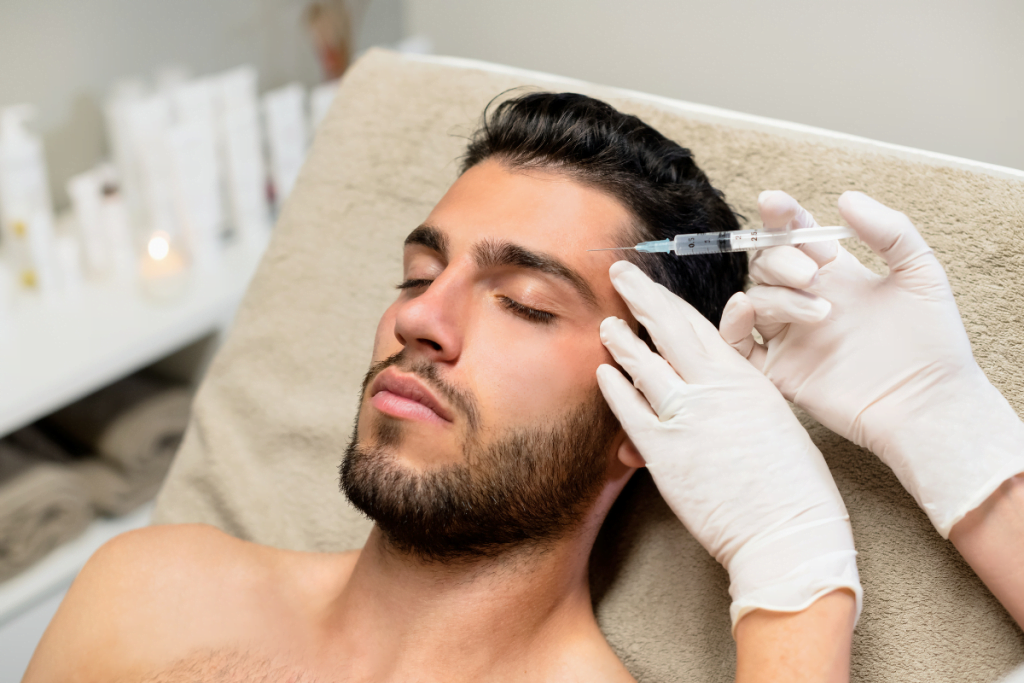
Male aesthetics is no longer a niche request in many practices. Patients often ask for sharper angles, balanced midface support, and a rested look. Dermal Fillers for Men can support these goals, but only with careful planning. The technical details matter, especially when you want structure without a “done” appearance.
This guide is written for licensed clinics and injectors. It focuses on practical decision points: anatomy, treatment-area strategy, communication around “before and after” expectations, and clinic operations. For product category context, you can review your options in the Dermal Fillers hub.
Trust cue: MedWholesaleSupplies supplies only to licensed healthcare professionals.
Key Takeaways
- Prioritize structure: chin, jawline, and midface support.
- Plan placement planes with male anatomy differences in mind.
- Standardize photos and documentation to reduce miscommunication.
- Discuss durability and aftercare using label-aligned language.
- Use sourcing controls to protect traceability and patient safety.
Dermal Fillers for Men: Goals, Candidacy, and Guardrails
Most male patients are not looking for “volume” as a concept. They want stronger lines, less facial fatigue, or improved balance from profile view. A useful intake frame is to translate aesthetic language into measurable endpoints. Examples include increased mandibular definition, better chin projection, or a smoother lid–cheek junction.
Start with a structured candidacy review that fits your local scope, consent standards, and product labeling. Pay attention to prior filler history, anticoagulant use disclosure, history of facial surgery, and any prior complications. Also screen for unrealistic expectations tied to social media images. When patients arrive with “male facial fillers before and after” screenshots, clarify lighting, angle, and swelling effects before you discuss a plan.
Why it matters: Clear endpoints reduce revision requests and “overcorrection” risk.
Operationally, align your consultation language with your product class. Many practices use hyaluronic acid (HA) fillers as a core option because they are widely used and have established training pathways. If you need a refresher on class differences, see Types Of Dermal Fillers.
Anatomy Priorities That Commonly Differ in Male Patients
Male facial assessment often emphasizes angles and skeletal support. Compared with many female patients, men may present with thicker skin, stronger muscle pull in certain regions, and different aesthetic ideals. The same mL placed in the same apparent location can look different due to tissue characteristics and baseline projection.
When you build protocols for Dermal Fillers for Men, map anatomy and goals together. You are not only “filling” a deficit. You are shaping a frame. That frame includes chin width, gonial angle perception, and midface transitions. Confirm each injection plan against vascular anatomy, your training, and the product’s intended use.
Jawline and Chin: Building the “Frame”
For many clinics, jawline and chin requests drive first-time male bookings. Patients may ask for a “non surgical jawline for men” result, but their real goal is often improved contrast between jaw and neck. In planning terms, consider projection, width, and symmetry separately. Chin work can influence lower-face proportions more than patients expect, especially in profile.
Document your rationale in plain language. “Improved chin support” is easier to defend than “masculinization.” If your team uses patient-facing terms, define them consistently. “Jawline contouring” can mean mandibular angle enhancement, pre-jowl support, or both. Clear definitions also help when patients compare “male jawline filler before and after” images that may not match your technique.
Cheek, Temple, and Under-Eye: Transitions, Not Rounds
Cheek strategy in male patients often aims for structured support rather than a rounded apex. Cheek fillers for men may be used to restore midface support, reduce the look of under-eye shadowing, or improve facial balance in three-quarter view. Temple filler for men can also affect perceived upper-face width and smooth a hollowed transition. Under eye filler for men (including tear trough filler for men) is typically high-scrutiny because minor edema or contour irregularities are more visible in this region.
When discussing technique, avoid implying a single “male cheek filler placement” map fits every face. Instead, use standardized assessment steps: facial thirds, zygomatic projection, and dynamic movement. Consider adding a note about “male cheek filler technique” variability in your consent language, since small differences in plane (subcutaneous vs supraperiosteal (on-bone)) can change contour and palpability.
Trust cue: Inventory is sourced through distributors your supplier has vetted.
Area-Based Planning: A Practical Matrix for Teams
Many practices reduce rework by using an area-based planning template. It helps coordinators, injectors, and photo staff stay aligned. It also supports consistent charting when multiple clinicians treat the same patient over time.
Consider using a simple matrix during consults. It can standardize what you mean by “structure,” “balance,” and “refinement” across the face. It also keeps you from chasing a single feature while ignoring proportion.
| Area | Common male goal | Planning notes |
|---|---|---|
| Jawline / angle | Sharper mandibular line | Define endpoints; confirm symmetry; document vectors. |
| Chin | Improved profile balance | Separate projection vs width; reassess at rest and in motion. |
| Cheek / cheekbone | Support, not roundness | Use baseline photos; avoid “lift” claims; plan transitions. |
| Tear trough / under-eye | Less shadowed look | High-scrutiny area; counsel on swelling variability and follow-up. |
Teams often get questions that sound cost-focused, such as “male cheekbone filler cost” or “jawline contouring cost.” Even when you do not quote numbers in educational material, you can explain that complexity, product choice, and follow-up needs drive resource use. That explanation improves consent quality and helps patients compare like-for-like plans.
For broader context on men’s aesthetic preferences, see Aesthetic Treatments For Men.
Longevity, “Before-and-After” Communication, and Aftercare Basics
Patients often ask how long results last, especially “how long does cheek filler last.” The most accurate answer is conditional. Duration depends on product characteristics, injection plane, mobility of the area, and individual metabolism. Framing longevity as a range of possibilities, rather than a fixed timeline, reduces dissatisfaction and supports informed consent. Your documentation should mirror the label and your clinical judgment.
In Dermal Fillers for Men consults, “before and after” language needs extra precision. Swelling, bruising, and lighting can create a short-term impression that differs from later appearance. Consider setting internal standards for photo timing, lighting, and patient expression. Also define what a “touch-up” means in your practice, since patients may assume it is routine.
Standardizing Photos and Patient-Reported Goals
Most miscommunication happens because photos are inconsistent. Use the same camera distance, lens settings if possible, and background. Capture front, oblique, and profile views. Add one dynamic photo if your workflow allows it, such as smiling or clenching, to show how movement changes contours. When a patient asks for “1 ml cheek filler before and after,” translate that into a goal-based plan. Volume is an input, not an outcome. You can also document what you agreed not to change, which helps prevent scope creep.
For post-procedure education structure, many clinics maintain a standardized handout. You may find it helpful to cross-check your content against Post-Treatment Care Essentials. Keep your handout aligned with the product’s instructions for use and your local policies.
Quick tip: Use the same “neutral face” photo for every follow-up comparison.
Cost Drivers and How to Discuss Them Professionally
While clinics avoid quoting specific numbers in general education, you still need a consistent way to explain what drives costs. Patients commonly research “cheek filler cost,” “male jawline filler cost,” or “male facial sculpting cost,” then arrive with mismatched comparisons. A neutral explanation prevents the conversation from turning into a unit-count negotiation.
For Dermal Fillers for Men, cost drivers typically include assessment time, complexity of the treatment map, product class and rheology (flow and firmness characteristics), and anticipated follow-up. Jawline and chin cases may require more detailed symmetry planning and photography. Under-eye cases may require additional monitoring because the area is unforgiving. Some patients also need staged treatment to prioritize safety and aesthetic coherence.
When you address comparisons, focus on what is being treated, not what is being injected. “Jawline filler for men” can refer to angle enhancement, body definition, or pre-jowl support, each with different time and product needs. Similarly, “chin filler for men” can mean projection, length, width, or a combination. If patients ask about specific product names, keep responses label-based and training-based.
For educational reading on evolving filler technology, see Advancements In Dermal Fillers.
Clinic Operations: Sourcing, Documentation, and Inventory Controls
Safe injectable practice depends on more than technique. It also depends on product integrity, traceability, and clear internal controls. Clinics should build a repeatable process for receiving, storing, and documenting injectable devices, consistent with manufacturer guidance and local regulation.
In operational reviews for Dermal Fillers for Men, many teams separate “clinical fit” from “supply fit.” Clinical fit covers anatomy and goals. Supply fit covers training requirements, documentation, and inventory reliability. If you manage multiple brands, a category view can help standardize procurement. For example, your team may browse Hyaluronic Acid Fillers as a class when building a formulary.
Trust cue: Products are supplied as authentic, brand-name items from controlled distribution channels.
Procurement and Documentation Checklist (Clinic-Facing)
- License verification: keep current facility credentials on file.
- Receiving log: record lot, expiry, and shipment condition.
- Storage check: follow manufacturer temperature and light guidance.
- Traceability: link lot numbers to the patient record.
- Adverse event pathway: document reporting roles and timelines.
- Staff access: limit handling to trained, authorized personnel.
- Waste log: record partials and disposal per local policy.
If your practice supports multiple aesthetic indications, it can help to maintain “reference shelves” in your SOP binder. These are not sales materials. They are quick links to training notes and product IFU access pathways. When reviewing product categories, some clinics keep a short list of examples used in training discussions, such as Juvéderm Volux With Lidocaine for structural planning conversations or HArmonyCa as a point of comparison in staff education. Keep selection criteria grounded in labeling, clinician competency, and patient need.
For practices balancing scheduling and resupply, predictable US distribution can simplify operational planning. Policies vary by supplier, so confirm required documentation and receiving procedures in advance.
If patient expectations are shaped by online content, consider sharing a myth-correction resource during consult workflows, such as Myths And Misconceptions. It can reduce last-minute cancellations and improve consent discussions.
Authoritative Sources
For regulatory and safety context, refer to primary sources and official instructions for use.
- Neutral overview from the regulator: FDA dermal fillers (soft tissue fillers).
- Professional society patient-safety overview: ASDS dermal fillers information.
Further reading: If your clinic treats age-related volume change as a primary complaint, review Facial Volume Restoration to align consult language and documentation. For supply planning, keep a short list of comparable devices for staff training, such as Juvéderm Voluma With Lidocaine, and confirm your storage and traceability steps match your SOP.
When approached as a structured, documented process, Dermal Fillers for Men becomes easier to deliver consistently. Reliable US logistics can support that consistency, but clinical governance remains your responsibility.
This content is for informational purposes only and is not a substitute for professional medical advice.