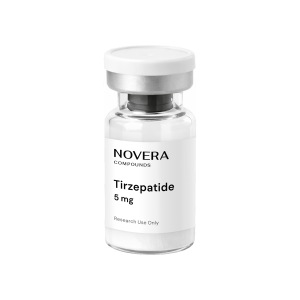
Tirzepatide
$71.00 - $499.00
View
Free shipping on orders over $800
5% off your first order, applied at checkout
Order as a guest or log in. Your medical licence details are collected at checkout and checked against the state board and the NPI registry.
Enter your own figures: the syringes you use per treatment and what you charge per treatment. The table shows your product cost and margin per treatment at each quantity price. It does not suggest doses, prices or treatments.
| Quantity | Price per pack | Cost per unit | Cost per treatment | Margin per treatment |
|---|
Uses today's prices for the selected option before shipping and any other costs. Your figures stay in your browser.
Ships within 24–48 hours
Delivery typically 48–72 hours after shipping, up to 5–7 business days depending on origin and customs. Tracking is emailed when your order ships.
Warm or damaged on arrival?
Send us photos or a video. We investigate and arrange a replacement where needed.
Licence checks
Licences are checked against the state board and the NPI registry.
100% genuine products
In original manufacturer packaging, with lot numbers for full traceability. Lot numbers are shown on your packing slip and invoice.
250 active clinics · Supplying clinics since 2013
“Everything has been easy from ordering to delivery. The prices are good, orders arrive quickly, and the customer service has been great. I would definitely order from MWS again.”
SureComfort U-100 insulin syringes 31G pair a 1 cc barrel with a 31-gauge, 5/16 in. (8 mm) fixed needle for subcutaneous insulin injection. Licensed clinics, hospital units and medical professionals can order them in 10-count packs for treatment-room dosing, day-unit visits and hands-on injection teaching. The U-100 calibration is the first detail to confirm at the bedside, because the unit markings assume insulin containing 100 units per mL.
Why it matters: A unit mark on a U-100 syringe only equals an insulin unit when the vial is also U-100.
An insulin syringe is a single-use device with a permanently attached needle and a barrel marked in insulin units rather than millilitres. Staff draw the ordered dose from an insulin vial, expel air, confirm the volume against the order, then inject into subcutaneous fat. Because the needle is fixed, there is no hub dead space to hold back part of the dose, which supports accurate delivery of small volumes.
The 1 cc barrel holds up to 100 units of U-100 insulin, so a larger single dose can be given in one injection instead of two. Smaller 0.5 cc and 0.3 cc barrels remain useful when doses are low and fine resolution matters more than capacity. Many clinics keep more than one barrel size so staff can match the syringe to the ordered dose rather than the other way around.
Typical professional uses include:
Gauge describes needle thickness; 31G is one of the finer gauges used for routine subcutaneous insulin. Length is the second variable. A 5/16 in. (8 mm) needle is a short length intended to place insulin in subcutaneous tissue rather than muscle, which helps keep absorption consistent.
Document the gauge, length and barrel size used for each patient in the record. That makes refill ordering, teaching and troubleshooting far simpler when a different staff member sees the patient next.
These syringes are a delivery device, so the clinical decisions sit with the insulin order and the patient. The precautions below are the ones that cause most practical problems in clinic use.
Contact the treating clinician if doses repeatedly leak at the site, if glucose control changes without an obvious cause, or if the patient cannot manage vial-and-syringe technique safely at home.
Check cartons on arrival for crushing, moisture or open wraps. Each syringe is supplied sterile for single use, so discard any unit whose wrapper is torn, wet or already opened. Record lot numbers and expiry dates against the receiving document, and keep that trail available for incident review and recalls.
In the treatment room, use standard aseptic technique: disinfect the vial stopper, draw the dose, hold the barrel upright and clear air bubbles before confirming the volume. Insulin is widely treated as a high-alert medicine, so many clinics use an independent second check of drug name, concentration and dose before administration.
Quick tip: Keep a sharps container within arm’s reach of the injection chair so needles are never recapped or carried.
Do not recap, bend or detach the needle. Place the whole syringe in an approved sharps container immediately after use, and give take-home patients clear disposal instructions in writing.
Store cartons in their original packaging, dry, away from direct sunlight and heat, and follow the storage condition shown for this product. Keep boxes off the floor and away from solvents or cleaning agents that could damage wrappers.
For stock planning, rotate by expiry date so the oldest sterile units are used first. The 10-count pack suits small clinics, education visits and starter kits, while higher-volume services usually hold several gauge and length combinations side by side. Label shelf bins clearly, because 5/16 in. and 1/2 in. needles look similar in a drawer and 1 cc, 0.5 cc and 0.3 cc barrels are easy to mix up under pressure. Med Wholesale Supplies is a wholesale supplier of aesthetic, orthopedic and medical products to clinics, hospitals and medical professionals, operating since 2013.
SureComfort U-100 insulin syringes 31G sit in the vial-and-syringe route. Pen needles serve a different route entirely: they screw onto a prefilled pen or cartridge and are dialled rather than drawn. Clinics that supply both keep them in separate bins to avoid substitution at the point of care.
| Supply type | Practical difference |
|---|---|
| 1 cc insulin syringe | Draws up to 100 units of U-100 insulin from a vial in a single injection |
| 0.5 cc and 0.3 cc insulin syringes | Smaller barrels used when ordered doses are low and fine graduation helps |
| Pen needles | Used with prefilled pens or cartridges, not with vials |
| Safety-engineered syringes | Add a shield or retraction feature; often assessed under clinic sharps-injury prevention programs |
No single combination fits every patient. Needle length, gauge, barrel size and the patient’s own technique all shape the choice, and that decision belongs to the treating clinician and the diabetes education team.
Short, repeated teaching prevents most technique errors. Cover the concentration on the vial, how to read the unit marks, how to clear air bubbles, and why the needle is used once. Ask patients to demonstrate the steps back rather than only describing them.
Reinforce site rotation within a chosen zone, inspection for firm or lumpy tissue, and safe disposal at home in an approved container. Remind staff that any change in syringe size or needle length should be noted in the record, so later doses are measured the same way.
This content is for general informational purposes only and is not a substitute for professional medical advice, diagnosis, or treatment. Always consult a qualified clinician or pharmacist about your situation, and seek urgent care or call your local emergency number for severe or worsening symptoms.

MWS Customer Service Team
Our customer service team helps you choose the right pack, label option and quantity for your clinic, and sets up your first order.
Monday to Friday, 9am to 6pm ET
Why clinics order from MWS
Built for licensed clinics
Licences are checked against the state board and the NPI registry.
Every pack option named
Each option names its dosage and pack size, so you know which pack you are ordering.
Volume pricing up front
Quantity tiers are shown on the product, before you order.
Cold-chain packing
Refrigerated lines ship in thermo-packaging with enough ice packs to hold temperature for up to 10 days.
“The customer care team was very efficient in offering hand-held guidance to choose the most cost-effective options.”