
Description
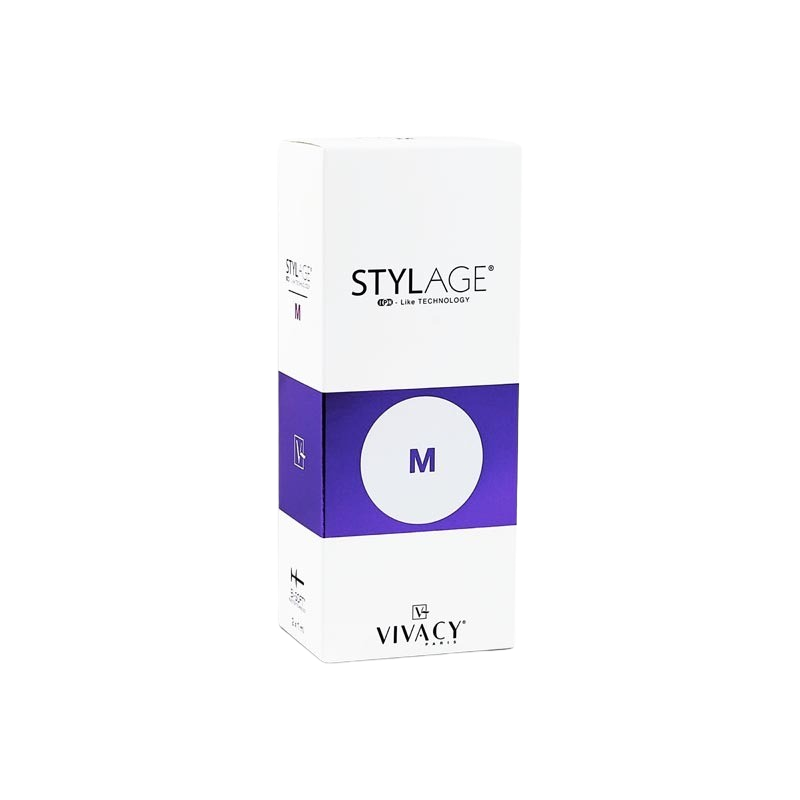
Stylage® M is an injectable hyaluronic acid dermal filler used by trained aesthetic clinicians for fine to moderate lines and facial contour refinement. Licensed clinics and healthcare professionals can order the 2 x 1 mL prefilled syringe pack for treatment-room use, inventory planning, and lot documentation. The formulation combines cross-linked hyaluronic acid with mannitol and is intended for professional intradermal placement.
Med Wholesale Supplies serves licensed clinics, med spas, and healthcare professionals with brand-name medical products sourced through vetted distributors and verified supply channels. Sign in to view current clinic pricing, confirm pack availability, and allocate units for scheduled procedures.
Clinic Pricing, Pack Size, and Ordering
Stylage M 2x1ml is supplied as two sterile 1 mL prefilled syringes per box. This format helps clinics plan tray setup, assign product to individual appointments, and maintain consistent stock counts across providers. Pricing is available after account sign-in because clinic allocations, quantity needs, and account terms can vary.
Each order should be matched to your practice’s treatment schedule, injector preference, and documentation workflow. Clinics using multiple Stylage products may keep this mid-range gel alongside lighter or more volumizing preparations to support graded correction across facial zones.
Quick tip: Record lot and expiry information at intake, treatment, and inventory closeout to simplify traceability.
What Stylage® M Is Used For
Vivacy Stylage M is used in professional aesthetic practice for soft-tissue refinement where a mid-range hyaluronic acid gel is clinically appropriate. Common clinic uses include correction of fine to moderate facial lines, support for nasolabial folds, marionette lines, perioral rhytids, and contour work in selected facial areas. Treatment planning should always follow patient anatomy, tissue quality, product characteristics, and injector training.
The gel is placed intradermally by trained clinicians. In practice, experienced injectors may use linear threading, small boluses, or layered approaches depending on the anatomical site and desired correction. The cohesive texture supports controlled placement without making the product a structural volumizer for every indication.
For broader clinical context across the brand family, clinics can review the Stylage dermal filler range. That type of product-family planning is useful when building protocols for different depths, facial zones, and correction goals.
Formulation and Handling Characteristics
Hyaluronic Acid Stylage M Filler contains a cross-linked hyaluronic acid gel matrix with mannitol. Cross-linking helps create a stable, cohesive gel for professional injection. Mannitol is included as an antioxidant and is used in the formulation to help limit oxidative stress around the gel during and after placement.
This presentation does not include lidocaine. Clinics that maintain both lidocaine and non-lidocaine filler formats should label storage areas clearly and confirm the selected box before preparing the treatment tray. If a lidocaine-containing Stylage M preparation is preferred for a specific protocol, review the dedicated Stylage M Bi-Soft with lidocaine format rather than substituting without clinical review.
| Attribute | Clinic-use detail |
|---|---|
| Product type | Injectable hyaluronic acid dermal filler |
| Pack format | Two 1 mL prefilled syringes |
| Needles | Four 30G needles included |
| Key components | Cross-linked hyaluronic acid and mannitol |
| Lidocaine | Not included in this presentation |
| Documentation | Package insert and traceability labels included |
Professional Applications and Technique Fit
Stylage M Filler 1ml may fit clinics that perform light-to-moderate correction sessions and want a balanced gel for controlled intradermal placement. The product can be incorporated into treatment plans for facial folds, contour support, and line refinement when the patient assessment supports use of a mid-range HA filler.
Clinicians often evaluate depth, mobility, vascular anatomy, prior filler history, skin thickness, and patient expectations before selecting a gel. Conservative volumes, aseptic preparation, and careful assessment after placement help maintain predictable outcomes. Massage, if used, should follow the injector’s technique and the product’s package insert.
For patient counseling and staff education, the internal article on how Stylage filler creates natural-looking results can support discussions about realistic correction, tissue integration, and progressive treatment planning. It should not replace product training, anatomy education, or clinical judgment.
Is Stylage® M Suitable for Lips?
Stylage M may be considered for selected lip or perioral work by trained injectors when its rheology matches the treatment goal. However, lip procedures require careful product selection because vermilion border definition, hydration, projection, and dynamic movement may call for different gel behavior than nasolabial or marionette fold correction.
Clinics that regularly perform lip enhancement often keep dedicated lip formulations available. For a more specialized lip-focused product within the same brand family, review Stylage Special Lips Bi-Soft if it is part of your protocol set. Staff may also benefit from the clinical article on Stylage lip filler use in clinics when standardizing consultation language and photo documentation.
Key Features for Treatment Rooms
- Cross-linked HA matrix designed as a cohesive injectable gel.
- Mannitol antioxidant included in the formulation.
- Two sterile 1 mL prefilled syringes per box.
- Four 30G needles included for procedure setup.
- Package insert supplied for product-specific handling details.
- Traceability labels included for clinic records.
- Non-lidocaine presentation for protocols that require it.
- Mid-range filler role within the broader Stylage portfolio.
The 2 x 1 mL format can simplify scheduling when clinics group similar correction appointments on the same day. It also supports inventory separation by product family, lot, and expiry date, especially in multi-provider practices.
Packaging, Documentation, and Storage Workflow
Each box contains two sterile prefilled syringes, four 30G needles, a package insert, and traceability labels. The labels support lot and expiry documentation in clinic systems, treatment records, and consent workflows according to local policy. Staff should keep the package insert accessible for product-specific instructions before use.
Outer-box and syringe labels should remain readable until treatment documentation is complete. Store the product according to the manufacturer’s instructions in the insert, and avoid exposing sterile components to unnecessary handling before the procedure. If your facility separates filler stock by injector, treatment room, or indication, keep the complete box and labels together until allocation.
Orders may be coordinated with temperature-controlled handling when required and tracked US delivery. Clinics should inspect received goods according to internal receiving procedures and document any discrepancy promptly.
Safety, Contraindications, and Patient Counseling
Dermal fillers are medical aesthetic products that require appropriate training, anatomical knowledge, and aseptic technique. Expected post-injection responses may include temporary redness, tenderness, itching, bruising, swelling, discrete bumps, or mild discomfort at the injection site. These reactions are usually discussed during consent and post-treatment counseling.
Clinicians should screen for factors that may affect injection risk, including active local infection, inflammatory skin conditions at the treatment site, allergy history, anticoagulant or antiplatelet use, prior filler complications, immune status, and recent aesthetic procedures. Product selection and sequencing should be adjusted to the patient’s clinical presentation and the practice’s protocols.
Serious complications are uncommon but can occur with injectable fillers, including vascular occlusion, skin compromise, infection, hypersensitivity, nodules, or visual symptoms. Clinics should maintain emergency protocols, staff training, and appropriate supplies for filler-related adverse events. Patients should receive clear instructions on symptoms that require urgent clinical contact.
Why it matters: Safe outcomes depend on product knowledge, anatomy, injection technique, documentation, and timely management of adverse events.
How It Compares Within the Stylage Range
Stylage M sits in a modular range of hyaluronic acid fillers that includes lighter, mid-range, and more supportive gels. In general clinic planning, a lighter product may be chosen for superficial lines, while a denser product may be selected for deeper folds or structural support. Selection should be based on the specific formulation, tissue depth, and treatment goal.
Clinics comparing Stylage M Bi-Soft, Stylage M Lidocaine 1ml, and non-lidocaine formats should focus on handling preference, patient comfort strategy, injection site, and protocol consistency. For a related non-lidocaine format in the same M category, see Stylage M Bi-Soft. For deeper correction planning within the range, review Stylage L Bi-Soft or the lidocaine-containing Stylage L Bi-Soft with lidocaine.
When teams evaluate brand positioning, handling differences, and portfolio design, the internal Stylage and Juvederm comparison can help frame product-family discussions without replacing hands-on injector training.
Inventory Planning for Licensed Clinics
Stylage 1 ml syringes are practical for clinics that need flexible filler counts without overcommitting to larger single-treatment allocations. The two-syringe box supports paired appointments, staged correction, or provider-specific stock assignment. Practices can plan weekly quantities based on consultation volume, historical utilization, and the number of injectors using the product.
Maintain separation between lidocaine and non-lidocaine products to reduce selection errors. Clear shelf labeling, first-expiry rotation, and complete lot capture help staff align inventory movement with treatment records. For clinics standardizing across one manufacturer, the Stylage brand category provides a useful way to review related products.
Comparable Products and Adjacent Choices
Clinics building a layered filler portfolio often compare Stylage M with products that differ in gel density, intended depth, lidocaine content, and facial-zone focus. A mid-range product may be used for folds and contour refinement, while lighter or more specialized products may be reserved for superficial lines or dynamic areas.
For practices that want a lighter Stylage option with lidocaine, Stylage S Bi-Soft with lidocaine may support different superficial-correction protocols. Product changes should be reviewed by the clinical lead before use so injection depth, volume strategy, consent language, and aftercare remain consistent.
Authoritative Sources
Use manufacturer materials, package inserts, and professional training resources when creating clinic protocols. Public sources can support general product understanding, but final treatment decisions belong with trained healthcare professionals using patient-specific assessment.
This content is for informational purposes only and is not a substitute for professional medical advice.
Frequently Asked Questions
What is Stylage® M used for in clinics?
Stylage® M is an injectable hyaluronic acid dermal filler used by trained aesthetic clinicians for fine to moderate lines, facial folds, and contour refinement when a mid-range HA gel is appropriate. Treatment planning should follow anatomy, tissue depth, patient assessment, and the product insert.
Does this Stylage® M pack contain lidocaine?
No. This Stylage® M presentation is described as a non-lidocaine format. Clinics that require a lidocaine-containing M product should use a dedicated Stylage M with lidocaine format rather than treating the two presentations as interchangeable.
What comes in the Stylage® M 2 x 1 mL box?
Each box contains two sterile 1 mL prefilled syringes, four 30G needles, a package insert, and traceability labels for lot and expiry documentation in clinic records.
Is Stylage® M good for lips?
Stylage® M may be considered for selected lip or perioral work by trained injectors when its handling profile matches the treatment goal. Many clinics also keep lip-specific Stylage products for border definition, hydration, or projection protocols.
How long does Stylage® M filler last?
Duration varies by injection site, tissue movement, product volume, patient metabolism, and treatment technique. Clinics should set expectations during consultation and use follow-up assessment rather than promising a fixed result timeline.
What is the difference between Stylage® M and Stylage® L?
Stylage® M is generally positioned for mid-range correction, while Stylage® L products are typically considered when more support is needed for deeper folds or contour work. Final selection should be based on the specific product, injection depth, facial zone, and clinician protocol.
Specifications
- Main Ingredient: Hyaluronic Acid
- Manufacturer: Vivacy Laboratories
- Drug Class: Aesthetic Surgery Product
- Generic Name: Hyaluronic Acid Dermal Filler
- Package Contents: 1 mL x 2 Pre-Filled Syringes
- Storage Requirements: Room Temperature (2℃~25℃)
- Main Usage: Volume Filler
About the Brand
Stylage
Stylage is a widely recognised healthcare brand that manufactures premium dermal fillers and aesthetic solutions of exceptional quality. Whether your goal is to diminish wrinkles, enhance lip volume, or contour your facial structure, Stylage offers the right product for your needs. Endorsed by medical professionals on a global scale for its progressive formulations and naturalistic results, Stylage's products can be conveniently purchased via our official web portal, medwholesalesupplies.com. Our team at medwholesalesupplies.com realises the crucial role of reliable and esteem brands like Stylage in the medical profession. Hence, we have entered a collaboration with Stylage to make their pioneering products available to our valued customers. When medical practitioners buy Stylage products from our website, we assure them of the authenticity of the products, sourced directly from the manufacturer. We also promise competitive pricing and rapid delivery, assuring healthcare providers have the necessary implements to deliver superior quality aesthetic treatments. Securing your Stylage products from medwholesalesupplies.com comes with several perks. Firstly, it corroborates the authenticity of the products, ensuring medical professionals receive genuine Stylage fillers and aesthetic solutions. Next, we provide competitive pricing, enabling healthcare providers to access these high end products at the most economical prices. Lastly, our timely delivery service ensures that medical professionals receive their Stylage products without delay, contributing to an efficient patient treatment process. Consider medwholesalesupplies.com as your go-to destination for all your Stylage essentials.
Browse Stylage Products
Here to help
Questions about ordering, delivery or products? You can email our team here or call now at 1-800-630-9757 and be connected with your dedicated Account Manager
Related Products
Evenity® (English Alternative)
Injectable Medication
$1,229.00 - $1,299.00
You save
You save
Intraline® For Men
Dermal Filler
$59.00 - $79.00
You save
You save
RejuvaNAD+ Pro
Injectable Medication
$237.00 - $249.00
You save
You save
Teosyal® RHA 4
Aesthetic Surgery Product
$259.00 - $279.00
You save
You save
Related Articles
Prednisone in Clinical Care: Uses, Risks, and Monitoring
Prednisone is a prescription systemic corticosteroid used to reduce inflammation or suppress immune activity in…
Lip Fillers Swelling Stages: Timeline, Safety, and Follow-Up
Lip fillers swelling stages usually follow a short inflammatory course: swelling appears soon after injection,…
Hypopigmentation of the Skin: Assessment and Care
Hypopigmentation of the skin means one or more areas look lighter than the surrounding skin.…
Radiesse vs Sculptra: Selection Factors for Clinics
Radiesse vs Sculptra is best understood as a comparison between two collagen-stimulating injectables with different…
Hyaluronic Acid Under-Eye Filler: Safety and Workflow
Hyaluronic acid under-eye filler is an injectable soft-tissue filler used by trained aesthetic clinicians to…
Dermal Filler Types: Materials, Uses, and Clinic Fit
Dermal filler types are usually grouped by their base material, tissue behavior, and expected role…
What Is Dysport? Clinical Uses, Safety, and Workflow
For clinic teams asking what is Dysport, the short answer is simple: Dysport is a…
Biostimulators in Aesthetic Care: Selection and Safety
Biostimulators are injectable aesthetic products used to encourage a controlled tissue response, often involving new…