Lip Fillers Swelling Stages: Timeline, Safety, and Follow-Up
Lip fillers swelling stages usually follow a short inflammatory course: swelling appears soon after injection, often peaks during the first 24 to…

DERMAQUAL
PLLA L-polylactic acid
Free shipping on orders over $800
5% off your first order, applied at checkout
Order as a guest or log in. Your medical licence details are collected at checkout and checked against the state board and the NPI registry.
Enter your own figures: the vials you use per treatment and what you charge per treatment. The table shows your product cost and margin per treatment at each quantity price. It does not suggest doses, prices or treatments.
| Quantity | Price per pack | Cost per unit | Cost per treatment | Margin per treatment |
|---|
Uses today's prices for the selected option before shipping and any other costs. Your figures stay in your browser.
Ships within 24–48 hours
Delivery typically 48–72 hours after shipping, up to 5–7 business days depending on origin and customs. Tracking is emailed when your order ships.
Warm or damaged on arrival?
Send us photos or a video. We investigate and arrange a replacement where needed.
Licence checks
Licences are checked against the state board and the NPI registry.
100% genuine products
In original manufacturer packaging, with lot numbers for full traceability. Lot numbers are shown on your packing slip and invoice.
250 active clinics · Supplying clinics since 2013
“Everything has been easy from ordering to delivery. The prices are good, orders arrive quickly, and the customer service has been great. I would definitely order from MWS again.”
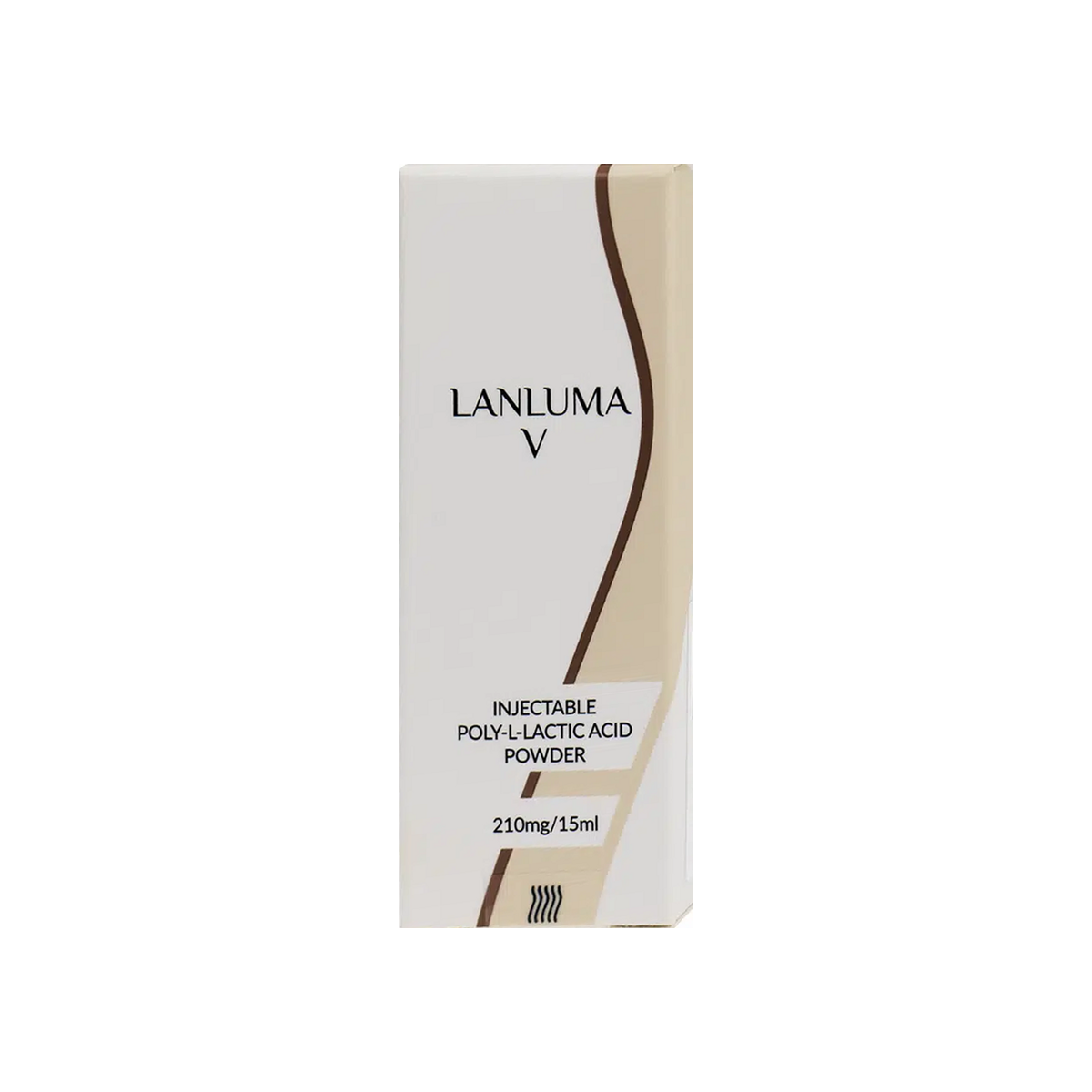
Lanluma® V is an injectable poly-L-lactic acid preparation used by trained healthcare professionals for subdermal collagen-stimulation workflows. Licensed clinics can order Lanluma V for professional aesthetic protocols that require reconstitution before administration. Each vial is identified as a Lanluma V 630 mg vial, supporting inventory documentation and staged treatment planning.
This PLLA biostimulator is used where gradual contour support is preferred over immediate gel filling. Med Wholesale Supplies serves licensed clinics, med spas, and healthcare professionals with brand-name medical products sourced through vetted supply channels for professional use. The product fits treatment-room workflows that require careful preparation, sterile technique, and appropriate clinical assessment before injection.
Current prices and quantity breaks are shown on this page, and licensed clinics can order as a guest or with an account.
Order Lanluma V through your clinic account so the billing, shipping, and professional-use details remain consistent with your organization’s purchasing records. Teams planning a PLLA program can coordinate vials with adjunct aesthetic supplies, including products used in dermal filler workflows or larger-area body contouring protocols. For practices operating across multiple locations, standardized ordering helps reduce charting variation and supports more predictable stock rotation.
Quick tip: Match the vial quantity to scheduled consultations, expected treatment intervals, and internal training coverage before placing a replenishment order.
Lanluma V injection is based on poly-L-lactic acid, commonly abbreviated as PLLA. In aesthetic medicine, PLLA microparticles are placed in the subdermal tissue, where they provide a temporary scaffold that can stimulate fibroblast activity and support new collagen formation over time. This makes Lanluma V poly-L-lactic acid different from hyaluronic acid fillers, which generally create volume through immediate gel placement.
The clinical value of a PLLA product is its gradual response profile. Results are not intended to appear as an instant fill at the time of injection. Instead, tissue change develops progressively as collagen remodeling occurs, which is why many clinics use staged visits, photography, and follow-up assessment to judge response. For a broader class discussion, see the role of poly-L-lactic acid in non-surgical treatments.
Many trade conversations call the product a Lanluma V filler, but the more precise term is PLLA biostimulator. That distinction matters for staff training, consent discussions, reconstitution technique, injection depth, and post-treatment expectations. A clinic that stocks both PLLA and HA products should maintain separate handling protocols rather than treating them as interchangeable materials.
Lanluma V is used by licensed professionals in aesthetic workflows that emphasize collagen support and contour improvement. Common professional planning areas may include cheeks, temples, jawline, and selected body zones that need broad structural support. Clinics offering buttock or body-focused volumization often evaluate PLLA when the goal is a gradual change across a larger surface area rather than focal correction alone.
Because the response unfolds over time, Lanluma V can fit well in protocols that use baseline photography, staged sessions, and measured reassessment. Treatment plans may also include HA gels for focal shaping or other modalities for tissue positioning when a clinician determines that combination care is appropriate. Clinics developing body programs may also find adjacent planning categories such as body sculpting products useful for building procedure-specific supply lists.
For staff education and service-line planning, the article Discover Lanluma injections provides additional background on collagen-stimulating use cases. Training should still rely on the manufacturer instructions, professional competency, and the clinic’s medical protocols.
Lanluma V is supplied as a powder for suspension after reconstitution with sterile water. The active component is poly-L-lactic acid, a biodegradable and biocompatible polymer used in medical and aesthetic applications. The current unit reference in clinic inventory is 630 mg per vial.
Reconstitution is a practical difference between Lanluma V and prefilled HA syringes. Staff should allow appropriate preparation time, use aseptic technique, and follow the manufacturer’s guidance for mixing, hydration, and administration. Clinics should not substitute local habits or instructions from another PLLA brand unless the medical lead has confirmed that the protocol is appropriate for this product.
Each unit is presented as a single-use vial. The vial and carton labeling typically support routine clinic documentation, including lot number and expiry capture. Recording those identifiers helps practices maintain traceability, reconcile stock, and respond efficiently if a manufacturer or distributor communication affects a batch.
Inventory teams should keep Lanluma V separate from HA fillers, neuromodulators, threads, and other injectables with different storage or preparation needs. A clear shelf location, visible expiry rotation, and consistent intake checklist can reduce treatment-room interruptions. If your practice manages face and body aesthetics from a shared supply room, consider separating PLLA stock by protocol type rather than by brand alone.
For shipment planning, we use temperature-controlled handling when required and tracked US delivery. Clinics should inspect received product packaging according to internal receiving procedures and store the product as directed by the manufacturer before use.
Lanluma V supports protocols built around gradual collagen stimulation. This can be useful when a clinic wants measured, natural-looking contour development rather than a one-visit gel result. The staged model also gives clinicians time to reassess tissue response and refine the next session based on the individual presentation.
Operationally, the powder format can support stock planning because vials are stored before reconstitution and prepared for use when the treatment session is scheduled. The product may be used in facial or body workflows, allowing clinics to integrate PLLA into broader aesthetic programs. For comparison with another collagen-stimulating option, review Lanluma vs Sculptra considerations.
Lanluma V should be administered only by appropriately trained licensed professionals. PLLA injections require correct patient selection, product preparation, injection depth, placement technique, and follow-up. As with other soft-tissue injectables, adverse events may include injection-site swelling, bruising, tenderness, redness, nodules, asymmetry, infection, or vascular complications. Serious events are uncommon but require prompt clinical recognition and management.
Clinics should screen for relevant contraindications, active skin infection near the treatment area, inflammatory conditions, allergy history, prior aesthetic procedures, and medications or conditions that may increase bruising or healing risk. The medical lead should determine whether PLLA is appropriate for each patient and whether alternative products or delayed treatment are safer. Staff should also provide instructions consistent with the clinic protocol and manufacturer guidance.
PLLA is not interchangeable with hyaluronic acid filler, calcium hydroxylapatite, threads, or energy-based procedures. Combination care can be clinically useful, but sequencing and placement should be planned by the treating professional. When building a multimodal protocol, category context from dermal filler education can help teams frame mechanism differences without replacing formal training.
Clinics often compare Lanluma V with Sculptra because both are associated with PLLA-based collagen stimulation. The better choice depends on provider training, product availability, labeled instructions, reconstitution workflow, treatment area, and the clinic’s existing protocols. A clinician should not choose between them on brand familiarity alone; technique, patient selection, and follow-up structure strongly influence outcomes.
Compared with HA fillers, Lanluma V has a different role. HA gels are often selected for focal contouring, line support, lip work, or areas where immediate shape is needed. PLLA is more often considered when gradual collagen response and broader contour development are the clinical priority. Some clinics stock both categories so injectors can choose the mechanism that best matches the treatment plan.
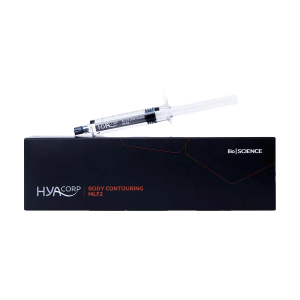
For body-volume planning, a related product such as HYAcorp Body Contouring MLF 2 may be evaluated for different contouring goals. Product selection should remain protocol-led because HA body contouring and PLLA biostimulation involve different materials, handling, and clinical expectations.
Lanluma V can sit within a broader aesthetic formulary that includes PLLA stimulators, HA fillers, body contouring products, and skin-quality treatments. Practices should decide whether a product is being stocked for facial collagen support, larger-area body contouring, or a combined service line. That decision affects training, consultation templates, photography standards, and supply par levels.
Clinics researching adjacent collagen stimulators may also use educational content such as AestheFill injection and skin collagen stimulators to understand how products in the category are discussed. For PLLA-specific brand context, Sculptra Aesthetic and collagen stimulation may help staff distinguish biostimulatory concepts from HA filler workflows.
This content is for informational purposes only and is not a substitute for professional medical advice.
Lanluma V is intended for licensed clinics, med spas, and healthcare professionals with appropriate training in injectable PLLA products. Account verification and professional-use documentation may be required before ordering.
No. Lanluma V is a poly-L-lactic acid biostimulator. HA fillers typically provide immediate gel volume, while PLLA products are used for gradual collagen-stimulation workflows in trained hands.
The 630 mg vial refers to the vial content used for clinic inventory and ordering. Lanluma V is supplied as a powder that must be reconstituted with sterile water according to manufacturer guidance before injection.
PLLA effects are assessed progressively because collagen response develops over time rather than immediately. Clinics commonly use staged sessions, follow-up visits, and photography to evaluate contour changes and plan maintenance.
Both are discussed as PLLA collagen-stimulating products, but product instructions, preparation, injector experience, and clinic protocol matter. The treating clinician should decide which product best fits the treatment area and patient assessment.
Lanluma V requires professional reconstitution, aseptic handling, correct subdermal placement, and lot and expiry documentation. Clinics should follow the current manufacturer insert and keep PLLA protocols separate from HA filler workflows.

MWS Customer Service Team
Our customer service team helps you choose the right pack, label option and quantity for your clinic, and sets up your first order.
Monday to Friday, 9am to 6pm ET
Why clinics order from MWS
Built for licensed clinics
Licences are checked against the state board and the NPI registry.
Every pack option named
Each option names its dosage and pack size, so you know which pack you are ordering.
Volume pricing up front
Quantity tiers are shown on the product, before you order.
Cold-chain packing
Refrigerated lines ship in thermo-packaging with enough ice packs to hold temperature for up to 10 days.
“The customer care team was very efficient in offering hand-held guidance to choose the most cost-effective options.”
Cannulas, needles and hyaluronidase for filler work.
Lip fillers swelling stages usually follow a short inflammatory course: swelling appears soon after injection, often peaks during the first 24 to…

Radiesse vs Sculptra is best understood as a comparison between two collagen-stimulating injectables with different materials and clinic workflows. Radiesse is a…
Hyaluronic acid under-eye filler is an injectable soft-tissue filler used by trained aesthetic clinicians to soften tear-trough hollowness or shadowing when anatomy…