
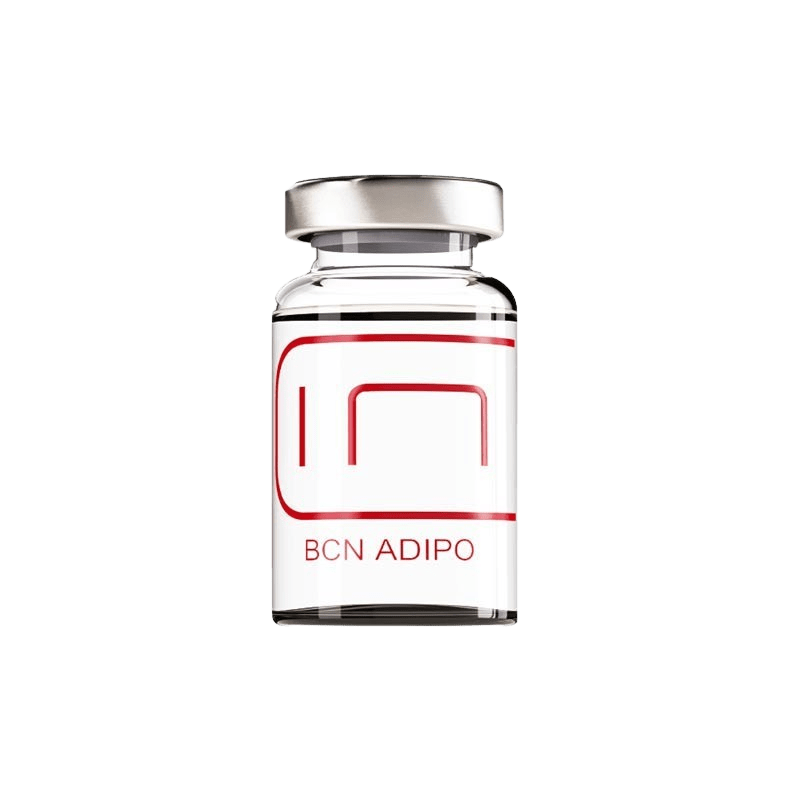
BCN Adipo
Order BCN Adipo® for Clinics
Anticellulite Solution
$49.00
You save
Description
BCN Adipo® is a professional mesotherapy solution supplied in sealed vials for clinic-directed body contouring and cellulite-care protocols. Licensed clinics, med spas, and healthcare professionals can order BCN Adipo for use within established aesthetic workflows. The formulation is designed for treatment-room consistency, inventory traceability, and protocol planning across localized body and submental areas.
The solution contains six actives selected for appearance-focused contour care: L-carnitine, caffeine, fucus extract, ruscus extract, organic silica, and glaucine. Clinics use it as a BCN Adipo lipolytic cocktail within multi-session programs that address the look of localized adiposity, uneven texture, and reduced firmness. Use should remain under professional protocols, with technique, treatment area, client screening, and aftercare defined by the clinic’s medical leadership.
BCN Adipo Price, Clinic Access, and Ordering
Account sign-in provides access to current BCN Adipo pricing and facility-specific purchasing options. Clinics can add the product to internal reorder lists, align quantities with scheduled body-contouring services, and consolidate aesthetic supplies for receiving efficiency. Because pricing may depend on volume, account status, and contract terms, the most accurate cost is shown through secure professional account access.
BCN Adipo is intended for licensed professional environments rather than consumer self-use. Clinic ordering helps support documentation, lot tracking, staff accountability, and standardized treatment-room preparation. Med Wholesale Supplies serves licensed clinics and healthcare professionals with brand-name products sourced through vetted distributor channels, helping purchasing teams maintain a consistent supply workflow.
For broader protocol planning, clinics can browse the Mesotherapy category to evaluate adjacent solutions used in professional aesthetic delivery methods. Practices building a body-focused service line can also review Body Contouring and Fat Removal categories for related professional-use supplies.
What BCN Adipo Is Used For in Professional Aesthetics
BCN Adipo is used in aesthetic clinic workflows focused on localized adiposity, cellulite appearance, tissue texture, and skin firmness. Treatment areas commonly considered in body-contour planning include the abdomen, flanks, thighs, upper arms, and submental region, depending on provider assessment and clinic protocol. The product is not a substitute for clinical judgment, client screening, or individualized treatment planning.
As a BCN Adipo anti cellulite cocktail, the solution supports appearance-focused goals rather than weight-management claims. Clinics typically position it within structured programs that may include assessment photos, measurement protocols, staged sessions, and adjunctive modalities. The practical value for teams is consistency: a defined composition reduces the need for on-the-fly ingredient selection and helps staff follow repeatable preparation steps.
Mesotherapy techniques can vary by clinic, training, device selection, and local professional standards. For workflow context, the article on mesotherapy clinical uses, risks, and workflow provides a professional overview of how clinics organize treatment planning, hygiene, and safety checks. Use that background as operational education, not as a replacement for manufacturer directions or medical director guidance.
Active Ingredients and How They Support Protocol Design
BCN Adipo combines cosmetic actives commonly selected for contour-focused mesotherapy programs. L-carnitine and caffeine are frequently used in body-care formulations aimed at supporting lipid-mobilization strategies and improving the look of treated tissue. Fucus extract and ruscus extract add marine and botanical components often associated with body-care and circulation-support cosmetic routines.
Organic silica is included for its role in skin-firmness and structural-support routines, while glaucine is used in advanced body-care compositions. Together, these ingredients make the product practical for clinics that want a predefined formulation rather than mixing separate actives at each appointment. The final treatment plan should still account for the client’s health history, target area, skin condition, and tolerance for procedure-related effects.
| Component | Clinic-use relevance |
|---|---|
| L-carnitine | Used in contour programs that include lipid-mobilization strategies. |
| Caffeine | Commonly paired with L-carnitine in appearance-focused body formulations. |
| Fucus extract | Marine extract selected for professional body-care protocols. |
| Ruscus extract | Botanical component used in cosmetic circulation-support products. |
| Organic silica | Used in skin-firmness and structural-support routines. |
| Glaucine | Included in advanced contour and cellulite-care compositions. |
Clinics interested in individual actives can review Phosphatidylcholine for a separate professional product used in fat-reduction and contour protocols. Ingredient selection should be based on training, intended technique, client screening, and the supervising clinician’s protocol.
Packaging, Handling, and Inventory Control
BCN Adipo is supplied in sealed vials intended for professional use. Each vial should be inspected during receiving and again before treatment-room preparation. Teams should confirm the product name, lot number, expiration date, and seal integrity as part of routine inventory control. Do not use any vial if the seal is compromised or the product does not match clinic records.
Clear lot and expiry markings help practices rotate stock, document product use, and reconcile purchase records. Assigning BCN Adipo to a defined storage location can reduce selection errors, especially in clinics carrying multiple mesotherapy and contouring products. Staff training should cover product identification, aseptic preparation practices, documentation, and disposal steps required by clinic policy.
Orders are supported through reliable US logistics, with temperature-controlled handling when required and tracked US delivery. Receiving teams should process shipments promptly, document carton condition, and store vials according to the product’s applicable handling requirements and the clinic’s standard operating procedures.
Professional Administration and Treatment-Room Workflow
BCN Adipo may fit needle-assisted or device-assisted mesotherapy workflows when those techniques are part of the clinic’s approved scope and training. The product should be prepared using standard hygiene practices, clean work surfaces, and appropriate professional supplies. The provider should select the treatment area, session spacing, delivery approach, and follow-up process based on the clinic’s written protocol.
Practical workflow planning often includes intake review, contraindication screening, baseline documentation, product lot recording, post-procedure instructions, and adverse-event escalation steps. Because body-contouring programs are usually multi-session, consistency matters. Using the same defined formulation across planned visits can help teams document progress and maintain predictable preparation steps.
Clinics expanding body programs may also review Body Sculpting supplies for adjunct service planning. Educational context on injection-based fat protocols is available in fat-dissolving injections for stubborn fat, while ingredient-specific background is covered in phosphatidylcholine benefits for contours.
Safety, Screening, and Cautions
Professional screening should precede any BCN Adipo protocol. Providers should review relevant medical history, allergies or sensitivities, current medications, prior aesthetic procedures, skin integrity, infection risk, pregnancy or breastfeeding status when applicable, and expectations for visible improvement. Clients with active skin infection, significant inflammation, open wounds, or unsuitable treatment-area findings should be assessed by the supervising clinician before proceeding.
Procedure-related reactions can occur with mesotherapy-style treatments. Common local effects may include temporary redness, tenderness, swelling, bruising, warmth, or mild discomfort at the application area. Clinics should explain expected post-treatment observations, provide aftercare instructions, and document any reaction that falls outside the normal course defined by protocol.
More serious concerns require clinical escalation, including signs of infection, persistent pain, allergic-type symptoms, unexpected tissue changes, or worsening swelling. Staff should know how to route client concerns to the appropriate clinician and when urgent evaluation is required. Treatment decisions, modifications, and exclusions belong to qualified professionals familiar with the product, technique, and client history.
BCN Adipo Compared With BCN Adipo Forte and Other Options
BCN Adipo and BCN Adipo Forte are related products within the BCN family, but clinics should evaluate each option by formulation, vial configuration, intended protocol, and staff familiarity. Search demand often focuses on BCN Adipo Forte price, BCN Adipo Forte vials, and Adipo Forte mesotherapy, but those terms should not replace product-specific review. Select the exact product that matches the clinic’s written protocol and the treatment objectives approved by the medical director.
For a related configuration, review BCN Adipo Forte. Clinics that compare BCN Adipo Forte with other contouring products may also assess Aqualyx or Alidya, depending on protocol design and professional training. Each product has its own composition and handling workflow, so substitution should not be automatic.
Brand-focused purchasing teams can view the BCN brand category to keep related products organized. For deeper product education, the article on BCN injection and mesotherapy treatment solutions can help staff understand how BCN products are positioned in professional aesthetic programs.
Clinic Purchasing Checklist
Before adding BCN Adipo to a protocol, clinics should confirm that the product aligns with service scope, provider training, consent language, and aftercare documentation. Procurement should also account for expected treatment volume, reorder timing, storage space, and inventory rotation. A defined purchasing checklist reduces last-minute substitutions and helps the treatment team maintain product consistency.
- Confirm BCN Adipo is the formulation specified in the clinic protocol.
- Review the active ingredients and any client-specific sensitivity concerns.
- Inspect vial seals, lot numbers, and expiration dates upon receipt.
- Document product use according to internal treatment-room standards.
- Train staff on preparation, identification, and escalation procedures.
- Plan reorders around scheduled body and submental contouring programs.
- Use related products only after clinician review and protocol approval.
Quick tip: Keep BCN Adipo and BCN Adipo Forte records separate to avoid confusion during receiving, storage, and treatment setup.
Authoritative and Educational Sources
Professional mesotherapy products should be evaluated through manufacturer directions, clinic protocols, staff training, and credible medical guidance. Internal education can support product selection, but it should not replace clinical oversight or product-specific instructions. Practices should keep current documentation available for providers and staff who prepare or administer aesthetic treatments.
- Aqualyx clinical overview and practice notes for clinics
- Body contouring articles and clinic education
- Weight loss and body-care education
This content is for informational purposes only and is not a substitute for professional medical advice.
Frequently Asked Questions
What is BCN Adipo?
BCN Adipo is a professional mesotherapy solution supplied in vials for clinic-directed protocols focused on localized adiposity, cellulite appearance, and skin firmness. It is intended for use by licensed clinics and healthcare professionals within established treatment and hygiene procedures.
What ingredients are in BCN Adipo?
BCN Adipo contains L-carnitine, caffeine, fucus extract, ruscus extract, organic silica, and glaucine in an aqueous solution. These actives are selected for professional body-contouring and texture-focused aesthetic protocols.
How should clinics compare BCN Adipo with BCN Adipo Forte?
Clinics should compare the exact formulation, vial configuration, intended protocol, provider training, and documentation requirements. BCN Adipo Forte is a related BCN option, but product selection should follow the clinic’s written protocol and supervising clinician guidance.
Can BCN Adipo be used for submental or body contouring workflows?
BCN Adipo is used in professional workflows that may include body and submental contour-focused areas. The treatment area, technique, session plan, and suitability screening should be determined by qualified clinic staff under the practice’s protocol.
What handling checks should staff complete before use?
Staff should confirm the product name, lot number, expiration date, vial seal integrity, and storage status before preparation. Any vial with a compromised seal or inconsistent documentation should be held out of use and reviewed according to clinic policy.
What side effects or reactions should clinics discuss?
Mesotherapy-style procedures may cause temporary local redness, swelling, tenderness, bruising, warmth, or discomfort. Clinics should provide aftercare instructions and escalate unexpected, persistent, allergic-type, or infection-related symptoms to the appropriate clinician.
Specifications
- Main Ingredient: Carnitine, Caffeine, Organic Silica, Ruscus, Glaucine
- Manufacturer: BCN
- Drug Class: Anticellulite Solution
- Generic Name: Anticellulite Solution
- Package Contents: 5 mL x 5 Vials
- Storage Requirements: Room Temperature (2℃~25℃)
- Main Usage:
About the Brand
INSTITUTE BCN
INSTITUTE BCN stands as a respected name in the medical industry, offering a vast assortment of premium medical equipment. Be it bandages, syringes, gauzes, or gloves, BCN's comprehensive selection ensures patient safety and superior care. Apt for healthcare professionals or households requiring medical supplies, INSTITUTE BCN is a trusted brand. BCN's extensive collection can be conveniently accessed and purchased on our online platform, medwholesalesupplies.com. This offers a tailored shopping experience, delivering BCN products directly to your location. Offering not just convenience, our online portal also guarantees the authenticity of BCN products at competitive prices. At medwholesalesupplies.com, we highly value the reliability and quality of medical supplies. This is reflected in our procurement selection, sourcing only from trusted brands such as BCN. By choosing to shop on our website, rest assured you are acquiring superior supplies fit for your needs. We invite you to explore the range of BCN products at medwholesalesupplies.com today.
Browse INSTITUTE BCN Products
Here to help
Questions about ordering, delivery or products? You can email our team here or call now at 1-800-630-9757 and be connected with your dedicated Account Manager
Related Products
Evenity® (English Alternative)
Injectable Medication
$1,229.00 - $1,299.00
You save
You save
Intraline® For Men
Dermal Filler
$59.00 - $79.00
You save
You save
RejuvaNAD+ Pro
Injectable Medication
$237.00 - $249.00
You save
You save
Teosyal® RHA 4
Aesthetic Surgery Product
$259.00 - $279.00
You save
You save
Related Articles
Prednisone in Clinical Care: Uses, Risks, and Monitoring
Prednisone is a prescription systemic corticosteroid used to reduce inflammation or suppress immune activity in…
Lip Fillers Swelling Stages: Timeline, Safety, and Follow-Up
Lip fillers swelling stages usually follow a short inflammatory course: swelling appears soon after injection,…
Hypopigmentation of the Skin: Assessment and Care
Hypopigmentation of the skin means one or more areas look lighter than the surrounding skin.…
Radiesse vs Sculptra: Selection Factors for Clinics
Radiesse vs Sculptra is best understood as a comparison between two collagen-stimulating injectables with different…
Hyaluronic Acid Under-Eye Filler: Safety and Workflow
Hyaluronic acid under-eye filler is an injectable soft-tissue filler used by trained aesthetic clinicians to…
Dermal Filler Types: Materials, Uses, and Clinic Fit
Dermal filler types are usually grouped by their base material, tissue behavior, and expected role…
What Is Dysport? Clinical Uses, Safety, and Workflow
For clinic teams asking what is Dysport, the short answer is simple: Dysport is a…
Biostimulators in Aesthetic Care: Selection and Safety
Biostimulators are injectable aesthetic products used to encourage a controlled tissue response, often involving new…