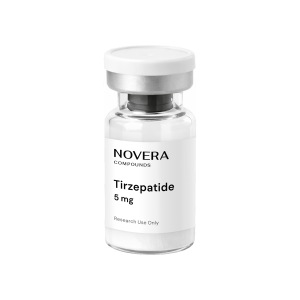
Tirzepatide
$71.00 - $499.00
View

Free shipping on orders over $800
5% off your first order, applied at checkout
Order as a guest or log in. Your medical licence details are collected at checkout and checked against the state board and the NPI registry.
Enter your own figures: the bottles you use per treatment and what you charge per treatment. The table shows your product cost and margin per treatment at each quantity price. It does not suggest doses, prices or treatments.
| Quantity | Price per pack | Cost per unit | Cost per treatment | Margin per treatment |
|---|
Uses today's prices for the selected option before shipping and any other costs. Your figures stay in your browser.
Ships within 24–48 hours
Delivery typically 48–72 hours after shipping, up to 5–7 business days depending on origin and customs. Tracking is emailed when your order ships.
Warm or damaged on arrival?
Send us photos or a video. We investigate and arrange a replacement where needed.
Licence checks
Licences are checked against the state board and the NPI registry.
100% genuine products
In original manufacturer packaging, with lot numbers for full traceability. Lot numbers are shown on your packing slip and invoice.
250 active clinics · Supplying clinics since 2013
“Everything has been easy from ordering to delivery. The prices are good, orders arrive quickly, and the customer service has been great. I would definitely order from MWS again.”
Hospira® Sterile Water for Injection and Irrigation 50 ml is a solute-free sterile water preparation used as a diluent for medications and as an irrigating fluid. Per the manufacturer’s labeling it contains no antimicrobial preservative, no buffer and no added electrolytes, so it is hypotonic and must not be infused on its own. Licensed clinics, hospital departments and medical professionals can order the 50 ml presentation for treatment-room, procedure-room and pharmacy stock.
Two roles dominate day-to-day practice. Teams use it to reconstitute medications supplied as a lyophilized (freeze-dried) powder, and to dilute concentrated parenteral products to a working concentration. It is also used as an irrigating fluid when a solute-free rinse is the appropriate choice for the procedure.
The 50 ml size fits small-volume work. Staff can prepare a single dose or a short run of doses without opening a large-volume container, which keeps waste and handling steps down in a busy treatment room.
Always follow the prescribing information of the drug being prepared. Each product specifies its own diluent, final concentration and in-use limits. Many lyophilized injectables call for preservative-free 0.9% sodium chloride rather than water, and substituting a diluent is not a clinical shortcut.
Why it matters: The diluent changes the tonicity, pH and stability of the finished solution.
Water without a solute is hypotonic compared with blood. Red blood cells exposed to it can swell and rupture, a process called hemolysis. Manufacturer labeling for sterile water products carries a clear warning against intravenous administration unless the solution is first made approximately isotonic by adding a suitable solute.
In practice, that means the 50 ml container is a preparation fluid, not an infusion fluid. It should never be hung for direct intravenous infusion, and it should never be used as a fluid replacement for dehydration or blood loss. If a prepared admixture looks cloudy, discolored or contains particles, it should not be given.
Irrigation use deserves the same care. Clinical literature describes hemolysis and dilutional hyponatremia (low blood sodium from fluid absorption) when large volumes of solute-free irrigant are absorbed during endoscopic or transurethral procedures. Many surgical teams select an isotonic irrigant when systemic absorption is likely, and reserve sterile water for rinsing where absorption is minimal.
Suitability depends mainly on the drug being prepared and the procedure being performed. Review the following before use:
Monitor patients who receive admixtures or irrigation per your procedure protocol. Watch for signs of fluid overload, hemolysis or electrolyte disturbance, and escalate to a clinician promptly if they appear.
Treat every container as a sterile item from the moment it reaches the clinic. Clean hands, disinfect the access site, and use a sterile needle and syringe or a compatible transfer device. Prepare admixtures on a clean, dedicated surface away from traffic and treatment activity.
Because the fluid is preservative-free, any remaining volume after preparation should be discarded rather than stored for later use. Prepared solutions follow the beyond-use timing in the drug’s labeling and in your facility’s compounding policy, not the expiry printed on the water container.
Record the lot number and expiry for each prepared dose in the patient record or preparation log. That record supports recall response, incident review and routine inspection. Store cartons in their original packaging and follow the storage conditions printed on the carton and container labeling.
Quick tip: Rotate stock by expiry date each time a shipment is unpacked.
Check deliveries on arrival rather than at the point of use. Confirm the product name and 50 ml size against the order, inspect outer cartons for crushing or moisture, and inspect individual containers for cracks, leaks or loose closures. Hold anything that fails inspection and document it.
Inspect the fluid itself before each use. It should be clear and free of visible particles. Discard any container that looks cloudy or discolored, or where the closure integrity is in doubt.
For stocking levels, count how many reconstitutions your clinic performs each week and add a buffer for procedure days. Small-volume containers suit single-dose preparation, while high-volume irrigation is usually better served by larger presentations. Keep sterile water separated from sodium chloride and bacteriostatic products on the shelf to reduce selection errors.
Several clear fluids look similar on the shelf and are not interchangeable. The table summarizes the practical differences, without ranking one product above another.
| Fluid | Preservative | Typical clinic role | Key caution |
|---|---|---|---|
| Sterile Water for Injection | None | Reconstitution and dilution; solute-free rinse | Hypotonic; not for direct intravenous infusion |
| Bacteriostatic Water for Injection | Benzyl alcohol | Reconstitution where repeated entry is permitted by the drug label | Not for neonates; check drug compatibility with benzyl alcohol |
| 0.9% Sodium Chloride Injection | None in preservative-free presentations | Isotonic diluent specified by many drug labels | Adds sodium chloride; follow the drug’s labeling |
| Sterile Water for Irrigation | None | Topical rinse, field and instrument irrigation | Absorption risk during endoscopic procedures |
When a clinician asks which to stock, the answer comes from the medications and procedures on your formulary. Pull the labeling for the products you prepare most often and match the diluent each one names.
Clinics order Hospira Sterile Water for Injection 50 ml as consumable stock alongside syringes, needles, transfer devices and skin antiseptics. Current pricing and the available quantity for this 50 ml presentation are shown with the product, so purchasing staff can plan a par level and reorder point around real usage.
We may review order details before processing, and professional-use ordering requirements may apply for clinics and healthcare facilities. Products are supplied through licensed pharmaceutical channels. Med Wholesale Supplies is a wholesale supplier of aesthetic, orthopedic and medical products to clinics, hospitals and medical professionals, operating since 2013.
Before stocking, confirm that your staff training covers aseptic preparation, diluent selection and documentation. Those three habits prevent most preparation errors involving solute-free water.
This content is for general informational purposes only and is not a substitute for professional medical advice, diagnosis, or treatment. Always consult a qualified clinician or pharmacist about your situation, and seek urgent care or call your local emergency number for severe or worsening symptoms.

MWS Customer Service Team
Our customer service team helps you choose the right pack, label option and quantity for your clinic, and sets up your first order.
Monday to Friday, 9am to 6pm ET
Why clinics order from MWS
Built for licensed clinics
Licences are checked against the state board and the NPI registry.
Every pack option named
Each option names its dosage and pack size, so you know which pack you are ordering.
Volume pricing up front
Quantity tiers are shown on the product, before you order.
Cold-chain packing
Refrigerated lines ship in thermo-packaging with enough ice packs to hold temperature for up to 10 days.
“The customer care team was very efficient in offering hand-held guidance to choose the most cost-effective options.”