What Causes Double Chin? Clinical Drivers and Red Flags
The main causes double chin presentations reflect are usually submental fat, inherited facial anatomy, chin or jaw projection, skin laxity, and age-related…

Marllor
Deoxycholate
Free shipping on orders over $800
5% off your first order, applied at checkout
Order as a guest or log in. Your medical licence details are collected at checkout and checked against the state board and the NPI registry.
Enter your own figures: the vials you use per treatment and what you charge per treatment. The table shows your product cost and margin per treatment at each quantity price. It does not suggest doses, prices or treatments.
| Quantity | Price per pack | Cost per unit | Cost per treatment | Margin per treatment |
|---|
Uses today's prices for the selected option before shipping and any other costs. Your figures stay in your browser.
Ships within 24–48 hours
Delivery typically 48–72 hours after shipping, up to 5–7 business days depending on origin and customs. Tracking is emailed when your order ships.
Warm or damaged on arrival?
Send us photos or a video. We investigate and arrange a replacement where needed.
Licence checks
Licences are checked against the state board and the NPI registry.
100% genuine products
In original manufacturer packaging, with lot numbers for full traceability. Lot numbers are shown on your packing slip and invoice.
250 active clinics · Supplying clinics since 2013
“Everything has been easy from ordering to delivery. The prices are good, orders arrive quickly, and the customer service has been great. I would definitely order from MWS again.”
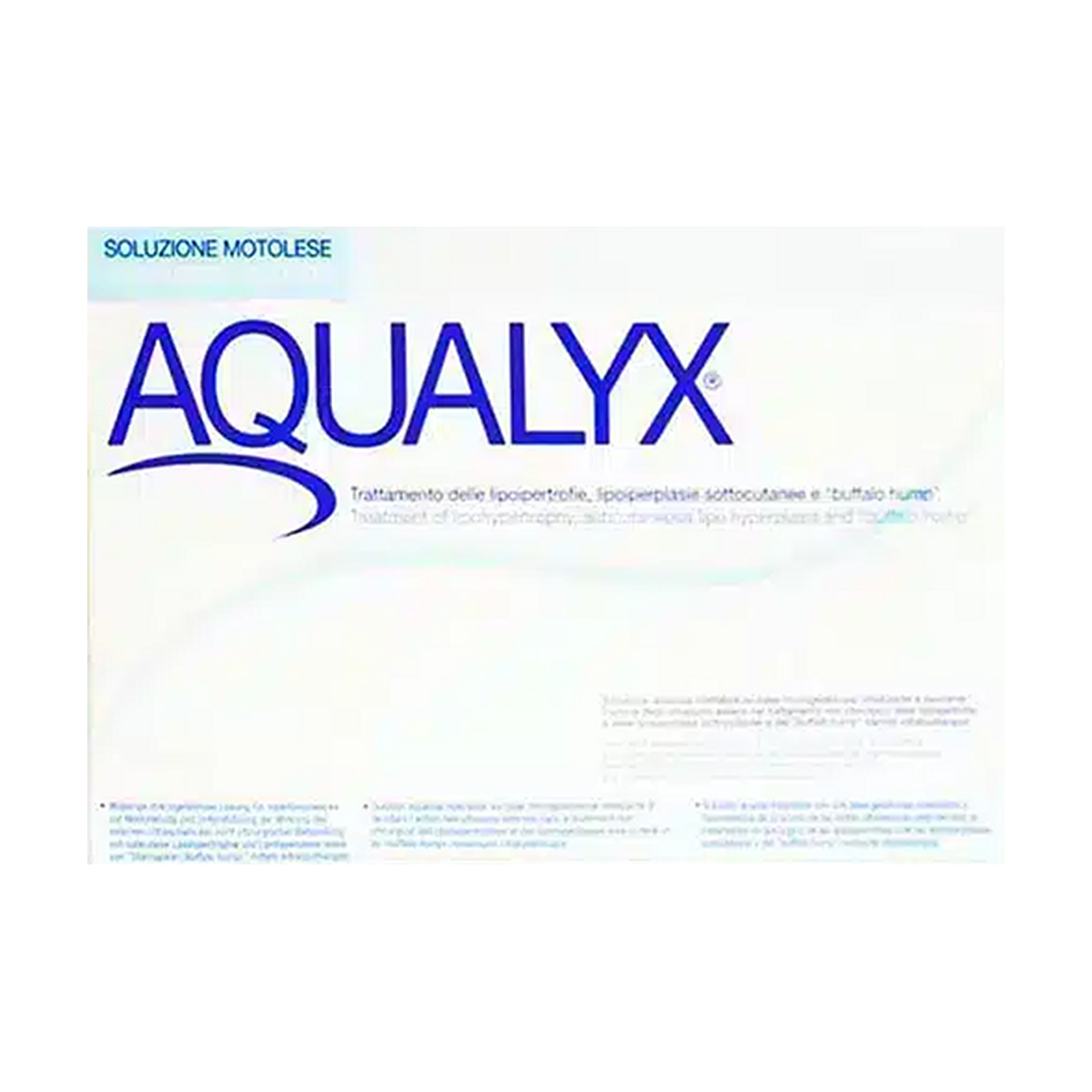
Aqualyx® is an injectable solution used by trained clinicians for intralipotherapy, the targeted treatment of small, diet-resistant fat deposits. Its active agent is sodium deoxycholate, a bile salt that disrupts fat-cell membranes when placed in the subcutaneous fat layer. Licensed clinics and medical professionals can order the pack of ten 8 mL vials for treatment-room use.
Sodium deoxycholate acts like a detergent on cell membranes. When injected into subcutaneous adipose tissue, it lyses adipocytes, and the released lipid is cleared through a local inflammatory response and the lymphatic system. According to the manufacturer’s instructions for use, the solution is buffered and carried in a slow-release gel-type base intended to keep it within the treated fat compartment rather than spreading widely through tissue.
In practice, this is a focal body-contouring agent, not a weight-management treatment. It is used on small, localized collections of fat that persist despite diet and exercise, such as the submental area, flanks, outer thighs, inner knees, upper arms and abdomen, as described in manufacturer materials. It does not tighten lax skin, and it does not replace surgical lipoplasty for large-volume correction.
Treatment is normally staged across more than one session. Injection volumes, needle or cannula choice, injection depth, grid spacing and the interval between sessions follow the instructions for use and the treating clinician’s assessment of the area. Comfort measures such as local anesthesia follow each clinic’s own protocol. Technique matters: the agent must sit in fat, never in dermis or muscle.
Why it matters: Injection depth and placement drive both the result and the risk of skin injury, so only clinicians trained in intralipotherapy should treat with it.
Aqualyx is not FDA-approved or FDA-cleared for injection lipolysis in the United States. It is manufactured and marketed for professional use in markets outside the US, so any US use falls outside FDA-approved labeling. We state this plainly rather than implying a US approval the product does not hold, and nothing here should be read as promotion of off-label treatment.
The only injectable deoxycholic acid product with FDA approval in the United States is a separate submental-fat medicine with its own labeling, warnings and administration instructions. Approval status, formulation and handling rules differ between that product and Aqualyx, and the two are not interchangeable. Clinics ordering Aqualyx are responsible for confirming their own federal and state compliance obligations, professional scope of practice, consent wording and insurance position before the vials are used on patients.
The pack supplied here contains ten 8 mL vials, which suits clinics running regular contouring lists rather than occasional single cases. Clinics that buy Aqualyx wholesale usually plan stock around treated area size, the number of sessions booked per cycle, and the shelf life remaining on incoming lots. Ordering in whole packs also keeps lot numbers consistent across a treatment course, which simplifies record-keeping.
Ordering is restricted to licensed clinics, hospitals and healthcare professionals, and professional-use documentation may be requested. We may review order details before an order is released. Med Wholesale Supplies is a wholesale supplier of aesthetic, orthopedic and medical products to clinics, hospitals and medical professionals, operating since 2013.
Current pricing, pack availability and any bulk tiers are shown with the item itself, so inventory leads can plan a reorder point against their own weekly case volume rather than ordering reactively.
Screening is the main safety control for injectable lipolysis. Suitable candidates typically have a stable weight, good skin quality over the target site, and a discrete fat pad that can be pinched and mapped. Patients seeking general weight loss, or those with poor skin retraction, are better served by a different conversation.
Clinicians should screen against the contraindications and cautions set out in the manufacturer’s instructions for use, which commonly include:
Anatomical precautions deserve attention in the submental region. Injections placed too superficially risk skin ulceration and necrosis, and injections placed near the marginal mandibular nerve risk temporary or prolonged nerve injury with asymmetric smile. Mark the area with the patient upright, define safe boundaries before the first injection, and stop if landmarks are unclear.
Local reactions are usual after treatment and should be discussed at consent. Patients commonly report swelling, redness, tenderness, warmth, bruising, firmness or palpable nodules, and transient numbness over the treated site. Swelling is often pronounced in the submental area and can last several days.
More significant effects are less common but need a plan. These include injection-site ulceration, skin necrosis, nerve injury with altered facial movement, difficulty swallowing after submental treatment, persistent induration, hyperpigmentation and infection. Patients should be told how to recognize these and how to contact the clinic urgently. Anyone with spreading pain, breakdown of the skin, fever, breathing difficulty or signs of an allergic reaction needs same-day clinical review.
Monitoring is practical rather than laboratory-based: review the treated field before each subsequent session, photograph consistently, record volumes and sites, and document any reaction and how it resolved. Do not re-treat an area that is still inflamed or indurated from the previous session.
Keep the vials in their original carton under the storage conditions shown with the item until the day of use. Receive each delivery against the packing note, confirm lot numbers and expiry dates, and quarantine any carton that is crushed, opened or shows damaged vials. Clinics that treat in cycles should rotate stock so the shortest-dated lots are drawn first.
At the treatment couch, work aseptically. Inspect the solution before drawing it up and discard any vial that is cloudy, discolored or contains particles. Draw up with a sterile needle and syringe, treat each vial as single-patient use, and discard any remainder rather than holding it for a later case. Sharps and partly used vials go straight into clinical waste.
Documentation closes the loop. Record the lot number, expiry, volume used, injection sites and depth in the patient notes, alongside consent and the pre-treatment photographs. That record supports follow-up review, supports any adverse-event reporting, and makes stock reconciliation straightforward for the clinic lead.
Quick tip: Log lot numbers at goods-in as well as in the patient record, so a single query can trace every patient treated from a given carton.
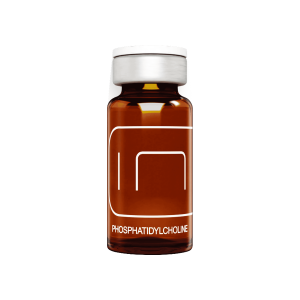
Clinics usually hold more than one approach to localized fat, and the choice depends on anatomy, downtime tolerance and regulatory position rather than preference. Injectable deoxycholate-based treatments act chemically on fat cells and need staged sessions with visible swelling between them. Device-based cryolipolysis applies controlled cooling without injections. Phosphatidylcholine and mixed mesotherapy formulations differ in composition, evidence base and authorization status by market, and should not be assumed equivalent to a deoxycholate product.
None of these is presented here as superior. The deciding factors are the size and depth of the fat pad, skin quality, the patient’s acceptance of post-treatment swelling, operator training, and whether the specific product is authorized for the planned use in the clinic’s market. Where an agent is not FDA-approved for the use being considered, that limitation should be part of the clinical and consent discussion rather than a footnote.
For stock planning, many aesthetic practices pair injectable lipolysis with aseptic draw-up supplies, needles or cannulas, marking tools, topical and local anesthetic agents, and post-treatment support items. Keeping those consumables in step with vial orders avoids part-prepared lists on a busy clinic day.
This content is for general informational purposes only and is not a substitute for professional medical advice, diagnosis, or treatment. Always consult a qualified clinician or pharmacist about your situation, and seek urgent care or call your local emergency number for severe or worsening symptoms.
Aqualyx® is intended for licensed clinics, med spas, and healthcare professionals using professional injectable body-contouring protocols. Account verification and professional-use requirements may apply before ordering.
This product is supplied as a 10 x 8 mL pack. The vial configuration supports session-based inventory planning, stock rotation, and traceability in aesthetic practices.
No. Aqualyx® is a localized injectable lipolysis preparation used in professional aesthetic workflows. Ozempic is a GLP-1 receptor agonist used for metabolic disease management, so the clinical purpose and use pathway are different.
Clinics may evaluate localized adipose pockets such as the submental region, abdomen, flanks, thighs, or hips when appropriate. Final treatment-area selection depends on provider assessment, anatomy, medical history, and clinic protocol.
Clinics should screen for contraindications or factors that increase risk, document informed consent, use aseptic technique, and counsel patients on expected local reactions and escalation symptoms. Administration should be performed only by trained professionals.
Record batch number, expiry date, date of use, provider, treatment area, amount used according to protocol, and disposal notes. This supports traceability, inventory reconciliation, and internal quality processes.

MWS Customer Service Team
Our customer service team helps you choose the right pack, label option and quantity for your clinic, and sets up your first order.
Monday to Friday, 9am to 6pm ET
Why clinics order from MWS
Built for licensed clinics
Licences are checked against the state board and the NPI registry.
Every pack option named
Each option names its dosage and pack size, so you know which pack you are ordering.
Volume pricing up front
Quantity tiers are shown on the product, before you order.
Cold-chain packing
Refrigerated lines ship in thermo-packaging with enough ice packs to hold temperature for up to 10 days.
“The customer care team was very efficient in offering hand-held guidance to choose the most cost-effective options.”

The main causes double chin presentations reflect are usually submental fat, inherited facial anatomy, chin or jaw projection, skin laxity, and age-related…

OverviewPhosphatidylcholine benefits are best understood as context-dependent rather than uniform. Oral supplements, lecithin-derived products, topical ingredients, and procedure-adjacent use can involve different…

Key Takeaways Phosphatidylcholine is a membrane phospholipid used as a supplement ingredient and, in some settings, an injectable component. Clinical teams benefit…